Family Matters
The Allure of Automation: AI’s Intrusion on Parental and Family Agency
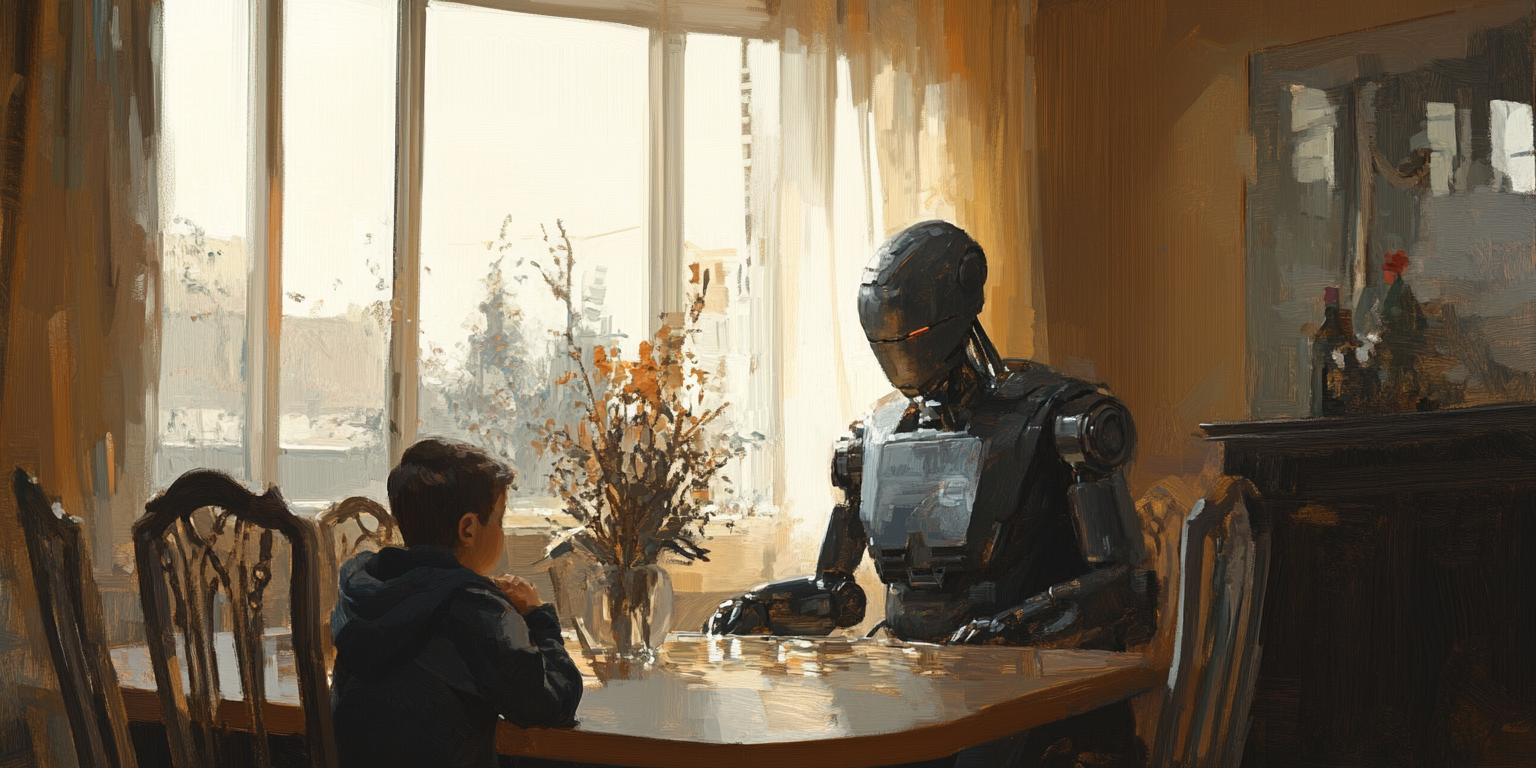
Does AI undermine parental agency? It shifts reliance onto digital tools that erode genuine family bonds.

Does AI undermine parental agency? It shifts reliance onto digital tools that erode genuine family bonds.

How can parents help children stay connected to faith? Open dialogue, flexible beliefs, and strong family bonds foster commitment.

Does Heavenly Mother stand apart from Heavenly Father? She is unified with Him, sharing His divine will, not a separate deity for revision.

Can Latter-day Saint theology answer Nietzschean critiques? Both emphasize agency, power, and rejecting passivity.

How can ancestry illuminate identity? By connecting spiritually, physically, and emotionally with family roots.

How does women’s visibility shape the Restoration? Prophetic insight reveals their key role in the Church’s progress.

Is romance still central in film? Modern movies downplay commitment, rush intimacy, and present love as just another life accessory. Filmmakers focus on personal growth, reducing love to a subplot rather than a driving force.
How does a community and the families within it respond to a nearly unspeakable accusation? How do you treat everyone with dignity? How do you suss out the truth? Do you need to? “Armand,” the Norwegian submission for The Academy Award’s best international feature film, sets out as though it is interested in answering those questions. The film opens with a young teacher, a principal, and a school staff member wondering what they are going to do. Armand has done something again. The parents are called in. The film’s premise is that Armand was accused of hitting Jon in the bathroom when Jon said he didn’t want to play with Armand. There are many additional revelations about the context, the relationship between Armand and Jon’s families, and the history of Armand’s family. There are accusations upon accusations that both indict and exonerate the boys and the adults around them. But these revelations eke out. It feels like filling up a mug from a leak in the sink. “If you want us to know what’s happening, just tell us,” I felt like shouting at the screen more than once. The film’s first act works well. The cinematography is ragged, framing its subjects well but always just off from what we’d expect. Too close, or the light is just wrong. It felt like how I imagine it would feel to have my child accused of something horrific. And when the parents first start talking the tension is terrific. Those first few drops of exposition in the mug were thrilling. Oh there’s something happening here; it’s complicated and interesting. Thea Lambrechts Vaulen, plays Sunna, a young teacher in over her head trying to manage the meeting between Armand’s mother, Elisabeth, played by Renate Reinsve, and Jon’s parents Sarah and Anders played by Ellen Dorrit Petersen and Endre Hellestveit. Vaulen is particularly effective. She has been sent on a mission by her principal, Jarle, to make sure the whole thing blows over. Watching her struggle to navigate this while the parents are processing what’s been said is captivating. But it just keeps going. The film’s entire second act consists of learning the basic facts of what has happened and the context around it. This is a complicated situation, and as a viewer I’m interested to see how the compelling characters navigate that situation. But the screenplay seems mostly interested in telling you the information. As though learning that Armand “plays doctor” at school is enough to compel me to the film’s ending. But once the audience finally understands the situation, the third act begins and flies wildly off the handle into surrealism, including two interpretive dance numbers, three over-the-top metaphors, and five straight minutes of Anders’ mother laughing. The movie feels so desperate to be deep that it forgets to be about anything. It’s the first film of director Halfdan Ullmann Tøndel, so perhaps the bold ideas and beautiful cinematography will be wielded for a more worthwhile story next time. The film is entirely in Norwegian. And its English subtitles include a fair amount of profanity, though not an overwhelming amount. And the accusations that fly include suicide, alcoholism, and sexual assault. So these are adult themes. The film is R-rated, but not an egregious one, it pretty well all takes place in a parent-teacher conference. I can’t imagine ever showing this to my kids. The themes are hard ones, and the film has nothing worthwhile to say about them. Two out of five stars. Armand releases in US theaters on February 14, 2025.

What role does emotional control play in peacemaking? Managing anger allows logic to guide solutions effectively.
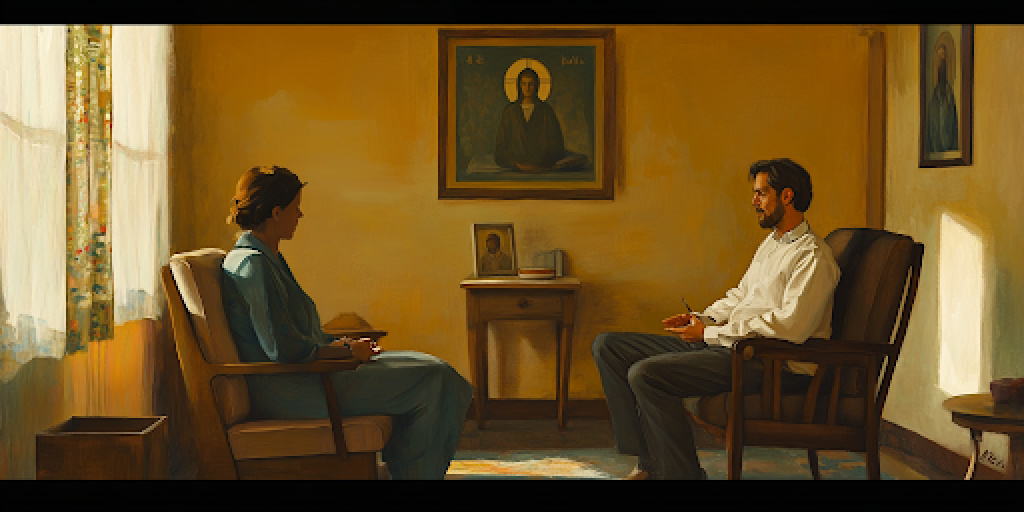
How can therapy honor faith? Effective therapy respects religious values, offering a complete path to mental wellness.