Maria Theresia Bonzel went against her parents’ wishes and became a nun in 1850. It was not an easy time to be Catholic in Germany, where Maria lived—the recent revolutions of 1848 had dealt a devastating blow to her religious community, and anti-catholicism continued to simmer throughout the country.
But Maria cared deeply for those who were suffering. Her faith taught her that everyone was a child of God, and she felt called to serve those in need. In 1863 she founded the Sisters of St. Francis of Perpetual Adoration. The Sisters initially cared for orphans and neglected children but later expanded their work to include care for the poor, health care, and education.
Their ministry continued to grow, and eventually, Maria sent missionaries to Indiana, U.S.A., to continue their compassionate work. Today the Sisters of St. Francis of Perpetual Adoration runs twelve hospitals in the midwest under the name of Franciscan Health.
The reason these hospitals exist is because of the Catholic faith of Maria Bonzel and those who followed her. Franciscan Health is committed to carrying forth “Christ’s healing ministry” through compassionate care to all people, “especially the aged, the poor, and the disabled.” This commitment would not exist without the core Christian doctrine that every person is made in the image and likeness of God and deserves love and compassion.
But not everyone sees Franciscan Health as a beacon of love and compassion. In 2016, they became involved in a lawsuit because they did not want to provide gender transition services or abortions. Critics accused Franciscan Alliance of denying “basic health care.” Speaking on behalf of the ACLU in this case, Louise Melling said that “No one—whether they’re male or female, transgender or not—should fear being turned away at the hospital door because of who they are.”
At best, this statement is misleading. It suggests that Franscian Health is waiting at the door to turn away transgender patients who may have, say, a broken leg or high blood pressure. It suggests that the people who work at Franciscan Health are cruel and heartless, unwilling to help people who are different from them, and indifferent to the suffering of transgender people.
The truth is actually very different. Franciscan Health clarifies that it provides “all of its standard medical services to every individual who needs and qualifies for its care, including to individuals who identify as transgender. Thus, for instance, if a transgender individual required cardiac care, Franciscan would provide the same full spectrum of compassionate care for that individual as it provides for every other cardiac patient.”
In other words, there is a lot that transgender individuals could gain at a Franciscan Health hospital. Even Franciscan Health’s refusal to provide gender transition services is rooted in their view that such services would not be in the best interest of the individual, and thus not an expression of love. What this organization won’t and can’t do is reject their religious understanding of that person’s identity. And again, if they did not see each individual as a child of God, they wouldn’t be providing health care in the first place. These lawsuits are, in effect, asking them to fundamentally restructure their worldviews so that they see individuals not through the religious view that has always inspired their work, but through the worldview of expressive individualism.
This latter worldview holds that individuals are defined by who they think and feel they are or their “psychological core” and that the purpose of life is to express this inner self to the world. By contrast, Maria Bonzel, and those who have followed in her footsteps, believed that individuals are defined by God, and by their relationship to Him.
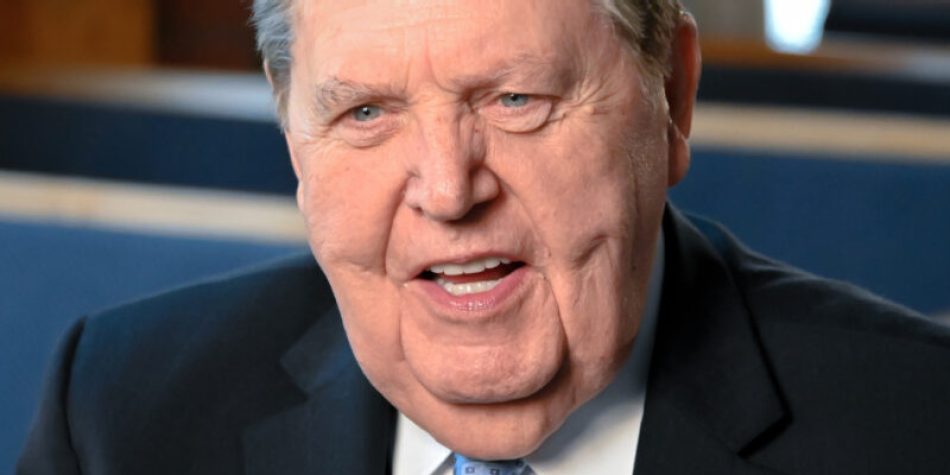
This fight over Franciscan Health provides a window into a recent dustup involving Southern Utah University’s (SUU) decision to have Elder Jeffrey R. Holland speak at an upcoming commencement.
Elder Holland is one of the twelve apostles of The Church of Jesus Christ of Latter-day Saints. As one of the foremost leaders of one of the world’s leading faiths, any university would be fortunate to have him as a commencement speaker. Elder Holland is also a former university president and grew up in southern Utah, near SUU. About 80% of SUU’s student population are also members of the Church of Jesus Christ. In the past, SUU has invited business and political leaders, professors, athletes, journalists, and other religious leaders.
Since the last time a Latter-day Saint religious leader spoke at an SUU commencement in 2009, Rabbi Shmuley Boteach and Reverend France Davis (Baptist) have both spoken.
An online petition that has (as of this writing) more than 16,000 signatures claims that Elder Holland is “openly opposed to LGBT+ individuals” and that he has “opposed the recent statements of the LDS Church in regard to accepting LGBT+ individuals.” This claim is similar to those who claim that Franciscan Health denies “basic health care” to transgender individuals.
In both cases, certain statements or policies are isolated, taken out of context, and presented as indubitable evidence of pervasive moral fault. The criticism ignores or downplays anything that might mitigate the image of the organization or person as something other than a moral monster. No complexity or nuance is permitted—the target is reduced to a one-dimensional caricature, with all actions and words channeled through a negative lens.
The evidence of Elder Holland’s love for all people, including LGBT+ people, is not hard to find. In 2007, Elder Holland wrote of LGBT+ individuals, “We do not reject you … We cannot reject you, for you are the sons and daughters of God. We will not reject you, because we love you.”
Fourteen years later, Elder Holland was preaching the same tune, “declaring unequivocally my love and that of my brethren for” LGBT+ individuals before adding, “Too often the world has been unkind, in many instances crushingly cruel, to these our brothers and sisters. Like many of you, we have spent hours with them, and wept and prayed and wept again in an effort to offer love and hope.”
And Elder Holland has followed through on his words in his personal relationships. Jeff Bennion, the founder of Northstar, a Latter-day Saint LGBT+ advocacy organization, many years ago was considering discussing his sexual identity as part of a project that would be televised to a national audience. His phone rang. Elder Holland was on the other end of the line. During the conversation, he told Jeff that if he “wanted to disclose something this personal to the world, he would welcome it and was supportive of that decision.”
A friend of Bennion’s tells the story of meeting Elder Holland and disclosing his sexual orientation to him. Holland responded by pulling him in close and saying, “We need you in the Church. Please stay with us! We love you!”
Elder Holland has a strong history of support and love for those who identify as LGBT+ because of his religious belief that every single one of those individuals is a child of God.
So if that is the reality of Elder Holland’s feelings and work with the LGBT+ community, why are critics claiming the opposite? The idea that Elder Holland is “opposed” to LGBT+ individuals stems largely from a speech he gave to BYU faculty and staff—or more precisely, a misinterpretation of certain things he said in the speech. The remarks include a great deal of love towards those in the LGBT+ community, some of which were quoted above.
He also said that commencement addresses are not an appropriate venue to come out of the closet (this is likely the source of the claim in the petition that Elder Holland “disregarded the achievements of LGBT+ individuals within his own community”). As evidenced by his support of someone discussing their sexual identity on national television, this likely has more to do with Holland’s feelings, as a former university president, about commencement and less about discussing sexual identity openly.
Additionally, Elder Holland repeated a metaphor previously used by LDS leaders Elder Neal A. Maxwell and President Dallin H. Oaks about the builders of the Nauvoo Illinois Temple in the 1840s, a time of significant persecution for the Church. Quoting Elder Maxwell, Elder Holland said that these builders “worked with a trowel in one hand and a musket in the other. Today scholars building the temple of learning must also pause on occasion to defend the kingdom. … The dual role of builder and defender is unique and ongoing.” In the context of the talk and in the context of Elder Holland’s life and ministry, it is clear that he was calling on the faculty at BYU to do more to defend the teachings of the Church from various kinds of intellectual attacks.
What he emphatically was NOT doing, and what it takes a good deal of motivated misinterpretation to believe he was doing, is calling for violence towards LGBT+ individuals. But this is exactly how his words were interpreted by online critics. On the day of the speech, one BYU colleague remarked that many of Elder Holland’s critics on Twitter heard the message of “gun violence against queers.” But again, one can only hear that if one ignores everything else about Elder Holland’s talk, life, and ministry.
Like Franciscan Health, Elder Holland has a lot of love and compassion for those who identify as LGBT+. It is false and unfair to say that he “openly oppose[s] LGBT+ individuals.” The key point of disagreement between Elder Holland and his critics is what it means to love LGBT+ individuals. If you come from the worldview of expressive individualism, love means accepting and affirming whatever gender or sexual identity a person identifies with. Desires and self-perceptions are central to the self. But from a Restoration Christian perspective, love means helping and encouraging others to live up to their true identity as children of God. As Elder Holland says in the talk that his critics denounce, “As near as I can tell, Christ never once withheld His love from anyone, but He also never once said to anyone, ‘Because I love you, you are exempt from keeping my commandments.’ We are tasked with trying to strike that same sensitive, demanding balance in our lives.”
The great love that Holland has for LGBT+ individuals comes from his knowledge that they are children of God, the same knowledge that inspires him to call on faculty to defend the Church’s position on the family. The two are intrinsically connected.
There is much that could be said here about free speech, and the importance of listening to contrasting points of view. But that does have its limits. Southern Utah University students deserve to have a commencement speaker who does not wish them harm. The problem is that SUU has chosen just such a speaker, and yet, some have interpreted the very fact that he does not share their worldview as harmful to them, and have gone in search of evidence, no matter how distorted from the reality, to prove that point.
Yes, SUU students should feel safe. But if there are students graduating who don’t feel safe just because their commencement speaker has a different worldview, then SUU has much bigger problems than who’s speaking at graduation.