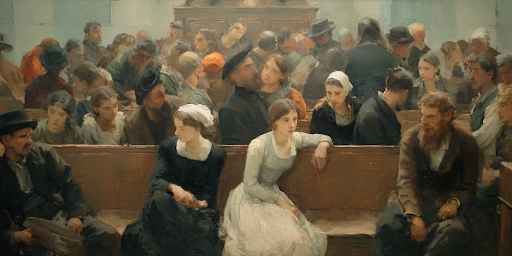
A cardinal casts a ballot alone by candlelight, illustrating the solemnity and spiritual gravity of the papal election and the depth of conclave meaning.

A Church in Waiting: A Conclave of Possibility

Who will lead the Catholic Church next? The conclave may reshape its global, theological, and moral influence.

Download Print-Friendly Version

On April 21, 2025, Pope Francis, 266th Supreme Pontiff of the Catholic Church, passed away. At that time, the Catholic Church entered a sede vacante period, which is Latin for “the chair is vacant.” On May 7, 2025, the College of Cardinals, 135 of which are eligible to vote but only 133 will participate, will convene in the Sistine Chapel to elect a successor to Pope Francis. Who will it be? What could this mean for the future of the Catholic Church and other Christians? This article will attempt to answer these questions.

How The Conclave Works

If you’ve seen the movie Conclave, you already have a somewhat accurate picture of how a papal election works. The College of Cardinals—comprised of Catholic leaders from around the world—gathers to elect the man they believe is best suited to lead the Church’s 1.4 billion members.

Technically, any baptized male is eligible, but the pope is almost always chosen from among the cardinals. To be elected, a candidate must receive a two-thirds majority—about 90 votes, depending on attendance. The voting will begin on May 7 and continue until a new pontiff is chosen. Once elected, the pope must accept the role and choose a regnal name—the name by which he will be known throughout his pontificate. Afterward, the ballots are burned. If a pope has been elected, white smoke will rise from the Sistine Chapel chimney, signaling to the world that a new leader has been chosen. He will then appear before the public in St. Peter’s Square.

Since the Second Vatican Council concluded … no one is sure exactly where the Church is headed.

While there have been many speculations about who is likely to be elected, since Pope Francis selected the vast majority of cardinals in this conclave, many have not had time to get to know one another or discuss which direction they think the church should take. The past several conclaves have lasted less than a week, but as this is a very different make-up of cardinals who scarcely know each other, it may take longer. As of 2025, the longest conclave was three years, lasting from November 1268 to September 1, 1271, when Pope Clement IV was elected.

Why the Conclave Matters

Whether you are a Catholic or not, the outcome of this conclave is of vital importance. Ever since the Second Vatican Council concluded in 1965, where the church issued proclamations on revelation, liturgy, religious liberty, ecumenism, and even the church itself, the state of the Catholic Church has been one where no one is sure exactly where the Church is headed. This is in large part because there is no universal consensus on how to interpret that council. Some see it as not a radical break with the past, but merely some updating and non-fundamental change. This is known as the hermeneutic of continuity, which Pope John Paul II and Pope Benedict XVI championed. Others see the Second Vatican Council as a rupture with the Catholic tradition and long for a return to the church as it was in the past. This position is most associated with Archbishop Marcel Lefebvre’s Society of Pius X and Catholics who refer to themselves as Traditionalists. Others see Vatican II as progress and want to see more reform and a greater break with the past. Pope Francis and his supporters generally fall into this camp. Which camp will prevail is unknown, and thus the future of the Catholic Church is unknown. The next pope will play a significant role in determining where the Catholic Church is headed, for better or worse.

But if you are not a Catholic, this upcoming conclave is still of value to you, especially if you are a Christian. This is because the Second Vatican Council emphasized ecumenism, and the three different camps hold different opinions on the topic. For example, Traditionalist Catholics often reject it, believing that unity can only be achieved through conversion to Catholicism. Others, like Pope John Paul II and Pope Francis, champion interfaith outreach.

Who it will be, and what his leadership will mean, remains to be seen.

Notably, in 2019, Pope Francis met with President Russell M. Nelson of The Church of Jesus Christ of Latter-day Saints—a first in papal history—when President Nelson visited Rome to dedicate an LDS temple. If ecumenical dialogue is important to you, this conclave may be one of the most consequential elections in recent Catholic history.

The pope’s influence also extends beyond religion. As the sovereign of Vatican City and a representative at the United Nations, the pope has diplomatic and moral influence across political and humanitarian spheres as a member state.

By next week, the Catholic Church will likely have a new pope—and potentially a new trajectory. Who it will be, and what his leadership will mean, remains to be seen. But one thing is certain: the days ahead will not be dull.

As a convert to Catholicism and a committed Traditionalist, I don’t claim to be an impartial observer. But no matter the outcome, I intend to follow the counsel of Pope Boniface VIII in his papal bull Unam Sanctam: to submit to the authority of the newly elected pontiff.


About the author

Tarik D. LaCour

Tarik D. LaCour is a Ph.D student in philosophy and a Master’s student in evolutionary biology at the University of Texas at Austin. When he not brooding on human nature, the nature of time, and evolutionary theory he also enjoys spending time with his wife and two daughters, as well as obsessing over the Texas Longhorns, Dallas Cowboys, Los Angeles Lakers, and New York Yankees. He blogs personally at Boltzmann Brains on Substack.
On Key

You Might Also Like

Baseball Does Religious Freedom

Two stories out over the past several days seem deserving of attention. In one, Walmart settled a religious freedom complaint that seemed likely to end up before the Supreme Court. While in the other, the Major League Baseball team, the Tampa Bay Rays, had a temporary team uniform celebrating sexuality as an identity that several players had religious objections to wearing. The similarities between the two cases are clear. In both, employees sought religious accommodations at work. And in our opinion, these represent a positive step forward for religious freedom. The Walmart case is more complicated. One employee was offered an assistant manager position, but because he was a Seventh-day Adventist, he chose not to work from sundown Friday to sundown Saturday. This meant that Walmart would need to rearrange schedules by asking other managers to cover unpopular shifts, leave the store understaffed, or hire an additional manager. All of these potential accommodations would impose some cost on Walmart. The current law on this issue is that employers do not need to accommodate religious employees if there is more than a trivial cost attached. This is a much lower standard of accommodation than is required in other cases, and so some have suggested that the Supreme Court might intervene to make the standard for religious accommodations the same as other kinds of accommodations. While Walmart’s settling prevents that Supreme Court case, for now, it does suggest perhaps a changing tide that employers may be recognizing the prudence of a fairness for all approach. The Tampa Bay Rays situation is in much murkier legal waters. Private employers can compel speech in most cases, even if it’s not directly related to the job, but does asking for a specific religious exemption constitute more than a trivial cost? The Rays sidestepped this question entirely by putting their diversity policies where their mouth is. While some fans opposed anything other than total conformity from the players, the coach said that conversations in the clubhouse were what the Associated Press described as “constructive and emphasized the value of differing perspectives.” It is certainly always difficult to be part of the small group that opts out of the popular statement, but I think it is a sign of progress that in both the cases of Walmart (eventually through litigation) and the Rays, employers recognized the need to appreciate the religious diversity in their workplace.

Subscribe To Our Weekly Newsletter

Stay up to date on the intersection of faith in the public square.

You have Successfully Subscribed!