
My father, now eighty-five years old, tells a story of being five years old and visiting his grandparents in Heber, Utah. One sunny summer afternoon, Dad wandered into his grandmother’s garden and began harvesting and eating onions, which he claims were almost as sweet as apples.
When Grandma DeGraff came out and caught him, she let him know that his behavior was bad, even sinful. By the end of the lecture, Dad believed he was bad.
He can’t remember how long he sat in the dirt, stunned, simmering in shame, and stinking of onions when his grandpa finally came out. Grandpa DeGraff said, “Steve, what you did was wrong. But I love you. There’s no one I’d rather give these onions to than you. All you have to do is ask.” Dad said, “Grandpa’s forgiveness brought me back into my humanity.”
We know how good, joyful, and freeing receiving forgiveness feels. It connects us to the person who forgives us and can even help us feel more connected to God.
But forgiving is not always easy. C.S. Lewis once wrote, “Everyone says forgiveness is a lovely idea, until they have something to forgive.” More recently, Sister Kristen Yee, Second Consuelor in the Relief Society General Presidency, taught this same truth: “Forgiving can be one of the most difficult things we ever do and one of the most divine things we ever experience.”
It is normal to struggle with forgiving. It is normal to want retribution, or revenge, when others sin—especially when their sins hurt us.
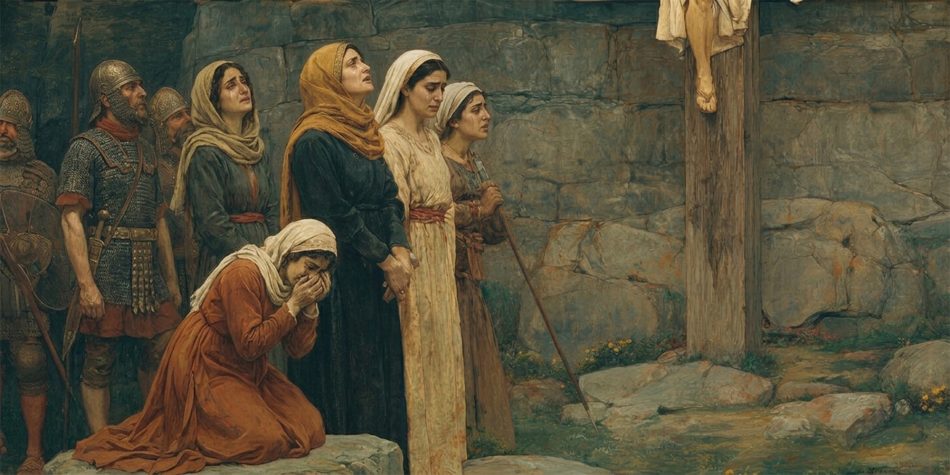
Yet when Christ was on the cross, He opened the door for our forgiveness and repentance. In a simple moment that was pivotal in eternity, Christ forgave His crucifiers: “Father, forgive them for they know not what they do.”
This Easter, as we contemplate our Savior’s Atonement, we can learn learn at least seven lessons on the nature of forgiveness from Christ’s time on the cross.
Lesson One: We Worship a Loving and Forgiving God
The first word Christ utters in the process of forgiving His crucifiers is “Father.” Christ previously showed us in the parable of the Prodigal Son how our Father responds to an imperfect child: “But when he was yet a great way off, his father saw him, and had compassion, and ran, and fell on his neck, and kissed him.”
There are no lectures in this offering of forgiveness; there is no delay. Christ tells us clearly in this parable that God forgives us lovingly and completely. When Christ reaches for that divine forgiveness at the moment of His own death, He knows the gift will be granted. Symbolized in Christ’s cross itself is a forever open-armed God—one who is willing to forgive us and is waiting to embrace us.
Lesson Two: Even When We Forgive, We Might Still Experience Pain
Even when we forgive, we might still experience pain, grief, or loss as a result of what has happened. When Christ forgave those actively hurting Him, the pain He felt did not immediately stop. So why should we forgive, knowing we might still experience the effect of the offense?
We know how good, joyful, and freeing receiving forgiveness feels.
Because Christ has promised to set us free. He will “preach deliverance to the captives” and “set at liberty them that are bruised.” When we cannot forgive, we become those captives. Christ gave us a way to stop living in our brokenness and bitterness. Our choice to walk out of those gates Christ unlocked for us can be based on our trust in the promise: “All that is unfair about life can be made right through the Atonement of Jesus Christ.”
Our pain might not be magically erased by forgiving, but forgiving can help us pivot. Elder Gerrit W. Gong has taught that, “Often condemnation focuses on the past. Forgiveness looks liberatingly to the future.”
Lesson Three: Forgiveness puts Responsibility in the Right Places
During His ministry, Christ had forgiven sins Himself. But while on the cross, He asks God to do it: “Father, forgive them.” Christ gave their sins to God to manage.
We might be handed something painful, but it’s not our responsibility to hold onto that thing forever, to carry it, and wonder why our offender handed it to us in the first place. Elder David E. Sorenson said: “Forgiveness means that problems of the past no longer dictate our destinies, and we can focus on the future with God’s love in our hearts.”
There’s a certain amount of relief in the fact that forgiveness is not conditional on our offender in any way. Forgiveness is a way of taking ourselves out of the equation with an offender: We get to work directly with Christ, and allow Christ to work with our offender.
Lesson Four: We Must Forgive Human Weakness
When Christ petitioned our Father for forgiveness of the people who were crucifying Him, He didn’t talk about their murderousness, He addressed their ignorance: “They know not what they do.”
This willingness to forgive humanness is crucial to our happiness.
Christ continually forgave humanness. He forgave forgetfulness and hesitancy, he forgave people for being hungry and tired, He forgave them of being faithless and fearful at inopportune times. We will have daily opportunities to forgive human weakness—including our own. The poet Maya Angelou once said: “Forgive yourself for not knowing what you didn’t know before you learned it.” This willingness to forgive humanness is crucial to our happiness.
Our oldest son, Owen, was four years old when he let us know his feelings about not getting to have a family movie party one night. He left us a note on green construction paper: “I love you. But I’m still mad.” Forgiveness is what allows us to keep love in our hearts, even as we navigate the friction of daily life.
Lesson Five: Through Forgiveness Our Pain Can Be Transformed
In this life we will suffer. We are told this in the scriptures, and we have experienced plenty of it. German philosopher Dietrich von Hildebrand reminded us that we sometimes mistake “Christ’s transfiguration of all suffering for an elimination of all suffering.” Suffering is part of life, and yet through Christ we know that suffering is not meant to be our final destination.
Christ’s suffering was not the end, but Christ had to experience death in order to be resurrected to a new life. Likewise, we have the promise that God can transform all of it—our pain, destruction, and mourning—not that the hard things will be erased from our lives but transformed.
Isaiah tells us that beauty can rise from the ashes of our lives, that joy can come from our grief, and praise can come from heaviness. We don’t often quote the next verse in this Isaiah passage, but it conveys the fact that the most difficult things, the “desolations of generations,” the big things, even as big as “waste cities” shall be raised up through Jesus Christ.
Lesson Six: Forgiveness Should Become Part of Our Nature
Forgiveness is the only part of the Lord’s Prayer that Christ emphasizes through repetition. When He talks about our daily need of bread, forgiveness is mentioned as well.
The immediacy of Christ’s forgiving those in the moment they were sinning against Him on the cross indicates that forgiveness was part of His very nature. I had a BYU Religion student write about how a forgiving nature could create a culture of love in her home. “I want to create a space where forgiveness is not withheld, not earned, not delayed—but simply given. I want my children and spouse to feel that mistakes are part of life, not the end of love.”
Forgiveness is not a checklist we march through, but a mindset and a heart-set that can become part of who we are. We might even become so forgiving that we don’t look for offenses. Not picking something up in the first place means we won’t have to figure out how to set it down later.
Lesson Seven: We Are Not Alone as We Forgive
In the throes of His agony, Christ was not alone. He had heavenly help in Gethsemane and on Calvary when Christ asked His Father to forgive the people hurting Him. We are not alone in forgiving, either.
Sister Yee has taught that Christ “does not ask us to [forgive] without His help, His love, His understanding. Through our covenants with the Lord, we can each receive the strengthening power, guidance, and the help we need to both forgive and to be forgiven.”
Forgiveness does not always include relational reconciliation.
Corrie Ten Boom, a Holocaust survivor, met a former guard in the basement of a church in Munich, two years after the war had ended. He did not recognize her, but she had vivid memories of her sister dying as a result of this man’s cruelty. He approached her asking for her forgiveness. She said that it was the most difficult thing she’d ever had to do.
“I stood there with coldness clutching my heart. But forgiveness is not an emotion—I knew that too. ‘Jesus, help me!’ I prayed silently. ‘I can lift my hand, I can do that much. You supply the feeling.’
“Woodenly, mechanically, I thrust my hand into the one stretched out to me. And as I did, an incredible thing took place. The current started in my shoulder, raced down my arm, into our joined hands. And then this healing warmth seemed to flood my whole being, bringing tears to my eyes, ‘I forgive you, brother!’ I cried. ‘With all my heart!’
“For a long moment we grasped each other’s hands, the former guard and the former prisoner.
I had never known God’s love so intensely as I did then.”
What Forgiveness Is Not
When offering forgiveness feels insurmountable, we may be assuming that we have to do more than Christ has actually asked us to do. Elder Neil L. Andersen wrote a useful list about what forgiveness is not.
- Forgiveness is not failing to protect ourselves, our families, and others.
- Forgiveness is not continuing in a relationship with someone who is not trustworthy. Christ’s response to those threatening to harm Him at Nazareth is instructive: He did not lecture, try to persuade, or call down lightning bolts. Christ simply “went his way” (30)—and never goes back. Forgiveness does not always include relational reconciliation.
- Forgiveness is not condoning injustice. The late Elder Jeffrey R. Holland taught that Christ never called evil things good, and neither should we.
- Forgiveness is not dismissing the hurt or disgust we feel because of the actions of others. We should be patient with ourselves while we heal and progress toward forgiving.
- Forgiveness is not forgetting but remembering in peace.
A Path to Joy
Elder Holland has explained that none of us have “traveled beyond the reach of divine love. It is not possible for you to sink lower than the infinite light of Christ’s Atonement shines.” The divine forgiveness that God offers to us is complete and it is joy-filled.
God has His forgiving arms forever open to us, waiting to embrace us without delay. When we choose to forgive, like Christ did on the cross, God’s love can flow through us, and we open ourselves to connection with others and with God.