Persuasion
Encouraging Disciple-Scholars in the Social Sciences
Many believers have distanced from sacred conviction in order to be “neutral” researchers – without recognizing the alternative worldview they are embracing. There is a better way.

Many believers have distanced from sacred conviction in order to be “neutral” researchers – without recognizing the alternative worldview they are embracing. There is a better way.
Yesterday Paul Mero, a man I long admired, wrote an op-ed in the Salt Lake Tribune titled, “LDS Church should surrender its tax-exempt status.” Since I’ve been on the record previously calling the argument that Churches should be taxed “a terrible argument.” I thought I should probably try and keep the conversation going with Mero. In his article Mero makes a few points: The Church can continue its mission with less financial means Members of the Church will continue to donate because of their faithfulness even if it is not tax deductible Tax exemptions don’t protect the religious from government interference The Church’s tax exemption gives church critics a platform to criticize the Church on. Mero clearly means well. He believes that the negative effects would be minor. But I believe where his argument falls flat is in the benefit it would provide the Church. The only benefit Mero can suggest is that, currently, some critics argue that the Church should pay taxes. Sure the Church would certainly be able to survive while taxed, but those funds would be taken away from accomplishing the Church’s mission. And the only accomplishment would be to take one issue away from critics. But this criticism is not virtuous. It is almost always a thinly veiled attempt at religious discrimination, arguing that religious nonprofits should be treated uniquely worse than all other nonprofits. (Religious nonprofits currently have some benefits others do not. But arguments to tax churches don’t seek to remove those minor additional benefits, but to take from them a major benefit that all other nonprofits have.) And this is very unlikely to reduce total criticism of the Church. No one who criticizes the Church for its tax status is likely to join if they start paying taxes. And there will always be some new issue to criticize whether real or invented that will immediately fill the gap. Criticism won’t go down, it will just move on to a different issue.
The Church released this morning a video open house of the Washington D.C. Temple. The open house has attracted many prominent politicians, journalists, and celebrities. This unique video, narrated by Gary E. Stevenson and Dale G. Renlund, may prove to be a perfect opportunity to share the wonder of a temple open house with anyone no matter where they live.
Our daily rundown of the articles from around the web that we feel our readers would enjoy and appreciate. We hope to highlight the best of what’s around. Public Square Bulletin recommends: Will the Utah Senate Race Break the Partisan Doom Loop? Beau Tremitiere — The Bulwark Latter-day Saint politician Evan McMullin is an independent running for Senate in Utah against Mike Lee. In a very unusual move, however, McMullin has been endorsed by Utah’s Democratic party. Could this cross-partisan alliance signal a new way forward? Conflict in a Society without a Religious Consensus Rick Plasterer — Juicy Ecumenism This article certainly is not the first to suggest that a lack of moral consensus plays a major role in our current political tensions, but Plasterer does an enviable job of tracing the history of this fracturing consensus. Now in the spotlight, Dubai Jews struggle for public synagogue Isabel Debre — Associated Press With a newly announced temple in Dubai, Latter-day Saints may find this article about the Jewish search to find worship space in the city of interest as well. Bravo! The New York Times reports that evangelicals are divided, not united on politics Terry Mattingly — Get Religion The godfather of religious journalism criticism examines the silver linings in a recent article in the New York Times about the state of politics among evangelicals. How We Fought Each Other at Michigan Law Andrew Koppelman, Ilya Shapiro — Heterodox Academy Two law professors at the University of Michigan coming from very different perspectives on constitutional law questions describe how meaningful they find their debates, and how to disagree with one another better.
Despite the reality of overwhelmingly peaceful Latter-day Saints, an odd cultural relic continues to portray members of the Church of Jesus Christ as violent. This is the main thesis in the recent series Under the Banner of Heaven. Riding the wave, a new film Sinner v. Saint has just been announced, which has a Latter-day Saint main character and plenty of violence. In perhaps a welcome relief, this story doesn’t portray the Latter-day Saints as the perpetrators of violence, but rather as the victims. The story recounts the true story of a missionary who was kidnapped, tied up, and repeatedly raped before escaping. You might expect this story to be a somber account of the vestiges of anti-religious fervor, or the marginalization of Latter-day Saints in our popular imagination painting us as little more than pawns to be used. But who are we kidding? The director, Tim Kirby has almost exclusively worked in comedies such as Fleabag, Veep, and Brockmire. Kirby describes the story as featuring “zany twists” and “quirky characters.” And ultimately he says the story is all about “obsessive first love.”
Among the interesting details in LDS Daily’s stellar reporting today is about a Latter-day Saint meetinghouse that is being used to house and support refugees leaving the country. The baptismal font has been adapted to be used as a shower, and local church members come to the building every day to help clean. https://news-uk.churchofjesuschrist.org/article/places-of-refuge-from-the-storm Latter-day Saint Meetinghouse in Ukraine Used as Refugee Station This is an important article highlighting the ways we can in our own small spheres make a big difference in helping the lives of others. A full list of efforts the Church is making in helping with the current refugee situation can be found at the Church’s newsroom.
Our daily rundown of the articles from around the web that we feel our readers would enjoy and appreciate. We hope to highlight the best of what’s around. Public Square Bulletin recommends: Therapy Beyond Good and Evil James Mumford — The New Atlantis As modern therapy has come to rely almost exclusively on Rogerian humanism, it has lost the ability to help its patients recognize an objective reality that exists outside themselves. Explainer: Religious liberty in Ukraine in the 20th and 21st centuries Jordan Wootten — Ethics & Religious Liberty Commission A brief history of Ukraine, its approach to religious freedom, and the impact it is having amid the current conflict. A better abortion debate is possible. Here’s where we can start. Leah Libresco — America Leah Libresco offers a stunning account of bringing friends together to discuss abortion in her home and a path towards a more productive conversation. A must-read for those hoping to have difficult conversations better. Groundbreaking dates set for new Ephraim Utah Temple and Lubumbashi Democratic Republic of the Congo Temple Scott Taylor — Church News Groundbreaking for the Ephraim Utah Temple will occur on August 27, 2022, and be presided over by Elder Walter Gonzales. Groundbreaking for the Lubumbashi, Democratic Republic of Congo temple will occur on August 20, 2022, and be presided over by Matthew Carpenter. The Certainty Trap Ilana Redstone — Tablet The solution to our broken political conversation won’t be found in censoring ‘misinformation’ but in recognizing the profound limits of our own beliefs. Washington Post Finds Thriving Anti-Abortion Church and Moribund Mainline Jeffrey Walton — Juicy Ecumenism Recent reporting in The Washington Post about religious responses to the leaked Dobbs opinion paints a vivid picture that can only be found between the lines. Jeffrey Walton highlights the way pro-life churches are vibrant places for educating mothers and finding adoptions.
A spate of vandalism is targetting Catholic churches in the wake of the leaked opinion reversing Roe v. Wade. https://kdvr.com/news/local/boulder-church-vandalized-for-2nd-time/ This occurs at a time when hate crimes on the basis of religion are on the rise across the country. And most of this violence seems to be based on a mistaken idea about what the actual impact of a Supreme Court Ruling in the Dobbs case would actually mean.
Summary – The episode opens with Detective Pyre leading a group of officers up the mountain to rescue Taba, who is completely fine and sitting on the ground outside one of the cabins. (The episode doesn’t explain how he got there after having a gun pointed at his face at the end of episode 2.) Pyre calls for more backup and finds a little girl wandering in the woods, lost and scared. The officers apprehend her and she tells Pyre about how things function up at the “fort” and about “Uncle Allen and Auntie Brenda” when her mother Sara arrives. Pyre questions Sara about Brenda’s experiences in the temple. The episode then depicts the beginning of an endowment session in a pretty good imitation of the garden room in the Salt Lake Temple. Brenda shares with her sisters-in-law her worries about making a covenant to “surrender” to her husband. One of the signs is shown as well as the penalty motion. Sara claims the end of the world is nigh, that her husband Sam’s job is to separate the wheat from the tares, and that Brenda was subject to the doctrine of blood atonement. A large squadron of police officers prepares to storm the Lafferty “fort,” when Pyre realizes that the situation resembles the Haun’s Mill Massacre and decides to instead approach unarmed. A wild-looking Sam and his family are taken into custody while one man escapes into the woods. Meanwhile, Pyre’s mother with dementia is recovered after she wandered out during the twin’s birthday party. We see a flashback to Father Lafferty confronting Dan about refusing to pay taxes and beating him with his belt. The next day, Dan receives a “revelation” that he is the rightful leader of the family. In the present, Pyre and his wife take the girls to their baptismal interview with their bishop, and Pyre stays behind to discuss his mother’s health with the bishop. He also brings up how his current case ties into difficult church history topics, which the bishop encourages him to “put on a shelf.” At home later, Pyre and his wife fight about whether to postpone the girls’ baptism until after the case is closed. At the police station, Sam Lafferty is ranting and raving. Pyre corners Allen about his criminal record due to unpaid parking tickets. He shares how his brothers pressured him into it, and as a result, he was arrested and missed Brenda’s graduation from BYU. Brenda’s anger about this led her to confront Dan about his beliefs (which involve a lot of strange reasoning about the constitution and separation of powers), and during the confrontation, Dan reveals his plan to run for sheriff and eventually pull down most government institutions from the inside. Allen ties this story to Brigham Young encouraging Joseph Smith to fight persecution, but Allen says he made a deal with Brenda that he would leave their influence if she gave up her career to start a family. Pyre and Tab interrogate Sam Lafferty, who claims to be the Lord’s destroying angel, murdering those who are on his “holy list.” Robin Lafferty, still in custody, overhears Sam’s rants and demands to know if Brenda and her daughter are okay. Pyre shows him pictures of their deaths and Robin breaks, revealing that the Lafferty’s are likely also planning an attack on their bishop and stake president, who tried to stop their apostasy. Flashback to Brenda finding out she is pregnant and deciding to try to help the Lafferty family back onto the path of the mainstream church. Church History – This episode has a violent depiction of the Haun’s Mill Massacre, which most members will readily recognize. Less well known is the obscure early church concept of blood atonement, which the Lafferty’s appear to believe is still in force and to be enacted by them. Allen also pins violence in the early church on Brigham Young’s influence on Joseph Smith, with Emma Smith being against it. This neatly parallels the Lafferty situation, but it’s a significant simplification of the complex web of influences and responses to constant violence against the early Saints. We also get a mention of Joseph Smith running for president, which from my understanding he mostly did to draw attention to the plight of the church rather than expecting to win and reform the government. The show also alludes to the alleged assassination attempt on Governor Boggs by Porter Rockwell. Shibboleths – Sara Lafferty asks Pyre if he “follows his covenants.” This phrasing is off: LDS members would say “keep your covenants” or “honor your covenants.” (A search for the phrase “follow the covenants” on the church website yields only one result.) In the temple, Robin’s wife remarks on the importance of “keeping our agency strong,” another formulation that makes no sense. To Latter-day Saints, agency means the God-given ability to choose. This isn’t something we can strengthen, but an inherent condition of mortality. During their fight, Sister Pyre worries that delaying the baptism will shame her in front of their “congregation.” Members would never use this word, especially in private. We exclusively refer to our congregation as a “ward.” Her concern about people wondering if her daughters “failed” their interview seems off as well. Finally, let’s talk about LDS family size. Several times in this episode we get references to “at least 10” or “dozens” of kids as though this is the typical size of an LDS family. But in actuality, in 1980, only 12% of Utahns had a family of 6 people or more, and only a fraction of that 12% would have 10+ children. The wards I have lived in have maybe one family that has more than 5 kids. It’s just not that typical. I Don’t Love to See the Temple – Alright, here we are at the biggest controversy of the series: the decision to portray sacred temple ordinances. The temple scene takes place from timestamp 14:00 to 17:00. Only three minutes long, yet
Our daily rundown of the articles from around the web that we feel our readers would enjoy and appreciate. We hope to highlight the best of what’s around. Public Square Bulletin recommends: Why I welcome the prospect of Roe v. Wade being overturned Rabbi Avi Shafran – NBC News While some American Jews have worried about how potentially overturning Roe v. Wade might impact their own religious freedom, one Rabbi writes for NBC news about how overturning Roe comports well with his own faith. Should Courts Assess the Sincerity of Religious Beliefs Linda Greenhouse – The Atlantic Last week we wrote in the Bulletin about how courts should avoid assessing the sincerity of religious beliefs, even when it may prove uncomfortable. But Linda Greenhouse for the Atlantic sees religious freedom claims being abused and presents the opposite case. 107 Florida congregations leaving UMC to join new conservative church network amid LGBT debate Michael Gryboski – Christian Post The official split of the United Methodist Church was delayed so often during COVID that many congregations in Florida have recently voted to join the Global Methodist Church instead. The schism is largely based on the United Methodist Church’s increasingly liberalized stance on LGBT+ issues. Christianity Is Under Trial With the “Praying Coach” Case Auguste Meyrat – Crisis Magazine With many ideologies taught at public schools with the imprimatur of the school, one coach’s decision to pray after football games has gone to the Supreme Court. Auguste Meyrat argues that because of the many ideologies available at schools, the question is whether religious individuals are afforded the same expression rights as others. Our Moral Pandemic: Christian Nationalism and Political Idolatry Drew J. Strait – Sojourners Drew J. Strait has a simple Q&A style article on Christian Nationalism, what it is, how it contradicts Christianity, and what we can do about it.
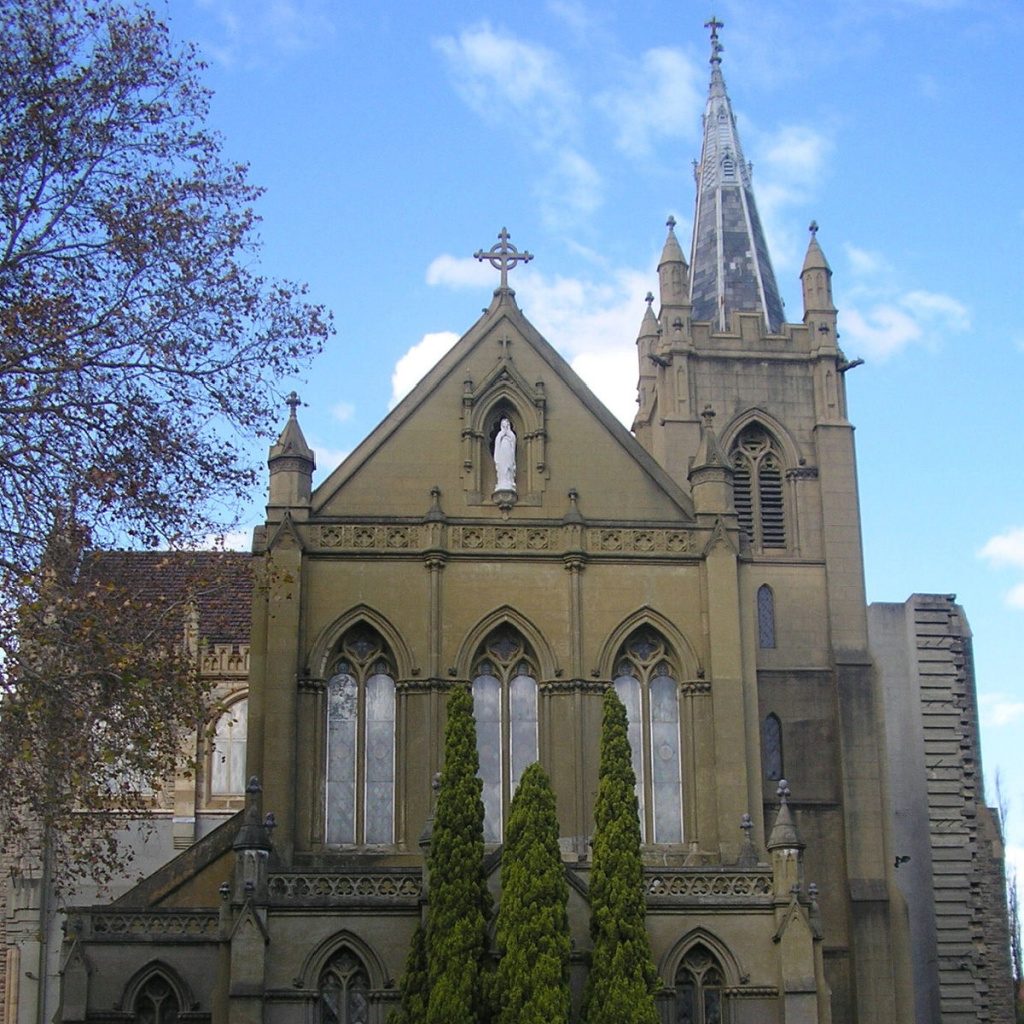
Most American faiths are facing a shortage of pastors due to burnout and the avoidance of ministry among young people. Are there lessons from the Latter-day Saint experience that can help our fellow Christian brothers and sisters?