prophet-isaiah-foretells-christs-birth-39469-wallpaper (1)

Seeing Old and New Things in Isaiah

In our eagerness to explore imagery pointing to Christ in ancient text, let’s not overlook the value of other readings, including earlier meanings for ancient peoples and sacred meanings held by Jewish brothers and sisters still today
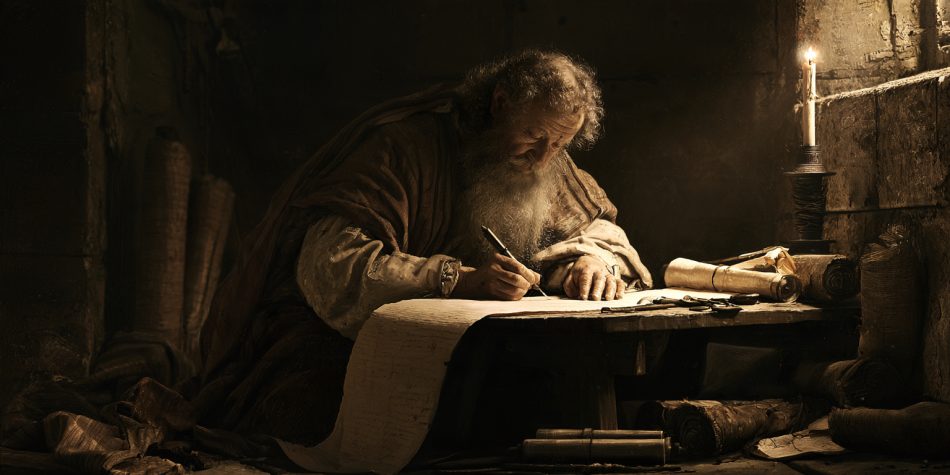
The Prophet Isaiah Foretells Christ’s Birth, by Harry Anderson

It is hard in the 21st Century—with more than 1 billion Christians and two millennia of Christian apologetics and tradition behind us—to truly appreciate the conundrum that Jesus posed to his Jewish adherents in the first century.  Here was a practicing Jew who understood and could explain the Torah and the teaching of the prophets with striking clarity and profound insight, and yet the authority by which he taught seemed by some to put him at odds with the same sacred text from which he taught. Here was a person whose insights were unquestioningly deeply rooted in Torah and prophetic literature but who also, simultaneously, stretched the Jewish tradition in ways that many found uncomfortable and others found downright problematic.  Here was a Jew who appeared strikingly uninvolved in local politics and yet who taught things and acted in ways that challenged, at the most fundamental levels, the social equilibrium of his day.  Most challengingly, while Jesus reinforced monotheism, a defining characteristic of the Jewish people—especially when contrasted with the polytheism of the Babylonia, Persian, Greek, and Roman powers which had subjected the people of Judah for more than 500 years—he also affirmed, or at least did not deny, divine sonship; a position which some saw as a continuation of God’s covenant with Israel, and which for others was a blasphemous dismissal of the first commandment. Though it may be hard for Christians of the 21st Century to see it sometimes, Jesus was a polemic figure who drew out intense reactions—positive and negative—from those with whom he interacted.

Thus, it is not surprising that Jesus’s detractors and followers both scrambled to find sacred text to support their respective position regarding Jesus—each group looking for a way to “explain away” or “explain” Jesus.  There are numerous examples in the New Testament of Jesus’s detractors challenging his teachings and actions based on (what we now call) Hebrew Bible texts.  They brought core Jewish teachings to Jesus (e.g. on the Sabbath Day) and, in essence, asked Him, “how can you do/teach [this thing] when our sacred text seems to say something contrary?” (According to the Gospels, Jesus handled these challenges easily.)  That this happened should not be at all surprising. Throughout religious history, and even today in modern Christianity, when there is a sense that someone is teaching/doing something that we feel is contrary to established practice or doctrine, individuals dig back into their sacred tradition to ground their disapproval in authoritative texts.

It is hard in the 21st Century to truly appreciate the conundrum that Jesus posed to his Jewish adherents in the first century.

Conversely, Jesus’s followers did the same thing—mining sacred text to marshal support for the cause of Jesus.  A prime example of this, as I note elsewhere, is the presence of the fulfillment citations in the Gospel of Matthew. (See Matthew 1:22-23; 2:15, 17-18, 23; 4:14-16; 8:17; 12:17-21; 13:35; 21:4-5; and 27:9-10.) That Gospel writer often used the phrase “that it might be fulfilled”  to expressly link the prophetic language of Isaiah, Jeremiah, Hosea, and others with Jesus’s actions and teachings.  Matthew’s Gospel saw in Israel’s sacred texts a “theological trajectory” that could encompass Jesus and His mission.  In fact, to one degree or another, all of the New Testament texts seek to ground the authoritative nature of Jesus’s coming, mission, death, and/or resurrection somewhere in the Hebrew Bible. Though the New Testament’s way of reading the Hebrew Bible may feel like a self-evident approach for modern Christians 2,000 years later, in its day, this was a dramatic act of re-seeing ancient text with new eyes and within the new light of Jesus’s advent.  The earliest Christians, many of whom were Jewish Christians, re-heard the ancient prophetic language of their own faith tradition in distinct new ways and, in so doing, found texts that could support the doctrine Jesus taught and which seemed to be open to Jesus’s divine, messianic mission.  It was an innovative interpretative exercise.

So why does this matter?  In The Church of Jesus Christ of Latter-day Saints’ Come, Follow Me curriculum, for most of September, church members will be studying the writings of Isaiah—the most quoted Hebrew Bible prophet in our faith’s standard works. (See here for a table of Isaiah quotations found in the Book of Mormon and here for one list, among many, of Isaiah quotations in the New Testament.)  And, in a way that is not markedly different from many other Christian denominations’ readings of this profound piece of literature, Latter-day Saints are encouraged to see references to and prophecies of Jesus in the writings of Isaiah. To be clear, “finding Jesus” in the book of Isaiah (or other Hebrew Bible texts) is a perfectly legitimate interpretive move.  However, nearly 2,000 years removed from the early Christian’s first attempts to “find” Jesus in the Torah and prophetic literature, it is sometimes too easy for Saints, and for all Christians generally, to forget how novel this understanding of the Hebrew Bible was in the first century: this was a bold and daring reinterpretation of the core texts that had grounded the Jewish faith for hundreds and hundreds of years!  But in our time, we’ve become so normalized to seeing the Hebrew Bible through a Christian lens that it is easy (perhaps too easy) to slip into the belief that this modern Christian view is the only legitimate reading … to the exclusion of all other understandings.  And that is problematic.

The Come, Follow Me materials note plainly that, “for the most part, people today aren’t the primary audience of the Old Testament prophets. Those prophets had immediate concerns they were addressing in their time and place—just as our latter-day prophets address our immediate concerns today.” The guide also notes that “prophets can also look beyond immediate concerns. … they teach eternal truths, relevant to any age.”  In other words, there are multiple ways to understand the same text. As a case in point, the Come, Follow Me materials point to Isaiah 40:3: “The voice of him that crieth in the wilderness, Prepare ye the way of the Lord.”  The materials note that this verse can be read at least three ways, all of which are proper: (1) as a message to captive Jews in Babylon that God would free them (probably how it was originally understood); (2) As a reference to John the Baptist for writers of the Gospels of Matthew, Mark, and Luke (a re-seeing of this verse in the new light of Jesus’s advent); and (3) as a prophecy still being fulfilled today in preparation for Christ’s second coming (when considered within the context of the continuing restoration).  

This same reality is true for scriptures like Isaiah 7:14-16, Isaiah 9:6-7; Isaiah 11:1-12, and Isaiah 53:2-12.  Yes, we Christians can see in these specific scriptures references to Jesus who is portrayed as Immanuel, “God with Us” (Isaiah 7); the “prince of peace” (Isaiah 9); the one with “wisdom and understanding” (Isaiah 11); and he who was “wounded for our transgression” (Isaiah 53). That is a legitimate interpretive approach.  It is the approach the first Christians took.  But it is not the only interpretive approach. Consistent with the Come, Follow Me discussion of prophetic texts, it is also true that once again, “[Isaiah] had immediate concerns that [he] was addressing in [his] time and place.” These texts, in their own time, certainly had profound meaning for those who heard them.  (And they continue to have profound meaning for the Jewish community, which also draws strength from these same texts!)  For instance, consistent with the theological approach of Isaiah, in their own day, these texts likely pointed to the hope that God will establish a theopolitical leader (Isaiah 7 & 9) through the Davidic line that would be more attentive to the Torah requirements, specifically those related to communal care, resulting in a kingdom of peace and prosperity for a reunited Israel (Isaiah 11), and that Israel’s struggle to establish this kingdom would be redemptive for all people of the world (Isaiah 53).  Both readings provide valuable and different insights, and both readings represent visions that are legitimately beautiful.    

In fact, I believe honoring these different readings of these Isaiah texts specifically—but also, that honoring Jewish understandings of the Hebrew Bible more generally—increases our appreciation for these sacred texts.  Speaking of Isaiah, scholar Walter Brueggemann notes

 The book of Isaiah has been a fertile interpretive field for Christian theology … but it must always be recognized that much Christian reading has flatly preempted the text and forced upon the text readings that are far removed from its seemingly clear intent. … It is strongly preferable, I suggest, that Jews and Christians together recognize that the book of Isaiah is enormously and generatively open in more than one tradition.

Honoring these different readings of these Isaiah texts specifically—but also, that honoring Jewish understandings of the Hebrew Bible more generally—increases our appreciation for these sacred texts.

In short, and said slightly differently, when we fail to appreciate both readings, side-by-side, we do ourselves, the book of Isaiah, and the prophetic tradition a disservice.  When we only see the texts like those in Isaiah from an exclusively-Christian perspective, it robs us of an additional layer of insight and deprives us of being able to see how these same texts provided comfort to ancient Israel and still provide a fountain of hope for modern Jews.  Further, failing to honor multiple readings may unintentionally close us off from seeing new ways in which these texts might be understood in the future, perhaps even keeping us from anticipating the “great and important things pertaining to the Kingdom of God” which have not yet been revealed.  Finally, in its most pernicious form, failing to honor Jewish readings (I’ve actually heard it sometimes expressed in church services I’ve attended as crudely as, “the Jews don’t even understand their own scriptures!”) can feel somewhat antisemitic.

Rather, I suggest we take the advice of Brigham Young and seek out as much truth as can be learned.  As members of The Church of Jesus Christ of Latter-day Saints move into their study of Isaiah and the other prophets, it is critical to follow the guidance of the Come, Follow Me manual and “learn about the context in which [the book of Isaiah was] written,” and to consider the “immediate concerns [Isaiah was] addressing in [his] time and place.”  In so doing, we may find new levels of insight that, perhaps surprisingly, deepen our reserves of Christian faith.  We may even find that the 8th century BCE and 21st century CE readings of the text have more in common than we initially imagine.  Returning to the insights of Walter Brueggemann, he notes: “my own judgment is that it is more important to recognize the commonality and parallel structure of Jewish claims and Christian claims at the core of faith than it is to dispute about which presentation of claim is primary. … Both faiths have in common [their] common trust in a common God to do something new” (emphasis added).  By recognizing the many different ways that Isaiah, and all of the prophets, can be read, we increase our own chance for insight and inspiration and create space to be taught new things which we had never before considered.


About the author

M. David Huston

Michael Huston (who has previously published in Public Square Magazine under M. David Huston) currently resides in central Maryland. He received degrees from Utah State University (Logan, UT), American University (Washington, DC), and Wesley Theological Seminary (Washington, DC). You can find him at wonder.annotated on instagram and Wonder Annotated on facebook.
On Key

You Might Also Like

The Audacity of Temples

Can temples justify their costs? What if those who built temples knew something that outside observers didn’t?

The Ordinary Saint’s Guide to Under the Banner of Heaven

In an age that claims to value “own voices” media, it is sad that Under the Banner of Heaven is probably going to be the biggest story that the public sees about members of The Church of Jesus Christ of Latter-day Saints this year or this decade. While the tale it tells is based on an actual occurrence and about some actual problems within the broader movement of people hearkening back to Joseph Smith, one thing that can’t be said for either the book or the show was that they were written by a member of our community. The producer may have “grown up” as a Latter-day Saint, but he left the faith before he was an adult. If you’ve never had the experience of holding a calling, making temple covenants, or negotiating the relationships that make up a ward (Latter-day Saint congregation), are you really the best person to interpret our community? So I’m stepping in to offer my perspective. I am not a historian or theologian. So, though I try to be informed about the difficult parts of our religion’s past, I can only give you the perspective of what an average member would know or believe about these situations. I undoubtedly will get some of the nuances wrong. This will not be the best place if you’re looking for information about the historical accuracy of the show. (Consider checking FAIR’s guide or Book of Mormon Central.) However, I am an active participant in the larger Latter-day Saint literary community. I’ve written essays about my own life as a woman in the Church and fictional stories about others. I studied Latter-day Saint literature in college and continue reading contemporary Latter-day Saint literature. I am on the board of the Association for Mormon Letters, an organization that promotes literature written by, for, or about those who tie back to the prophet Joseph (including members of The Church of Jesus Christ of Latter-day Saints, but not exclusive to our denomination). So you might say I have some experience with portrayals of the Latter-day Saints and separate fundamentalist communities. The purpose of this series of recaps is two-fold. First, I want to summarize the series for ordinary Latter-day Saints who don’t intend to watch it so they won’t be surprised around the metaphorical watercooler this week. Second, I will catalog the series as it compares to Latter-day Saint literature more broadly. As a writer, reader, and advocate of Latter-day Saint literature, this is my home turf. I am interested to see where the show gets things right and wrong. Granted, my experience isn’t the experience of every member; like any community, Latter-day Saints are not a monolith. But I will compare the show to my personal knowledge of our community and talk about what sticks out. Without further ado, here are my impressions of the first two episodes of Under the Banner of Heaven. Episode 1, “When God Was Love”  Summary—The episode opens with Detective Pyre being called away from his family’s Pioneer Day celebrations to visit a crime scene. At an ordinary suburban house, he finds a scene of chaos with a mother (Brenda Lafferty) and her 15-month-old daughter (Erica) murdered in a gruesome way. (Luckily, we are only shown large quantities of blood on the floor and walls; the show shies away from showing the bodies, though we will get hints through dialogue about the exact method of killing.) Soon the husband (Allen Lafferty) is taken into custody, his clothes soaked in his wife’s blood. The killer claims that his wife was murdered by men with beards like “Mormon prophets” and continually ties his wife’s murder back to early church history stories, particularly Joseph and Emma marrying against her father’s will. We then get a flashback to a young Brenda. She is an energetic and ambitious young woman who transfers to BYU after being tired of “holding girl’s hair back while they puked” at her party school in Idaho. Allen introduces Brenda to his family at a large family dinner. His brothers seem both strangely attracted to her and judgmental of her for her ambition and less strict faith (caffeinated soda is mentioned). The Lafferty family band together to clear a neighbor’s land to prevent it from being seized by the federal government to build a highway. In the present, Detective Pyre’s partner Bill visits Allen’s brother Robin’s home and finds the house abandoned and papers burning. They arrest Robin after a chase through a motel. This episode depicts the First Vision. It shows Joseph going to the woods to pray and a light shining down on him. The script draws parallels between Joseph’s prayer and Robin’s prayer in the woods before he is caught by the police, which doesn’t really make much sense except that they are both kneeling in a natural setting. We also get a scene of Joseph and Emma discussing whether to marry against her father’s wishes. The show tries to make a big deal of them choosing between “God’s will” and her father’s authority, implying that the problem is that they can justify almost anything as God’s will. I found this assertion pretty strange, given that Joseph and Emma were hardly the first couple to marry against a parent’s wishes. It seems a thin justification on which to hang a condemnation of trusting God. Shibboleths—It’s apparent that the showrunners have made an effort to try to include jargon of Latter-day Saints in the dialogue. Sometimes this works: the Pyre family prayer scene feels exactly like the ones that take place in my family. Others make it apparent that the writers are not members of the community. While we do refer to God as Heavenly Father, particularly in prayer, we don’t use this term exclusively like the characters in the show. I regularly hear members refer to him as “God” or “the Lord,” and a brief search of the church’s 1980’s general conference talks shows that this isn’t a new innovation. While there is

Subscribe To Our Weekly Newsletter

Stay up to date on the intersection of faith in the public square.

You have Successfully Subscribed!

Pin It on Pinterest

Share This