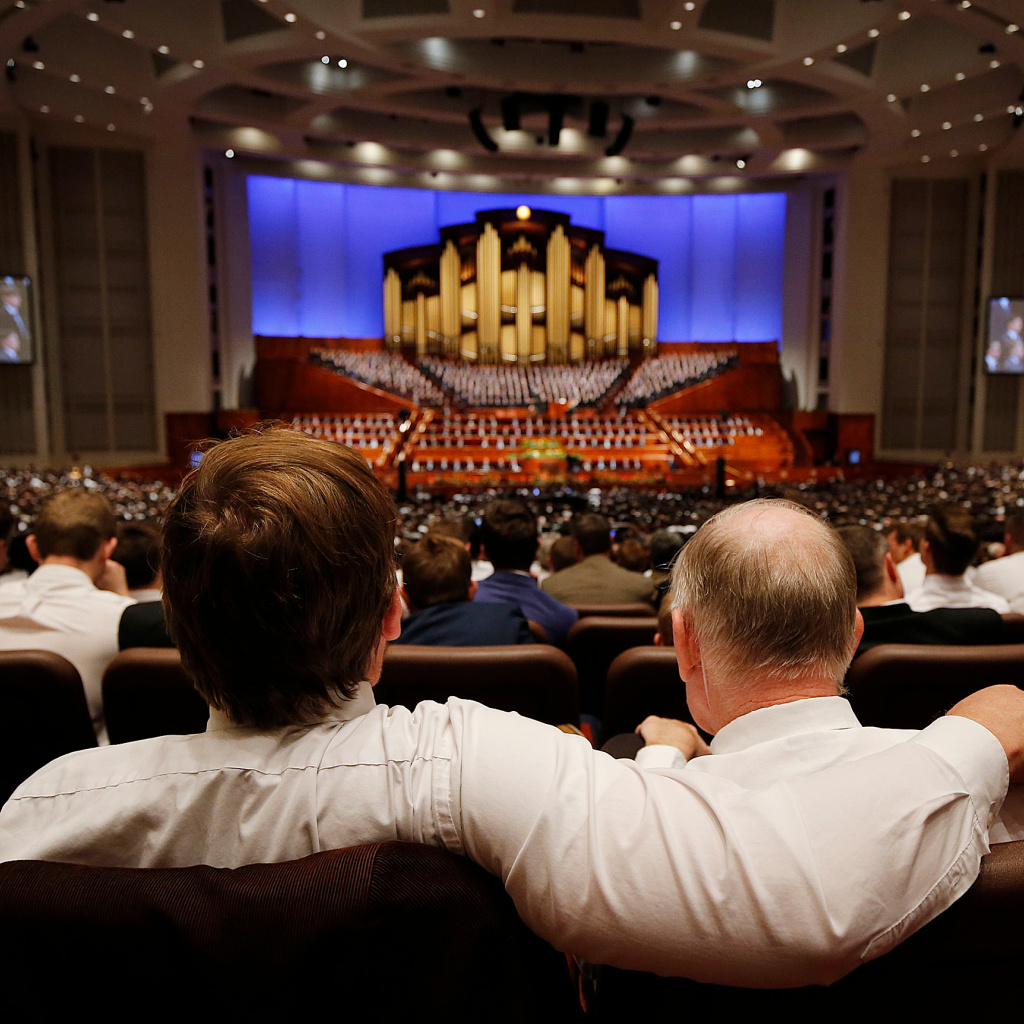
The Public Square staff and friends learned much watching the October 2024 General Conference. Here are our main takeaways. What were yours?
CD Cunningham: Moving Beyond ‘What Works for Me’
It can be that one of the main obstacles to learning and growing from General Conference is an attitude that we will only accept those messages that “work for us.”
I was interested in how many of the messages we heard on the first day of the conference felt designed to rebut these attitudes—to help us be more open to the messages to come.
In the first session, Elder David P. Homer emphasized that prioritizing God’s will requires trusting Him, even when His will contradicts popular opinion or our own judgment. He used the example of the Savior’s disciples who “walked away” because they “did not like what He said,” emphasizing that “it is easy for our pride to come between us and eternal truth.” He encouraged us to follow the example of those who remained faithful, trusting that God “has something better for us” if we “reach out to Him.”
Elder D. Todd Christofferson continued on this theme; he cautioned against “pursuing [our] own path without regard to divine direction,” likening it to choosing “I did it my way” instead of “I did it God’s way.” He stated that this applies even to inherently good things, like careers or caring for our physical bodies, which can become “weapons of rebellion” if they supersede God’s priorities in our lives. Instead of prioritizing our own desires, Elder Christofferson encourages us to “put the first commandment first in our lives” and allow our “love of God and our determination to serve Him” to guide our decisions.
In the final remark of the Saturday afternoon session, Elder Ulisses Soares brought the principle home. He pointed to the “growing trend” of “people becoming consumed with themselves and constantly proclaiming: ‘No matter what, I live my own truth, or I do what works for me.'” He warned that this mindset, while often framed as “authentic,” can actually hinder our spiritual progress and prevent us from obtaining “eternal life.” Instead, Elder Soares encourages us to follow the example of the Savior, who said, “For I came down from heaven, not to do mine own will, but the will of [Him] that sent me.” He emphasizes that aligning our will with God’s is not about diminishing our individuality but rather about becoming “consecrated to the Lord” and allowing His will to become ours.
Hannah Rice: The Necessity of the Church
One clear theme stood out to me from the October 2024 General Conference: the essential role of The Church of Jesus Christ of Latter-day Saints as an organized, divinely appointed institution. This wasn’t just about the importance of personal spirituality, but about the need for a structured Church that helps us grow, stay anchored, and access the power of God.
Instead of holding us down, our covenants with Him—like a kite string—allow us to soar.
I was moved by an assurance from David A. Bednar: The Church will never fall into apostasy on an institutional level. No matter what happens in the world or in our personal lives, the Church will remain strong, guided by divine authority and purpose.
President Russell M. Nelson posed a personal question: “To whom or what will I give my life?” The Church, with all its ordinances, covenants, and guidance, helps us answer that question. It points us to Christ and gives us the tools we need to follow Him. He is the One to whom we should give our lives.
Instead of holding us down, our covenants with Him—like a kite string—allow us to soar, giving us stability in a world full of distractions and confusion, as Dallin H. Oaks suggested. The Church’s structure is that anchor-string which enables spiritual heights.
And as David L. Buckner reminded us: just showing up at church isn’t enough. Sitting in a pew doesn’t make you a Christian any more than sitting in a garage makes you a car. It’s living the gospel—actively applying the teachings of Christ’s Church—that makes the difference.
For me, this Conference reinforced just how essential the Church is in our path to the Savior. It’s not just a community or a collection of beliefs—it’s the divinely appointed organization that leads us to the full blessings of the gospel and helps us stay connected to God in a meaningful way.
Cassandra Hedelius: A Warm Welcome
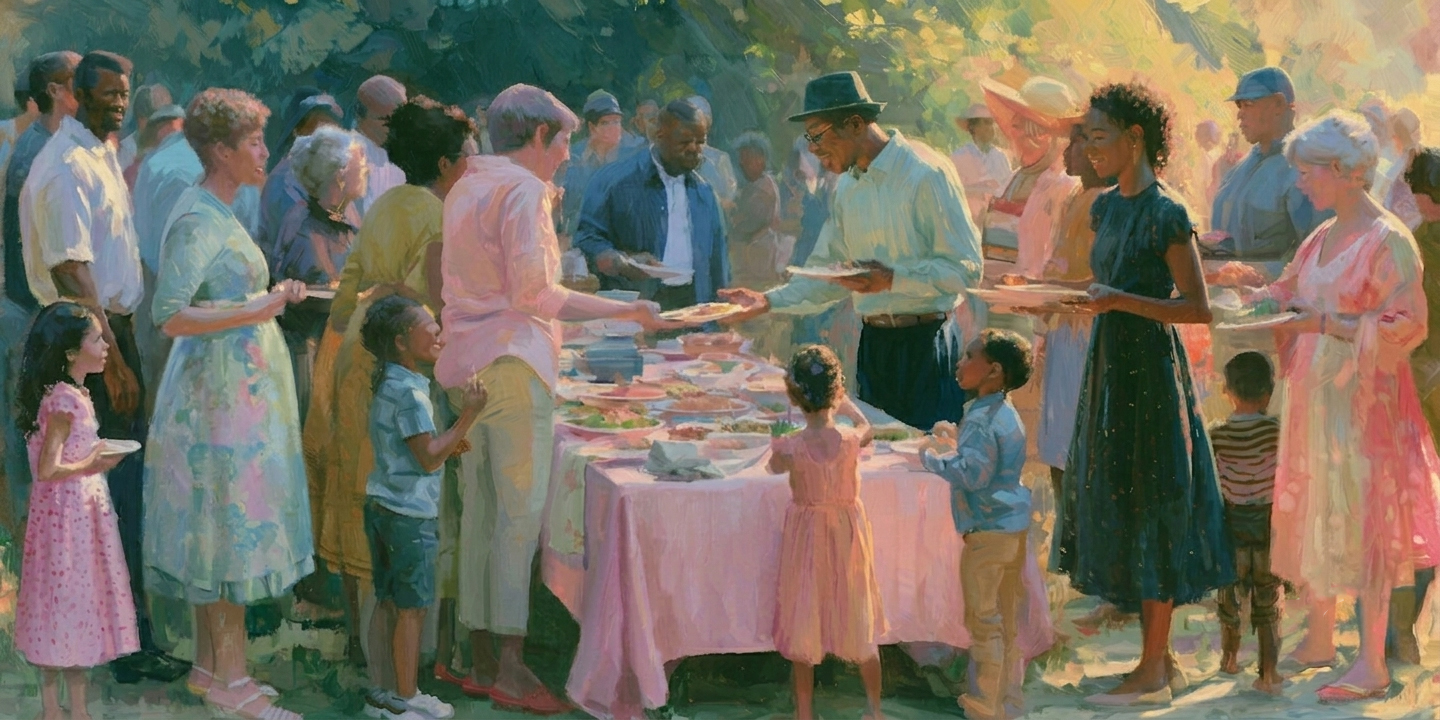
I serve the young women in my ward, and we recently implemented the new guidance in the Church Handbook for the youth to welcome visitors and members as they arrive at Sacrament Meeting. My girls are outstanding and have risen to the occasion to fulfill this new responsibility, but I think some are a little hesitant or confused (as I absolutely would have been at that age). Why is this suddenly a thing? Why give such a task to possibly busy, tired, shy, inexperienced teenagers? Does it really matter whether people arriving at church receive eye contact, a smile, and a “welcome!” as they walk through the door?
These possible concerns from my young women weren’t on my mind when Elder Kearon took the stand, but as I listened, I quickly realized he was giving me all the answers. He reminded us he had once been a young investigator and new convert who knows first-hand the power of a sincere and joyful welcome. That experience and perspective fed his touchingly sincere enthusiasm that “we are members of the church of joy.” All of us, but particularly the youth stationed at the chapel doors, can seriously ponder Elder Kearon’s question: “How would He want each one of His children to be welcomed, cared for, nourished, and loved? How would He want us to feel when we come to be renewed through remembering and worshiping Him?”
I’ve never been a new convert, but I’ve had plenty of first days as a newly moved-in member of my new ward. Some of those Sundays were times in my life when I badly needed to feel known and loved. I’m excited for everyone arriving at church who is new, or investigating, or maybe just feels a little lost or overlooked, to see those beautiful youth with their bright eyes and shy smiles waiting at the doors, welcoming into the church of joy. I’m excited for the youth to carry out Elder Kearon’s counsel to welcome, care for, nourish, and love. It’s exciting to see the youth become more and more effective in the “Lord’s Battalion.”
Daniel Frost: Motivated Misunderstanding
President Holland’s talk reminded me of the ever-present danger of resisting and misinterpreting what God is trying to tell us. Speaking of how some people see Jesus, President Holland said, “They’ve reduced his righteousness to mere prudishness, his justice to mere anger, his mercy to mere permissiveness.” Misunderstandings like these can be innocent, but often they are motivated. We do not want God to be certain way, so we imagine a god more to our own liking. Our pride prevents us from perceiving the light God sends (John 3:18-21). President Holland taught, “We must not be guilty of such simplistic versions that conveniently ignore teachings we find uncomfortable.”
This thought reminded me of a poignant moment in Book VIII of Plato’s Republic. Here Socrates is telling how a person (and a city) can devolve from one kind of corruption to another. At one point, the “temple” of a young person’s soul is overwhelmed with unruly desires and the best parts of the soul are pushed out. When this happens, the person begins to call “anarchy liberty, and waste magnificence, and impudence courage.” Everything becomes distorted once the truth has been displaced and ignored. This corruption of perception may not be entirely intentional, but it is also not entirely innocent, either. Only by “hold[ing] fast to that which is good” (1 Thess 5:21) can we avoid the temptation of motivated misunderstanding.
Carol Rice: Songs of Hope
As someone who spends my days surrounded by words, I found many of the messages shared during this weekend’s General Conference particularly encouraging. I recognize that it’s not unique to feel as though they were crafted just for me. However, each speaker delivered the words I needed to hear—filled with hope, instruction, course correction, consistent comfort, and love.
The moments that especially touched my heart, however, were not conveyed through words but through song. The choir of children on Saturday afternoon performed one of our new hymns, “Gethsemane,” with poignant sincerity. Their pure voices delivered the message with remarkable gravity, resonating straight to my heart. The combination of the children’s innocence and the power of the music allowed me to truly feel the weight of what transpired in Gethsemane in a profoundly personal way.
God knows and loves each child personally.
I worry for our children in today’s world, which can often seem so frightening. However, this moment brought me a sense of calm and reassurance. It reminded me that God knows and loves each child personally. I reflected on my recent study of 3 Nephi, where angels surrounded the children and ministered to them in the presence of Jesus Christ. I couldn’t help but imagine that angels were singing alongside those children. Perhaps they were there, encircled in fire; although I didn’t see it, the feeling was so profound that I wouldn’t be surprised if someone else did.
As the lyrics echoed, “The hardest thing that ever was done, / The greatest pain that ever was known,” I was reminded of the love and sacrifice that Jesus offered in Gethsemane—for me. “Gethsemane. Jesus loves me.”
Another new hymn performed was “Come, Lord Jesus.” Years ago, I had the incredible opportunity to be cast alongside my son, Andrew, in Savior of the World. Spending an entire holiday season traveling back and forth to Temple Square didn’t leave much time for anything else, but it remains one of my fondest memories, a season filled with a focus on the Savior and enriched by song and the promise that he will come again. Lately, I find myself singing “Come, Lord Jesus, Come” every single day. Hearing the choir sing it brought back all the feelings from that Christmas, but most especially to hear our prophet promise, in his closing remarks, that Jesus will indeed return.
It is humbling beyond words.
Brianna Holmes: Embracing the Steadfast Love of Christ
Elder Hirst’s talk on Saturday was quite remarkable to me. As I have gone back and relistened to it again and again, I am always struck by the simple and powerful way that he talks about our relationship with the Savior and our ability to feel His and God’s love for us. First, Elder Hirst emphasized that “I [can] glory in my Jesus.” While I recognize that He is the Savior of us all, we have the ability to have a unique, personal, loving relationship with Jesus Christ so that He becomes ours, each individually.
Additionally, we can understand that even when we do not feel divine love, that does not mean that it is actually beyond our reach. Elder Hirst aptly uses the mountains as evidence of the certainty of God’s love. In 3 Nephi 22:10, we read, “For the mountains shall depart, and the hills be removed, but my kindness shall not depart from thee, neither shall the covenant of my peace be removed.” God’s love is as steady and sturdy as the mountains, but even if they fall, we can be assured that His love will remain, regardless of whether we feel individually worthy of it. As Elder Hirst further commented, “We can disqualify brokenness in any way from denying us heavenly love.”
Indeed, nothing can remove God’s love from us, and as we increase our ability to receive His love, our capacity to feel joy despite our circumstances will increase. As Elder Hirst commented, “Joy is our purpose and not the gift of our circumstance.”
Gale Boyd: From Hubris to Humility
Tracy Y. Browning, the Second Counselor in the Primary presidency of the Church, was my favorite speaker at this General Conference. I took an astronomy class at BYU way back in the 1960s. Our textbook portrayed the moon and Mars as known entities in our solar system, but the book became obsolete before class started when early orbital missions provided new information. I remembered sensing the hubris we humans tend to have that hopefully turns to humility when new truths present themselves.
Sister Browning described our discoveries at the edge of our solar system, which changed everything we know about Pluto (a former planet) and nearby bodies in space. She then counseled us on how to grow in faith by asking questions in humility. I have watched dear ones suffer from cognitive dissonance as they have accepted wrong information about the gospel and the Church. I hope they follow Sister Browning’s suggestions for finding real truth and peace and, in the meantime, to be able to have faith without knowing everything.