joseph-barrientos-NpiMxrnHUlQ-unsplash (1) (1)

Only a Few Fans at the Super Bowl? That’s No Problem for Sex Traffickers.

The Super Bowl is an opportunity to highlight the 24/7/365 problem of human trafficking.

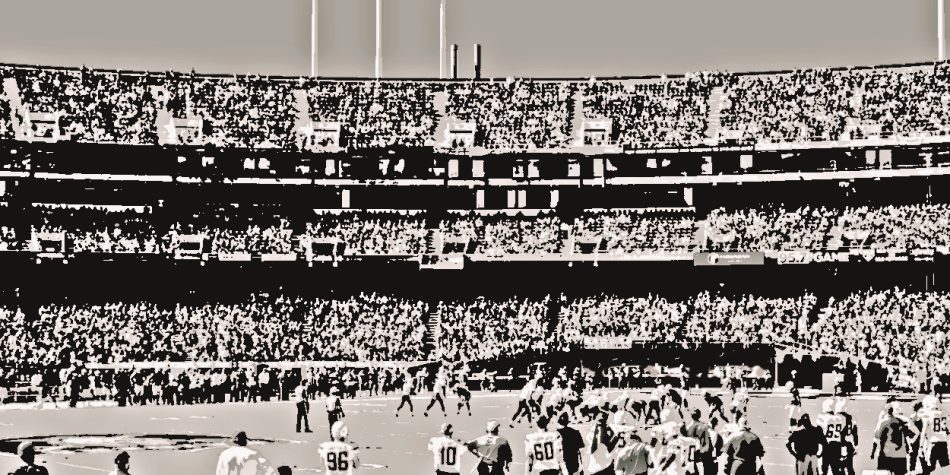
The fact that Super Bowl LV, a game featuring Patrick Mahomes and the Kansas City Chiefs squaring off against Tom Brady and Tampa Bay Buccaneers, will likely long hold the record for the fewest fans in attendance at a Super Bowl would be a problem for sex traffickers … if commonly held ideas about sex trafficking and the Super Bowl were actually true, that is. 

Prior to Super Bowl LV in 2021, which will have just 25,000 fans in attendance (compared to 30,000 cutouts), the lowest-attended Super Bowl in NFL history was Super Bowl I when just shy of 62,000 fans showed up to watch the Green Bay Packers play the Kansas City Chiefs. The most-attended Super Bowl of all time boasted over 103,000 fans.  

With attendance numbers that large, it isn’t difficult to see why misconceptions about the scope of sex trafficking in connection with the Super Bowl—such as claims that it is America’s biggest day for sexual slavery—have gained traction in the public’s perception. According to those misconceptions, it might also be easy for someone to think that COVID-19 restrictions limiting attendance at Super Bowl LV might be a huge win for the fight against sex trafficking in America. The problem with those assumptions, though, is that they are based on a faulty understanding of 1) what sex trafficking usually looks like, 2) how pervasive sex trafficking is in the United States, and 3) what solutions are needed to address the root of the problems.

Sex trafficking in America is a phenomenon that occurs on a day-to-day basis in virtually all of our communities.

While sex trafficking certainly does occur around major events such as the Super Bowl—a reality that should definitely not be ignored—America has a much bigger problem with sex trafficking than sensational-but-poorly-sourced media narratives can unintentionally hide.  

A limited number of fans at Super Bowl LV isn’t a problem for sex traffickers because the demand of commercial sex buyers that drives the market for all sex trafficking in America is a 24/7/365 reality.   

Sex trafficking in America is a phenomenon that occurs on a day-to-day basis in virtually all of our communities. Sex trafficking doesn’t happen “over there” or “mostly just around major events.” Sex trafficking, as cases such as the one involving New England Patriots’ owner Robert Kraft exemplify, is happening all around us at almost all times at a scale that most in America are clueless about.  For that reason, tackling the true scope and full demand for commercial sex buying is crucial for effectively addressing the problem.   

As such, it is important that we leverage the sex trafficking misconceptions that swirl around the Super Bowl as an opportunity to enter into conversations and help change the narrative. It’s not enough to decry bad narratives. We have to be willing to set the record straight and redirect people’s rightful feelings of indignation toward real and tangible action.   

That is why the National Center on Sexual Exploitation is dedicated to both awareness and advocacy. The National Center on Sexual Exploitation works hard to address demand’s core role in sexual exploitation and to help people understand the way myriad forms of sexual abuse and exploitation are interconnected in order to then motivate and equip them to take action through targeted and effective advocacy efforts such as the annual Dirty Dozen List.   

Whenever and wherever you see myths about sex trafficking pop up, you can be a committed, tangible part of setting the record straight by sharing good information about how pervasive sex trafficking really is, how we can help spot it, and how all of us can be a part of building a world free from sexual abuse and exploitation of all kinds

About the author

Jake Roberson

Jake Roberson is the vice president and director of communications for the National Center on Sexual Exploitation, the leading national non-partisan organization exposing the links between all forms of sexual exploitation such as child sexual abuse, prostitution, sex trafficking and the public health harms of pornography.
On Key

You Might Also Like

Barry Keoghan shines in weak star vehicle

“Bring Them Down” is a careful small-town drama about Irish sheep farmers. The film stars Christopher Abbott as Michael after his acclaimed performance as the villain in “Poor Things,” and titular role in “Wolf Man.”  Barry Keoghan plays opposite as Jack, the son of neighboring farmers. Keoghan also made his mark in a Yorgos Lanthimos film, “Killing of a Sacred Deer.” He is as up-and-coming as an actor can be, set to star in the highly anticipated Beatles biopic.  The film is mostly a showpiece for the two talented leads to luxuriate in the acting moments that the revenge plot affords them. Abbott builds a character suspended in tension between his guilt over his mother’s passing, his deference to his strong-willed father, his honor, and his self-sufficiency. Keoghan has a slightly more complicated job, as he needs to find the motivation to start the feud inside a character that is juvenile and slight. As a showcase, the film is a success. Not many people will see it, but it will certainly help burnish the reputations of Abbot and Keoghan as formidable actors. And the plot is good enough to serve that purpose. Caroline, Michael’s ex-girlfriend, and Jack’s mother, has decided to leave Jack’s father because of their financial problem. A bridge is out, and Michael’s father is reluctant to let Jack’s family cross his property. So Jack hatches a plan to steal two prized rams from Michael’s family. When Jack’s dad catches him, he makes him kill the ram and get rid of it. The woman they sell it to offers them good money for sheep legs, offering what Jack sees as a solution to his family’s problems. But rather than tell the story in a forthright way, the edit tells the story twice, first from Michael’s point of view, and then from Jack’s. So during the first half of the film things move so fast and with so little context, you struggle to know what’s going on. Then when it restarts, the audience doesn’t know the device yet, and doesn’t figure it out for about twenty minutes when plot points begin to repeat themselves.  Once we figure it out, the idea isn’t terrible. When we were strictly in Michael’s perspective the feud seems meaningless and is cast in strictly moralistic terms. When we revisit it through Jack’s perspective, we can begin to appreciate the complicated factors that led to Jack’s decision.  But the edit doesn’t tell the story clearly enough. So the main emotion I felt while watching the film was confusion. I’m certain that the film would improve on a rewatch, but the ultimate story that a feud develops because Jack steals Michael’s sheep to keep his parents together doesn’t have enough heft to draw me back. It’s a pastoral film, and it does a good job of capturing the place. Colm Meaney, who plays Michael’s father, Ray, does a particularly notable job speaking Irish at length. First-time director Chris Andrews has some interesting ideas. He is clearly capable of letting talented actors do what they do best, a skill that will serve him well in his directing career. The film is also shot in a subdued way that highlights the natural light and natural beauty of the setting, but without ever drawing attention to itself.  The use of fire in the film’s back half is particularly notable.  “Bring Them Down” is R-rated for its violence and language. The domestic violence where Jack’s mother beats Jack’s father is particularly harrowing. But I found the film’s moral message to be largely in the right place. Jack’s theft leads to nothing but suffering. And revenge is shown as almost entirely futile. The film even offers a glimpse at honest redemption. Still, I wouldn’t watch this with my kids, at least until they were adults.  Two and a half out of five stars. “Bring Them Down” releases in theaters nationwide February 7, 2025.

The Wisdom of the Aged

Increasingly, older and senior members of our communities are seen as backward and not worth considering. That’s a mistake. General Conference will provide an opportunity to listen to the hard-earned wisdom of age that we should seek for.

Subscribe To Our Weekly Newsletter

Stay up to date on the intersection of faith in the public square.

You have Successfully Subscribed!

Pin It on Pinterest

Share This