20171230_1602_Christina_AL13402 (1)

Church Finances and the Doubting Soul

Is there a dollar amount of donations to the poor sufficient to allay concerns about how the faith spends its money?
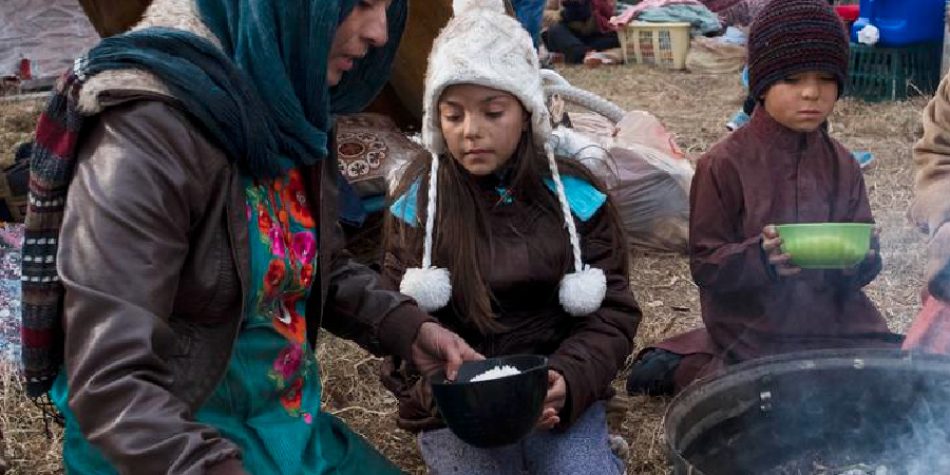
The Church of Jesus Christ of Latter-day Saints, joins with other relief organizations to help families relocate to refugee camps, such as this one, to cope with the loss of their homes and way of life. Refugee family makes the best of their challenging situation.

For thousands of years, the watchdog has blessed us.

This dog is an important warning system—perhaps nature’s first security system—that adds a comforting level of protection to a home. “Bad guys think twice about breaking into a house with a dog,” Mike Ehrmantraut tells his widowed daughter-in-law Stacey in Better Call Saul. And a canine’s nose is an indispensable shield for any army or nation. Consider Patron, Ukraine’s famous bomb-sniffing dog, a Jack Russell terrier so light he can walk on mines without them exploding, saving the lives of many soldiers and citizens.

But a dog’s bark is sometimes little more than obnoxious irritation as it yaps at the slightest sound on the sidewalk.

As one who has worked for The Church of Jesus Christ of Latter-day Saints’ Public Affairs and Communication Departments for nearly 13 years, I’ve read and heard oceans of concerns, legitimate and otherwise, that people have with the institution. I’ve learned a lot and developed a thicker spiritual skin along the way.

I’m rarely bothered by the barking of the dogs outside of—and sometimes within—the walls of Zion. We need people to speak up when problems arise. But sometimes, I’m simply bemused by the myopia—what feels like yapping—of otherwise brilliant people. For example, the Church’s significant financial reserves have been a topic at which many with a watchdog spirit have barked. A December 14 opinion piece from the gifted Jana Riess at Religion News Service (RNS)—an important contemporary watchdog—repeated hackneyed arguments I’ve heard so often that the Muse demanded I open a blank Word doc to process my thoughts.

Some have greater reasons—deeply spiritual and personal—to trust the work of the faith’s prophets, seers, and revelators.

Riess, the author of the hilarious 2011 memoir Flunking Sainthood (which sounds like the story of my life!), says the Church—her church, my church—is “hoarding” billions of dollars “with no immediate plans to use the money to help people.” I wonder what a Latter-day Saint bishop—the one who probably knows more than anyone the needs of the poor in his area—would say to this.

In any case, it’s an easily diagnosable case of myopia. Public information refutes it soundly.

In 2021 alone, the Church’s expenditures for those in need totaled nearly US$1 billion. That puts the Church right up there with some of America’s top charitable organizations. And this year, the faith has given $32 million to the World Food Programme, $10 million for polio and neonatal tetanus vaccinations to Rotary International and UNICEF, $5.1 million to the American Red Cross, another $5 million to UNICEF’s global malnutrition program, and millions more for flood relief in South Africa.

And that’s just what was reported publicly.

Riess acknowledges only the $10 million donation for vaccinations. “Such efforts are beautiful and important—and not nearly enough,” she writes. She concedes that “$10 million is a fair amount of money” but is a pittance “in comparison to the billions that the church takes in each year.” Because of this perceived shortcoming, Riess says she no longer pays tithing to the Church.

Surely a church that teaches a mindset of daily repentance can do better. Nobody—not even leaders at the highest levels—is exempt from the consequences of violating sacred trust. Scripture teaches this; discipline of recent years verifies this.

But the Church of Jesus Christ is doing a great deal. Why not acknowledge that more generously?

Is there a dollar amount of donations to the poor that is enough to satisfy the doubting soul?

None of us grasp the vastness of the Church’s expenditures. This is because the faith hasn’t published a detailed account of expenses in decades. Aside from the annual auditing report at general conference, it seems the body of Christ is being asked to trust that things are in good order and caring hands so we can focus on serving our families and communities.

Every day we give a somewhat blind trust to others—that a restaurant isn’t poisoning our food, that the mechanic really is honestly and accurately diagnosing our car problem, that the news we read is true.

Some have greater reasons—deeply spiritual and personal—to trust the work of the faith’s prophets, seers, and revelators. Go ahead. Call us credulous sheep. Jesus already did that, so we’ll take the compliment.

Really, though, don’t you wonder what it’s like to be a Latter-day Saint bishop and see how much money just one of the faith’s 31,300-plus congregations spends on the needs of its poor? And, as important as helping the poor is, the Church is committed to other equally important expenses: education, temple and meetinghouse construction, genealogy, missionary service, the workforce, and more.

This Church is a joint venture of salvation—the perfect Jesus Christ in partnership with the imperfect Saints.

One of the most insightful things a church leader has said on this topic came at the National Press Club in Washington, D.C., on May 26, 2022. Elder David A. Bednar spoke for nearly an hour to journalists about the Church of Jesus Christ. He began with a 30-minute talk that touched on many of the Church’s core initiatives, which I listed above.

These cost a lot of money for the Church to provide them at low cost or completely free.

After Elder Bednar’s speech, he fielded more than a dozen questions over 25 minutes from Press Club President Jen Judson. One question was, “With over $100 billion in funds and assets, the Church has more capability than any other church in the country to help eliminate poverty. What more could the Church do in terms of humanitarian efforts?”

“People want to bang on the Church and say, ‘Well, you’ve got all that money in reserve.’ Yeah, and it’s a good idea for other people to follow that example,” Elder Bednar responded. “You can read in the Old Testament about seven years of famine and seven years of plenty. It’s a good idea to prepare. These undertakings that I’ve described are resource-consuming, not resource-generating. And a lot of people depend on the resource that we provide. And if things are different in the future than they are now, we think it’s provident and wise to prepare to maintain that kind of support in an uncertain economic environment.”

No institution is perfect. The full name of the Church—The Church of Jesus Christ of Latter-day Saints—is itself a sermon on this. This Church is a joint venture of salvation—the perfect Jesus Christ in partnership with the imperfect Saints. In a half-human partnership, we should expect errors along the way as God lets us grow. His work is to perfect us.

And so we must watch—like watchdogs—for ways to improve.

But as we watch, and before we bark, let us ensure the lenses through which we see reality allow us to grasp “things as they really are.”


About the author

Samuel B. Hislop

Samuel B. Hislop is a writer in Utah.
On Key

You Might Also Like

The Conference Themes That Press on Our Mind

This last weekend, we participated in our semiannual General Conference, listening to the leaders of The Church of Jesus Christ of Latter-day Saints. Here are some themes that stood out to our staff.

Disagreement is Not Disunion

The inauguration of our new president is almost a week old. There’s one especially striking moment from his speech that can’t and shouldn’t yet slip from our memories.

The Ordinary Saint’s Guide to Under the Banner of Heaven

In an age that claims to value “own voices” media, it is sad that Under the Banner of Heaven is probably going to be the biggest story that the public sees about members of The Church of Jesus Christ of Latter-day Saints this year or this decade. While the tale it tells is based on an actual occurrence and about some actual problems within the broader movement of people hearkening back to Joseph Smith, one thing that can’t be said for either the book or the show was that they were written by a member of our community. The producer may have “grown up” as a Latter-day Saint, but he left the faith before he was an adult. If you’ve never had the experience of holding a calling, making temple covenants, or negotiating the relationships that make up a ward (Latter-day Saint congregation), are you really the best person to interpret our community? So I’m stepping in to offer my perspective. I am not a historian or theologian. So, though I try to be informed about the difficult parts of our religion’s past, I can only give you the perspective of what an average member would know or believe about these situations. I undoubtedly will get some of the nuances wrong. This will not be the best place if you’re looking for information about the historical accuracy of the show. (Consider checking FAIR’s guide or Book of Mormon Central.) However, I am an active participant in the larger Latter-day Saint literary community. I’ve written essays about my own life as a woman in the Church and fictional stories about others. I studied Latter-day Saint literature in college and continue reading contemporary Latter-day Saint literature. I am on the board of the Association for Mormon Letters, an organization that promotes literature written by, for, or about those who tie back to the prophet Joseph (including members of The Church of Jesus Christ of Latter-day Saints, but not exclusive to our denomination). So you might say I have some experience with portrayals of the Latter-day Saints and separate fundamentalist communities. The purpose of this series of recaps is two-fold. First, I want to summarize the series for ordinary Latter-day Saints who don’t intend to watch it so they won’t be surprised around the metaphorical watercooler this week. Second, I will catalog the series as it compares to Latter-day Saint literature more broadly. As a writer, reader, and advocate of Latter-day Saint literature, this is my home turf. I am interested to see where the show gets things right and wrong. Granted, my experience isn’t the experience of every member; like any community, Latter-day Saints are not a monolith. But I will compare the show to my personal knowledge of our community and talk about what sticks out. Without further ado, here are my impressions of the first two episodes of Under the Banner of Heaven. Episode 1, “When God Was Love”  Summary—The episode opens with Detective Pyre being called away from his family’s Pioneer Day celebrations to visit a crime scene. At an ordinary suburban house, he finds a scene of chaos with a mother (Brenda Lafferty) and her 15-month-old daughter (Erica) murdered in a gruesome way. (Luckily, we are only shown large quantities of blood on the floor and walls; the show shies away from showing the bodies, though we will get hints through dialogue about the exact method of killing.) Soon the husband (Allen Lafferty) is taken into custody, his clothes soaked in his wife’s blood. The killer claims that his wife was murdered by men with beards like “Mormon prophets” and continually ties his wife’s murder back to early church history stories, particularly Joseph and Emma marrying against her father’s will. We then get a flashback to a young Brenda. She is an energetic and ambitious young woman who transfers to BYU after being tired of “holding girl’s hair back while they puked” at her party school in Idaho. Allen introduces Brenda to his family at a large family dinner. His brothers seem both strangely attracted to her and judgmental of her for her ambition and less strict faith (caffeinated soda is mentioned). The Lafferty family band together to clear a neighbor’s land to prevent it from being seized by the federal government to build a highway. In the present, Detective Pyre’s partner Bill visits Allen’s brother Robin’s home and finds the house abandoned and papers burning. They arrest Robin after a chase through a motel. This episode depicts the First Vision. It shows Joseph going to the woods to pray and a light shining down on him. The script draws parallels between Joseph’s prayer and Robin’s prayer in the woods before he is caught by the police, which doesn’t really make much sense except that they are both kneeling in a natural setting. We also get a scene of Joseph and Emma discussing whether to marry against her father’s wishes. The show tries to make a big deal of them choosing between “God’s will” and her father’s authority, implying that the problem is that they can justify almost anything as God’s will. I found this assertion pretty strange, given that Joseph and Emma were hardly the first couple to marry against a parent’s wishes. It seems a thin justification on which to hang a condemnation of trusting God. Shibboleths—It’s apparent that the showrunners have made an effort to try to include jargon of Latter-day Saints in the dialogue. Sometimes this works: the Pyre family prayer scene feels exactly like the ones that take place in my family. Others make it apparent that the writers are not members of the community. While we do refer to God as Heavenly Father, particularly in prayer, we don’t use this term exclusively like the characters in the show. I regularly hear members refer to him as “God” or “the Lord,” and a brief search of the church’s 1980’s general conference talks shows that this isn’t a new innovation. While there is