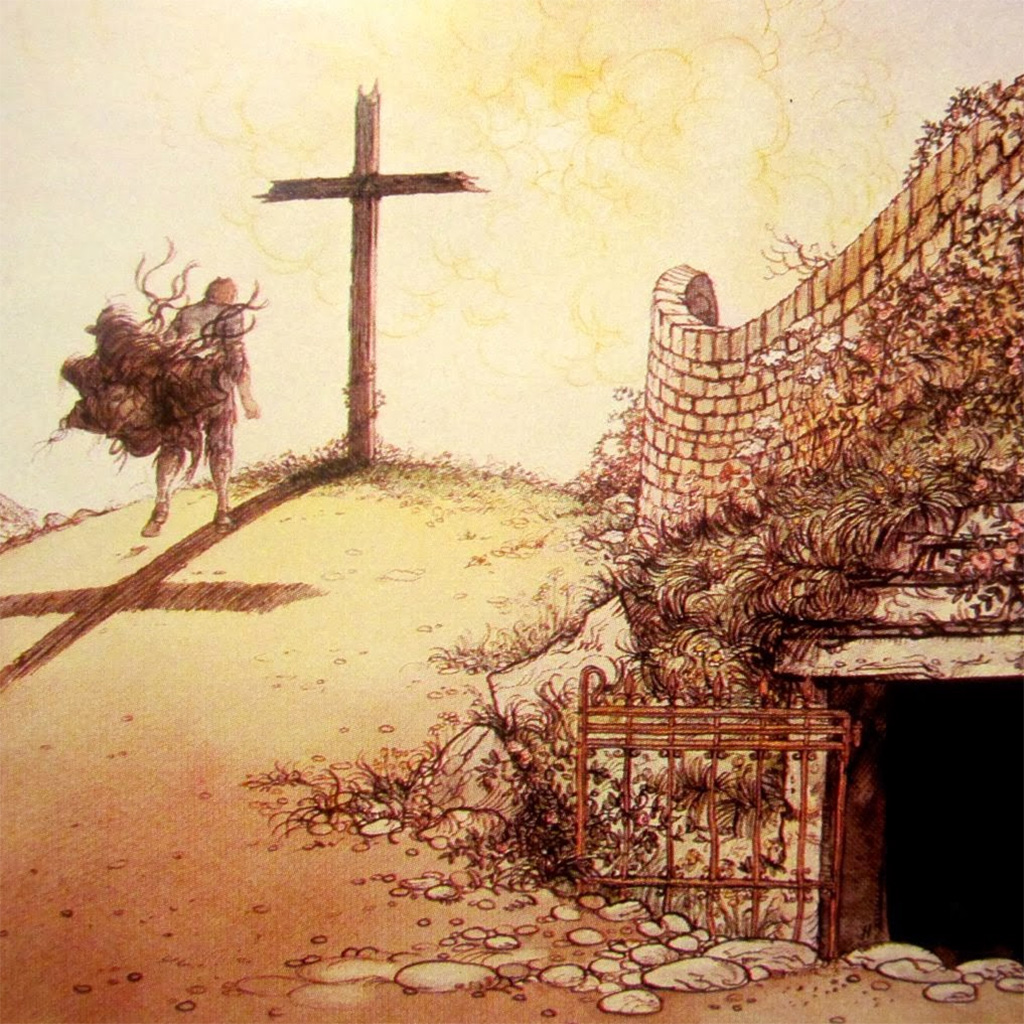
A radiant clearing opens in a quiet plain and gentle valley, portraying reverence for the gathering at Adam-ondi-Ahman.

The Valley Where Adam Stood with God

Can names reveal divine truth? The Restoration revived Ahman as a sacred name linking identity to divine order.

Download Print-Friendly Version

Joseph Smith often spoke of miraculous things the way others might speak of the weather. Details that would have sent people reeling were, for him, offered in passing. He described visions, angelic visitors, and heavenly councils with the ease of someone reporting familiar events. When asked about sacred mysteries, he didn’t pause to dramatize. He simply answered. In 1832, in the early spring dust of frontier Ohio, Joseph sat with a few companions and dictated a short theological text. It slipped in quietly, without an announcement. The document, later called A Sample of Pure Language, read more like a spiritual note passed across the room than a formal revelation. Because it wasn’t a revelation.

The topic began with a single question: “What is the name of God in the pure language?”  Joseph’s reply was immediate: “Awman. The Being which made all things in all its parts.” There was no preface, no citation. Just a name, resting between Joseph’s memory and revelation. The spelling later settled as Ahman, and that name began to ripple into hymns, into revelations, into sacred places. A second question followed: “What is the name of the Son of God?” Joseph responded: “The Son Awman, the greatest of all the parts of Awman, except Awman.” The document is compact and unfinished. It offers no grammatical rules, no dictionary, no syntax. But it leaves a pattern. Ahman. Son Ahman. Sons Ahman.

When asked about sacred mysteries, he didn’t pause to dramatize. He simply answered.

This mirrors the pattern found in texts like Psalm 82, where God (Elohim) presides among a divine council of lesser gods. Joseph’s naming structure reflects a linguistic form common to Semitic and Proto-Semitic languages, where relationship is encoded directly into names. He placed Ahman at the center and extended names outward: Son Ahman, Sons Ahman. (For linguistic parallels in Hebrew divine council language, see Heiser, Bokovoy, and Friedman, pp. 26–29.) The closer the name sat to Ahman, the more divine its identity became. This naming pattern, known to linguists as construct chains or semantic layering, positioned each figure in relation to God. Names marked individuals, and their place within a sacred hierarchy. Even in its brevity, the exchange preserved an ancient logic, offering a rare glimpse into the structure of Joseph’s cosmology.

William W. Phelps recognized this. He referred to the document as a specimen of the pure language and copied it into a letter to his wife. Soon, he began to write hymns invoking the name Ahman and included it in editorial work on church publications (Church History Catalog, MS 8532). When preparing the 1835 Doctrine and Covenants (D&C 78:20), Joseph inserted the phrase “saith Son Ahman.” It wasn’t in the original manuscript, but reflected his evolving vocabulary of Edenic language. For those familiar with the earlier version, the meaning was clear. The language of Eden had been quietly woven into formal scripture. (See Jensen, pp. 385-386.)

In 1838, Joseph declared a valley in Missouri to be Adam-ondi-Ahman, revealed to him by God. The name implied that Adam once stood there with Ahman. The structure mirrored Semitic naming traditions. The revelation gave no explicit definition, but the sense was immediately understood. Adam once stood in the presence of God in that very place. W. W. Phelps had already invoked the name in hymns. Orson Pratt, years later, affirmed what he had learned from the Prophet and the early brethren: that Ahman was a name by which God had been known to Adam. The valley became sacred for what had occurred there, but even more so for what was promised to come. It was understood as the place where the first covenant between heaven and earth had been made, and where that covenant would someday be fulfilled.

What started as a brief Q&A in an Ohio notebook grew into a network of names, rooted in the identity of God, spreading through doctrine, scripture, and song. And yet, the deeper structure of it all remained unspoken. Joseph never laid out the grammar of the pure language. What is left is a set of terms, offered plainly, but arranged with care. By the early 1840s, Joseph Smith entered a new season of instruction. In Nauvoo, he spoke more freely about the nature of God, the structure of eternity, and the roles of divine beings. Revelation came in stages. Some teachings were delivered from the pulpit, while others took shape in more intimate settings. One such setting was the Nauvoo Lyceum, a circle of trusted Saints who explored theology in dialogue with Joseph’s reflections. Joseph often used these moments to teach the process by which he himself received revelation. From these accumulated moments, Joseph began to articulate a divine hierarchy and establish structures that reflected it. Priesthood quorums, the Relief Society, and the vision of an earthly Zion all emerged from this process. They were designed to mirror the divine order of the Elohim as described in the councils of heaven. (See Psalm 82:1; “Nauvoo Lyceum Minutes”; Bushman, pp. 419-430; Flake, ch. 3.)

The valley became sacred for what had occurred there, but even more so for what was promised to come.

One such moment came when Joseph shared a teaching about God’s name. He explained that the name by which God would be called was Ahman. He added that in prayer, one should envision a being like Adam, since Adam had been made in God’s image. This quietly affirmed a vision of the Godhead and humanity as bound by resemblance, origin, and order. Joseph rarely offered these moments as final pronouncements. They were pieces or indicators of something unfolding. To early Saints, this method could be frustrating in its incompleteness, but it also reflected the nature of Joseph’s revelatory life. Doctrine was not downloaded. It was revealed gradually, through phrases, patterns, and names that asked to be pondered.

According to William P. McIntire, who recorded the moment in his journal, Joseph told the group: “The Great God has a name by which He will be called, which is Ahman.” And then he explained that when someone sought divine instruction, when one prayed, there was power in understanding God with a name as a being like Adam. God made mankind in His own image, Joseph said, and that knowledge could become a key to unlocking divine communication. It was a frame of reference. Ahman was the God who looked like Adam, and who still bore that familial connection in His title. Ahman is then a title reflecting the theological pattern Joseph Smith often taught in which the name of God shares a familial relationship with humanity.

Lorenzo Snow later expressed this pattern in a now-famous couplet: “As man now is, God once was; as God now is, man may become.” Joseph confirmed this principle in his King Follett Discourse, teaching that God was once a mortal being and that mortals, through progression, could become like Him. The name Ahman thus aligns with Joseph’s understanding of revelation as relational. It echoed the belief that humans are not distant from the divine but are deeply connected to it across time, form, and potential.

Humans are not distant from the divine but are deeply connected to it across time, form, and potential.

The early Saints who accepted this teaching saw a cosmos arranged by relationship. The names revealed who someone was and where they stood in the eternal order of things. By placing Ahman at the root of every sacred name, Joseph offered a system of divine identity. This pattern aligns with scriptural naming practices across the ancient world. Biblical names often reveal function, status, or covenant. They identify and testify. Joseph’s pure language followed the same impulse. The names began with Ahman and radiated outward, each degree of being marked by their nearness to the original. What Joseph offered in A Sample of Pure Language was not just a list of terms, but a theological structure.

The Hebrew Bible follows a similar pattern. Names like Daniel, Ezekiel, Elijah, and Adonijah embed divine titles, El, Yah, Adonai, within personal missions. Joseph Smith had no formal training in ancient onomastics, yet he intuited what many philologists later confirmed: sacred names carry layered, relational meaning (Alter, and Noegel). Some Latter-day Saint writers later linked Ahman with “Man of Holiness,” a divine title from the Book of Moses (McConkie, p. 22, and Stapley). The Son was then called “Son of Man,” meaning Son of the Man of Holiness, a theology of relationship encoded in language. For Joseph, the name simply belonged. He offered it without preface or explanation, as if it had always been there. And in a way, it had. This brief note, later titled A Sample of Pure Language, was not a revelation in the formal sense. But it became a spark. Ben Spackman describes revelation as a layered reality, glimpsed in visions, refined through translation, and shaped by years of reflection. That is what this was. A moment of clarity inside a much larger process. 

The name Ahman reflects how Joseph’s revelations often began. Rarely given in a grand vision, but with a question or phrase that opened space for inquiry. It was about being drawn into the pattern. For Joseph and the Saints, this small note became a theological key. It spurred conversations, inspired edits, clarified doctrines, and formed part of the sacred lexicon of Restoration scripture. The name itself is less a solution than an invitation to think relationally, to seek divine patterns, to follow meaning as it accumulates. Revelation, for Joseph, was not something dropped from heaven. It was something shaped by effort. The Restoration came word by word, name by name.


About the author

Jared Lambert

Jared Lambert has worked as the Sacred Materials Linguist for The Church of Jesus Christ of Latter-day Saints and as a military linguist in the United States Army. He is currently pursuing a PhD in history with a focus on religious historiography and the influence of language on scriptural interpretation.
On Key

You Might Also Like

Discerning the Impact of Influencers

As the reach of influencers in and out of the Church of Jesus Christ grows, it’s important to know how to discern between influencers that point us to Christ, versus somewhere else.

When Did We Stop Trusting the Media? A Review of “September 5”

When did we begin to lose trust in the news media? There are plenty of theories. Some suggest March 6, 1981, Walter Cronkite’s last broadcast. Others suggest it was the coverage of President Bill Clinton’s perjury and impeachment. Others suggest it was the advent of 24-hour news stations. The newest film from Paramount Pictures suggests another option in its title, “September 5.” September 5, 1972, is the day that the Black Sabbath militant group kidnapped Israeli Olympic athletes. In total, eleven Israelis were killed. But according to the journalists at the center of the movie, none of that was nearly as important as making sure the “ABC” logo was on the TV screen while the coverage went on. A brief epilogue about how the incident turned out ends with these eerie words, “900 million people watched.”  “September 5” is interesting because, in a movie presumably about the attacks, we see none of it ourselves except through camera lenses and TV screens. It’s not a movie about the attacks at all; it’s a movie about watching the attacks. The film opens as Geoff takes over the control room for ABC Sports. He’s running the night shift, when word comes in about the attacks.  The ABC studios are yards from where the attacks are happening. So they rush Peter Jennings into the Olympic village, and put their own studio camera on top of the building so they can keep a camera on the room where the hostages are being held at all times. Geoff wakes up his bosses, Marvin and Roone, who often debate the relative merits of their decisions, such as whether to turn the story over to ABC News rather than the sports division or whether or not to call the attackers “terrorists.” These compelling arguments make for thoughtful viewing. Ben Chaplin, who plays Roone, an American Jew, does particularly good acting work as he tries to find a nugget of morality in what they are doing.  But every argument ends with the decision being made that will best help ratings and ABC. No matter how many times they argue about good practices, such as waiting for a second confirmation that the hostages were all safe before reporting, the better angels of our trio of decision-makers always lose.  By the way, the hostages weren’t safe, ABC did get the story wrong because they were relying on German state news, and Germany was trying to look safe and less militaristic in their first major international attention since the end of WWII. But for a moment, when the station thought the hostages were safe, their only concern was getting them in the studio for interviews.  Marvin Bader tries to use the language of “the story” as though his audience deserved to have “the story” in real-time. And no matter what decision they made it was in pursuit of capturing the story. But this justification rang shallow as the movie moved on. When the German police burst in to get them to stop telecasting their rescue attempts live because the militants were watching, they stopped to get them to put their guns down, but turned the feed back on nearly as soon as they had left. All of this makes this an engaging movie that is worth watching. When journalists are the main characters, we expect them to be the good guys. “All the President’s Men,” “Spotlight,” “The Post.” Even the film “Shattered Glass” about a dishonest journalist, spends more time highlighting the good journalists who caught him. “September 5” doesn’t offer the media such a convenient way out. By making its characters clear-headed and conflicted, they are more than simple villains. They are exactly what the pressure of studio news would naturally produce. There are real powerful forces driving the decisions of the news industry that are at odds with what is right or good, and all too often, there’s nothing we can do about it. If we are curious about how the spiral of trust began, this film serves as a worthwhile primer while being entertaining as all get out. The film is rated R. It is thematically tough, dealing with questions like whether to broadcast an execution live, but none of the violence of the incident is actually seen the movie. In terms of a ratings feel, I might compare it to the film “Gravity” while using the word “f***” three more times than is allowed in a PG-13 film. I wouldn’t recommend this for young children or young teens, but the themes about how media manipulates us would be important for older teens, and I might consider watching this film with my kids once they turn 15 or so.  If I did, I’d ask them questions about the nature of journalism. Is getting the story more important than the lives of the kidnapped Olympic team? Do we need to know about what’s happening in real-time on the other side of the world? How has constant news coverage made the world a better or worse place? What motivates those who choose what to show on the news, and how they tell those stories? Four out of Five Stars. September 5 has already had a limited release, and it is rolling out in individual markets across the country through January. 

Dune: Part Two

I can’t wait to watch Dune: Part Two with my kids. Dune: Part Two is so good it lodges itself (and retroactively lifts its predecessor) into the pantheon of great epic movie trilogies. Depending on whether or not the third and final installment can stick the landing, I suspect it will be spoken of in the same breath as Lord of The Rings, The Dark Knight, and Star Wars.   Like the first two of those trilogies, however, the film is not right for young children. Dune deals with serious themes such as drug use, religion, violence, colonialism, gender, and terrorism. It does so in a way that avoids the overly simplistic explanations appropriate for younger kids, but that is honest and thought-provoking. The film provides easy access to difficult conversations with teens while telling a thrilling story, and adults will leave feeling satisfied and contemplative about some of the film’s broader implications.  The film picks up in the aftermath of the Harkonnen’s capture of Arrakis from House Atreides, and Paul Atreides (Timothée Chalamet) taking a place among the local Freman. For a part two, the film is remarkably well contained with a clear beginning, middle, and end. I wouldn’t recommend coming into this film without watching the first, but if you did, you would certainly enjoy the story on its own merits.  For Latter-day Saints, the film’s most poignant themes revolve around the nature and abuse of power. Among the Fremen, Paul is believed to be the Mahdi, a Messianic figure they expect will return them to control of their lands. Paul is torn between seeking vengeance for the defeat of his family and moving on by integrating into the Fremen society. The faction of Fremen who view Paul as the Mahdi complicates this by holding out the opportunity for the power he needs to seek out revenge. The ethics of how Paul wields that potential power are among the most potent themes of the film, one sure to be further explored in the trilogy’s final installment. The director, Denis Villeneuve, is in top form here. His shots are each expertly crafted art pieces on their own merits. They lend weight to the themes he’s exploring, and he weaves them together like a composer weaving together the themes of a symphony. He even includes an extended black-and-white motif that just works. You don’t even question it.  The script is well paced. It never lags like sometimes happened in the first installment, but also gives plenty of space for its beats to breathe. It’s never confusing, but also doesn’t feel the need to over explain to its audience. Just as in the first film, the sci-fi is absurd—dragonfly-like helicopters, giant worms, and magic yelling. But the imagination here makes them feel completely authentic. You can’t help but buy in. Perhaps the most fun new element—riding the sandworms—is so thoughtfully considered it feels obvious, quite a feet for a film that wants you to buy the reality of riding a worm.    Chalamet leads a stellar cast here that has added Florence Pugh, Christopher Walken, and Austen Butler. Butler in particular inhabits the grotesque Harkonnens in a way that feels both terrifying and authentic. As for the returning cast, Javier Bardem, Rebecca Ferguson, and Stellan Skarsgård are standouts. A lot of weight is put on Zendaya in this film and she is substantially up to the task. Dune: Part Two is a great story wrapped in a world class sensory experience executed by artisans at the top of their craft. It is certainly not a film for kids, but I imagine many parents connecting to their teens over it, and I would heartily endorse it to them. Five out of five stars.

Subscribe To Our Weekly Newsletter

Stay up to date on the intersection of faith in the public square.

You have Successfully Subscribed!

Pin It on Pinterest

Share This