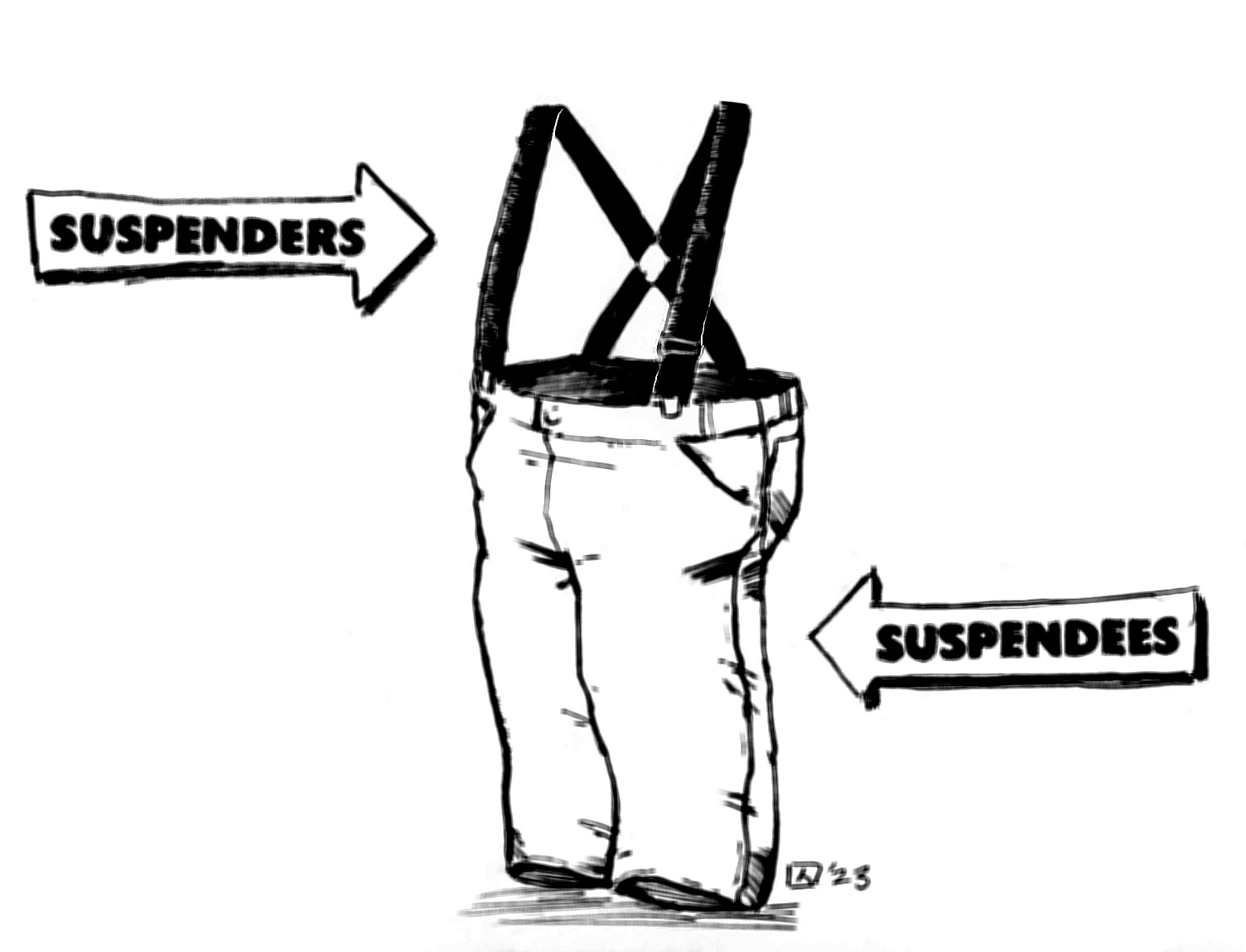
Interpreting scripture is hard. The irresolvable tension between scriptural authority and ambiguity makes it even harder.
As a believer, my fundamental interest in scripture is the proposition that it contains the Word of God. And the Word of God is authoritative. If scripture weren’t authoritative then it would be pointless to me as scripture. (It might still be important in other senses: as literature, or art, or cultural heritage.)
But scriptural authority is naturally limited by its ambiguity. That is, an unknown statement has no practical authority. And so to the extent that we are not sure what a particular passage in scripture is saying, its authority is circumscribed.
This creates perverse incentives. For those who wish to emphasize authority, there is a temptation to downplay ambiguity. To insist that meanings are transparent (even when they are far from clear) because that transparency is a necessary precondition for an expansive view of scriptural authority.
The same dynamic plays out in reverse. For those who wish to de-emphasize scriptural authority, there’s a pitfall of exaggerated ambiguity. Of insisting meaning is opaque (even when it’s fairly obvious) because that opacity is a convenient pretext for a parsimonious view of scriptural authority.
Of course, this kind of selective expansiveness and parsimony are not only applied generically, but also to specific stories, passages, or themes that people wish to defend or attack. We believers all tend to have expansive views of scriptural authority about the bits we think agree with us and much narrower views when it comes to those other parts we find less accommodating.
This means that all debates over scriptural interpretation have higher stakes than it first appears. Questioning a received interpretation entails upgrading the apparent ambiguity which in turn downgrades the practical authority of scripture. Resolving a long-standing ambiguity entails downgrading the apparent ambiguity which in turn upgrades the practical authority of scripture.
Now, this upgrading and downgrading of scriptural authority isn’t intrinsically problematic. In the Latter-day Saint tradition, scripture is authoritative, but not infinitely so. It shares space with the teachings of prophetic leaders and auxiliary heads (we call General Authorities) and with an individual spiritual witness. So it’s not at all clear that there is a “right” amount of authority for scripture to have. Why, then, is downgrading or upgrading scriptural authority so contentious? We tend to have expansive views of scriptural authority about the bits we think agrees with us and much narrower views when it comes to those other parts we find less accommodating.
Another reason this can all be so fraught is that we tend to make temporary peace with the scriptures as we understand them. Whatever a person’s balance of authority/ambiguity happens to be at any point in time, it is almost by definition the balance that is least troubling for them. This means any further change will likely lead to more (at least initial) turbulence than the present equilibrium.
This is why debate over matters that would otherwise seem tangential can become so heated. It makes sense that a passage over, say, sexuality would draw a lot of heat. But what’s the connection between a global flood or creation in seven, 24-hour days that cause so much angst? It’s not the issues themselves. It’s the status of scriptural authority that is fueling much of the tension. If you thought the interpretation of those stories was self-evident and suddenly it’s called into question, then the ambiguity/authority thread has been pulled, and that will rile people up.
It seems largely accidental to me that most people who think scripture is fairly self-evident (who have a high authority, low ambiguity approach) tend to embrace so-called literalist interpretations like a young earth and a global flood, and a historical Adam. We could just as easily envision an alternate history of the growth of Christian culture where non-literal interpretations were the dogmatic champion, and someone asking whether or not the Flood had a historical basis would be viewed as a dangerous threat to scriptural authority. The problem isn’t which answers are being questioned, it’s that answers are being questioned.
The ironic tragedy is that all this controversy about what scripture says makes it harder to learn what scripture is, in fact, trying to tell us. We live in an environment where some folks react to any interpretive question as though it’s a nefarious attempt to undermine scriptural authority. And at least some folks are deliberately, selectively confused about scripture precisely because that’s what they’re trying to do (undermine scriptural authority).
So where does that leave the folks who want to accept scriptural authority but also want to actually understand the scriptures, and therefore go through the tough work of accepting what ambiguity really does exist and trying to sift the text from the culture?
It’s a tough prospect, but here’s one thing that I’ve learned that can help: always provide a superior interpretation for the interpretation that you’re critiquing.
Consider the Flood. I don’t remember the first time I was taught this story, but one way or another the first position I can recall having was an embrace of a literal, global flood because I thought that’s what the scriptures said. Over time, I learned that my assumptions about how to read the story were largely unfounded and I let the “global” qualifier go, but some historical basis still seemed really important because I didn’t have any other way of interpreting the text that made the story meaningful.
This is a place I think a lot of believing, non-experts find themselves in. We can see that the particular views we’ve held in the past are suspect, but we aren’t willing to let them go in exchange for nothing. That’s not sheer stubbornness. It’s an insistence that scripture matters. Sure, not every single word or verse or story, but the big stuff (including the Flood) is there for a reason. And it’s difficult—and probably inadvisable—to let go of the best understanding you have just because it’s flawed. All interpretations are likely to be flawed to at least some extent. So telling me, “Your interpretation of the Flood is wrong for X and Y” is insufficient to get me to totally abandon it. What I need to hear is a better interpretation.
When it comes to the Flood, it’s just been this year that I have (largely thanks to Ben Spackman) come to understand the concept of what he calls the cosmological Flood. This is the superior interpretation I was waiting for. It is more faithful to the text (in its cultural context) and there’s a clear sense of why the story is important and what it is doing in the Bible. Now I am ready to basically set aside the global/local debate, but I couldn’t really grasp its irrelevance until I saw a genuinely new way of reading Genesis.
I can imagine a lot of scholars would sort of smack their foreheads over this. But it’s one thing to have an expert say, “That’s not how the story would have been understood in its original cultural context” and it’s quite another to have an expert say, “But this is …” and go on to provide enough of a framework that I have something new to hold onto. This need to understand for myself is indispensable to maintain a personal investment in scripture. I can just take an expert’s word for it on a lot of matters, but not a matter of my own faith. For that, everybody is responsible for building their own, and an expert can only be an advisor in an endeavor that could not and should not be outsourced.
So what I’d like to see from scholars is an emphasis on constructive critique. I’ve already mentioned Ben Spackman, and he introduced me to John H. Walton who is doing the same thing. N. T. Wright is another. These folks often challenge the current dogma, but always in a sense of trying to understand the scriptures better (not strategically) which includes an emphasis on what the scriptures do say (rather than just what they don’t). More of this, please. And I’d especially like to see more Latter-day Saint scholars add to the cultural insights of folks like Walton the unique tenets of the Restored Gospel (such as pre-mortal existence) alongside to arrive at a rigorous and distinctive Latter-day Saint perspective.
And what is required from lay people like myself is a willingness to do the hard work of sifting scripture from culture. This means, you know, doing our best to actually read what some of these scholars produce. Of course, we all have different degrees of ability and opportunity to do this, but the underlying and motivating attitude behind the pursuit is one that is accessible to all, and it is one of epistemic humility. Be willing to reconsider your interpretations and always be on the lookout for a chance to rediscover teachings and stories in the scripture that are better than what you thought you already knew.
Also, to the extent possible, everybody should probably try to avoid the contentious debates where these good-faith efforts are lacking. For these efforts to amount to something of lasting good for God’s Kingdom, we must pursue and invite His Spirit, and that means that sometimes it’s better to avoid controversies than try to win them.