
For many lovers of classical music, Handel’s Messiah represents the pinnacle of both artistic and spiritual excellence. It is almost temple-like in its ability to create an intersection between the human and the Divine. Handel’s work has helped countless listeners to internalize the message of the Savior’s birth, Atonement, and Resurrection.
Scripture is clear that inspiration is necessary to bear witness of the Savior. The Apostle Paul wrote that “No man can say that Jesus is the Lord, but by the Holy Ghost.” Restoration Scripture adds the further insight that “you cannot write that which is sacred save it be given you from me.” Handel’s music, combined with the biblical texts that librettist Charles Jennens selected for the work, bears witness that Jesus is the Lord. I believe the scriptures when they say that “every thing which inviteth to do good, and to persuade to believe in Christ, is sent forth by the power and gift of Christ.” My own faith in and desire to follow the Savior is strengthened whenever I listen to or sing the Messiah. Because the Messiah bears witness of Christ, I conclude that it was inspired by God.
Some scholars have cast doubt on whether Handel’s Messiah was divinely inspired because of what is known about the composition process. However, because of its inspired witness of Christ, I believe it would be more fruitful to reframe our idea of what it means for an artist to be inspired rather than rejecting inspiration altogether. A closer look at Handel’s process of composing the Messiah suggests that divine inspiration often draws on previous experience, comes “line upon line,” and may manifest as an enabling power.
Preparation and Previous Experience
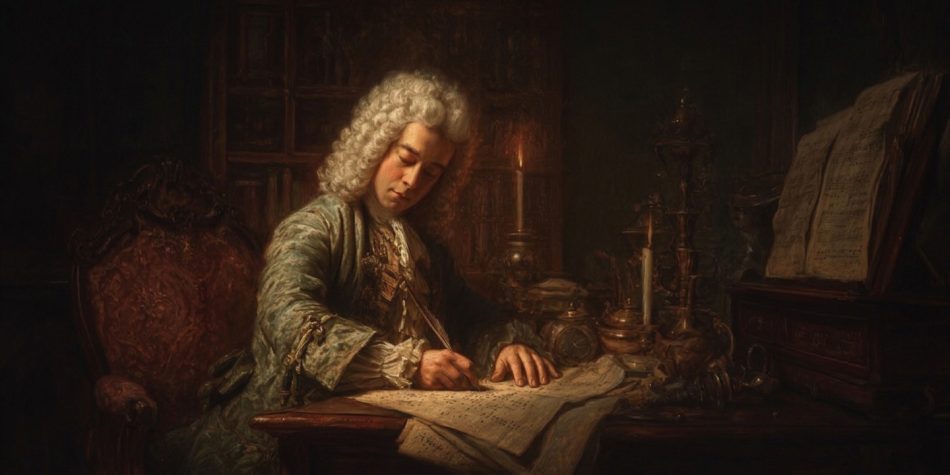
Handel’s Messiah came at a pivotal point in Handel’s career. Four years earlier, he had been restored to health after a dangerous stroke, defying an initial diagnosis that he would never again play the organ or compose music. But after his stroke, he struggled to find success. Handel’s signature Italian operas were falling out of favor with his British audience. His personal debts were mounting, raising the threat of debtor’s prison and increasing his stress. Considering the pressure that Handel experienced during this time, he likely felt an increased dependence on the Lord. Despite his talents, he may have felt that he needed help from on High. It is possible that such a sense of urgency and “real intent” made it possible for him to receive inspiration.
My own faith in and desire to follow the Savior is strengthened whenever I listen to or sing the Messiah.
In the inspiration process, the Lord—and Handel—drew from years of Handel’s preparation that preceded the Messiah. By the time he composed it in 1741, Handel was a 56-year-old professional composer with a university education and decades of experience composing music. His prolific output up to that time included at least 40 operas, over 35 concertos, 100 cantatas, and nine oratorios, among an impressive list of other works.
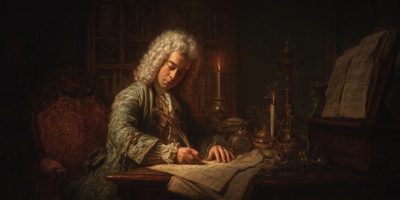
Handel had essentially mastered the composition process, including the common 18th-century practice of writing a large quantity of music in a relatively short time. Researcher Calvin Stapert noted that Handel’s pace of 24 days for composition “was more or less typical for Handel.” To Stapert, this meant Handel was not inspired in his composition. Stapert wrote: “Romantic notions notwithstanding, it cannot be taken as a sign of exceptional or, as some have believed, divine inspiration. Like most of the composers of his time, Handel was capable of turning out a prodigious amount of music in a relatively short span of time … He was following his normal work pattern of composing new works in the gap between concert seasons.”
But the fact that the composition timeline was typical for Handel does not mean he was not inspired. Although the rapid composition of the Messiah was typical of Handel, the finished product stands out from the rest of his work for its spiritual qualities. Shortly after composing the Messiah, he wrote another oratorio, Samson, in about the same amount of time. It is worth listening to (I particularly recommend the 2009 BBC Proms performance), but it has nowhere near the same depth and spiritual power as the Messiah. Something was different about the process of composing the Messiah. I believe that divine inspiration entered into Handel’s routine and elevated what he was able to create. Honing his creative process over the years prepared him for his most inspiring and inspired work.
Handel drew on prior preparation not only in his composition speed, but also in the musical qualities of the Messiah. Since 18th-century composers like Handel needed to produce a great deal of music quickly, they frequently recycled music from their own earlier compositions or borrowed from others. This behavior was culturally acceptable at the time, partly because facility and craftsmanship were prized more than originality, and partly because many people didn’t notice. Recordings weren’t possible, and the idea of a classical repertoire of pieces played on a regular basis didn’t yet exist. (Messiah may actually be the beginning of the classical repertoire, since it is the first piece to be performed regularly year after year.)
Handel was no exception in his borrowing; he borrowed from his own previous work and from that of other composers. In his Messiah, for one example, he drew from a forgotten madrigal he had previously written to write a duet and chorus. He also used ready-made material: the main melody of “And with His Stripes” was used by both Bach and Mozart, leading one researcher to call it “public property.” The same researcher notes that the Pastoral Symphony “is based upon a bagpipe tune played at Christmas by the pifferari of Naples and Rome,” but Handel acknowledged this by his abbreviation pifa at the beginning of the movement.
While some might argue that Handel’s borrowings rule out the idea of divine inspiration, I suggest they merely change our idea of how inspiration works. Inspiration is not always about receiving completely new ideas. The Savior spoke of the Holy Ghost’s ability to “bring all things to your remembrance, whatsoever I have said unto you.” Memory, discovery, and organization are all part of inspiration.
In Handel’s case, it appears that inspiration involved helping him to recall, select, and improve preexisting material. This may actually coincide with the understanding of the Creation process revealed to the prophet Joseph Smith. The Book of Abraham, for instance, redefines the Creation as “organizing” preexisting matter, rather than creating out of nothing. Handel’s recycling of prior works was not a passive copy-and-paste approach; in each case, he elevated the material. This is most clearly seen in the fact that one of the oratorio’s most beloved choruses, “For Unto Us a Child is Born,” is built out of material he had written for a forgotten Italian duet and a madrigal. The final result is not a similarly forgettable work but a masterpiece that offers spiritual nourishment to audiences all over the world. The borrowings and recyclings of prior work that were ordered to testify of the Savior attest to Handel’s inspiration, rather than disproving it.
Line Upon Line
Although the initial composition process took twenty-four days, Handel spent a great deal of time revising the Messiah. An editor of one version of the score, Watkins Shaw, notes that “no fewer than 11 movements … were subject to re-shaping or complete recomposition by Handel, some of them more than once, following original composition in 1741 and first performances in 1742.” Another researcher, Robert Manson Myers, notes that Handel “ultimately devoted more time and thought to Messiah than to any other single composition.”
The Messiah did not come all at once, fully formed and unchangeable. It came filtered through a mortal instrument through trial and error. The process accords with what scripture teaches about revelation: “For behold, thus saith the Lord God: I will give unto the children of men line upon line, precept upon precept, here a little and there a little; and blessed are those who hearken unto my precepts, and lend an ear unto my counsel, for they shall learn wisdom; for unto him that receiveth will I give more.” Inspiration and creation do not happen all at once. Handel’s experience shows that the process takes time and progresses gradually. It often includes inspired revision.
An Enabling Power
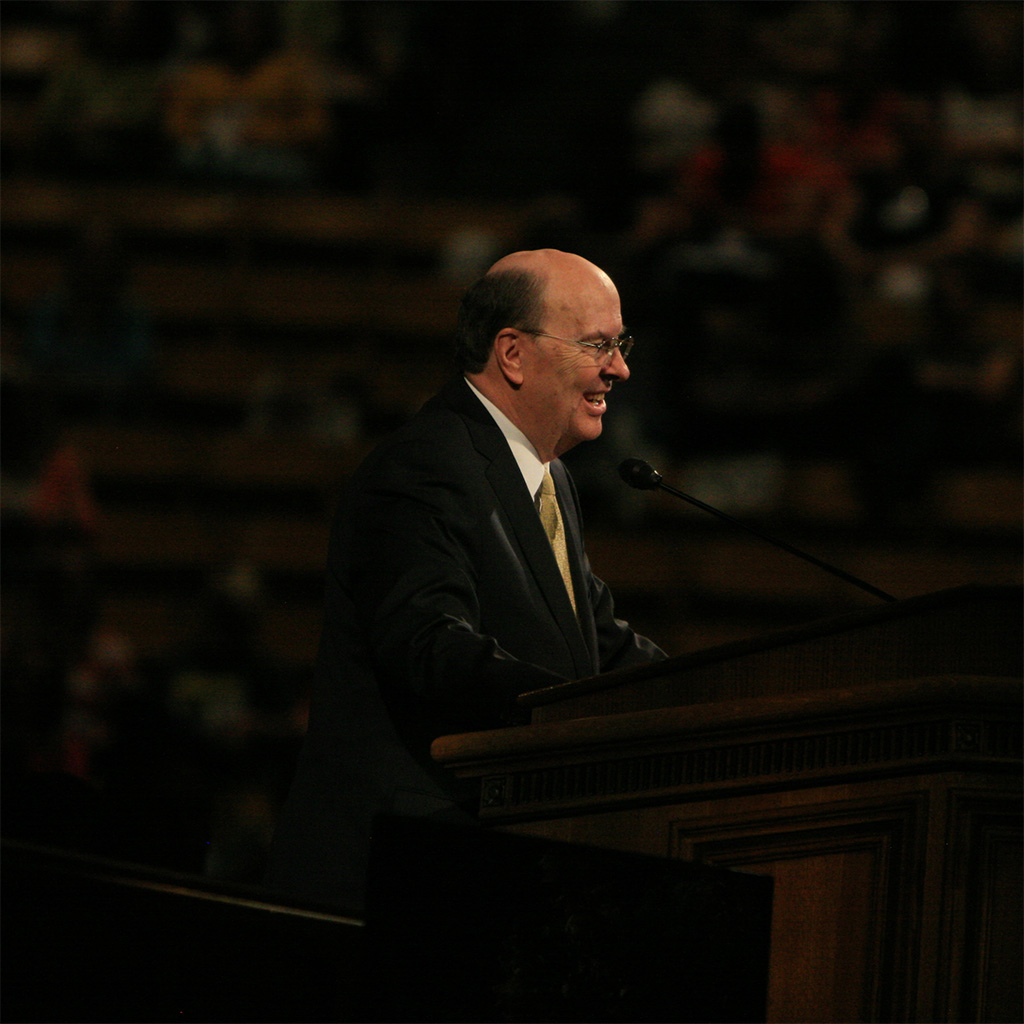
Handel’s inspiration process did not shortcut the time and effort necessary for the creative process. Instead, it was a force that lifted and sanctified his efforts. Elder David A. Bednar, a member of the Quorum of the Twelve Apostles in The Church of Jesus Christ of Latter-day Saints, has spoken of Christ’s “strengthening and enabling power” that “strengthens us to do things we could never do on our own.” I believe that this divine power played a role for Handel in the process of composing the Messiah.
The finished product stands out from the rest of his work for its spiritual qualities.
For Dr. Nelson, the hand of heaven was not seen in doing something unfamiliar, but in performing work he was experienced in at an extraordinarily effective level. The Messiah occupies a similar place in Handel’s career. He was enabled to create his most accomplished, most beloved work because he set out to bear witness of Jesus Christ. Like Dr. Nelson, Handel gave the glory to God, not only through a chorus that literally sings those words, but by inscribing at the end of the score S.D.G. (Soli Deo Gloria—“To God Alone be the Glory”).
There is a frequently quoted account from a servant of Handel that the composer once said that while working on the “Hallelujah” chorus, “I did think I did see all Heaven before me, and the great God Himself seated on His throne, with His company of Angels.” While we should use caution with source verification, it suggests Handel understood he was under the influence of divine inspiration. Handel’s claim is modest. His language (“I did think I did see”) emphasizes the subjective nature of the spiritual experience he had. That composing the chorus was a spiritual experience is not hard to believe, because listening to and singing it is a spiritual experience.
Perhaps inspiration, then, served both to enable Handel to create his best artistic work and to inject a powerful moral and spiritual influence into his work, breathing the Spirit into the work that Handel created. It is that Spirit that continues to animate the work and, after nearly three hundred years and despite trends of secularism, continues to move us to stand and sing “Hallelujah, for the Lord God Omnipotent reigneth.”