kyiv_ukraine_temple_lds (1)

We Can’t Even Agree on Vladimir Putin?

If we can’t even agree about the threatened invasion of a democratic, sovereign nation playing out before us, what does that say about our own condition as an American people?
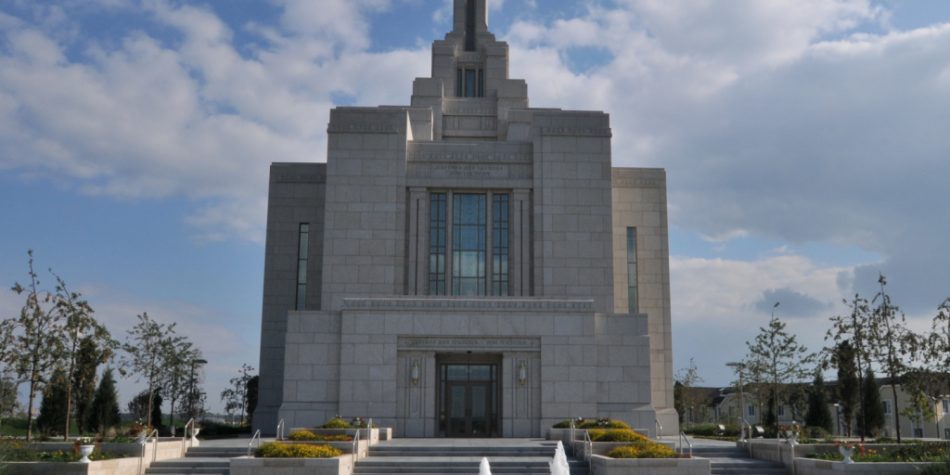
A temple of The Church of Jesus Christ of Latter-day Saints in Kiev, Ukraine.

Every once in a while—even in our contentious times—there is an inchoate sense in the air … of a unity so close we can almost taste it.  

From our shared fear and concern about getting through the disastrous pandemic to a shared sorrow and revulsion at the Afghani suffering following our withdrawal, in moments like this, we don’t seem to be all that far from a deeper unity as an American people.  

Until we look closer. With a free, sovereign nation that has openly embraced many Western ideals of democracy now surrounded by an overwhelming horde of Russian troops, you would think we would be close to that kind of unity this week. Indeed, when we started this staff piece, our working title was “A Rare Moment of American Unity?”

Until that is, we started reading more closely the national discourse. Although a surprising number of Republicans and Democrats are united in condemnation for actions taken by the Russian army, one Republican Senate candidate notably said, “I gotta be honest with you, I don’t really care what happens to Ukraine one way or another.”

Are we really our Ukrainian brother’s keeper?

This candidate went on to boast of his priorities being exclusively in his own community. After all, is he really his Ukrainian brother’s keeper?

Former secretary of state Mike Pompeo called President Putin “very talented” as a statesman—and someone who should be respected because he “knows how to use power.” Even more notably (and inexplicably), former President Trump took this dire moment—to be clear, prior to the more overt invasion—to praise Vladimir Putin’s recent actions (yes, watch for yourself) as “genius” and “smart” and “pretty savvy” and “wonderful.”

Lastly, Tucker Carlson chimed in to scold people for hating Vladimir Putin too much, reminding them of all the reasons that liberals in America were far worse than he was. While it’s true we need to be cautious about intense emotions such as hatred, it’s important to not overlook how repeatedly scripture encourages believers to “hate evil” and “hate sin.” 

Even in a day when “good is evil” and “evil is good,” surely this is still something we can find meaningful common ground … especially when any overt violence is concerned (rape, abuse, invasion of another country). 

To be clear, a great number of American conservatives are as shocked as liberal-leaning folks at the aggression we are all witnessing.  President Joe Biden said in a brief statement yesterday at the White House, “Who in the Lord’s name does Putin think gives him the right to declare new so-called countries on territory that belonged to his neighbors?” 

It’s definitely not the Lord, the Prince of Peace. 

Prayers for brothers and sisters in Ukraine. In 1994, the Ukrainian state gave up its nuclear weapons in exchange for guarantees from Russia, the United States and other western countries that they would never “use force or threats against Ukraine and all would respect its sovereignty and existing borders.”  That agreement included reassurances for international action if any country did try to use force against them.

Yet as everyone inside Ukraine knows, no one is coming to defend the Ukrainian people. As the international community looks on in horror, they will be required to fight for themselves.  The New York Times described “many civilians joining territorial defense units across the country” and “lines outside of recruitment centers.” 

Imagine having to make those kinds of decisions with your family over the dinner table?  

Within this beautiful country of 42 million waiting with bated breath, there are over 11K Latter-day Saints spread out across 48 congregations (8 wards and 40 branches) across nearly every major city. A temple—considered the House of the Lord in our faith—has been dedicated and active since 2010. 

We pray for these Saints, as we do all the mothers and fathers, husbands and wives—and especially the children—who will no doubt have difficulty falling asleep in many nights ahead of them, and even more difficulty when they wake up.  

To one of our own friends living in the Ukrainian capital of Kyiv, we offered a place to stay in Utah (she is resolute about remaining). What else more can we do aside from donating to refugees and praying?

Reaching for a moment of possible unity. It’s fair to wonder whether this whole Ukraine mess would have happened if our current White House administration had made different choices in Afghanistan.  It’s also fair to wonder (like many on the political right), how the different entanglements of the President himself and his son have influenced the situation. It’s equally fair to wonder (as do many on the political left) how the previous administration’s hands-off approach to Putin’s prior efforts to undo western military support for Ukraine also plays into this dire moment. But before we get carried off into yet more of the endless partisan bickering (about pretty much everything), can we not appreciate the potential way this could be a rare moment of unity? 

Vladimir Putin has done what no one else seems to be able to do — unite leaders of the free world. Yet in the United States, up until this very moment, that unity has been elusive, with much of the rhetoric focused on attacking President Biden more than President Putin.

Now that the invasion has commenced, there are signals of unity emerging.  When was the last time you saw Republicans and Democrats even tempted to be united? 

Maybe at the beginning of the pandemic. For sure, 9/11.  And perhaps again now? As Sen. John McCain said in 2014, during the last Russian invasion of Ukraine, “We are all Ukrainians.”

By many measures, President Biden has shown some steady and reassuring leadership during this crisis—and we can be grateful for that. In addition to providing significant military resources for Ukraine, the president has had to grapple with enormously sensitive dynamics of our own involvement. When explaining why American soldiers would not be intervening for now, he emphasized, “That’s a world war when Americans and Russia start shooting at one another.”

 We are all Ukrainians.”

There is some wisdom to appreciate here. Yet we’ve been surprised and saddened at the reluctance among some conservatives to concede any positive steps in the current administration—and the attempt to unify around only one thing: blaming President Biden for everything. In a moment when we could at least empathize for the difficult burden of leadership our current president carries, Tucker Carlson went out of his way to remind viewers of the president’s senility and took pains to mock the folksy language of his vice president.

Don’t let yourself get pulled into the partisan vortex so much that your mind is no longer able to see any good in your political opposite. If we can no longer see any such virtues even in a difficult moment of real courage and resolve, what does that really say about us?  

We can do better. Let’s do that. All of us.

About the author

Public Square Staff

Our core team, including our Editor, Managing Editor, Communications and Media Directors, Visual Display Director and Copy Editor.
On Key

You Might Also Like

Is it Time for Latter-day Saints to Support Same-Sex Marriage?

I wanted to thank Blair Hodges for calling attention to an article we ran earlier this year by Professor Robert P. George.  Blair has been a frequent critic of the magazine, and we appreciate his engagement and efforts in drawing attention to the work we’re doing. As one of the pre-eminent political philosophers working today, Professor George’s decision to publish with us was a major sign of legitimacy.  Hodge’s article was, in many ways, perceptive. He noticed that Professor George, and by extension, many of our editors here, is concerned that many people, especially religious people, struggle to justify their beliefs about family, marriage, and sexuality through anything other than appeals to religious authority. (We kindly disagree that these positions are anti-LGBT+ as Blair describes them.) And he’s right about that motivation. Church leaders have been very clear about the doctrine of the family for more than a generation, as we highlighted earlier this year. But where the cultural messaging on sexuality is so dominant, it’s easy for Latter-day Saints to feel overwhelmed and struggle to explain to others why they accept what prophet leaders of the Church of Jesus Christ teach what they do.   And Hodges is right that we hope to make a difference in this regard with our work. But otherwise, his article falls into the same traps of many before him that George and others have largely dealt with. Conflating “Hyper-Individualism” with “Expressive-Individualism” Hodges attempts to address George’s concern with individualism. But he makes a category error. Individualism, as Hodges uses it, seems to be a synonym for selfish. Individualism, as George uses it, means how we define the individual. These are two substantially different concepts. On this basis, Hodges raises concerns about hyper-individualism (hyper-selfish)—pointing out this issue is no more relevant to LGBT+ issues than to anyone else. That’s a fine argument to make, but it really has nothing to do with the point George makes. His point being, how we define the individual is of crucial importance to issues of sexuality. Because today the predominant cultural approach to defining the self is expressive individualism. Expressive individualism is a philosophy that holds that who we are is defined by what we feel we are at our psychological core. And that the greatest good is expressing that psychological core to the world, including through our behavior.  As described by Carl Trueman in his recent book The Rise and Triumph of the Modern Self, this idea has its roots in the work of Romantic philosophers like Jean-Jaques Rousseau and like-minded poets, literary figures, and artists of the 18th and 19th centuries, but largely took off in the 1960s at the beginning of the sexual revolution. Expressive individualism has substantially become our culture’s default approach to defining identity. But many Christians push back on this idea as we choose to make our central identities based on a different foundation.  As articulated by President Nelson in a recent devotional for young adults, he explained that the three identities we should prioritize (and not allow to be obscured) are 1) Child of God 2) Child of the Covenant 3) Disciple of Christ As Latter-day Saints, then, we choose to make those our central identities and base our choices on that foundation.  Hodges also suspects that “queerness would be less ‘central’ to a person’s identity the less social pressure and regulation they’d face about it.”  But what does Hodges mean by less central? If identity powerfully influences the choices we make, then the less central an identity, the less influence it has over our choices. These choices include why, how, when, and with whom someone has sexual relations. Prioritizing disciple of Christ and child of the covenant as identities, as Russell M. Nelson suggests, would lead to different choices about sex than prioritizing sexuality as identity. Love and Disagreement One of Hodges’ main requests is that George “spent more time saying how a person can be loving towards someone while also condemning an important part of their identity.” In our view, this is a tired argument in an already wearisome conversation. Sexuality is not an inevitably central part of identity.  Our editorial team falls across the political spectrum. In each of our lives, we have people who love us despite having serious concerns with that political part of our identity.  Our editorial team are all Latter-day Saints. In each of our lives, we have people who love us despite harboring serious questions about the important religious part of our identity. We’ve also felt loved by people who thought it was a dangerous and outdated idea not to have sex until marriage, constituting an important part of all our sexual identities. But Hodges’ argument suggests it’s somehow impossible to love someone while having honest concerns about how they prioritize the sexual part of their identity.  But of course, it’s not. Not only is it possible, but Christian believers are under clear command to love those we disagree with.  It’s those who demand “you can’t love me unless you agree with my paradigm for identity” that are preaching an extreme and radically alternative  approach to tolerance in a pluralistic society, not those who say, “I love you, but I disagree.” That has been the durable default of pluralistic tolerance that has helped make our diverse nation possible. Race and Sexuality Blair also goes to the old tired well of comparing race and sexuality. This is a comparison that many civil rights activists have rejected.  Dr. Alveda King, Martin Luther King Jr.’s niece, and William Avon Keen, president of the Southern Christian Leadership Conference of Virginia, the organization Martin Luther King Jr. started, have rejected the connection between sexuality and race in civil rights.  In fact, George takes on Blair’s point at length in his article in Harvard’s Journal of Law and Public Policy: Revisionists today miss this central question—what is marriage? when they equate traditional marriage laws with laws banning interracial marriage. … But the analogy fails: antimiscegenation was about whom to

Subscribe To Our Weekly Newsletter

Stay up to date on the intersection of faith in the public square.

You have Successfully Subscribed!