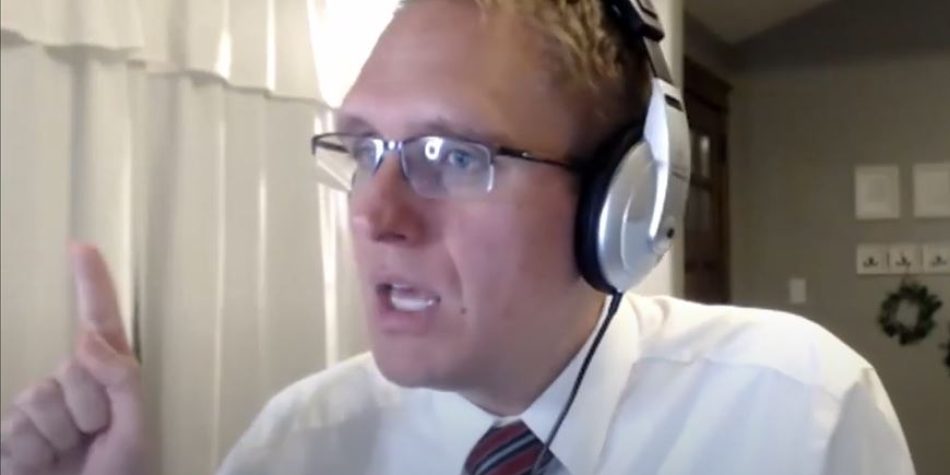
I chat with Greg Matsen of the Cwic show about Elder Holland’s BYU talk. We talk politics, CRT, religion and teaching policy. Fun to agree-and disagree-with him!


Research shows sexual violence is more likely where women are isolated, unsupported, undereducated, unmarried, and surrounded by addiction.

Discarded boundaries do not produce freedom when children, marriage, and human dignity are treated as content.

Do bias charts capture real distortions? Absolutely; they also miss framing, sourcing, scale, and beat inexperience

Plenty of horrifying things in history have been justified as accomplishing “great good.” That’s true of the atrocities in Ukraine. And it’s also true of those tearing apart the faith of believers young and old.
The Church News had a report yesterday on a ward in Calabar, Nigeria serving a local orphanage. The Young Single Adult Ward had recently been pondering the hymn “Have I Done Any Good,” and decided that they could make a difference by serving a local orphanage. The ward members brought food and supplies, and prayed and sang with the children. The staff noted how timely the gifts were as they continue to recover from the negative effects of COVID-19.
Summary – Pyre joins Taba in talking with Prophet Onias about how Ron’s belief that he is the “One Mighty and Strong” tempted him into immoral behavior. In a flashback, Ron interrogates Matilda about the warning she gave Brenda and gets information about who helped Diana disappear. He comes up with the removal revelation, which Onias immediately rejects, but Dan pushes back, saying his doubts are just what an unbeliever would say. Ron brings out a blade he’s “consecrated” for the purpose. In the present, Pyre finds out that Ron has Diana’s address in Florida because their son sent a letter with a return address. Pyre struggles in his office to write out a testimony, presumably to give in church to fulfill his wife’s requirement or he quips to Taba he’ll “be single by fall.” Pyre is talking to Allen again when an unidentified church leader is brought in by Taba (I’m still not sure if it’s the stake president or a seventy). The church leader again pressures Pyre to wrap the case up, saying the church doesn’t need more bad press after the 1978 revelation and the “communists at the NAACP.” He then regales with Taba about how his “Lamanite” ancestors helped the Saints in the Mountain Meadows Massacre. Allen and Taba both dispute this interpretation, and the church leader leaves after brushing the dust off of his shoes against them. The detectives call the Florida police to do a welfare check on Brenda. They break into her home and find no one there, but security footage from a local store shows Diana and her kids at the grocery store four days ago. She looks behind her and is frightened by something, causing her to leave the groceries on the counter and quickly exit the store with her family. At the police station, Jacob Lafferty, the mentally handicapped brother, wanders in and briefly causes a tense situation before turning over Dan’s journal to the police. Turns out he was the one who bolted from the cabin in episode 3. He was under orders to protect “God’s word” but heard the press conference and wants to help solve Brenda’s murder because he had a crush on her. Pyre reads the journal, which reads like scripture, and finds out that Dan and Ron were holed up in Las Vegas earning money by gambling when they received the “revelation” that it was time to start the killing. Somehow (it’s not clear how) he knows that at that point Diana called Brenda to warn her and also called the prophet, which Pyre calls “bold as it gets for a woman.” He wants to fly out to Florida immediately to look for Diana. While he’s packing for the trip, Becca Pyre walks in. She’s disappointed he’ll be skipping out on Sunday’s testimony meeting. We find out that she’s the one who called the church leader on him. Pyre again orders her not to interfere with his investigation, pulling rank as the priesthood holder again. He claims that early church leaders saw “little girls and women as eternal servants” and that he’s afraid of what will happen to his daughters in the church. Ron’s car is located in Cheyenne and so the detectives are rerouted to there to investigate. They find the two strangers, Ricky and Chip, identified by Ma Lafferty in a previous episode. Ricky and Chip claim Dan and Ron are in Reno trying to make more money so they can finish their list, and that they stole the car to get away because they were disturbed by the murders. In flashback, we see Ron and Dan preparing for the murders at the Lafferty house, leaving Sam and Jacob behind. They stop by Robin’s home to ask for his rifle but he doesn’t have it. Ron leans in and kisses Robin on the mouth and then leaves. Now we come to the actual murder. Ron knocks on Brenda’s door, but no one answers, so they drive away. Brenda comes in from the backyard, calls Allen worried that there’s someone at the door, but no one is there. She goes out to check the mail and finds a letter from Diana which she writes a reply to. Back in the car, Dan stops in the middle of an intersection and attempts to wrest religious control back from Ron, saying that this was just a test of their faith and they should go back and try again. This time, Dan knocks on the door. Brenda answers and immediately tries to shut the door. She is overpowered by Dan who knocks her to the ground. She tries to convince Ron that this isn’t who he is and quotes scripture to them about being cast to outer darkness and testifies that she knows God will make her whole again. Ron cuts the cord from the vacuum cleaner that will be used to strangle Brenda before the camera cuts away to Dan and Ron leaving the house covered in blood. They drive to the Lows, find them not home, and miss the turn to the stake president’s home. Dan interprets this as a sign that they should stop killing and regroup, focusing on Diana so that he can keep Ron involved. Pyre and Taba are searching on the side of the highway where Ricky and Chip have told them the Laffertys discarded the weapon. Pyre worries that the men lied because they are atheists, but Taba asserts that it’s Mormons who have an allergy to facts. He shares the version of the Mountain Meadows Massacre that he was taught as a child, and eventually they find the murder weapon on the side of the road. The detectives return to Reno to search for the brothers, with Pyre trying to get details without a warrant by reminding the casino owner that “if there’s one thing our people have in common, it’s that we hate the feds crawling around our home.” They hear back from the Florida agents who
What should believers do amid extremism and grief? They choose peacemaking, refuse contempt, and honor every soul.

Stay up to date on the intersection of faith in the public square.