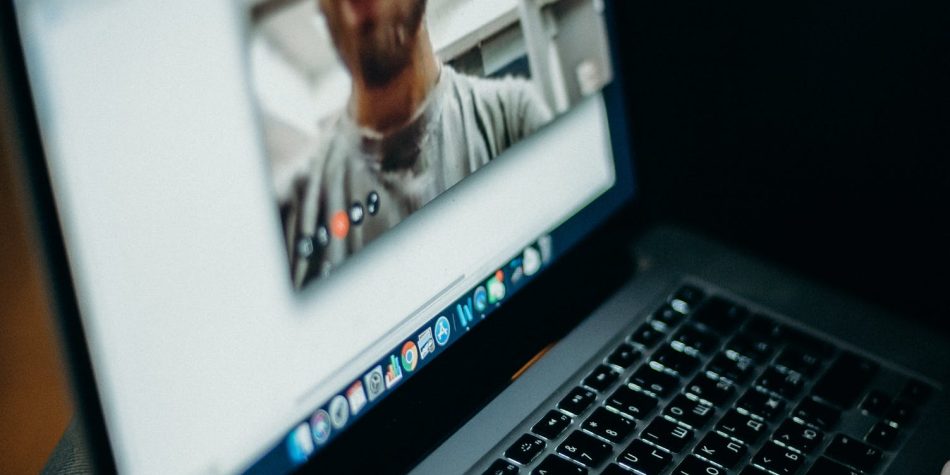
On Junteenth of 2020, I was co-hosting a video call among predominantly white organizational leaders when our call was interrupted by vile, racist and misogynistic neo-nazis. Their goal was to terrorize a group of peacemakers working on Equity in Democracy — the subject of our call.
We won the “battle” for control of the video call, removing them from the call one-by-one until they were gone. But their effect was felt by everyone who participated. Personally? I’m fine. As a child who was bullied, I know this energy and have stood up to it for a long time. For others, it was a visceral, first hand account of what many have experienced online – and sometimes in person – especially our black and brown friends.
Physically, my adrenaline shot up and I reacted as if I was under physical attack. The images of violence, pornography and Hitler were vile. The verbal threats were issued through a voice disguise mechanism. My desire to protect our guests, my co-host (a Black man) and use this moment as training was immediate and ongoing. Our team, also feeling that intense rush of adrenaline, each adopted their role in the battle, without a word being spoken. It bonded us more closely together.
Interestingly enough, this turned out to be the experience we needed in order to better address the mounting challenges that have emerged in recent months and help us better prepare for the emotional toll of it all. Now there are nightly protests in cities around the country. A physical battle for formal and informal power shifts seems to have begun. And it will likely play out, in small and large ways, until we make a new agreement with one another.
These new understandings and shared commitments will heal our land.
What is a “new agreement”? Historically, we advance, through protests, debates and conflict and then formalize our agreement in amendments to the constitution and major legislation. But the agreement precedes the legislation. We build on top of our founding principles to address the legitimate concerns arising across the union. These new understandings and shared commitments will heal our land and move us into a future where we all feel more supported and hopeful.
Within that new agreement, there would be deeper appreciation and broader awareness for the extent to which the past has shaped our present experiences – and ways in which minority communities can be empowered as full citizens. The agreement would involve more tolerance of and reconciliation between different groups – which would, in turn, yield greater care and compassion among us – and healing on all sides.
To the neo-nazis who bombed our call for eight minutes. Thank you. Thank you for strengthening our resolve to be better, more caring and more compassionate human beings. I wish you had more care and compassion in your lives, too. I wish you knew that your happiness in the world lies in being of service to others. Your value, like that of all humans, is built-in.
Back to the point. Equity in democracy means that everyone has equal value and a voice in deciding our societal norms. Why do some people act on their need to feel superior to others? Why do others choose not to do the same? The need to be superior persists in all cultures as arguably a survival response that hides feelings of inferiority. I believe it is why so many are drawn to secret groups, conspiracy theories and other dark corners of humanity. This insistence on superiority is perhaps also the only way some have found to feel special – providing meaning to their life that is something beyond drudgery.
We are all children of the same God, whether we wish to believe that or not.
In turn, these people attempt to terrorize the rest of us because their survival is based on being superior. They are afraid of being at the bottom of the pecking order, so they seek to keep themselves in what they perceive as the “superior” group. Of course, their logic is deeply flawed because we are all children of the same God, whether we wish to believe that or not.
No one wants to be at the bottom of the pecking order, of course. The chicken who is lowliest in the flock is bedraggled and paranoid – since all the chickens can “peck them.” Humans have pecking orders, too. And the lowliest among the human pecking order are the people society blames for being weak and vulnerable. And we congratulate ourselves that we are not them.
This moment in history is an opportunity for people higher up in the pecking order to protect those at the bottom – the most vulnerable among us. As of this writing, there are dozens of communities that have sprung up in protest and have said “enough!” They are challenging the legacy of our existing enforcement system, calling for an end to police brutality and demanding accountability.
Change is uncomfortable. And justice delayed is justice denied. While we sit with our fears about violence and long for peace, we must remember that peace is not the absence of tension, but the presence of justice. Please don’t allow the agitators – a small fraction of left and right extremists intentionally seeking to sow chaos – to overwhelm the honest concerns of your fellow citizens. Let justice be the focus – as we all, rightfully, unitedly oppose those (on both sides) turning to violence as their frustrated expression because no solution feels viable..
Yes, we need order in our world. But we need to replace the pecking order with a more compassionate, even sacred order — written in a new social contract (laws or amendments + informal power) that outlines a culture of dignity-for-all embedded in healthy relationships and shared power. This is what we consider equity in democracy: An order where the weak and vulnerable are not pecked, but provided enough to survive.
This goes beyond noble words and aspirations, though. We must also provide skills and tools, education and community for us to thrive based on individual effort. Our yet-to-be-drafted agreements, aka social contract, would also make it easy for leaders to embody courage and stewardship; to become guardians of the people they are serving.
Many people are aware (or feel) that the world/society/social contract as we know it is dying/changing/broken. And what “will be” has not yet been created. We are in between the old world and the new. It is time to question the old and think seriously about building up the new. What will you choose?
A new social contract, based on the values we hold dear, would enact a civil sacred order.
Each of us ultimately must choose how we act. Will you and I support – or oppose – new understandings, and agreements coming into being? This will require dialogue, compromise – and a willingness to work with “the other side” – something increasing numbers see as impossible.
And what of the institutions already around us: Is your role to tear down or to build up? If you are tearing down, what are you tearing down? The new voices? The old system? If you are building up, what are you building? A new social contract or a bigger wall to protect what was?
I’m a builder. I build up people, systems and ideas that increase dignity for all. I listen to many voices — especially those with whom I disagree, because they are also important to include in the new social contract.
We can do this. And I know we can do this together. What can we imagine as our collective growth going forward? Without denying our fears or frustrations, what if we could also come together around aspirations for the future – both shared and unique?
I’m blessed in my life. I meditate to imagine a better future. I have diverse friends and colleagues across the political spectrum, across the country and of many ethnicities, who imagine with me and love working within a community to flesh out our vision of a “new world.” That’s something people of so many faith and philosophy backgrounds share – albeit with differing details.
Whatever our differences might be, we all can do our small part by upholding values and principles upon which our new social contract begins. Let’s create a civil sacred order for our nation and the world that is based on dignity and justice for all.