In recent weeks, our nation marked the 25th anniversary of the 9/11 attacks, which profoundly changed the world we, as Americans, live in. On October 7, the global Jewish community and its allies will commemorate the third anniversary of the brutal Hamas attacks on Israel, which have profoundly changed the world that every Jewish person lives in.
I feel these changes almost every day of my life. As the daughter of two Hungarian-born Holocaust survivors, I have long been aware of the evils of antisemitism. Yet the reality of that time of horror seemed like a nightmare from a world which, thankfully, no longer existed. Many thoughtful people believed that the deadly poison of Jew hatred had at long last been expunged from society following the Holocaust—that the sheer magnitude of the evil perpetrated against the Jewish people during World War II had somehow purged this cursed toxin from our body politic.
Furthermore, as my mother often reminded me in my youth, after 2,000 years of persecution in the diaspora, there was once again a Jewish home in the ancient land of Israel. She would say with sorrow, “If only Israel had existed during the Second World War, there would have been no Holocaust because there would have been a safe haven that those of us threatened by the Nazi death machine could have fled to.” It was a comforting thought that such vicious hatred could never again be unleashed on the Jewish people, but, in retrospect, it was naïve and simply wrong. October 7 exposed just how naïve and wrong such thinking was.
If you had told me the day after the attack that the worst atrocity committed against the Jewish people since the Holocaust would unleash an unprecedented tidal wave of global antisemitism, I would have dismissed it as absurd. Yet that is precisely what happened, and it continues as I write these words three years later.
The Warning Signs Were Already There
Looking back, the signs of danger were all around. Let me explain with a bit of history. In 1947, the United Nations adopted a partition plan for the territory of the former British Mandate for Palestine in the Middle East. It called for two independent states: one Arab and one Jewish, with Jerusalem and Bethlehem as part of a special international zone that would have been administered by the U.N.
Israel accepted the partition plan, while all the Arab nations rejected it. Egypt, Transjordan, Syria, and Iraq launched a war against the newborn nation of Israel. The secretary-general of the Arab League, Abdul Rahman Hassan Azzam, declared that this would be “a war of extermination” and promised “a momentous massacre.” He advised a British official that “It does not matter how many Jews there are. We will sweep them into the sea.” He was not alone in announcing the Arab armies’ genocidal intentions vis-à-vis the Jewish state.
Thankfully, they failed in their efforts to “drive the Jews into the sea,” and in 1949 Israel became the 59th member of the U.N. by a vote of 37 to 12 with 9 abstentions.
As the daughter of two Hungarian-born Holocaust survivors, I have long been aware of the evils of antisemitism.
A more recent example of the U.N.’s moral corruption as it relates to the Jewish homeland is one that hits close to home. The U.N. held a World Conference Against Racism in Durban, South Africa, 25 years ago, which was originally meant to combat global discrimination and slavery. Instead, it devolved into a festival of hate that demonized Israel and engaged in sickening antisemitism. My father, Tom Lantos, the only Holocaust survivor ever to serve in the U.S. Congress, led the congressional component of the American delegation to this shameful conference. As participants distributed blatant Nazi-style caricatures of hook-nosed Jews and thousands marched in the streets with signs reading “Hitler should have finished the job,” individual Jewish participants faced nonstop harassment and intimidation. At the direction of Secretary of State Colin Powell, my father spearheaded the walkout of the entire U.S. delegation and subsequently denounced the conference as “the most sickening and unabashed display of hate for Jews” that he had witnessed since the Nazi era.
Just as with the October 7 attacks, a rational person would expect that this “Durban debacle” would have led to profound regret and introspection on the part of the global diplomatic and human rights communities, along with a sincere attempt to right a ship that had so clearly foundered on the rocks of moral confusion and hatred. That did not happen. On the contrary, many historians mark this terrible episode as the start of a dark new era in which the language of human rights was laundered and hijacked to denigrate, slander, and isolate the Jewish homeland.
Criticism and Antisemitism
It is one of the points of pride in a vibrant democracy that its citizens can express loud and impassioned disagreement with their own government and others.
Natan Sharansky, former Soviet dissident and current chairman of the Institute for the Study of Global Antisemitism and Policy, has suggested a simple framework to help any fair-minded, nonracist person spot the difference between legitimate and hateful censure. Sometimes called the “Three Ds” test, it is an effective tool that, like the sword spoken of in Hebrews 4:12, is “quick, and powerful … a discerner of the thoughts and intents of the heart.” The three questions posed by the test are as follows:
- Is the intent of the criticism to demonize?
- Is the intent of the criticism to delegitimize?
- Does the criticism apply a double standard to the actions of the state of Israel that no other nation is subjected to?
If the answer to any of these questions is yes, then disagreement has devolved into something darker, and it has lost its legitimacy.
What Antisemitism Looks Like Now
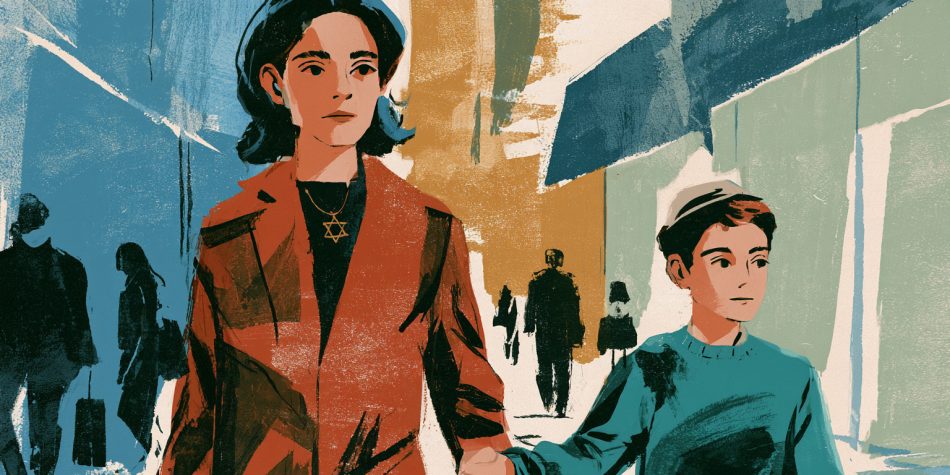
I wrote at the beginning of this article that, as a person of proud Jewish heritage, I live every day in this new world of pervasive antisemitism. This takes many forms, from people looking at me askance or making comments under their breath when they see my Star of David necklace, to the fear and worry I feel when I see a young Jewish boy wearing a kippah in public and wonder if and when he might be attacked, to watching the fear of so many Jewish students who face a climate of suspicion and exclusion on college campuses while so many university administrators remain indifferent to this reality. It also takes the form of my 95-year-old mother pleading with me not to publish this article because she fears that in this new climate of Jew hatred, it could bring me to harm.
Still, I am fortunate to continue to live in relative peace and safety. The same, sadly, cannot be said for many Jewish individuals and communities throughout the world. Antisemitism may begin as muttered comments and stereotypes, shifting to slurs and chants, but it always moves with alarming speed to violence. The examples are manifold and heartbreaking: An angry mob storming a Russian airport in search of Jewish passengers; two young Israeli embassy employees gunned down on the streets of Washington, DC, after attending an event focused on interfaith bridge-building; a fatal attack on a synagogue in Manchester, England, on Yom Kippur, with another suspected plot only recently foiled by the British police; an elderly Jewish woman killed by a violent flamethrower attack in Boulder, Colorado, during a peaceful march in support of the October 7 hostages; an armed driver plowing into a Michigan synagogue that also housed a preschool for more than 100 Jewish children; a modern-day pogrom in the streets of Amsterdam targeting supporters of an Israeli football club; and, most devastatingly, a Jewish community joyfully celebrating Hanukkah at Bondi Beach gunned down in broad daylight.
Choosing Light
Despite all these tragedies, and others too numerous to list, the darkness of this present moment cannot compare to the shadows that covered the earth during my parents’ childhood. Yet even then, when “evils were most free,” as the Jewish-Hungarian writer George Gabori put it, the light found a way to shine in the darkness and not be overcome by it.
I think of Denmark. My family lived there for three years while my husband served as the American ambassador to that country. We never tired of hearing or retelling the story of how the Danes rescued virtually their entire Jewish population from deportation, literally under the noses of their Nazi occupiers. For this national act of courage, Denmark has been uniquely recognized at Yad Vashem for its valor and humanity, with a special tree dedicated in its honor in the Avenue of the Righteous.
I think of the noble defiance of Moroccan Sultan Mohammed V, who refused the demands of the Nazi-collaborating Vichy government to turn over a census of Jewish Moroccans, instead reportedly stating, “There are no Jews in Morocco. There are only Moroccan subjects.”
I think of Albania, the only occupied European nation where the Jewish population was larger at the end of World War II than at the beginning. Following its noble code of “Besa,” which means “to keep the promise,” it extended protection to nearly 2,000 fleeing Jews, often at the peril of its citizens’ lives.
These heroic examples of light shining in the darkness give me more than hope.
These heroic examples of light shining in the darkness give me more than hope; they give me courage to face the evils of my day. I was recently reminded in an article by Daniella Greenbaum Davis about God’s very first act, as recounted in the book of Genesis. She writes, “The first thing God does in the Torah—before light, before land, before people—is draw a line. He separates light from darkness … day from night. Creation itself begins as an act of distinction … Right from wrong. Truth from fiction. Order from chaos.”
I sometimes despair that there are far too few people today who are willing to choose light over darkness. Then I think of Ahmed Al Ahmed, a Muslim father of two, who bravely charged the attackers at Bondi Beach and likely saved dozens of Jewish lives by doing so. When confronted by evil, he did not hesitate, and he put his life on the line to stop it. Most will not be called upon to show such courage in defense of their Jewish brothers and sisters, but I hope more will see his example and have the decency to at least speak out against the tidal wave of antisemitism that was unleashed on October 7.
As I reflect on that fateful day, three years on, I am grateful for those in history and today who have chosen light over darkness. I pray, and I must believe, that this will always be the choice that ultimately prevails in our world.