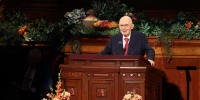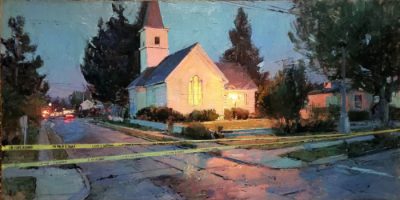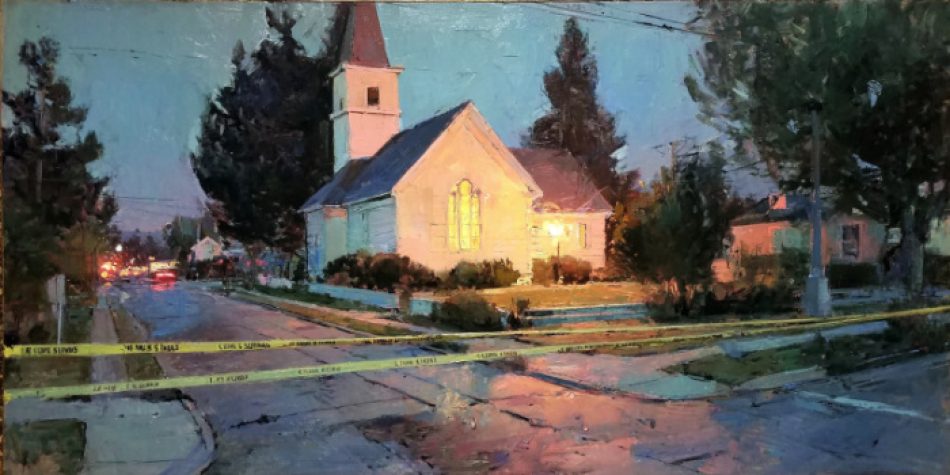

On a winter night in Montgomery, 1956, a young pastor stood at a pulpit preaching nonviolence while the movement’s enemies slipped a bomb onto his home’s front porch. When Dr. Martin Luther King Jr. learned his home had been bombed—with his wife Coretta and their infant daughter inside—he rushed home to find an angry, armed crowd gathering in the street. King raised his hands and pleaded for peace: “We must meet violence with nonviolence … go home and don’t worry. We are not hurt.” Then he sent people back to their families and back to their faith. The church remained the movement’s shelter, and the movement remained the church’s work.
That is one of our nation’s defining images of what sacred space is for. A sanctuary is not a fortress; it’s a promise. It promises that there is at least one place where the human person is not a problem to be solved by force but a soul to be received, heard, and protected. It promises a time‑out from vengeance long enough for justice, mercy, and reason to do their work.
But that promise has been pierced—again and again.
When the sanctuary is torn
The wounds are old. On a Sunday morning in 1963, terrorists placed dynamite under the steps of Birmingham’s 16th Street Baptist Church. The blast killed four little girls and shook a nation awake. Their names—Addie Mae Collins, Denise McNair, Carole Robertson, and Cynthia Wesley—still invite us to say never again with our whole chests. A sanctuary is not a fortress; it’s a promise. That promise has been pierced–again and again.
Two years later, the deadliest church shooting in American history struck First Baptist Church of Sutherland Springs, Texas—twenty‑six slain, twenty‑two wounded—on a Sunday that became a long Good Friday for a small town. That same autumn near Nashville, gunfire ripped through Burnette Chapel Church of Christ as worshipers were leaving morning service; one was killed, and several were wounded.
In 2019, at West Freeway Church of Christ, an attacker killed two congregants; the livestream captured the trauma of a sanctuary violated.
In 2022, a gunman opened fire at St. Stephen’s Episcopal in Vestavia Hills, Alabama, during a potluck, killing three retirees. That same spring in Laguna Woods, California, political hatred targeted a Taiwanese congregation meeting at Geneva Presbyterian; one man died shielding others as five were wounded.
And then came this late summer: a school‑year Mass at Minneapolis’s Annunciation Catholic Church was transformed into a scene of horror. Two children were killed. Twenty‑one people were wounded. A community of parents and grandparents in their Sunday best learned the meaning of intercession under fire.
And it’s not only bullets and bombings that have pierced the promise of sanctuary. It’s not only bullets and bombings that have pierced the promise of sanctuary.
For years afterward, our government tacitly restored a norm. But in January 2025, federal officials rescinded those “sensitive locations” protections and announced that churches would no longer be treated as off‑limits.
And now, as I write, we are once more confronted by blood on the sanctuary floor. On September 28, 2025, in Grand Blanc Township, Michigan, a man rammed his pickup into a Latter‑day Saint meetinghouse, opened fire on worshipers, and set the building ablaze. Four were killed and eight wounded; the suspect died after an exchange of gunfire with police. Investigators say he harbored a hatred of Latter‑day Saints. Whatever the motive, we can say what it was: an act of targeted violence against a people at prayer.
If sanctuary is the promise, these are its betrayals.
Why sanctuaries matter—still
Sanctuary is older than our nation and broader than our denominations. The Hebrew Scriptures created “cities of refuge”—an early recognition that justice without mercy becomes mere force.
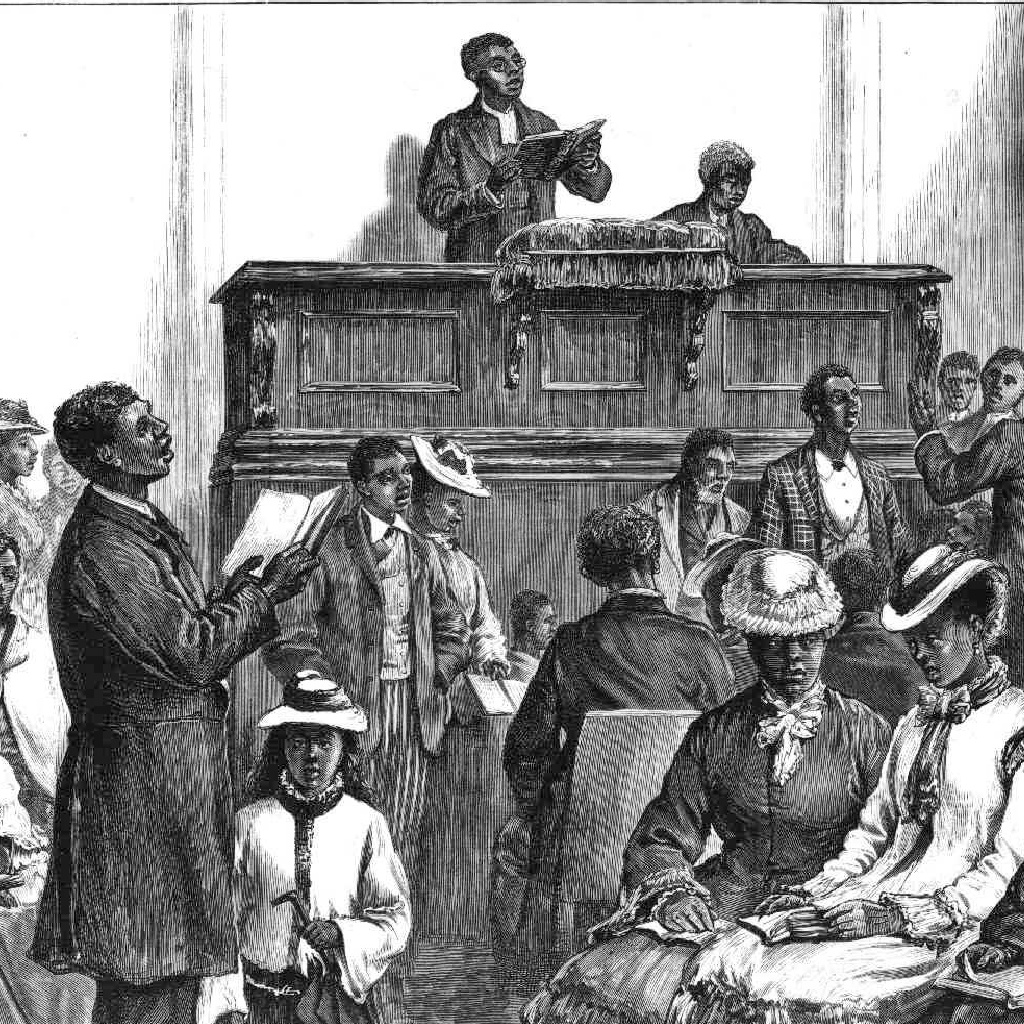
American churches have tried. Black congregations made their sanctuaries waystations on the Underground Railroad because conscience and Scripture would not let them return the image of God in chains. Civil rights churches kept their doors open to people who had been beaten by deputies and attacked by dogs. In the 1980s and again in our own decade, congregations of every stripe opened basements and parish halls to immigrant neighbors facing sudden separation from their children.
Even those skeptical of religion should recognize what is at stake. Houses of worship are where communities knit trust, where hungry people find food, and addicts find companions who will not give up on them. When our cycles of violence treat churches like just another address—or when hatred treats them like just another “soft target”—it sends a message: there is no place you can assume a modicum of peace. That message corrodes the very social capital our neighborhoods need to be safe.
What “re‑enshrining” sanctuary should look like
A renewal of sanctuaries in America does not require turning churches into islands above the law. However, it will require the re-entrenching of norms that the state respects. It requires recovering the moral wisdom that our law should serve.
We can re‑establish a bright‑line norm against enforcement actions in sanctuaries. Congress can codify what was once policy into law: absent a true, immediate threat to life or a judicially‑authorized exigency, federal agents do not conduct arrests in churches, synagogues, mosques, or their immediate grounds. This would align enforcement with religious liberty and with long‑standing American instincts about sacred space. Align enforcement with religious liberty and with long‑standing American instincts about sacred space.
Name and resist hatred for what it is. The Charleston murderer did not just kill; he desecrated hospitality offered across a color line. The Grand Blanc attacker allegedly nursed a bigotry toward Latter‑day Saints. We need moral clarity that the attack on a worshiping community is an attack on America’s promise to itself. Hate‑crime statutes and domestic‑terror tools should be used—fairly, consistently, and without fear or favor—to confront that reality.
And then we need to turn hatred into love. An Amish community in Pennsylvania put this into practice when they forgave and then helped the family of the man who murdered many of their daughters. Similarly, Latter-day Saints have raised more than $265,000 (at the time of publication) for the care of the family of the man who died while attacking their chapel.
A plea
Return, for a moment, to the home of Martin Luther King Jr. Glass on the floor. A baby’s cries. A crowd bristling with weapons. And a pastor who refused to let his people become what their enemies hoped they would become. King did not deny the danger or minimize the evil; he simply insisted on a better way. That choice—on a porch, in the dark—saved lives that night, and arguably the movement itself. The promise of sanctuary will never be perfectly kept … but the alternative is a country where nothing is sacred.
We need sanctuaries. We need places where the command ‘do not harm here’ holds.
The promise of sanctuary will never be perfectly kept; the list of violated spaces proves that. But the alternative is a country where nothing is sacred—not our neighbors, not the truth, not even the peace we claim to seek. That is not a future worthy of our children, or of the God so many of us worship.