“Deep” Norwegian Film About Nothing in the End

How does a community and the families within it respond to a nearly unspeakable accusation? How do you treat everyone with dignity? How do you suss out the truth? Do you need to?

“Armand,” the Norwegian submission for The Academy Award’s best international feature film, sets out as though it is interested in answering those questions.

The film opens with a young teacher, a principal, and a school staff member wondering what they are going to do. Armand has done something again. The parents are called in.

The film’s premise is that Armand was accused of hitting Jon in the bathroom when Jon said he didn’t want to play with Armand.

There are many additional revelations about the context, the relationship between Armand and Jon’s families, and the history of Armand’s family. There are accusations upon accusations that both indict and exonerate the boys and the adults around them.

But these revelations eke out. It feels like filling up a mug from a leak in the sink. “If you want us to know what’s happening, just tell us,” I felt like shouting at the screen more than once.

The film’s first act works well. The cinematography is ragged, framing its subjects well but always just off from what we’d expect. Too close, or the light is just wrong. It felt like how I imagine it would feel to have my child accused of something horrific. 

And when the parents first start talking the tension is terrific. Those first few drops of exposition in the mug were thrilling. Oh there’s something happening here; it’s complicated and interesting. 

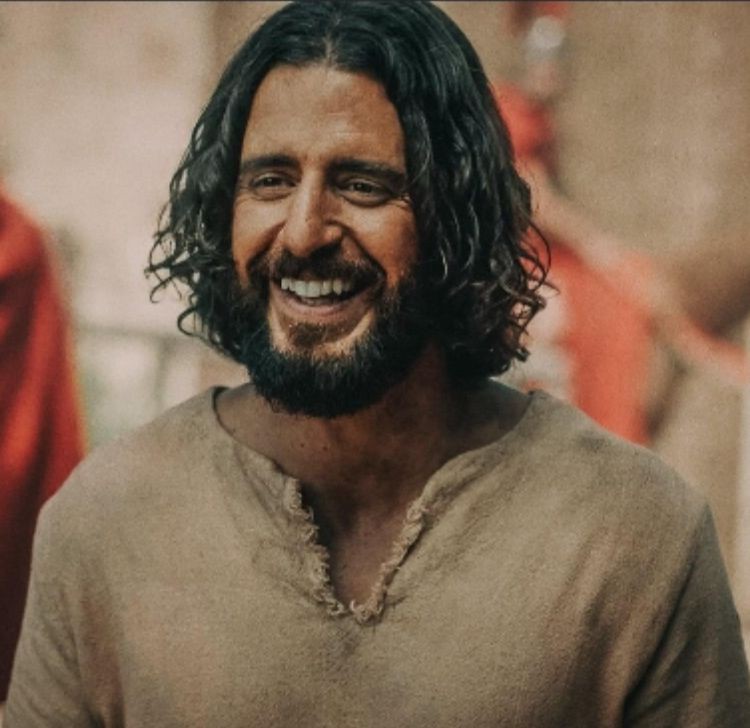
Thea Lambrechts Vaulen, plays Sunna, a young teacher in over her head trying to manage the meeting between Armand’s mother, Elisabeth, played by Renate Reinsve, and Jon’s parents Sarah and Anders played by Ellen Dorrit Petersen and Endre Hellestveit. 

Vaulen is particularly effective. She has been sent on a mission by her principal, Jarle, to make sure the whole thing blows over. Watching her struggle to navigate this while the parents are processing what’s been said is captivating.

But it just keeps going. 

The film’s entire second act consists of learning the basic facts of what has happened and the context around it. This is a complicated situation, and as a viewer I’m interested to see how the compelling characters navigate that situation. But the screenplay seems mostly interested in telling you the information. As though learning that Armand “plays doctor” at school is enough to compel me to the film’s ending.

But once the audience finally understands the situation, the third act begins and flies wildly off the handle into surrealism, including two interpretive dance numbers, three over-the-top metaphors, and five straight minutes of Anders’ mother laughing. 

The movie feels so desperate to be deep that it forgets to be about anything. It’s the first film of director Halfdan Ullmann Tøndel, so perhaps the bold ideas and beautiful cinematography will be wielded for a more worthwhile story next time.

The film is entirely in Norwegian. And its English subtitles include a fair amount of profanity, though not an overwhelming amount. And the accusations that fly include suicide, alcoholism, and sexual assault. So these are adult themes. The film is R-rated, but not an egregious one, it pretty well all takes place in a parent-teacher conference. 

I can’t imagine ever showing this to my kids. The themes are hard ones, and the film has nothing worthwhile to say about them.

Two out of five stars. Armand releases in US theaters on February 14, 2025.

On Key

You Might Also Like

The Ordinary Saint’s Guide to Under the Banner of Heaven

In an age that claims to value “own voices” media, it is sad that Under the Banner of Heaven is probably going to be the biggest story that the public sees about members of The Church of Jesus Christ of Latter-day Saints this year or this decade. While the tale it tells is based on an actual occurrence and about some actual problems within the broader movement of people hearkening back to Joseph Smith, one thing that can’t be said for either the book or the show was that they were written by a member of our community. The producer may have “grown up” as a Latter-day Saint, but he left the faith before he was an adult. If you’ve never had the experience of holding a calling, making temple covenants, or negotiating the relationships that make up a ward (Latter-day Saint congregation), are you really the best person to interpret our community? So I’m stepping in to offer my perspective. I am not a historian or theologian. So, though I try to be informed about the difficult parts of our religion’s past, I can only give you the perspective of what an average member would know or believe about these situations. I undoubtedly will get some of the nuances wrong. This will not be the best place if you’re looking for information about the historical accuracy of the show. (Consider checking FAIR’s guide or Book of Mormon Central.) However, I am an active participant in the larger Latter-day Saint literary community. I’ve written essays about my own life as a woman in the Church and fictional stories about others. I studied Latter-day Saint literature in college and continue reading contemporary Latter-day Saint literature. I am on the board of the Association for Mormon Letters, an organization that promotes literature written by, for, or about those who tie back to the prophet Joseph (including members of The Church of Jesus Christ of Latter-day Saints, but not exclusive to our denomination). So you might say I have some experience with portrayals of the Latter-day Saints and separate fundamentalist communities. The purpose of this series of recaps is two-fold. First, I want to summarize the series for ordinary Latter-day Saints who don’t intend to watch it so they won’t be surprised around the metaphorical watercooler this week. Second, I will catalog the series as it compares to Latter-day Saint literature more broadly. As a writer, reader, and advocate of Latter-day Saint literature, this is my home turf. I am interested to see where the show gets things right and wrong. Granted, my experience isn’t the experience of every member; like any community, Latter-day Saints are not a monolith. But I will compare the show to my personal knowledge of our community and talk about what sticks out. Without further ado, here are my impressions of the first two episodes of Under the Banner of Heaven. Episode 1, “When God Was Love”  Summary—The episode opens with Detective Pyre being called away from his family’s Pioneer Day celebrations to visit a crime scene. At an ordinary suburban house, he finds a scene of chaos with a mother (Brenda Lafferty) and her 15-month-old daughter (Erica) murdered in a gruesome way. (Luckily, we are only shown large quantities of blood on the floor and walls; the show shies away from showing the bodies, though we will get hints through dialogue about the exact method of killing.) Soon the husband (Allen Lafferty) is taken into custody, his clothes soaked in his wife’s blood. The killer claims that his wife was murdered by men with beards like “Mormon prophets” and continually ties his wife’s murder back to early church history stories, particularly Joseph and Emma marrying against her father’s will. We then get a flashback to a young Brenda. She is an energetic and ambitious young woman who transfers to BYU after being tired of “holding girl’s hair back while they puked” at her party school in Idaho. Allen introduces Brenda to his family at a large family dinner. His brothers seem both strangely attracted to her and judgmental of her for her ambition and less strict faith (caffeinated soda is mentioned). The Lafferty family band together to clear a neighbor’s land to prevent it from being seized by the federal government to build a highway. In the present, Detective Pyre’s partner Bill visits Allen’s brother Robin’s home and finds the house abandoned and papers burning. They arrest Robin after a chase through a motel. This episode depicts the First Vision. It shows Joseph going to the woods to pray and a light shining down on him. The script draws parallels between Joseph’s prayer and Robin’s prayer in the woods before he is caught by the police, which doesn’t really make much sense except that they are both kneeling in a natural setting. We also get a scene of Joseph and Emma discussing whether to marry against her father’s wishes. The show tries to make a big deal of them choosing between “God’s will” and her father’s authority, implying that the problem is that they can justify almost anything as God’s will. I found this assertion pretty strange, given that Joseph and Emma were hardly the first couple to marry against a parent’s wishes. It seems a thin justification on which to hang a condemnation of trusting God. Shibboleths—It’s apparent that the showrunners have made an effort to try to include jargon of Latter-day Saints in the dialogue. Sometimes this works: the Pyre family prayer scene feels exactly like the ones that take place in my family. Others make it apparent that the writers are not members of the community. While we do refer to God as Heavenly Father, particularly in prayer, we don’t use this term exclusively like the characters in the show. I regularly hear members refer to him as “God” or “the Lord,” and a brief search of the church’s 1980’s general conference talks shows that this isn’t a new innovation. While there is

Mapping Public Disagreements about Vaccine Mandates

The intensity of feelings around vaccine mandates makes clear comprehension of what other people actually believe more difficult, and less likely across the board. Mapping out summary positions held on key questions might help a little, at least as a step in the right direction.

Mother Figurine Holding a Baby | Public Square Magazine | Meaning of the Lyrics Peace on Earth, Goodwill to Men

Now is the Time for Peace on Earth, Goodwill to Men

You’ve heard it before: “Peace on earth, goodwill to men.” Whether viewed as prophecy for a hopeful future, as rebuke to a fallen world, or as the deep aspiration of many human hearts, these words invoke wonder still today, especially at a time like 2020. I believe these words point towards legitimate reasons for great hope in humanity’s future, even in the midst of our current distress. A closer look at their meaning provides a glimpse into bright possibilities. The modern-day enshrinement of these words was penned by the hand of Henry Wadsworth Longfellow during a time of deep personal sadness and grief in his 1863 poem “Christmas Bells.” Subsequently, these words have been sung by millions as the hymn “I Heard The Bells On Christmas Day.” Sadly, few choirs will sing this popular carol during the Christmas season this year as many of our most cherished traditions are disrupted by the continuing, unprecedented epidemic.  Notwithstanding the familiarity of these words in the modern context, their first recorded rendering came anciently in a most unusual setting. It was one of the few instances in all of secular or religious writings where an entire host of heavenly beings—angels—came to deliver a message to a few lucky ones on earth. Their entire message as recorded in Luke 2:14 of the New Testament was “Glory to God in the highest, and on earth peace, good will toward men.” If there was more to the message or not, we don’t know. But this was the message that was recorded and handed down over thousands of years since that momentous event.  It was this short heavenly song of praise that Longfellow was referring to when he lamented that “hate is strong and mocks the song of peace on earth goodwill to men.” Then as now, we join Longfellow in observing a world stricken with contention, tragic death, and human suffering with no clear end in sight. As a bold counterpoint, however, his poem and the hymn conclude with a resounding proclamation of hope that indeed there will be yet “peace on earth and goodwill to men.” Is it possible to find for ourselves this same hope of which Longfellow wrote so long ago?    Some might assume that the author had somehow arrived at more pleasant circumstances and material conditions. Yet in describing his world that Christmas morning in 1863, Longfellow was feeling the weight of personal tragedy in the death of his wife and the strife of a hot civil war spreading devastating carnage across the land. In such a heavy time, he couldn’t help but underscore how much the surrounding hate he saw in the world seemed to mock the idea of peace and goodwill – a word that suggests to “tease or laugh at in a scornful or contemptuous manner.” The hate he was referring to, and which has the power to infect us in our own day, was between groups of people and between individuals who looked at each other with scorn and contempt. In an environment that fosters hate, any suggestion that feelings of scorn and contempt might be replaced with feelings of peace and goodwill can seem to be almost laughable (another reason it’s powerful to have a heavenly host delivering this message to the world).   We sometimes think of peace and goodwill as synonyms. They are not. In fact, they represent very different human conditions – either one by itself being incomplete. But together they weave a social fabric of heavenly dimensions. There are many examples of one without the other, but relatively few of both existing and being sustained for any great length of time.  In its simplest form, peace could be defined as the absence of conflict. When this kind of peace is voluntary, due to an underlying feeling of goodwill toward all, it is a wonderfully satisfying human condition.  However, a “peaceful” absence of conflict can also be achieved through coercion, even in the notable absence of goodwill. In that case, it comes at the obvious, and dear price of freedom and liberty and represents a most cruel form of the human condition. Coerced peace is usually a political construct as it requires overwhelming use of force to constrain human behaviors. There have been modern examples of peace without goodwill in the recent past. One can reflect on Yugoslavia, Libya, Iraq, and other nations. For example, Yugoslavia was created after World War II as a federation of six different ethnic regions. A strong central governing party ensured that conflicts were resolved emphatically and quickly. There was “peace,” but without the underlying goodwill among the different ethnic groups. Under Josip Broz Tito the country experienced an extended period of prosperity characterized by enforced peaceful interaction among the various ethnic groups. In many ways, it was considered a model of economic success.  But after Tito died in 1980, the ability to continue the peaceful climate through coercive means declined, and the unresolved conflicts among the different ethnic groups emerged with frightening consequences in human suffering for the whole country and region. In a relatively few years, the region completely lost both its peace and prosperity.  Similar events have unfolded in other countries where peace was enforced despite the absence of “goodwill toward men.” As the power to enforce coercive peace diminishes, people are subsequently often subjected to tragic suffering that can take decades and even generations to overcome to a point of regaining a semblance of stability. In short, peace without goodwill has a terrible historical record for producing great human suffering in the end.  Unlike “peaceful” conflict suppression, goodwill to men cannot be coerced. It is almost by definition an innate feeling of each individual human heart. It can be contagious, and it often seems to be either in large supply or in short supply in a particular family, community, or nation. It would seem that goodwill to other human beings is something that would be a universal good. However, once again we find that

Subscribe To Our Weekly Newsletter

Stay up to date on the intersection of faith in the public square.

You have Successfully Subscribed!

Pin It on Pinterest

Share This