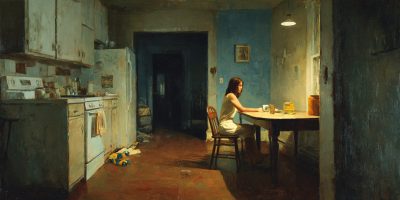
The Room Next Door Review

“The Room Next Door” is the latest example of arthouse social engineering. 

The film is about a troubled woman, Martha, who in the midst of cancer treatments decides to commit suicide. If this bothers you, the film implies, it is because there is something wrong with you.

This is all the more troubling, because the film, in many ways, is beautiful. It is directed by Pedro Almodóvar, one of the most acclaimed living film directors, in his first full-length film in English. And you can’t help but be taken by the beauty of it all. The film is suffused with the soft colors of the woods. Despite being an entire screenplay full of little except two friends talking, the camera work keeps the film alive and moving. And Julianne Moore and Tilda Swinton who play Ingrid and Martha once again give impeccable, engaging performances, that you can’t help but admire. 

But all the beauty in this film is in service of a story that is decidedly ugly—but not self-awarely so.

Our two main characters are old friends who met as young writers. Ingrid has published a best seller recently, where she writes about how she can’t accept death. On her publicity tour, she learns that Martha is in the hospital with cancer. She goes to visit her and reignite their friendship.

We learn through the conversations that these characters aren’t bad people, necessarily, they just struggle to see a world outside of their own desires and consciousness. They have repeatedly avoided building relationships or having families. Martha does have a daughter. But she chased her father away, then lied to her about who he was her whole life, and then proceeded to be an absent mother so she could chase the romanticism of being a war correspondent. 

Now that she is sick and dying, she notices that she has no one in her life. The movie comments on this like an unusual quirk, rather than the inevitable result of a life of bad decisions.

We learn early on that cancer treatment can be a roller coaster with euphoric peaks, and miserable nadirs. During one such rut, Martha purchases a suicide pill, and decides she will kill herself. She reaches out to Ingrid and asks her to come on vacation with her, so that she will have someone in the house when she does it. 

Ingrid agrees. And although she early on expresses some discomfort, she quickly respects Martha’s wishes to largely pretend nothing is happening.

They have a lovely vacation in upstate New York watching old movies and reading books. While they are there, Ingrid reconnects with Damien (John Turturo) an ex-boyfriend of both hers and Martha’s. He is horrified at the state of the world, and seems to only live for sex (or to constantly talk about sex.)

Damien is not a sympathetic character, and perhaps the audience is supposed to read that his unpleasant and helpless politics are akin to Martha’s helpless approach to life. If so the audience hardly has time to ponder it under a heavy heaping of affirmations about the power to choose, and the dignity to die. 

Eventually, Martha does exactly what she promised to do. There is a brief police investigation where the officer (Alessandro Nivola) expresses concern that Ingrid would have knowingly not gotten help for her friend. A lawyer comes and helpfully tells the audience we can ignore that concern because he is a religious fanatic.

This is the kind of movie that alludes to James Joyce not just once but three times. It is so pleased with just how artsy it is. And for a film with a message like “life isn’t worth fighting for,” the best comfort is that it’s so artsy not a lot of people will watch it. 

The only people I would recommend watching this film is for those studying how society has devalued human life, and how good tools can be misused to harm people.

The film is rated PG-13. It includes several normalized same-sex relationships, and some joking about polyamorous relationships. But obviously the biggest warning is the way it normalizes and glamorizes suicide.

If you watch it with older teenagers, I would focus on questions about the choice that Martha made, and how family and relationships could have helped her make better choices. I might ask about how Ingrid could have been a better or more caring friend.

One out of five stars. “The Room Next Door” will be released in theaters nationwide January 17, 2025.


On Key

You Might Also Like

Close up of Woman's Upward Facing Palms | Moderate, But Not Lukewarm | Public Square Magazine | The Virtue of the Lukewarm | Lukewarm Christianity

Moderate, But Not Lukewarm

There is wisdom in holding space for competing important priorities, while seeking contextual cues in difficult matters to discern the right course. Let’s not confuse that with being “lukewarm.”

Understanding Demons

Popular culture often uses demonic themes for shock value, with many modern commentators denying the existence of Satan or demons outright. But believers benefit from understanding the reality of demonic influence, and clues to the nature of that influence are found in the demons’ own words in scripture.

The Ordinary Saint’s Guide to Under the Banner of Heaven

In an age that claims to value “own voices” media, it is sad that Under the Banner of Heaven is probably going to be the biggest story that the public sees about members of The Church of Jesus Christ of Latter-day Saints this year or this decade. While the tale it tells is based on an actual occurrence and about some actual problems within the broader movement of people hearkening back to Joseph Smith, one thing that can’t be said for either the book or the show was that they were written by a member of our community. The producer may have “grown up” as a Latter-day Saint, but he left the faith before he was an adult. If you’ve never had the experience of holding a calling, making temple covenants, or negotiating the relationships that make up a ward (Latter-day Saint congregation), are you really the best person to interpret our community? So I’m stepping in to offer my perspective. I am not a historian or theologian. So, though I try to be informed about the difficult parts of our religion’s past, I can only give you the perspective of what an average member would know or believe about these situations. I undoubtedly will get some of the nuances wrong. This will not be the best place if you’re looking for information about the historical accuracy of the show. (Consider checking FAIR’s guide or Book of Mormon Central.) However, I am an active participant in the larger Latter-day Saint literary community. I’ve written essays about my own life as a woman in the Church and fictional stories about others. I studied Latter-day Saint literature in college and continue reading contemporary Latter-day Saint literature. I am on the board of the Association for Mormon Letters, an organization that promotes literature written by, for, or about those who tie back to the prophet Joseph (including members of The Church of Jesus Christ of Latter-day Saints, but not exclusive to our denomination). So you might say I have some experience with portrayals of the Latter-day Saints and separate fundamentalist communities. The purpose of this series of recaps is two-fold. First, I want to summarize the series for ordinary Latter-day Saints who don’t intend to watch it so they won’t be surprised around the metaphorical watercooler this week. Second, I will catalog the series as it compares to Latter-day Saint literature more broadly. As a writer, reader, and advocate of Latter-day Saint literature, this is my home turf. I am interested to see where the show gets things right and wrong. Granted, my experience isn’t the experience of every member; like any community, Latter-day Saints are not a monolith. But I will compare the show to my personal knowledge of our community and talk about what sticks out. Without further ado, here are my impressions of the first two episodes of Under the Banner of Heaven. Episode 1, “When God Was Love”  Summary—The episode opens with Detective Pyre being called away from his family’s Pioneer Day celebrations to visit a crime scene. At an ordinary suburban house, he finds a scene of chaos with a mother (Brenda Lafferty) and her 15-month-old daughter (Erica) murdered in a gruesome way. (Luckily, we are only shown large quantities of blood on the floor and walls; the show shies away from showing the bodies, though we will get hints through dialogue about the exact method of killing.) Soon the husband (Allen Lafferty) is taken into custody, his clothes soaked in his wife’s blood. The killer claims that his wife was murdered by men with beards like “Mormon prophets” and continually ties his wife’s murder back to early church history stories, particularly Joseph and Emma marrying against her father’s will. We then get a flashback to a young Brenda. She is an energetic and ambitious young woman who transfers to BYU after being tired of “holding girl’s hair back while they puked” at her party school in Idaho. Allen introduces Brenda to his family at a large family dinner. His brothers seem both strangely attracted to her and judgmental of her for her ambition and less strict faith (caffeinated soda is mentioned). The Lafferty family band together to clear a neighbor’s land to prevent it from being seized by the federal government to build a highway. In the present, Detective Pyre’s partner Bill visits Allen’s brother Robin’s home and finds the house abandoned and papers burning. They arrest Robin after a chase through a motel. This episode depicts the First Vision. It shows Joseph going to the woods to pray and a light shining down on him. The script draws parallels between Joseph’s prayer and Robin’s prayer in the woods before he is caught by the police, which doesn’t really make much sense except that they are both kneeling in a natural setting. We also get a scene of Joseph and Emma discussing whether to marry against her father’s wishes. The show tries to make a big deal of them choosing between “God’s will” and her father’s authority, implying that the problem is that they can justify almost anything as God’s will. I found this assertion pretty strange, given that Joseph and Emma were hardly the first couple to marry against a parent’s wishes. It seems a thin justification on which to hang a condemnation of trusting God. Shibboleths—It’s apparent that the showrunners have made an effort to try to include jargon of Latter-day Saints in the dialogue. Sometimes this works: the Pyre family prayer scene feels exactly like the ones that take place in my family. Others make it apparent that the writers are not members of the community. While we do refer to God as Heavenly Father, particularly in prayer, we don’t use this term exclusively like the characters in the show. I regularly hear members refer to him as “God” or “the Lord,” and a brief search of the church’s 1980’s general conference talks shows that this isn’t a new innovation. While there is

Subscribe To Our Weekly Newsletter

Stay up to date on the intersection of faith in the public square.

You have Successfully Subscribed!

Pin It on Pinterest

Share This