Over the last couple of years, I have decided to focus on improving myself in one area where the world has recently been given counsel by latter-day prophets and apostles, to do and be better: rooting out racism.
In his now well-known and oft-cited message in which we were told to “let God prevail” in all aspects of our lives, Russell M. Nelson asked faithful disciples of Jesus Christ “everywhere to lead out in abandoning attitudes and actions of prejudice.”
A Process of Healing
My personal scripture study over the past couple of years has, in some measure, dealt with the Sermon on the Mount and how I, as a follower of Jesus Christ, can learn the traits He preached about therein. Like much of Jesus’s personal ministry, this sermon focuses on forms of healing that transcend the world through the actions of His followers. Terryl Givens states that in seeking our own salvation or healing: “We crave wholeness so that we might be healers with Him.” We can be agents of Christ as healers of the world from the sin of prejudice and racism.
Pres. Nelson has assertively reminded us that prejudice against another race is a cause for repentance. Going a bit further back, this important truth was emphasized in 2000 by Elder Alexander B. Morrison of the Seventy: “Unfortunately, racism … remains one of the abiding sins of societies the world over. The cause of much of the strife and conflict in the world, racism is an offense against God and a tool in the devil’s hands. In common with other Christians, members of The Church of Jesus Christ of Latter-day Saints regret the actions and statements of individuals who have been insensitive to the pain suffered by the victims of racism and ask God’s forgiveness for those guilty of this grievous sin. The sin of racism will be eliminated only when every human being treats all others with the dignity and respect each deserves as a beloved child of our Heavenly Father.” “Racism is an offense against God and a tool in the devil’s hands.” Alexander B. Morrison
The Pulitzer Prize-winning African-American novelist Toni Morrison wrote, “Cycles of violence play out across generations. The wounds do not simply go away.” These wounds have become all too evident in recent years as our nation has had to come to terms with what Dallin H. Oaks called a “history of racism [which] is not a happy one.”
Loving healing is not only avoiding new wounds but healing existing ones. One part of healing the profound divides in our society is nurturing a society that goes out of its way to explicitly and actively include those who have previously been left out. Simply not excluding is not enough. Now is not the time for benign neglect; it is the time for loving welcome! Elder Quentin L. Cook has taught that “we can achieve greater unity as we foster an atmosphere of inclusion and respect for diversity.” The majority culture proclaiming “color-blindness” and pretending like the wounds are too old for concern isn’t healing anyone: though not an overt act of racism, this attitude perpetuates the woundedness.
There’s a lot of healing and including out there to be done. And now is the day of healing. As Christians, every day can be a day of healing, in our own lives, in our circles of influence, and in our community at large. To this end, and based on my own experience over the last couple of years, I might humbly recommend some things that have proved useful in my own attempts to root out attitudes of prejudice and hopefully help heal with Him.
Mourn (Learn), Comfort (Empathize), Comfort (Engage)
Followers of Christ covenant to “mourn with those that mourn … and comfort those that stand in need of comfort.”
But in order to do this, I need to know who is mourning, who stands in need of comfort.
I have sought out stories and true-life accounts of people of backgrounds much different from mine and all equally worthy of love as children of God. These stories have helped me to better understand, and in the words of Russell M. Nelson, “grieve that our Black brothers and sisters”—and other minorities—“the world over are enduring the pains of racism and prejudice.”
These accounts range from stories of Somali orphans caught in colonial Africa during World War II and forced to serve as cannon fodder in colonial armies to the caste and ethnic warfare in Sri Lanka to the still current US Supreme Court case law that American colonies cannot be states because they are “savage” and “uncivilized tribes.” These accounts have helped expand my vision of how broad this problem is across the world and how much of this problem remains today.
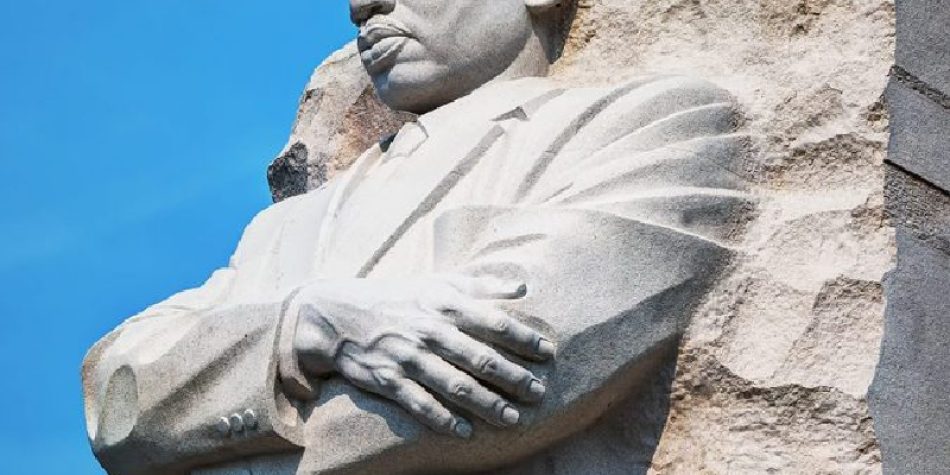
Once we know who is mourning, there are countless ways we can act to heal our world, to bring love to those who have been through the unspeakable and who bear the scars of generational wounds. In rooting out racism, we can’t all be freedom riders or Martin Luther King, Jr. We don’t all have a national platform or audience to preach to. But we can take up Jesus’ healing ministry of love, seeking justice, and making peace. We can all find ways to demonstrate kindness and a willingness to heal the divides in our communities.
These possibilities are not complicated but can require focused efforts to reconsider our attitudes. Perhaps foremost is simply listening and believing the stories of those in the BIPOC community. But we can also operate to enact cultural changes by lovingly offering course corrections when confronted with racist jokes, stories, terminology, or practices. We can also “root out” sources of racism from our media consumption.
While these steps can help us mourn, our duty and the path to healing also include comforting those in need. It is worth pointing out that in the times and places of the scriptures, providing comfort meant providing material and labor support as well as emotional support.
To that end, we can volunteer for community agencies that serve underprivileged communities. We can provide mentoring and pro bono assistance in our professions. And we can advocate for changes in school curriculums and workplace training that will do a better job of addressing issues of systemic racism.
Many of those fleeing from racism and ethnic strife come to our communities as refugees. A warm welcome to the newest members of our community is in order. We can stop the racist cycle and work to heal their wounds! Be a friend and a good neighbor: help with housework, shopping, transportation, or tutoring. Foster neighborhood and community gardens where those who come from predominantly agricultural backgrounds can grow the foods they know. Donate needed supplies such as backpacks, school supplies, household supplies, and baby goods. And, of course, provide financial support to local agencies that provide the framework to undertake such endeavors. One of my favorites is the Utah Refugee Connection.
As we seek to make generational change, perhaps most importantly, involve your children in these activities. My then seven-year-old daughter learned a lot, gained empathy, and really valued the chance to help with assembling kits of backpacks and school supplies for refugee children in our community. We can take up Jesus’ healing ministry of love.
Repentance means to change our minds and to change our purpose. Let us go forward with changed minds and hearts and a purpose of loving others this year and every year. Every day, we can be a little better. Every day, a little more love and kindness, wherever we have the opportunity. “[B]y small and simple things are great things brought to pass.” We can heal our world and root out racism, one attitude, one person, one act, and one day at a time.