7a9d1452-ec97-43af-ac2c-2431bb1f316c_1920x1080 (1) (2)

Processing the Unthinkable

Some of the charged responses to inexplicable tragedies like this are only understandable. And some are clearly standing in the way of both greater healing and more effective prevention of future violence.

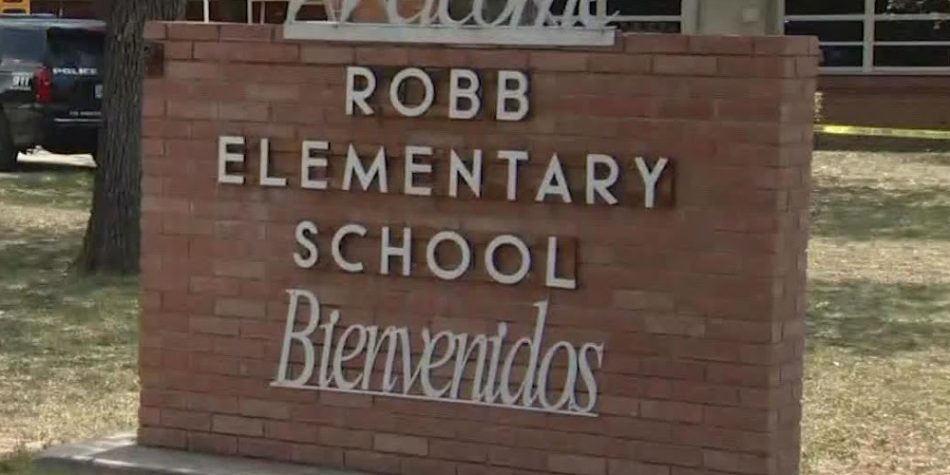
In the wake of more mass shootings, the most recent involving so many precious children, we are again replaying our typical responses. Let’s refuse to condemn anyone for how they respond to the unthinkable. School shootings in particular are situations where parents everywhere play out in their minds the hypothetical scenario of this happening to their own children. I don’t envision I will ever have a rational or emotionally measured response to that exercise.

The responses we see on social media reflect this dimension of human nature. In the denial stage of our grief, we put forward policy solutions that are not remotely reflective of reality. We look for people or institutions to blame, and usually settle on the familiar ones: our political opponents, who are always the ones preventing our society from reaching its ideals. Or we make claims in ignorance, such as that we are uniquely evil as a country, and/or these things don’t happen in other places.

But again, the denial stage is where we should give each other a maximum amount of grace, understanding that we are participating together in that difficult stage. Most of us are to some degree in denial. In tragedy, we have been reminded that despite our fondest wishes for the world to be kind or just or fair or simply manageable, often it is none of those. There is profound evil in the world, and despite our best efforts, we cannot control it. This reality can be downright overwhelming, so our responses reflect the thought processes of people who are overwhelmed.

Yet, at some point, we need to move beyond the flailing and screaming that characterize the denial and anger stages of acute grief. For the sake of the victims, for the sake of potential future victims, and for the sake of our own sanity, we need to move into healthier ways of engaging with reality.

In a time when healing is desperately needed, we need to be clear about what healing is, and what its counterfeits are, reflected in the moral grandstanding we see so often on social media and in our political speeches. True healing is never grounded in delusion or dishonesty. And when certain voices are telling us that our problems can be solved with the political defeat of this or that group; that our problems have nothing to do with the soul or spirit; that our problems would be totally resolvable with one or two policy fixes; or even that trying to fix our problems is futile, then we are engaging in shared delusion that serves as a significant barrier to healing.

Every one of us can prevent acts of violence.

It’s true that some amount of evil can be restrained or contained by addressing bad policy. Some amount of evil can also be restrained or contained with a focus on the spiritual dimension of our existence. And some amount of evil can be restrained or contained through the development of healthy families and communities. Ideally, we would speak in terms of multi-pronged solutions that address different dimensions of reality, and we would pursue these possibilities simultaneously.

But instead, we have activists for gun control who refuse to acknowledge any spiritual dimension to our problems, and who think that family integrity is irrelevant, or even that the family should be destroyed in the name of social justice. At the other end, we have activists who hold a laser focus on mental health or family context, but who refuse to acknowledge the value of even modest measures at gun control or red flag laws. On a personal note, I love guns. I hope to be able to buy and sell them as I please. And I know that making this process less convenient for a law-abiding citizen like me would not prevent every school shooting from happening. But what if my inconvenience, shared with other law-abiding gun people, could prevent five mass shootings? Or just one school shooting? Why do we, all across the political spectrum, insist on a 100% success rate in order for a policy solution to have any validity?

Even so, gun-control activists must recognize their policy solutions will have little impact on our larger crisis of meaning. In Chicago, the equivalent of a mass shooting happens on a regular basis, sometimes on multiple nights in the same week. China has recently been plagued by deadly mass stabbings, sometimes in schools. The Boston marathon carnage was perpetrated without any use of guns whatsoever. The reality is that evil finds a way, and evil’s way becomes much easier when people have concluded that the value of life is just another social construct, relative, whatever anyone deems it to be. With addiction and suicide rates skyrocketing, and guns available through illegal channels, how do gun control activists envision their policies would thwart problems that are rooted in the nihilistic soul?

For those of us seeking to foster real hope, instead of numbing and catharsis, there are happily better foundations available.  The system of meaning, purpose, and human connection within faith communities all across the nation has no substitute.  There is no after-school program or federal initiative that can take the place of what transcendence and sacred communion can gift us.

The best advocates are ones that refuse to demonize while remaining clear-eyed about every dimension of the problem.

And the more personal truth is that every one of us can prevent acts of violence. Every day as we are out in the world, we are encountering people on the edge, and we are encountering people who are close to family members and friends who are on the edge. Our decisions to show kindness and maturity wherever we are, whether that be at the grocery store, the DMV, or on social media, ripple out into humanity to influence others and pull them back from the edge of downward spirals into madness.

So when we see recent events and ask “what in the world can I do to prevent this?” The honest answer is that you likely already have contributed to the prevention of deadly violence on multiple occasions, just by being a kind-hearted person in the world. And it is also true that there are policy solutions that could use our advocacy. Yet the best advocates are ones that refuse to demonize while remaining clear-eyed about every dimension of the problem, seeking real solutions regardless of the political consequences that come from crossing people who crave catharsis and delusion over results.


About the author

Dan Ellsworth

Dan Ellsworth is a consultant in Charlottesville, VA, and host of the YouTube channel Latter-day Presentations.
On Key

You Might Also Like

LA Times Features Public Square Magazine

Several of the folks from Public Square Magazine were interviewed recently by Meredith Blake at the LA Times. She highlighted the ways that Latter-day Saints have reacted to the show Under the Banner of Heaven. Blake did an excellent job of representing our takes on the show. But we did have a couple of observations about the show mentioned in the interview that inevitably couldn’t make it, so I wanted to add those here for those who were curious. Jeb Pyre, the fictional detective portrayed by Andrew Garfield, is the main character viewers see the story through. But none of the four people being interviewed felt like Pyre was a good depiction of a thoughtful Latter-day Saint. Pyre is depicted as a well-established, thoughtful, fully-committed member of the Latter-day Saint community, yet the way he reacted to the information he learned felt less like the way an adult would respond to learning new things, and more like an adolescent response. Pyre’s character did resonate with some of us, from when we were teenagers. His character feels like it was written by someone who left the Church when they were sixteen, and remained mentally stuck in that place, and then tried to project those thoughts into a grown man, hoping to give them more validity. Consequently, the character feels flimsy. One of the other major observations from the interview was that we worried that the Church felt like it was part of the problem in the Lafferty murder when at the time, most members of the Church felt that they were part of the victims. These two men who had recently been excommunicated came back for revenge. In fact, the stake president was on their hit list. It seemed to place most Latter-day Saints on the opposite side of this issue than they felt at the time. The show’s writer, for his part, responded to these by engaging in the kind of motte and bailey techniques Cassandra Hedelius recently did a good job of identifying for us here at Public Square. Thanks again to Meredith Blake for her thoughtful interview.    

Exploring Complex Realities: This Month’s Featured Podcasts

In a world marked by ever-evolving societal norms and nuanced perspectives, these podcasts continue to navigate the intricate intersections of culture and faith. This month, the featured podcast episodes present thought-provoking discussions in a quartet of episodes, each tackling distinct aspects of some of our latest or upcoming articles. Family Bro Evening: “Ex-Brother Bundy and the Gift of Discernment” In this thought-provoking episode, the hosts of Family Bro Evening dive deep into one of the Church’s most notorious members, Ted Bundy, and the circumstances surrounding his time in Utah. The discussion extends to the role of the gift of discernment in our lives, both in the context of Bundy’s rampage and as a broader concept in faith and personal growth. It’s a gripping exploration of the intersection between faith, discernment, and the darkest aspects of human behavior. For consideration as a companion discussion to the article “Moving Toward Zion in an Age of Chaos” Sit Down With Sky & Amanda: “Please Don’t Be My Ally – Allies vs. Advocates for Christ” In this compelling episode, our hosts delve into the multifaceted challenges surrounding LGBTQ+ issues within religious communities. The spotlight is on the limitations of moral relativism and the tendency for church members to adopt this approach. They explore vital questions, such as how church members should ideally handle LGBTQ+ issues and whether there’s an alternative to the term “ally”. Moreover, the episode dissects why so many individuals lean toward a relativistic approach to morality in these contexts and suggests ways to combat it. Consider alongside the article “The Illusion of Neutrality” The Raising Family Podcast: “Resilience, Family, and Identity with Jenet Erickson” This enlightening episode welcomes guest Jenet Erickson, a Fellow at the Wheatley Institute and Associate Professor of Religious Education at BYU. Jenet’s research specializes in maternal and child wellbeing, and in this discussion, she illuminates the sacred roles of both mothers and fathers in child development. She explores how children’s emotional and physical growth is deeply influenced by bonding with both parents and delves into the development of identity within these familial bonds. Jenet also touches on the concept of resilience in children and how it can be both a strength and a challenge. The episode concludes with insights on finding joy and happiness in life by nurturing strong relationships within families and society. Accompanying the article “When Loving Ourself Meets Loving our Neighbor” Pop Culture on the Apricot Tree:  “Redemption Through Rituals: The Mandalorian’s Religious Parallels” Joining hosts Liz and Carl are special guests Jacob Hess and Jared Esselman to explore the significance of religious community and rituals in Season 3 of Disney’s The Mandalorian. This Star Wars spin-off show intriguingly employs a Jewish template for Mandalorian culture, emphasizing the importance of ordinances and community in Din Djarin’s quest for redemption from apostasy. Don’t miss Jared sharing profound parallels between The Mandalorian’s narrative and his personal journey of excommunication and rebaptism into The Church of Jesus Christ of Latter-day Saints. For consideration as a companion discussion to the article “A Deeper Look Into The Power of Latter-day Saint Temples”

Subscribe To Our Weekly Newsletter

Stay up to date on the intersection of faith in the public square.

You have Successfully Subscribed!

Pin It on Pinterest

Share This