Everyone looks forward to a good holiday. There is something special about a day with “no real expectations”—a day off from work and responsibility. A day to celebrate the good that has happened in the past. In light of recent events in the United States, we might be due for a couple of new holidays. And while these new holidays should definitely come with a heap of celebration, hear me out when I suggest that they should also come with a good dose of responsibility.
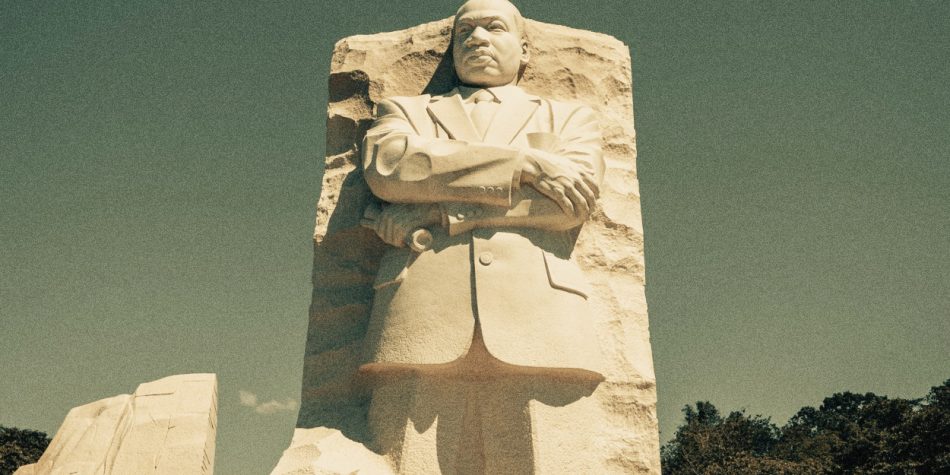
According to congressional research published in 2014, the United States currently celebrates eleven federal holidays: “New Year’s Day, Martin Luther King Jr.’s Birthday, Inauguration Day (every four years following a presidential election), George Washington’s Birthday, Memorial Day, Independence Day, Labor Day, Columbus Day, Veterans Day, Thanksgiving Day, and Christmas Day.”
In the United States, we use most of these days to honor and celebrate great leaders in our nation’s history, as well as those who have fought on behalf of our freedoms. We’ve also enshrined Christmas, a literal holy day from the Christian and Pagan traditions. (Columbus Day and Thanksgiving have some additional complications, but that may be a conversation for another time). All of our federal holidays have been in practice for generations, with the exception of the newly added Martin Luther King, Jr. Day in 1983.
During the American Civil War, on September 22, 1862, President Abraham Lincoln issued an executive order. This order, popularly known as the Emancipation Proclamation, freed all Black Americans enslaved within the rebelling Confederate States. The proclamation paved the way for the Thirteenth Amendment to the Constitution, which formally abolished slavery throughout the U.S.
But slave owners dragged their feet and were slow to comply, especially if there were no Union soldiers nearby to enforce the new mandate. Texas was the slave state furthest from Washington, D.C.; as a result, slavery did not immediately end there. Some slave owners ended up moving to Texas as the war raged, bringing enslaved people with them.
In 1865, almost three years after Lincoln made his proclamation, federal troops were deployed to Texas to emancipate its enslaved people. The Union army arrived in Galveston on June 19 and declared: “The people of Texas are informed that, in accordance with a proclamation from the Executive of the United States, all slaves are free.”
Juneteenth—a very American combination of the words “June” and “nineteenth”—is a holiday that celebrates the end of chattel slavery in the U.S. and has been in practice in various parts of the country since 1866. Cookouts, historical re-enactments, beauty pageants, stirring patriotism—this holiday has it all. And yet, until recently, many Americans had never heard of it. As a nation, we rightfully pride ourselves in the ability of our citizens to have a voice in our government and exercise it by voting for our representatives.
By many measures, white supremacy and chattel slavery are two of this country’s greatest sins—sins that the United States cannot and should not escape. We cannot undo the horrors of slavery, but we can remember them and vow to not repeat them.
One small step in that long journey would be to declare Juneteenth a national holiday —a day when all Americans can celebrate the sweet blessing of freedom while acknowledging that not everyone has enjoyed it throughout our history.
Another potential holiday worth considering is Election Day—honoring the fact that the United States is a republic that practices representative democracy. As a nation, we rightfully pride ourselves in the ability of our citizens to have a voice in our government and exercise it by voting for our representatives. Of course, elections happen numerous times and it’s not practical to have a national holiday for every election. But every four years, on the Tuesday after the first Monday in November, the American people assemble for an especially significant vote—one that puts a single person in the highest office in the land. It’s a day when we are as citizens all at our “most American,” and hey, that’s something worth celebrating too!
A huge part of voting is showing up. I have always loved going to my local polling place and waiting my turn to have my voice be heard. I love wearing my “I Voted” sticker and usually keep wearing it until fuzzies from my hoodie render it unsticky. I have never felt unsafe going out to vote, and I know that is a huge privilege.
There are growing concerns in this country about voter suppression—reflected in concerning laws that have ultimately had the practical effect of preventing marginalized people from participating rightfully in democracy. Gerrymandering voting districts also keep a party’s control in those areas. And throughout our history, we’ve also experienced generations of violence and voter intimidation. We should all be embarrassed by this, and we should strive to repair it.
Some have argued that the fact that Election Day is not a holiday is yet another subtle way of eliminating marginalized voices from our national conversation. Many polling places are only open during regular business hours, making it difficult or even impossible for a shocking number of working Americans to vote. One never knows how long the wait will be, and no one should have to give up their wages in order to embrace their right to vote. Election Day should be a national holiday as a way to make it easier for everyone to vote. One day, every four years, to celebrate the beauty of democracy in action. That sounds like a pretty holy day to me!