The headnote to Doctrine & Covenants 138 informs us that President Joseph F. Smith’s vision of the dead “was unanimously accepted” by the First Presidency, Quorum of the Twelve, and Church Patriarch on October 31, 1918—Halloween! Though merely a historical coincidence, how appropriate that this revelation would be ratified on Halloween. After all, Joseph F. Smith’s glorious vision of the dead reveals the real relationship between the world of the living and of the dead, the very topic that Halloween sensationalizes and distorts.
Halloween began as a religious holiday, All Hallows Eve (Oct 31), followed by two Christian festival days: All Saints Day (Nov 1) and All Souls Day (Nov 2). The three holidays, together called “Allhallowtide,” concerned themselves with the spirit world, albeit by mixing large dollops of folklore with Christian faith. Halloween now bears only faint echoes of All Hallows Eve.
In order to instill a modicum of spirituality into a holiday that is now anything but spiritual, I like to read D&C 138 on Halloween.
In modern America, Halloween has become little more than a sugar-fest for children and an excuse for people of all ages to don costumes. It trivializes and twists our view of an afterlife by rendering the very idea of ghosts as either childishly superstitious or darkly horrifying. Although meant in fun, Halloween horror has become more and more disturbing and distasteful to me the older I get. I suppose that’s because there is too much horror in real life.
So, in order to instill a modicum of spirituality into a holiday that is now anything but spiritual, I like to read one text sacred to Latter-day Saints (D&C 138) on Halloween. I also like to attend one of our temples—a place of sacred contemplation, reflection and service for our kindred dead—on or near Halloween. Both activities connect me to the original religious meaning of the season. It is a way of mediating Allhallowtide through principles and practices taught in the Church of Jesus Christ.
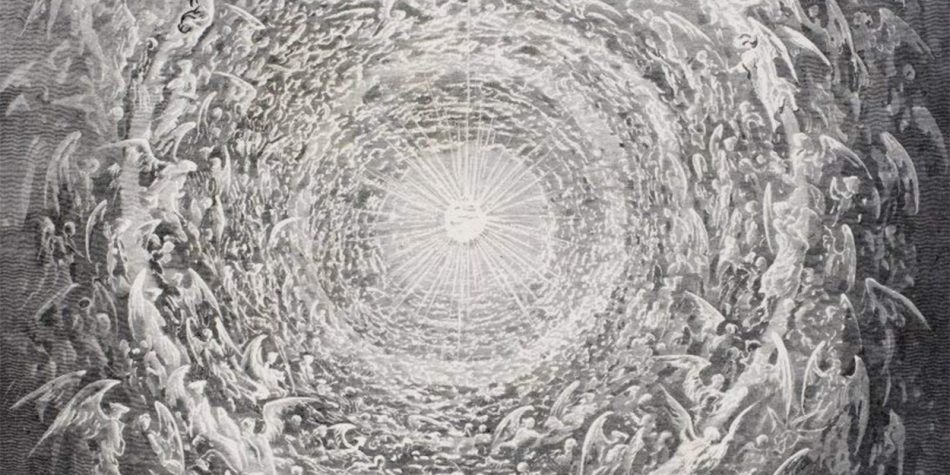
D&C 138 casts light on religious truths dimly intimated in these holidays, especially the latter two. In the traditional Christian calendar, for example, All Saints Day is an occasion to remember the righteous dead, i.e., “saints.” President Smith actually saw such saints, both “small and great…gathered together in an innumerable company of the spirits of the just” (v. 11-12). He subsequently catalogs and celebrates the most famous “noble and great ones” (v. 55) “assembled in [a] vast congregation of the righteous” (v.38). By remembering and celebrating such saints, he is doing what is supposed to be done on All Saints Day.
We feel President Smith’s joy in God’s great plan.
For all the Saints who from their labors rest,
Who thee by faith before the world confessed,
Thy name, O Jesus, be forever blest.
Alleluia, Alleluia.
This anthem, originally composed and sung for All Saints Day, is now included in the LDS Hymnal. When I sing it, I feel something of the elation that so thrilled and comforted President Smith when he beheld “all the saints” who confessed Jesus “before the world” and now “from their labors rest.”
In contrast to All Saints Day, All Souls Day is traditionally a time to remember one’s own dead and, in some traditions, the souls who are stuck in Purgatory. The holiday sometimes involves fanciful notions about the dead returning to earth. Some cultures leave out food for the dead, decorate graves, light candles, and pray for the dead to be purged from sin and thereby released from bondage.
The dead who dwell in darkness and bondage are actually liberated from captivity.
President Smith learned the truth about how the dead who dwell in darkness and bondage are actually liberated from captivity. He learned that Christ visited righteous spirits and organized them to preach to the spirits in prison so they, too, could receive the gospel. Thus, “the dead who repent will be redeemed, through obedience to the ordinances of the house of God” (138:58). This work of liberation is going forward in Latter-day Saint temples.
This is why I have adopted another personal seasonal tradition, along with reading D&C 138. I attend the temple. This feels like a fitting thing to do during a holiday known in Mexico as “The Day of the Dead” (El Día de los Muertos)—a holiday many will be acquainted with through the beautifully animated film Coco. The real way to redeem our dead ancestors is by participating in vicarious ordinances—sacred rituals that help connect individuals to God, and families to each other across generations.
So, if you are like me and find little that is edifying in Halloween traditions, I suggest that you supplement your celebration in the Halloween season with some new traditions: re-read D&C 138 and attend the temple. Doing so will open your mind and heart to the real connection between the world of the living and the dead. It will provide an uplifting antidote to the distortions and superstitions about the dead promulgated at this time of year. It will be a true Halloween treat.