For many individuals and families, the COVID-19 pandemic dramatically altered family life. In some ways, these changes have been unsettling or even tragic.
One jarring effect COVID has had on family relationships is the disruption of previous family routines and rituals. In the words of COVID researcher Heather Prime, families have been impacted by these changes in routines and rituals “on a magnitude likely not seen since World War II.”
We do not for a moment equate World War II’s effects with those of COVID. “An estimated total of 70–85 million people perished [in World War II] … about 3% of the 1940 world population,” while 5.6 million have died from the COVID-19 outbreak as of January 22, 2022 (or about three-quarters of 1% of the 2020 world population).
While the COVID death toll does not approach that of World War II, Prime may still be correct in identifying COVID as the greatest global disrupter of families “since World War II.” Further, we note at least two significant similarities.
World War II featured:
1. Significant economic strain as a result of the Great Depression.
2. Separation of families because of the war.
The external stress of this worldwide crisis initiated a whole spectrum of challenges for both individuals and families. Sound familiar?
The COVID-19 pandemic similarly featured:
1. Economic strain due to inflation, failing businesses, and significant job loss.
2. Family separation because of social distancing, health vulnerabilities, illness, and quarantining.
Like the WWII era, the COVID-19 pandemic caused a great deal of family disruption and instability—and even permanent change through death. Physical, social, financial, and psychological challenges alike have contributed to the stress faced by families. Having family members “with pre-existing health concerns” took on a new meaning and gravity. In addition, many mothers, fathers, and caretakers added the title “school teacher” to their swelling list of roles and responsibilities.
During COVID, many lost their jobs or made the switch to remote work. Isolation caused mental health challenges and loneliness rates to increase significantly. In essence, several aspects of the COVID-19 pandemic seem to have sent families into a level of shock comparable to that of a post-World War era.
Even so, in the face of challenges, family routines and rituals have proven to greatly benefit both adults and children, especially during times of stress or change. Despite the abundance of hardships, many families found useful coping mechanisms to help buoy them up during such times of uncertainty.
Spiritual Practices
A growing body of research suggests multi-faceted potential benefits of spiritual practices during stressful events. Defined briefly, spiritual practices are those that “help someone connect to a higher meaning in life or bring them peace.” Based on a recently published scholarly article in the Marriage and Family Review, Utah State University researcher Heather H. Kelley, along with a team of BYU professors, conducted a study on a number of families who remained resilient during the COVID-19 pandemic by engaging in spiritual practices. Their findings align with previous research, concluding that engaging in spiritual practices, such as yoga, meditation, mindfulness, and experiencing nature, may help promote growth and resilience during stressful events such as the COVID-19 pandemic. We briefly overview some high points next.
1. Yoga & Meditation
Perhaps the most prominent spiritual practice among the participants from this study was a blend of yoga and meditation. Not only did participants share their resolve to continue engaging in these practices, but some also described the benefits of their newly developed meditation habits. For example:
“I will continue … meditating to keep calm and secure.”
“[I now dedicate] a lot of time to ritual work and meditation.”
Participants often reported spiritual practices alongside various religious practices:
“[I have continued] reading the scriptures, meditation, listening to calming music, listening to our church’s conference talks, [and] reading uplifting books. … [These practices have] definitely made it easier to handle the unprecedented situation.”
While the benefits of meditation are clear on a personal level, many also experienced results as a family. One parent reported:
“We loved having family time together. … My girls and I did yoga together each day and meditated.”
From another parent:
“Our family bonding really increased by [engaging in] prayers, meditation, and yoga. It was really appreciated that our two children also took part … wholeheartedly.”
On both a personal and family level, taking the time to slow down and meditate or practice yoga seemed to produce positive and peaceful outcomes in a time of great uncertainty.
2. Mindfulness
Recent research suggests that engaging in mindfulness has the power to reduce anxiety, especially anxiety about the pandemic. One participant’s response indicated that as she and her husband grappled with their anxiety:
“[We are focusing on] being ‘present.’ We both have anxiety and all the ‘what ifs’ can get crippling. So we focus on the now … and making the best of what at present is important.”
While some engaged in specific mindfulness practices to help relieve them of their personal fears and worries, others found that the pandemic itself helped them to be mindful. For example, one newlywed participant said:
“I think COVID-19 occurring during our wedding year is a sign from God that we need to just Be Still and be in His presence.”
No matter the form of mindfulness, many reported significant benefits from slowing things down and acting more intentionally.
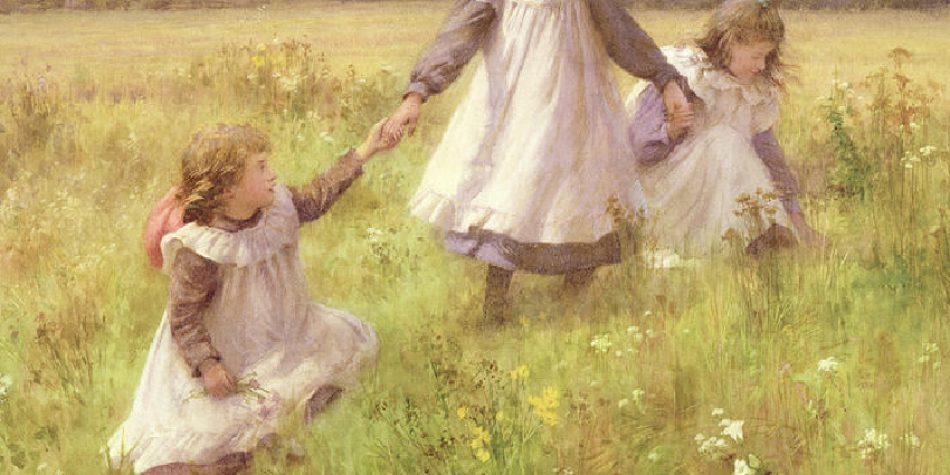
3. Experiencing Nature
In addition to meditation and mindfulness exercises, many families found that spending time in nature helped alleviate the stresses brought on by the pandemic. One mother shared her coping approach:
“Reconnecting with nature was by far the best way we reduced the negative influence of COVID-related stress. Getting outside in nature … has been crucial to my mental health and reducing negativity. Hikes, walks, [and] bike rides [outside] have all been key.”
Another participant shared how nature transformed their time together:
“We live on two acres on the edge of town, so we have lots of wide-open spaces to get out and enjoy nature. We also live close to mountains, rivers, lakes, etc. So … we [got] out in nature. My husband took a walking lunch every day and would have one or more of us go with him. It helped [our family] relationships. We learned more about our children. We got fresh air and exercise. So all the ‘together time’ wasn’t as suffocating as it could [have been].”
In a world saturated by technology and screen time, it seems that being out in nature had a tendency to bring families closer together. Not just in the sense of soothing the stress and uncertainty related to COVID and other family matters but also in strengthening relational ties.
All in all, Kelley and colleagues’ study found that families who increased their spiritual practices reported higher levels of family closeness, while families who decreased their spiritual practices reported lower levels of family closeness. In other words, families who were proactive in their efforts to prioritize their individual and relational well-being during COVID effects reportedly came out stronger and more united.
A Healing Response
The world is not blind to the painful realities of the COVID-19 pandemic. Many have struggled to grapple with their “new normal.” Indeed, profound changes have made it difficult for many individuals and families to be present and de-stress. And yet, despite the surrounding disruptions and mayhem, many have found strands of hope, happiness, and healing through spiritual practices. To name a few of the many benefits reported by Kelley’s participants, engaging in spiritual practices:
- Equipped individuals with tools for dealing with uncertainty
- Increased family time
- Produced family bonding
- Improved family relationships
- Reduced anxiety
- Reduced loneliness
- Reduced COVID-related stress
Perhaps we as a society have too often overlooked the power of simple practices such as mindfulness or enjoying nature. In an increasingly busy and chaotic world, we would do well to consider these benefits of spiritual practices that have the potential to aid our own journeys towards alleviating stress and improving personal relationships.
As the Greek philosopher Heraclitus said, “Change is the only constant in life.” Many of the changes brought by COVID ranged from devastating to uncomfortable, but healthy family responses to these challenges reportedly transformed the daily lives and relationships of most of the families we interviewed. We are reminded that leading family stress researcher Pauline Boss observed that the Chinese character for crisis also means “opportunity.” We are inspired that in spite of the strain, pain, and heartbreak that accompanied COVID, many resilient families were able to find new relational strength in one another.