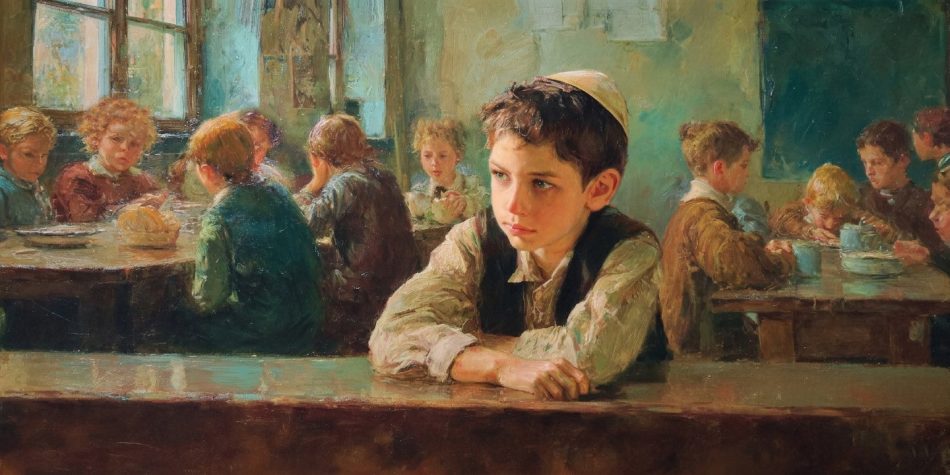
In The Merchant of Venice, Shakespeare’s portrayal of Shylock, the Jewish moneylender, embodied the danger that can accompany misrepresentation and stereotyping. Reduced by society to “the Jew,” Shylock is seen as less than human, his depiction fraught with inaccuracy and hyperbole. This unjustly skewed representation of the Jewish people has reinforced antisemitic sentiment across the globe, the effects of which have lasted for generations and continue to this day in many parts of the world.
Throughout history, religious minorities have faced significant struggles due to erroneous beliefs perpetuated about them, including by media and popular discourse. While the United States was founded on principles of religious pluralism and equality, our current society yet reflects harmful gaps in religious literacy that fuel a lack of empathy for those who believe differently than most.
The American Families of Faith Project conducted in-depth interviews with 131 families belonging to religious minority communities (e.g., Jewish, Muslim, Latter-day Saint, Jehovah’s Witness, and other minority faith traditions) to identify the most salient struggles being faced by these families on a regular basis. The published study resulting from this work presented five primary themes that reinforce the need for meaningful reform in religious literacy, education, tolerance and interreligious cohesion in the United States.
Theme 1: Struggles Related to Difference and Minority Status
Among the minority families interviewed, over one-third identified their religious distinctiveness, including behaviors, clothing, and practices that diverge from social norms, as a primary source of tension within majority culture. Narratives involving children were described as particularly distressing for parents. Bekah (names changed to protect participants), a Jewish mother, described witnessing her daughters’ religious exclusion:
There have been some difficult times with the girls, every year. “Why are all the decorations for Christmas?” You know, just a lot of questions and irritation, and I understand their irritation and I’ve experienced it in the past, but I’ve gotten to a point in my life where I’m not irritated by it. I keep explaining to the girls that people are not doing this to be mean, people do not mean to be excluding other religions, they’re not trying to hurt you. This is [just] what they do to celebrate.
Although the pain of not belonging was a frequently shared experience, most families were unwilling to compromise their religious convictions, even when this meant becoming accustomed to and even expecting exclusion from social activities. Wafiyah, a Muslim mother, borrowed the words of her daughter:
Because I wear hijab [when I am out] in the community… I have to be different. I cannot be friends with everybody because their reaction to my hijab is different. I can only communicate with the friends that I have from childhood [because] they know me. Making strong relationships is hard in a new community.
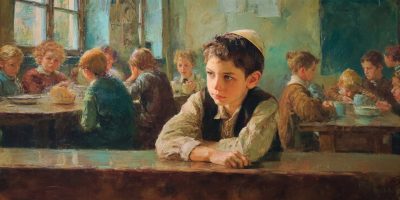
These patterns suggest that, especially for children and adolescents, the struggle of being different has the potential to shape their sense of belonging and ability to connect with their community. Many adolescents in mainstream culture are unfamiliar with visible religious identifiers such as hijabs, yarmulkes, or saris, which can exacerbate religious exclusion. Conversely, if young people see positive representation of these religious and cultural identifiers in media, they may experience less fear associated with religious identifiers.
Theme 2: Struggles Related to Other Religious People
While many participants described struggles with those outside their faith, a second prominent theme involved tensions within religious communities. Angie, a convert to Islam from a Christian faith, shared:
When I was in the [X] church, I hit rock bottom when my parents divorced and then the minister was publicly humiliated because he was having affairs on his wife. That was my loss in trust, my trust was totally broken and my family life was shattered all at the same time.
I had no idea where to go. I wondered, how can these people lead others?… At that time I had hit rock bottom. I had God but I didn’t have a faith.
Angie’s recollection highlights a shared struggle among minorities, which is often overlooked: intrafaith relations, or struggles within one’s own faith community. These religious difficulties are complex, but may include feelings of betrayal, mistrust, exclusion, division, or taking offense.
In a similar vein, Elijah, a Jewish father, explained a conflict he faced at his synagogue:
I profoundly disagree with institutional Judaism. For [my wife and me], Israel/Palestine is important. It’s actually caused friction between us and various Jewish friends of ours … in the synagogue. I will open my mouth and there will be people who are very upset at me. It’s a little interesting that we both feel … that it’s so important to have a synagogue, but in some ways we do not get along with the people in the synagogue.
Taken together, these stories reveal that while faith communities can be a source of great comfort for religious minority families, they can also be a cause of tension and deep divides. For minority families to flourish in the United States, there is progress to be made on an interfaith level as well as an intrafaith level.
Theme 3: Struggles Related to Misunderstanding and Ignorance
Echoing the damaging stereotype of Shylock in The Merchant of Venice, many of the religious minority participants revealed that they experienced feelings of frustration due to misunderstanding, ignorance, and being inaccurately portrayed. Notably, many Muslim families alluded to the pain they have experienced due to misconceptions surrounding the events of 9/11 in 2001 and during the subsequent years. Baseema, a Muslim wife said, “After September 11th you [could] feel it … They … question sometime[s], not with words but with their eyes.”
Another Muslim mother, Aisha, explained, “People think that [after 9-11], “Oh, Muslims, they take this lightly.” We were hurt that people were hurt. So, I think we were more offended that … [many] thought [the terrorism] was a form of … Islamic activity … [instead of the acts of terrorists].”
These poignant accounts invite us to examine our own assumptions about others. As the Nigerian novelist Chimamanda Ngozi Adichie argues, the danger of a single story lies in its reducing people or groups of humanity to one-dimensional stereotypes, rather than seeing them in multi-dimensional living reality.
Theme 4: Struggles Related to the Demands of Faith Community
The fourth theme, also found across participants from various minority faith traditions, centered on religious demands and expectations within one’s faith, many sharing that they often fall short of the high expectations despite their religious devotion. For example, Rose, a Latter-day Saint mother, explained:
Being a main member of the [congregation] carries a lot of responsibility. We are responsible to support everything. If [we] weren’t there [people ask],“Where were you?” There’s so much that I have to [do] and getting the three little girls [ready for church on top of that]. I really, really try. It’s hard, but I want to support everything and sometimes I get overwhelmed with all the responsibilities.
Rose’s reflection highlights a struggle that can be especially pronounced for religious minorities living in parts of the U.S. where few people share their faith or can offer support. Many also described the added pressure of needing to be exemplary representatives of their faith to those outside their community, further complicating this religious stressor.
Theme 5: Struggles Related to Animosity and Rejection
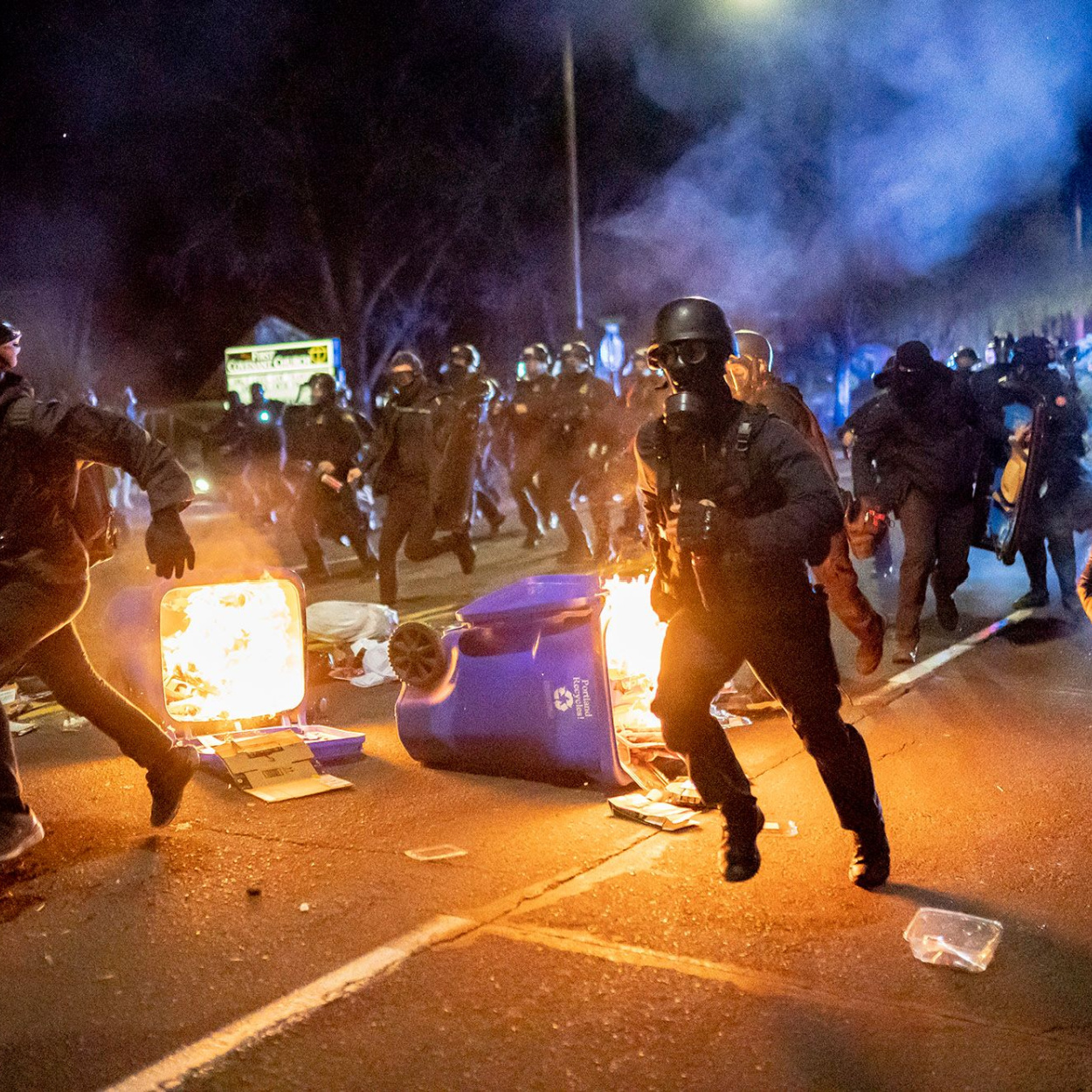
Without even being asked a related question, about one-eighth of the participants in the study spontaneously described being the victim of hatred, hostility, or rejection—experiences that left lasting impressions on those involved. Violent acts such as arson have disproportionately impacted Jewish synagogues, Black churches, and Muslim mosques (masjids) in the United States. Recent acts of hatred, including a 2024 attack on a Latter-day Saint church in Michigan reaffirm the existence of violent religious prejudice. Moreover, many families in the study reported experiencing acts of bigotry in one form or another. Ibrahim and Jala, a Muslim couple, a few months after 9/11, explained how popular media had been a cause of stress for them:
Ibrahim: It’s been really stressful for all Muslims. It’s tough to even watch the news anymore.
Jala: It’s so depressing.
Ibrahim: There is not one day that goes by without something negative about the Muslims. It’s been very stressful for all of us.
Their words reveal the distress felt by religious minorities who have navigated pervasive assumptions that their faith tradition is inherently violent. As a result, there is pressure to try to counteract false narratives. Another aspect of this theme was highlighted by a Christian father named Thomas, who spoke to the complexities that can arise when engaging with someone of another faith:
Our middle son, Jonathan… about five years ago . . . [he was] maybe going on about four [years old]. [Jonathan] was concerned for the salvation of this little neighbor friend… [who is] Hindu. His mother [also is] Hindu . . . but what happened was [Jonathan] tried to share his faith with him and said, “If you do not believe in God, you’re going to go to hell.” … His [friend’s] mother was very offended by that and now they do not—[well], it’s been five years and they do not play together [anymore]. That [has] hurt.
If this exchange and fallout were painful for Thomas and his son Jonathan, how much pain was experienced by the Hindu friend and his parents? There is significant room for additional learning, religious literacy, and neighborly compassion among us all.
Navigating struggles of difference can be painfully divisive for minority families. For many, it can be especially challenging to accept and respect the differing beliefs of others, when one’s own convictions are so deeply held. With greater empathy, our society can increase its capacity for awareness and sensitivity in avoiding damage and offense—and for humble repentance, forgiveness, and reconciliation when damage is done, whether intended or not. This is the healing balm that our world is in greater need of now than ever before.
Hath Not a Jew Eyes?
During a pivotal moment in The Merchant of Venice, Shylock makes a powerful appeal to shared humanity while facing those who have wronged him:
Hath not a Jew eyes? Hath not a Jew hands, organs, dimensions, senses, affections, passions? Fed with the same food, hurt with the same weapons, subject to the same diseases, healed by the same means, warmed and cooled by the same winter and summer, as a Christian is?
Diverse religious convictions may lead us to believe that we are too different to cultivate peace and view one another with empathy, but Shylock posits that we each grieve, suffer, love, and hope —things that make us more alike than we might think. We share so much in common—the things that make us human, many things that matter profoundly.
In examining the struggles experienced by religious minority families in the United States, the need for foundational change is undeniable. The question, then, is where do we begin?
Both the participants and the researchers involved in the American Families of Faith Project suggest starting with small, intentional steps, such as: (1) asking respectful questions about someone’s beliefs or practices with the intent to listen and learn, (2) attending religious services or celebrations outside one’s own tradition to support a friend, or (3) cultivating friendship with someone of a different faith. While interreligious understanding will not occur overnight, small steps have the power to bridge divides.
As we become a society that listens rather than assumes, and reconciles rather than retaliates, we will begin to see religious minority families not as stereotypes but as people—each with a unique story to tell.
Marks, L. D., Dollahite, D. C., & Young, K. P. (2019). Struggles experienced by religious minority families in the United States. Psychology of Religion and Spirituality, 11(3), 247–256. https://doi.org/10.1037/rel0000214