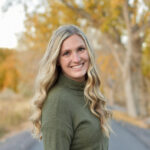

Kellie Leavitt and Lacey West share a lot in common. They’re both members of The Church of Jesus Christ of Latter-day Saints from Southeast Idaho, they’re both raising young children, and they both moved to Grand Blanc, Michigan, in 2023 for their husbands’ residency trainings.
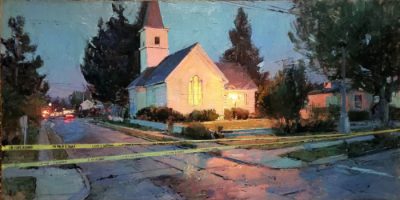
They were also both attending church with their young families one year ago in Grand Blanc when an attacker rammed a truck into the building, set it on fire, and shot at church members as they fled the burning building.
In the year since, they have worked hard to process and move on from the horrifying events of that day. In this interview, they share what healing through Christ has looked like for them and their close-knit congregation since the attack.
Editor’s Note: This interview has been edited for length, clarity, and style, and Kellie Leavitt and Lacey West have approved the edits.
Anna Bryner: Your families were both there with you that day. What were those next few weeks like as you tried to pull the pieces back together for your families and also for the ward?
Kellie Leavitt: So the first couple of weeks kind of felt like we were in limbo. Everybody taking time off work, trying to figure out our new normal, figuring out next steps—where we were going to meet again, what plans were going forward. And then we had four funerals in the next couple of weeks. So it was kind of this weird limbo time where we weren’t doing our normal thing, kids weren’t doing their normal things.
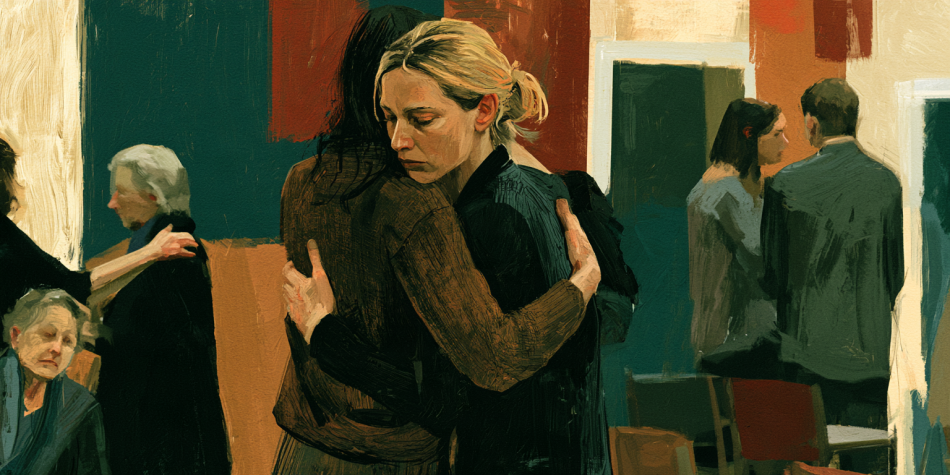
But we all would find each other at every little meeting that we had. I think we ended up at somebody’s work doing food and coloring pictures for the first responders, and there were little gatherings like that over the next few weeks. Every time we would end up there, it was like hugs all around. You hugged every person you saw.
One particular phrase you’d say or someone else would say to you is “I’m so glad to see you.” And it took on this whole other meaning. It was a time of really coming together and getting closer to each other, for sure.
Lacey West: Yeah, I would definitely agree. Lots of very heartfelt and sincere, “I’m so glad to see you,” or, “I’m so grateful you’re here.”
Everything that Kellie said—that weird limbo. Kids weren’t really going to school because they were scared, and as a parent, I was scared to send my daughter to school. We weren’t really going to church because we didn’t have a building anymore, and people were taking work off. So limbo is a really, really good way to describe it.
Healing—even healing through Christ—takes time.
There were meetups at parks, and people saying, “Hey, these wards from all across the U.S. have sent toys for the Primary kids—coloring books, crayons, busy boards, and all this stuff.” So we’d go to the park and walk away with a ton of new toys and things for the kids. The outpouring of love was amazing. Even now, our Primary especially is still getting sent gifts from other wards, hand-drawn cards, and pictures. There were tons of little get-togethers for, “Hey, a ward sent this for the Relief Society,” or, “Hey, all the youth meet here, because there was a gift sent to you from this ward.” Just so much service and so much was being done to try to provide comfort to all of us in such a difficult time.
Kellie: I would even say, within our ward itself, we were trying to find ways to serve each other. Obviously it wasn’t necessary, but I went to a sister’s house who had just had a baby, and I took her dinner because I wanted to—it was a way for me to help serve and try to provide comfort. In that short time I stopped by, there were three other people there checking on them, too! It was like that with everybody. So much love and outpouring from everyone, including members of our ward, which is part of what made us draw so much closer.
Anna: How would you say that you and your families have worked through the fear that came after this?
Lacey: I think for me, it mostly came down to trying to be brave enough to do it and to go out, reminding ourselves that this is not the norm. There’s definitely people out there who hate the church, sure. There are people who don’t like it or have really strong opinions about us. But at the end of the day, most of those people would never act the way that the attacker did. Reminding myself of that helped. While there is a lot of hatred out there, that was not the norm and that’s not something that’s going to happen all the time.
There were lots of prayers said: just asking to have the bravery to go out and face the world and do things again. At the end of the day, the world keeps turning and life keeps happening. So it’s either hunker down and sit in your house and be scared because you had a bad experience, or you stand tall, “be strong and of good courage,” and walk outside. You say, “Okay, we’re going to keep living life. I’m not going to let this person who did something horrible win by making me afraid to go out, live my life, share the gospel, and let people know I am a member of the Church and I’m proud of that.” If I were to go hide away in my house, then he wins, or people like that win.
So just lots of prayers to have that bravery and courage to go out. And I say that, but I am still a little scared sometimes. It’s not like I just decided to be brave and now I am. I’m still scared, and there are still lots of things that are hard to do and hard to approach after an experience like that. We’re a year away from that event, and there are still lots of prayers being said for bravery and courage. I’m sure there will be even more.
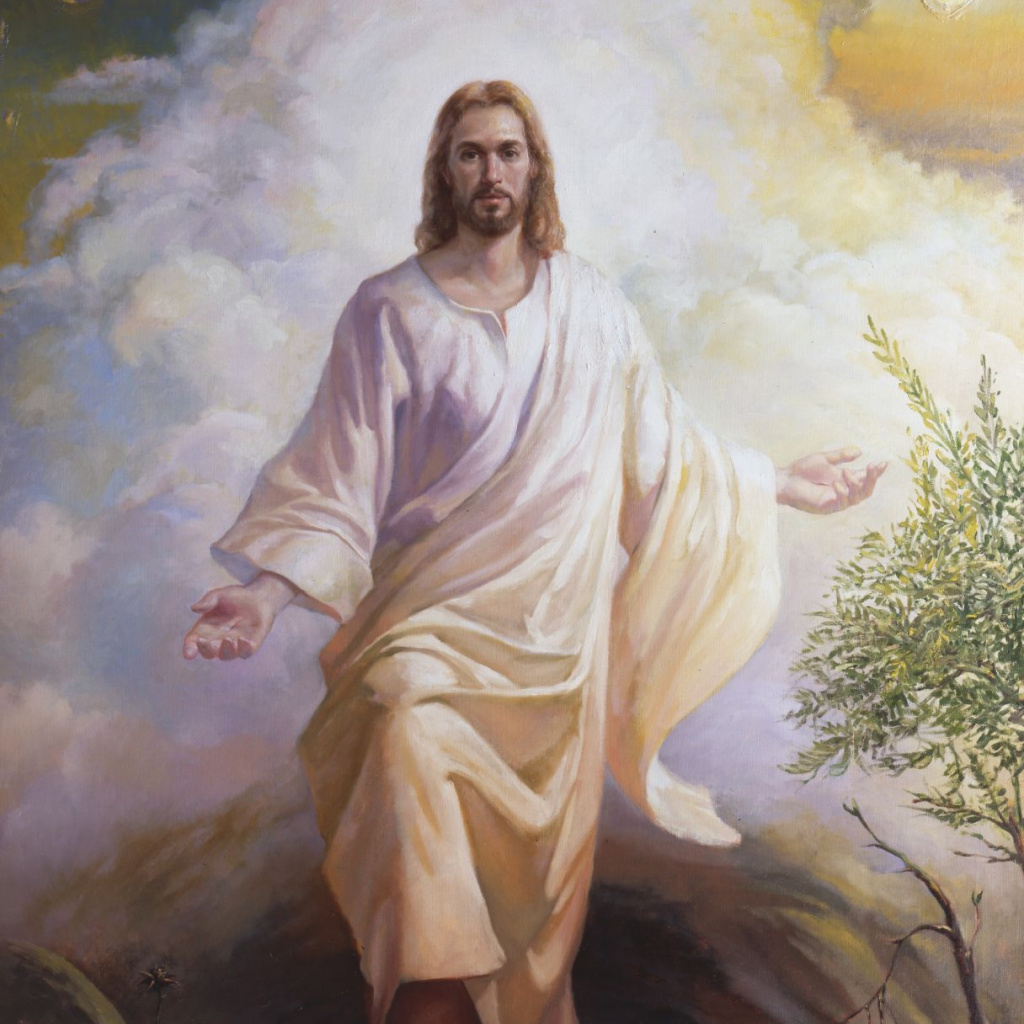
Just because He’s our Shepherd doesn’t mean the field or threats disappear.
Or silly things—I was sitting in church one week, probably like three months ago, and I had a diaper bag next to me blocking the end of the aisle. In my mind, I’m like, That bag is in my way if I need to run. Things like that do still come up, but you kind of have to force yourself to do these things so you can get back into it, be comfortable, and be confident going back to church again.
That first Sunday that we went back to church was hard, but we knew that was something that we wanted to continue to have in our lives because it was important. So you have to give yourself this push to get there, to make yourself used to it again, and to know that—like Lacey said—it’s not the norm to have something like that happen. Millions of people go to church every week and it never happens to them. It just so happened that it happened to us. So you have to realize that it’s going to be okay most of the time.
We’ve just had to lean on people, lean on God, and trust that we’re going to be okay again. It takes time, but it’s getting there.
Anna: In the last year, as you’ve worked through all the emotions of this, what have you learned about Christ?
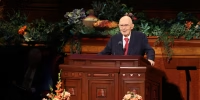
Kellie: We had a devotional Tuesday night after the attack, and Elder Bednar came. He said a lot of wonderful things, but what I remember most specifically is he told us he wanted us to sing “Gethsemane,” and we were going to sing it two times. He gave us his apostolic blessing that as we sang, we would find something in the song to help us start healing. Specifically in the song, it talks about Jesus dragging His feet—His steps were heavy and slow—and He took all that was bad, wicked or sad, all the pain we would ever know.
To me, during that song, it solidified that Christ knows all of our pain—not just what we do to ourselves, but things that other people do to us. It wasn’t easy for Him, but He chose to do it. That’s what I think makes it so powerful. Being able to give Him the fear, the pain, and the sadness has made a world of difference. It’s probably made the difference between being where I am now and being in complete depression and utter fear.
Lacey: Yeah, I definitely agree with all that. For me, a big one is that healing—even healing through Christ—takes time.
At the beginning, within the first few weeks after everything, there were some people who had these rock-solid testimonies and all this faith, and were in such a peaceful place. I remember thinking, Wow, I must not have enough faith, because I just don’t feel that way at all. I don’t feel like I’m in a good place. I’m scared. I’m still having such a hard time. Maybe I’m just not faithful enough.
I’ve come to know through my own journey of healing that it’s not a lack of faith, and it’s definitely not a lack of God in my life. It’s just that sometimes healing takes time. You see the scripture stories where people touch Christ’s garment or say they have faith, and He heals them instantly. Sometimes we think that’s how it’s supposed to be: I have faith, so I should just be healed from this. The reality is that’s not always the case. Healing takes time, even when you have Christ as your constant companion through that healing.
Like Kellie said, I know Jesus Christ suffered in the Garden of Gethsemane not only for my sins, but also for all the pain I would ever feel—so that when I went through this, He could look at me and understand perfectly how I felt. He knows that bone-deep fear. He knows that feeling in your gut of, I don’t know what to do next, I’m scared. He felt it with me through the whole experience and through this whole healing process. He is still very much by my side.
The scriptures teach us to endure to the end. If the end was supposed to be just a few faithful prayers and a good night’s sleep away, then there wouldn’t be much enduring happening. Enduring means long-term sometimes. That means healing is going to take a while, and that doesn’t mean that the Lord’s not there with you. It just means that maybe you need some time, and that’s okay. He’s going to be with you that whole time, guide you through it, and be your constant companion. He is going to walk that road with you patiently, go at your pace, and help you through it—no matter how long it takes.
Anna: Those are both such beautiful experiences. I’m curious: Based on what you’ve learned, if you could go back a year and tell yourself something right after this happened, what would it be?
Lacey: I think I would just want to remind myself to be patient with the process of healing, not try to rush it, and just have faith. They say “have faith in the Lord’s timing,” and I think that’s so much easier said than done when you’re actually waiting on the Lord’s timing! But the Lord is with you through that whole healing process, no matter how long it takes.
You have to be patient with yourself, be patient with the Lord, and understand that through this, you are becoming stronger. Through this pain and sorrow, you are growing. There is a light at the end of the tunnel. You’re not going to be afraid of the world forever. You’re not going to be afraid to go to church forever. You’re not going to be afraid every time you hear a loud noise forever. It’s going to stop, it’s going to go away, and it’s going to be okay. You just have to be patient with yourself, with your faith, with your healing, and with the Lord.
Kellie: Those are great points. Healing is not perfectly linear, that’s the big thing. I think I would tell myself to be patient on those days that it’s hard again.
Anna: Now that we’re a year out from the attack, where would you say the ward is at? I’m sure everybody is individually at a different place with how they’re healing, but where do you feel like the ward has landed in terms of recovery?
Lacey: I would say there’s a wide range of emotions. There are people who are feeling rock solid—bearing their testimonies, feeling strengthened, feeling good, and having fully forgiven the things that happened. And there are people on the other side of that too, who are still angry or sad. There are people still grieving, of course, and grief is one of those emotions that you carry for your whole life in different ways.
So there’s a wide variety of emotions, but the thing you see as a constant with everyone is that there is just a desire to take care of each other. Even the ones who I think are struggling the most just want to take care of people and help each other through this. That speaks volumes of what our Church stands for in general—that we don’t just show up and go through the motions of sacrament meeting and second hour and then go home. We show up and we are a family. We’re a community. We’re going to look out for each other, provide meals, and sit with each other and listen when you need someone to listen.
I always think about how Christ is the one who does the work and changes hearts, but as members of the church, we get to be His hands when it comes to serving others. Regardless of where members of the ward are in terms of healing from the pain, grief, sorrow, or anger, one thing we all have in common is that everyone just wants to really take care of the ward family and look out for each other. That was an attribute that was already in our ward before, but it has doubled since the event.
Kellie: Adding to that, there has been no lack of faith in God and faith in Christ. I think we all kind of expected there to be a few people that quit coming to church, but that was not something that I noticed. Everybody still came every week that they could. Everybody still has a strong testimony of Christ. There were so many things that happened following the attack that strengthened everybody’s testimony in Christ and faith in God in some small way. There was no wavering, no lack of faith in that way.
I do feel like we felt displaced, and I’m sure everyone still is feeling displaced just because the ward started going to the Flint building, which is a smaller building. It doesn’t quite fit all of us, so it feels tight, and we know it’s a temporary thing. But we are grateful that the Flint Ward was so accommodating and willing to move over, make room for us, and bring us in. It has become our second home, but it’s a little rocky while we wait to get back to normal, if that makes sense.
Anna: You mentioned that so many things happened after that strengthened faith. Are there any stories or experiences that stand out from that?
Kellie: There were so many people who felt so compelled and called to serve, and you’d feel them reach out to you at the right moment. On days that felt so much harder, I’d get a letter in the mail from somebody I hadn’t spoken to in eight years expressing their love, or I’d get a call on a random night when I was having a hard time. It always felt like there was somebody reaching out and lifting you up right when you needed it.
There were a lot of stories coming from others in our ward—and I won’t share names for their privacy—who described doing something that day they wouldn’t usually do. They thought, Huh, that’s weird, why did I do that? Then looking back later, you realize God put you there for that reason to help somebody, or God put a person in a certain spot so they could avoid the attacker.
Lacey and I left together. We had our cars parked right next to each other, and that day, my husband parked backwards from how we usually do. Usually we would pull in facing the building behind somebody, so when we left, we would have to back out. But instead, he backed in, so all we had to do was hop in and drive!
So we got out to our car, and Lacey was right next to us in her car. We hopped in the car and started driving out. It’s little things like that where I know God guided us so that we would be out of harm’s way.
Lacey: 100%! That day, I wore pants to church. I don’t think I’ve ever worn pants to church a day in my life, but randomly I was just like, “Yeah, that sounds like a good outfit.” I wore flats—I never wear flats! I always wear heels, I’m a heels girlie, but I wore flats that day.
My son was only eight weeks old. Usually I would get to church and nurse him in the mother’s lounge before going into sacrament meeting, but that day I decided to nurse him before leaving the house. Because of that, I was in the chapel, meaning I was much more aware of what was happening than if I had been in the mother’s lounge, which is closed off and hidden away in the bathroom. We very likely would have been trapped in the building while it was burning.
Just those little different decisions! The fact that Kellie and I parked next to each other. When the attacker rammed his truck into the building and I realized something was wrong, I grabbed my five-year-old daughter in one arm and my eight-week-old in the other and ran out. In the chaos of grabbing both kids, I forgot to grab my keys out of the diaper bag. If I hadn’t been parked next to Kellie and Chase, I don’t know what we would have done! I got to my car, told my daughter to hide on the floor, and thought, We’re just going to have to hide in the car, I don’t have a way to get out.
The fact that we happened to park next to Kellie and Chase—I happened to be out of the building before them so I could see them running to their car and realize, Oh, they’re right next to me, they’ve got their keys, I’m going to get my kids and hop in with them! Every little detail about the timing was so—it seemed like such little nothing things at the time, but afterwards I realized: If I had worn a dress or heels, would I have been able to run as fast? If I had parked anywhere else, what would I have done?
I lost my dad a year before the shooting. We were close—like talking on the phone every day close. He was my best friend. After the shooting, I just wanted to call him and talk to him so bad, and obviously I couldn’t. A few days later, my kids were in bed, it was late, and I was saying a prayer: “Could You just tell my dad what happened? I’m sure he saw, but can You let him know what happened and tell me, was he worried about me? What was he thinking?”
I got one of the strongest promptings I’ve had in my whole life: Lacey, he was there, and he held you. I got this image in my head of me running down the hall with my kids, and my dad behind me pushing my kids in tight to me. When I was running, I remember feeling like my kids were being squeezed into me, but I hadn’t put together what that really meant until that spiritual moment. Of course there were angels there!
I’ve heard other members of the ward say the same thing—that they felt like there were angels that helped them run faster, or told them, “Go out this door, not this door,” guiding them to take the path that got them out of harm’s way. It makes me realize how thin the veil really is. There’s no doubt in my mind that there were heavenly presences there that day guiding our steps to protect everyone.
Anna: Wow. That’s amazing. Is there anything else that you wanted to share about this last year or that experience that you haven’t had a chance to yet?
We were not abandoned, and we were not alone.
Lacey: Something I’ve thought about a lot since that event: I’ve always loved the imagery of Christ as the Good Shepherd. I always thought of that as Him protecting and making sure no harm comes to His sheep, or leaving the ninety-and-nine to find the one lost sheep. But I’ve come to know the analogy of Christ as the Good Shepherd a bit differently. A shepherd doesn’t just protect their flock; they guide their flock from one place to another and defend them.
When I think of my own journey, He is the Good Shepherd leading me through this field of grief, sorrow, pain, and fear. It’s still a big field and a big journey ahead. Just because He’s our Shepherd doesn’t mean the field or threats disappear. There are still going to be hardships, pain, and days that PTSD flares up worse than others. But the Shepherd never leaves. He’s still guiding His flock.
For those who maybe struggled the way I did—feeling like a lack of fast healing was a lack of faith—I cannot stress enough that is just not the case. The Lord did not abandon us that day. He was there. Just because that didn’t stop the attack from happening doesn’t mean He wasn’t there protecting us, just as a good shepherd should. We will never understand why everything happened as it did, or why some people were hurt or lost their lives, and others didn’t, but we can understand that the Lord still sought to protect us and help us.
Psalm 23:4 talks about, “Yea, though I walk through the valley of the shadow of death, I will fear no evil: for thou art with me; thy rod and thy staff they comfort me.” Sometimes you have to walk through the valley of the shadow of death. That’s just reality. Having faith doesn’t mean you will never walk through that valley, but you don’t have to be afraid, because He is right there with you.
If right now you are in that valley or in the trenches, you are not alone. Keep looking to Him. He knows your pain so perfectly; He would never leave you in that valley alone. He is going to guide you through it and walk with you the whole way.
Kellie: That’s so beautiful. Right after it happened, one of our friends’ little girls said, “Mom, we’re supposed to be safe at church.” That absolutely broke my heart, because I agree with that. We assume we go to church and we’re safe.
It happened because people have agency. The man that attacked us had his agency, and God had to let him do what he was going to do. But like Lacey said, we were not abandoned, and we were not alone. As long as we remember that He is there for us, you’re going to feel His presence.
The other thing I would say coming out of this whole experience: It is so important to record your strong spiritual experiences and your testimony. A week or two after the attack, I made a voice memo talking myself through the timeline, the devotional, and all the spiritual experiences we had. There were so many little details I had already forgotten that reaffirmed everything and made it so much more powerful. I firmly believe in writing down those things as they happen so that when you’re having those tougher days, you can look back on it and let it boost you again.
Anna: I have been so touched by everything you both shared. Thank you both.