Soft power is often described as influence without coercion—impact that grows because people trust you, respect you, and want to work with you. The Church of Jesus Christ of Latter-day Saints has developed a distinctive way of practicing that kind of influence: not by trying to be everywhere at once with church-branded programs, but by strengthening the organizations, networks, and local ecosystems already doing the work.
The Church’s soft power is built on credibility through collaboration—pairing a global volunteer culture and substantial resources with trusted partners who already have expertise, reach, and on-the-ground legitimacy. In a world hungry for trust, this posture multiplies humanitarian impact—and it quietly teaches the rest of us how to lead with humility, stewardship, and shared purpose.
For the Church, the aim is covenant discipleship and Christlike love; any “soft power” that follows is a byproduct of that faithfulness. In other words, credibility is fruit, not the vine.
Soft power is earned, not asserted.
Soft Power, Reframed as the Fruit of Discipleship
Here I use “soft power” descriptively, not normatively—the Church serves because it follows Jesus Christ; trust accrues because it serves consistently. Humanitarian service is an outgrowth of that discipleship.
To understand the Church’s “soft power,” we first need to clarify what we mean by the term. In Joseph Nye’s framework, soft power is the ability to shape outcomes through attraction and persuasion rather than force or payment. In practice, it runs on one scarce resource: credibility—earned over time through consistent values and reliable action.
In a world hungry for trust, this posture multiplies humanitarian impact.
Historically, the Church has maintained both an inward-facing welfare system and an outward-facing humanitarian effort—tracing its formal welfare program to 1936 and its broader humanitarian outreach to 1984. The existence of both streams is important: it signals that partnership is not a substitute for institutional capacity. It is, instead, a strategic and moral decision about how to deploy capacity for the widest good.
Why Partnership Is the Strategy—Not the Exception
The Church’s own public framing is revealing. It speaks of a desire to “maximize” impact so that help blesses not only individuals but families and communities—and it explicitly acknowledges “trusted organizations” as part of the ecosystem that makes the work possible.
In this context, partnership becomes more than a practical convenience. It becomes a posture:
- Stewardship: directing resources where they will do the most good.
- Humility: letting others lead when they hold the expertise.
- Unity: working across lines of faith, nationality, and institutional identity.
- Fidelity: cooperating widely without compromising revealed doctrine, standards, or church governance
And just as notably, the Church’s model often aims to serve people regardless of religious affiliation—an approach it states openly in its humanitarian descriptions.
Partnership is not a compromise. Partnership is a multiplier.
Creating a new program from scratch is not always the most compassionate option—especially in global humanitarian work. Building a parallel infrastructure can mean duplicating supply chains, duplicating local relationships, duplicating compliance systems, and, unintentionally, competing with the very organizations already trusted on the ground.
For example, organizations like the World Food Programme have global distribution systems and emergency operations that can be activated rapidly. The Church can amplify those systems faster than it could replicate them.
By contrast, partnering lets the Church contribute what it can uniquely offer—funding, commodities, volunteers, convening power—while relying on others for what they uniquely offer: specialized public health capacity, emergency logistics, refugee systems, school feeding programs, and long-developed accountability frameworks.
The Church’s own communications sometimes name this directly: long-standing work with organizations “recognized for their effectiveness and integrity,” including World Food Program USA, UNICEF, and CARE, is presented as part of how its projects are carried out.
What looks like “outsourcing” can, when done ethically, be a form of respect.
Case Study One: A Logistics Hub in Barbados
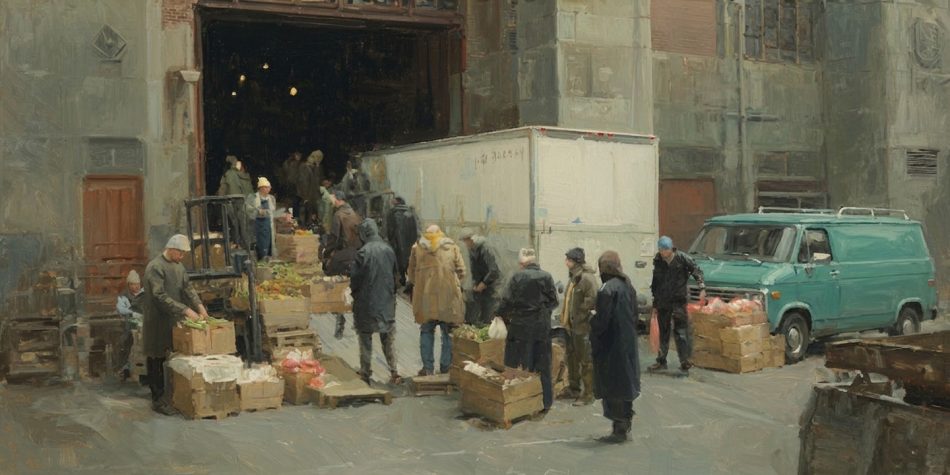
Consider a moment that is easy to miss if we only look for dramatic headlines: the Church and World Food Program USA jointly funded an emergency response logistics hub in the Caribbean, supporting construction and operations in Barbados with a combined $4.3 million, including an initial $2 million grant from the Church.
That is not merely a donation. It is an investment in readiness—the kind of capacity that makes the difference between good intentions and timely food, shelter, and supplies when disaster strikes.
Context: influence grows where reliability lives
Serve in ways that are clean, respectful, and non-transactional—without turning people into props for our identity.
And that choice keeps compounding. The World Food Programme identifies Latter-day Saint Charities as a partner since 2014, emphasizing measurable progress toward hunger relief.
Implication: soft power that doesn’t need the spotlight
Soft power, at its healthiest, doesn’t demand center stage. It chooses impact over branding, durability over applause, and coalition over control. A logistics hub is, in many ways, the perfect symbol: unglamorous, essential, and quietly decisive.
Case Study Two: Eight Organizations, One Women and Children Initiative
Now widen the lens from logistics to public health.
In a Relief Society–led global effort to improve maternal and child health, the Church announced $55.8 million in support. It is collaborating with eight internationally recognized nonprofit organizations—including CARE, Catholic Relief Services, Helen Keller International, iDE, MAP International, Save the Children, The Hunger Project, and Vitamin Angels—to strengthen health and nutrition programs in 12 high-need countries.
This is a partnership built not as a one-off, but as a deliberate coalition
Context: the Church as a convener, not just a funder
Furthermore, convening is its own kind of power. When a large institution chooses to collaborate across multiple NGOs—rather than selecting one “favorite” or building an in-house global health apparatus—it signals that the goal is not institutional dominance. The goal is reach.
In Helen Keller International’s own public statement about the collaboration, the logic is explicit: scaling “proven” nutrition services, with multiple peer organizations working together, to create lasting change.
Implication: the soft power of “shared credit”
There is a subtle leadership lesson here: the Church’s influence increases when it refuses to hoard ownership. It strengthens other institutions—and in doing so, it becomes the kind of partner other institutions want nearby.
That desire—to collaborate, to coordinate, to trust—is the heart of soft power.
Case Study Three: Feeding the Hungry Through Systems Already in Place
The Church’s partnership approach is not limited to international NGOs. It also shows up in the way it feeds neighbors close to home.
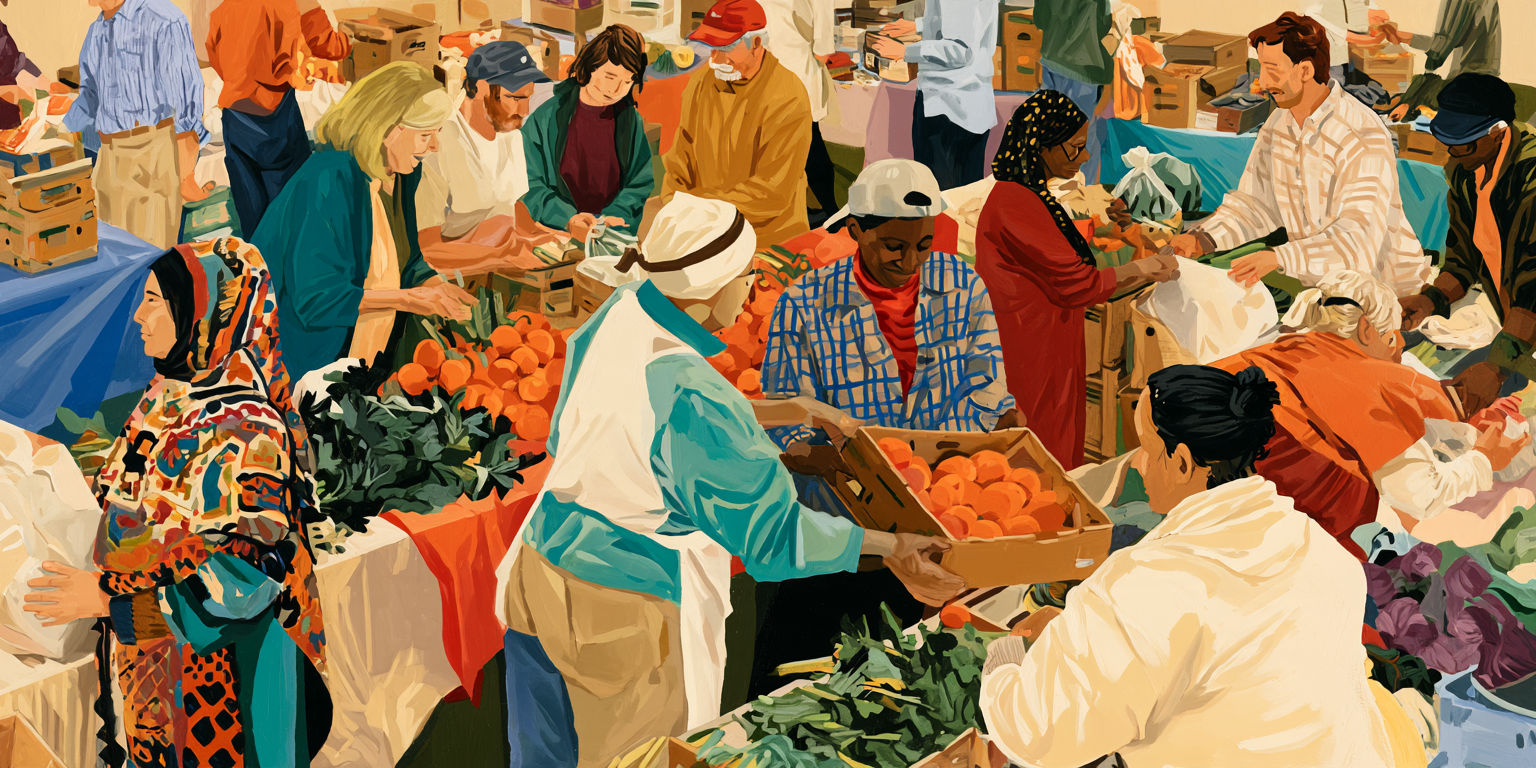
On its own “Feeding the Hungry” summary page, the Church describes a three-part approach: donate to immediate needs, collaborate with organizations focused on long-term food security, and run its own child nutrition program.
The Church reports operating 122 bishops’ storehouses across six countries, using them to care for members in need, and where storehouses are unavailable, it sometimes works with local grocery store chains.
But perhaps most notably, the storehouse system is not treated as a closed loop. The Church states that food and supplies from bishops’ storehouses are distributed to charitable organizations throughout the U.S. and Canada—and that in 2024, more than 32 million pounds of food were donated through humanitarian organizations and food banks (about 32 million meals).
It even offers concrete local examples, including support to Catholic Community Services in Salt Lake City and assistance to El Hogar Buen Samaritano in Spain.
This is one of the clearest answers to the question, ‘Why partner rather than build everything internally?’ Because hunger is not solved by a single pipeline. It is solved by networks—food banks, shelters, grocery chains, local ministries, civic agencies—each doing what they do best.
The Church’s soft power here is the power to strengthen the network without demanding the network become the Church.
Case Study Four: Trust Across Lines—The NAACP and the Red Cross
Soft power is not only global. It is also social: the ability to lower defensiveness and raise cooperation in places where history, misunderstanding, or suspicion might otherwise block progress.
The NAACP partnership
The Church’s relationship with the NAACP, as described in Church Newsroom coverage, began with a joint call for greater civility and racial harmony in May 2018, later developing into education and humanitarian initiatives.
Local and national outlets described scholarship support and related initiatives tied to the partnership. Later, Church News summarized additional education and humanitarian commitments, including scholarships and related efforts.
Whatever one’s perspective on institutional history, the partnership model here communicates a clear principle: we do not wait for perfect alignment before we begin building shared good. Such collaboration proceeds under prophetic direction and clear boundaries. Partnership does not equal endorsement of every position; we work together where concrete objectives align with the gospel and established Church policies.
The Red Cross collaboration
Similarly, the Church’s collaboration with the American Red Cross is framed—on the Church’s own regional humanitarian summary page—as having “staying power” because of shared values like humanitarian spirit and trust.
And the Red Cross itself publicly describes Church donations supporting Red Cross efforts, situating them as part of a longer pattern of giving.
The Personal Lessons: How to Practice “Soft Power” Without Losing Your Soul
Institutional examples matter because they give us patterns to imitate—not in scale, but in spirit.
Here are the takeaways that translate most directly into ordinary life. Our influence grows when our service is dependable.
Lesson 1: Choose contribution over control
In families, workplaces, wards, and neighborhoods, we are often tempted to help in ways that keep us central. The Church’s partnership posture suggests a different path: support what already works, and let others lead where they’re strongest.
Lesson 2: Let “shared credit” be your leadership style
Soft power in personal life is rarely about charisma. It is about trust—built through consistency, humility, and credit-sharing. The Church’s collaborations—from global NGOs to local food banks—model a way of doing good that doesn’t require ownership.
Lesson 3: Build ecosystems, not just moments
A single act of service can be beautiful. But durable influence comes from strengthening systems: the food pantry, the school, the shelter, the community volunteer network.
In this light, platforms like JustServe become more than a scheduling tool. They become an institutional habit of connecting people to organizations that can sustain service beyond one weekend.
Lesson 4: Measure what matters—then tell the truth about it
The Church’s annual summaries are not perfect proxies for every form of generosity, but they reflect a principle: service should be reportable, accountable, and visible enough to build trust. We count to improve care, transparency, and wise use of sacred funds—not to keep score. And we remember that many of the most important outcomes—conversion, dignity, belonging—resist quantification.
In our lives, that can look like simple clarity: following through, closing loops, showing receipts (sometimes literally), and making outcomes legible.
Lesson 5: Keep the moral center clear
Finally, partnership only works when your values travel intact. The Church repeatedly frames its humanitarian collaborations as rooted in Christlike love and a desire to bless communities broadly.
For us, the equivalent is straightforward: serve in ways that are clean, respectful, and non-transactional—without turning people into props for our identity.
Soft power is often misunderstood as image management. But at its best, it is something far more demanding: the disciplined practice of becoming trustworthy.
The Church of Jesus Christ demonstrates a version of that discipline through its partnership-centered humanitarian work—mobilizing volunteers, funding, and commodities, while collaborating with organizations that bring specialized expertise, local legitimacy, and global reach.
And the institutional example returns to us as a personal invitation: to live in a way that multiplies good—through humility, collaboration, and a steady willingness to build trust.