Orthodoxy
G.K. Chesterton
In this classic work of Christian apologetics, the prince of paradox delivered an insight that illuminates what Jesus may have meant when he told his followers to become “like a little child.”
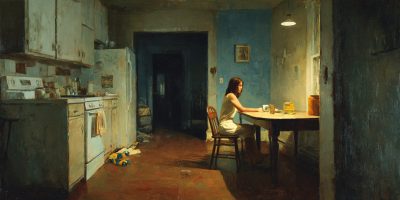
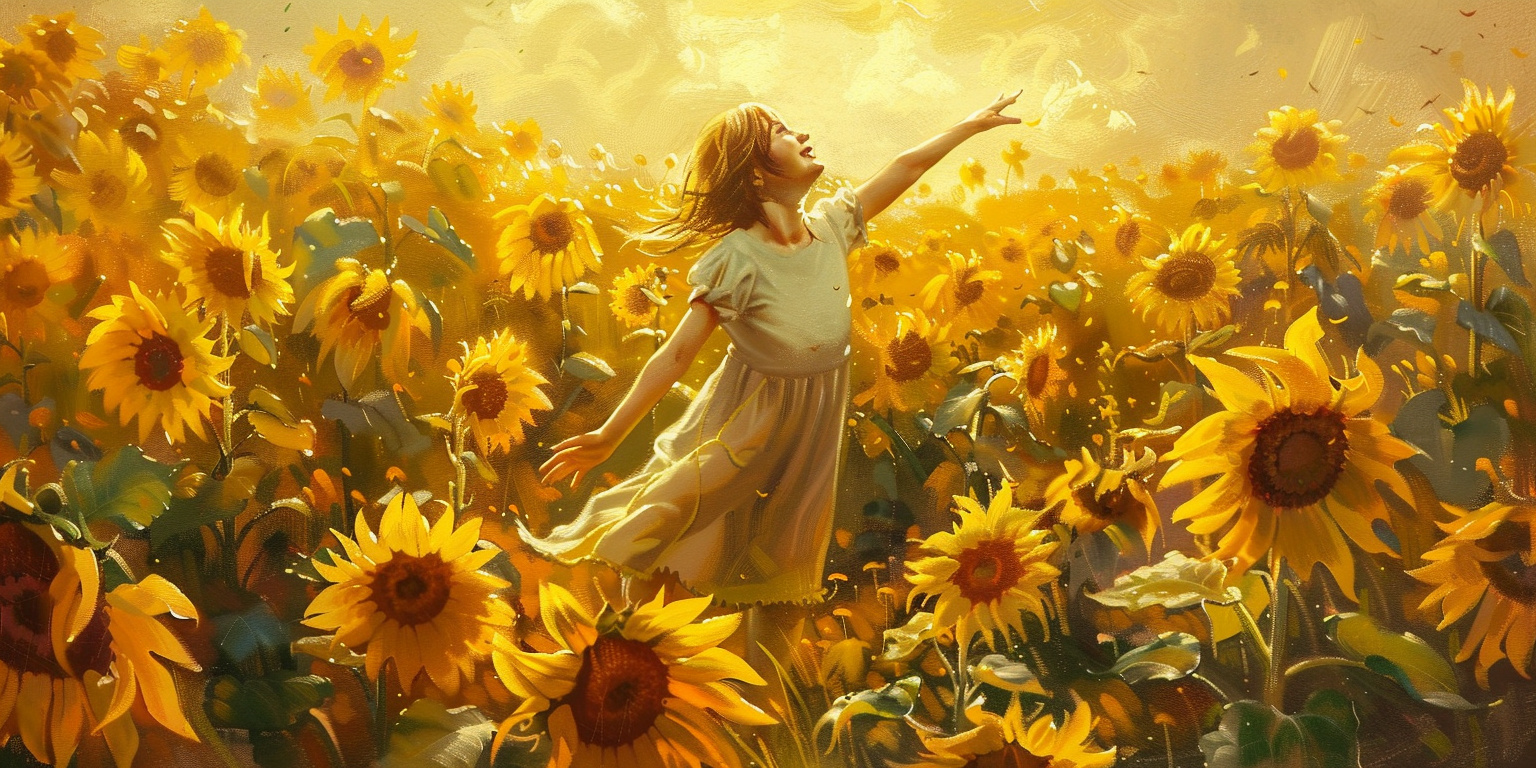
“Because children have abounding vitality, because they are in spirit fierce and free, therefore they want things repeated and unchanged. They always say, ‘Do it again’; and the grown-up person does it again until he is nearly dead. For grown-up people are not strong enough to exult in monotony. But perhaps God is strong enough to exult in monotony. It is possible that God says every morning, ‘Do it again’ to the sun; and every evening, ‘Do it again’ to the moon. It may not be automatic necessity that makes all daisies alike; it may be that God makes every daisy separately, but has never got tired of making them. It may be that He has the eternal appetite of infancy; for we have sinned and grown old, and our Father is younger than we.”
You Are What You Love
James K. A. Smith
Smith, a professor of philosophy at Calvin College, analyzed the formative power of the larger culture on our souls and the importance of weekly worship in the home and at church to combat its influence.
“An hour and a half on Sunday morning is not sufficient to re-habituate hearts that are daily immersed in rival liturgies. Yes, gathered, congregational worship is at the heart of discipleship, but this doesn’t mean that communal worship is the entirety of discipleship. While communal worship calibrates the heart in necessary, fundamental ways, we need to take the opportunity to cultivate kingdom-oriented liturgies throughout the week. The capital-L Liturgy of Sunday morning should generate lowercase-l liturgies that govern our existence the rest of the week. … Recognizing worship as the heart of discipleship doesn’t mean sequestering discipleship to Sunday; it means expanding worship to become a way of life. … We should be attentive to the rhythms and rituals that constitute the background hum of our families and should consider the telos toward which these activities are oriented. The frenetic pace of our lives means we often end up falling into routines without much reflection. We do what we think ‘good parents’ do. And we might think these are just ‘things that we do’ without recognizing that they may also be doing something to us.”
Letters and Papers from Prison
Dietrich Bonhoeffer
Bonhoeffer spent the last two years of his life imprisoned for his role in a plot to kill Hitler. In his final letter to his fiancé, some four months before his execution, he described how in the solitude of prison “the soul develops senses which we hardly know in everyday life.” Among these, he wrote in an earlier letter, is a hidden joy found only along the pathway of pain.
“Stifter once said ‘pain is a holy angel, who shows treasures to men which otherwise remain forever hidden; through him men have become greater than through all joys of the world,’” he wrote. “It must be so and I tell this to myself in my present position over and over again—the pain of longing which often can be felt even physically, must be there, and we shall not and need not talk it away. But it needs to be overcome every time, and thus there is an even holier angel than the one of pain, that is the one of joy in God.”
A 20th Century Testimony
Malcolm Muggeridge
Muggeridge, an English journalist and satirist who converted to Christianity later in his 60s, left this powerful witness of what Christ’s suffering wrought in his life:
“Contrary to what might be expected, I look back on experiences that at the time seemed especially desolating and painful… [and] I can say with complete truthfulness that everything I have learned in my seventy-five years in this world, everything that has truly enhanced and enlightened my existence, has been through affliction and not through happiness, whether pursued or attained. In other words, if it ever were to be possible to eliminate affliction from our earthly existence by means of some drug or other medical mumbo jumbo … the result would not be to make life delectable, but to make it too banal or trivial to be endurable. This of course is what the cross signifies. And it is the cross, more than anything else, that has called me inexorably to Christ.”
Resurrection
Leo Tolstoy
In a passage from Count Lev Nikolayevich Tolstoy’s novel, Resurrection, he described the charitable heart and soul of probably every woman I know. This is a reminder to both recognize and acknowledge the remarkable feminine gifts that surround us every day.
“[She] never thought of herself, her only concern being to find ways of helping other people, in matters great and small. … [H]er favorite sport was charity. Like a hunter on the look-out for game, she focused the whole interest of her life on finding ways of serving others. And the sport had become a habit, the sole concern of her life. And all of this came so naturally to her that those who knew her took it for granted and placed no value upon it.”