
I glanced at my son and saw the tension in his face. Sunlight flowed through one of the museum’s large windows, catching the tears running down his cheeks. His eyes were red. We had held them back for the first three chapters of the exhibit. Now, in front of him, was a panel showing the last known photograph of a group of Latvian women and children, moments before their execution by the Nazis. Inside, the mood was grave, the air heavy, and the silence tactile.
On the last day of our vacation, my family and I visited the Topography of Terror in Berlin. The museum documents the rise and fall of the Nazi regime and is located on the grounds where, from 1933 to 1945, the headquarters of the SS, the Gestapo, the Nazi intelligence, and—during World War II—the Reich Security Main Office were located. Its main exhibit is divided into five chapters of Nazi history and consists of multiple large panels that hang from the ceiling. Each panel includes unsettling photographs and documents.
In an interview with B.Z. Die Stimme Berlins, Dr. Andrea Riedle, director of the Topography of Terror Foundation, explained: “It is a perpetrators’ site, not a memorial. We also want to reach people intellectually so that they reflect on the larger context.” When I recently contacted her, she added: “The purpose of the Foundation is to share the history of, and life under, National Socialism through our documentation center and to promote dialogue about the injustices of the Nazi dictatorship and its lasting impact beyond 1945.”
It is shocking to see how systematically everything unfolded. The regime’s atrocities, the dismantling of democratic institutions, and the establishment of a tyrannical legal order are well-known. Many are familiar with the once-fringe ideas that became central to the regime, e.g., eugenics, the myth of the Aryan race, and the völkisch movement. But another disturbing and less discussed aspect of the rise of the Nazi regime was the extent of its acceptance by the German population. Hitler came to power in 1933, after being appointed chancellor of Germany by President Paul von Hindenburg. By 1934, many Germans—moved by nationalist pride, promises of prosperity and order, propaganda, intimidation, and social pressures—either supported the regime or accepted it.
Professionals of all fields were corrupted by the Nazi regime.
It is tempting to think these were uneducated people, but that would be naïve. Professionals of all fields were corrupted by the Nazi regime, including physicians. While the exact number of physicians who joined the Nazi Party and truly embraced their ideology remains debated, what is clear is that the medical profession was deeply complicit. And once German physicians embraced Nazism, or chose to look the other way, they betrayed their most fundamental ethical duty: to do no harm, to protect life, and to care for the vulnerable.
Examining this dark chapter of history is crucial, not only to honor the victims but also to recognize how easily democratic institutions can be subverted and how quickly professional ethics can erode under pressure.
While there are no moral equivalencies, this history serves as an effective example of the mechanisms that can lead to ethical erosion, allowing us to avoid similar mistakes today.
Today, we are witnessing pressures and incentives to discredit science, dismantle public health safeguards, and erode trust in medical expertise.
Science is being discredited through the amplification of the anti-vaccine movement, the weaponization of social media, the unchecked spread of pseudoscience, and the viral promotion of so-called miracle cures on digital platforms. Actively harmful proposals, such as the injection of disinfectants to treat COVID-19, have entered public discourse. Leading academic and evidence-based institutions, including journals and universities, have been accused of bias for publishing research or guidance that contradicts political narratives.
Public health safeguards are being dismantled. Institutions such as the CDC, FDA, NIH, and the U.S. Preventive Services Task Force, once internationally respected for their scientific integrity, have faced political interference, funding cuts, and deliberate campaigns of misinformation. These efforts weaken their ability to respond to public health issues and undermine their authority in the eyes of the public.
We should invite good-faith methodological critique, which improves safety. Institutional humility serves us well, and it must be paired with our own personal responsibility. Ultimately, we do not need to believe that these organizations are faultless or above correction to recognize that the rapid erosion of trust we’ve witnessed—often unearned—causes more harm than good.
Moral agency and care for the vulnerable transcend any single tradition.
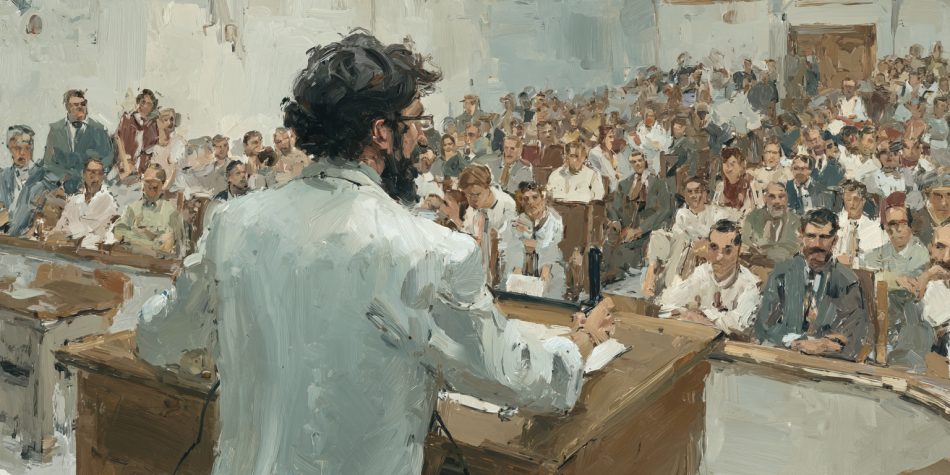
And this is where our responsibility begins. Moral agency and care for the vulnerable transcend any single tradition and are foundational to the practice of medicine itself. Truth-seeking, both scientific and ethical, honors these commitments. That is why defending evidence-based medicine, while insisting on transparency and accountability, is not merely a professional obligation; it is a moral imperative shared across diverse communities of conscience. History teaches us that silence enables erosion. A single physician may hesitate to speak out—out of fear, uncertainty, or futility. But when we raise our voices together, we can become a civic force. If we don’t defend the principles that define our profession—evidence, ethics, and advocacy—who will? The consequences aren’t theoretical. When we allow misinformation and ideology to guide health policy, it is patients, especially the most vulnerable, who suffer first.
Note: The views expressed are solely those of the author and do not necessarily reflect the official policy or position of the University of Washington or any other professional institution.