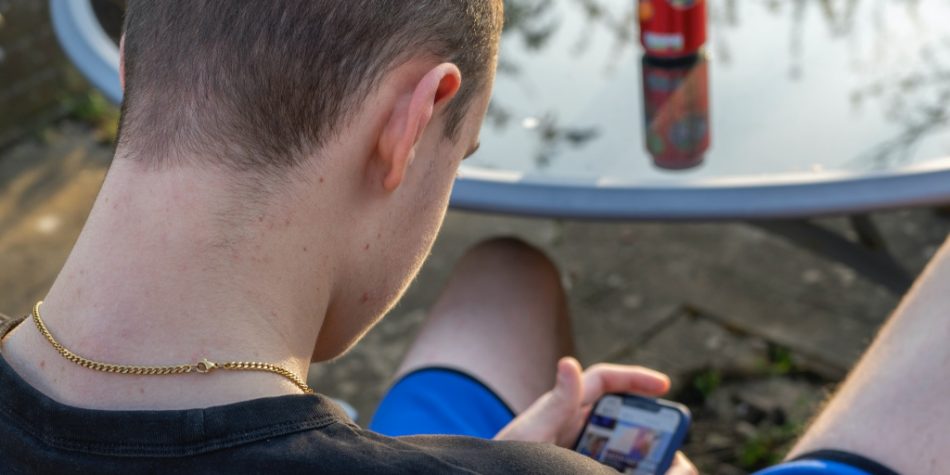
Last week, US Surgeon General Vivek Murthy caught the attention of conscientious parents and created a buzz online with statements about youth and social media. He warned of the dangers of social media platforms and the web at large as “harmful” for teens and their “developing sense of identity.”
“I, personally, based on the data I’ve seen, believe that 13 is too early … It’s a time where it’s really important for us to be thoughtful about what’s going into how they think about their own self-worth and their relationships and the skewed and often distorted environment of social media often do a disservice to many of those children.” He suggested a united front by concerned parents as a solution for overcoming the pressure teens feel to participate, “If parents can band together and say, you know, as a group, we’re not going to allow our kids to use social media until 16 or 17 or 18 or whatever age they choose, that’s a much more effective strategy in making sure your kids don’t get exposed to harm early.”
Among the harms, Dr. Murthy suggests that youth are out-gunned and pitted against addictive algorithms. He explained, “You have some of the best designers and product developers in the world who have designed these products to make sure people are maximizing the amount of time they spend on these platforms. And if we tell a child, use the force of your willpower to control how much time you’re spending, you’re pitting a child against the world’s greatest product designers.”
Seattle Public School District, parent’s groups, and states like Indiana, Utah, and Texas agree, and they are taking measures to protect young people from what they consider an “existential threat.” Citing concerns similar to the Surgeon General’s, the Governor of Utah, Spencer J. Cox, says, “It’s very telling when the very people building these apps refuse to let their kids have them.”
With research showing adverse effects from social media use that include loneliness, depression, bullying, poor physical health, sleep disorders, and privacy concerns, it can feel daunting to face the potentially precarious outcomes for the rising generation—especially for those who are called to minister, mentor, and parent them.
A week before Dr. Murthy’s comments, The Church of Jesus Christ of Latter-day Saints Church Educational System put on a training for the leaders of their Seminary and Institute programs. These programs are targeted at teenagers and young adults—precisely the age range at most risk of the dangers of social media and who need to learn how to effectively navigate these spaces.
The presentation reflects the forward-looking view of leaders of the Church Educational System in addressing these pressing concerns.
Belonging. Well before these national public warnings, church leaders have been making plans to counter these social pressures. As an antidote to loneliness and feelings of depression, “belonging includes loving and respecting one another,” explained Chad H. Webb, Church administrator of Seminaries and Institutes of Religion. “It also includes principles that bring us to the Savior. … The blessings of true gospel-centered belonging also include covenant connections. Belonging as defined through the lens of the restored gospel helps us to know our true identity and our eternal relationship with our Father in Heaven.”
Webb’s model of belonging is well supported by research that suggests that belonging happens when uniting around common goals and identities. Education professor and popular civility commentator Benjamin Pacini tells a story of two schools, one that focused on belonging as a primary goal and achieved nothing but discord. And another school that focused on working to fix the educational problems students faced. With that goal at the forefront, interpersonal problems faded away, with unity developing naturally.
Identity. While Dr. Murthy recognized the negative effects of social media on self-worth, he presented no alternative ways of developing the same. Young Men General President Steven J. Lund described changes to the new For the Strength of Youth guide as a way to help improve self-efficacy and decision-making in a way that assists young people to approach life with spiritual rather than just cultural sensitivities. “It’s a reset of the way they approach their lives,” he said. “Our youth are already being confronted with moral questions that were not even questions a decade or three ago. If they’re going to be thrown off balance today deciding about tattoos, well, just wait to see what else the world is coming hammer and tong at them with.” He suggested that increasing one’s sense of self can come from the practice of making good choices.
Expanding on the importance of understanding identity, Church Commissioner of Education Elder Clark G. Gilbert said, “Many young adults today are struggling because they do not understand their true identity.” He then cited President Russel M. Nelson, President of The Church of Jesus Christ, who “teaches with empathy and love, but he still teaches the central truth about divine identity.”
Lund and Gilbert’s transcendent approach to self-worth comes as a refreshing antidote to the secular and self-focused approach that has led this generation into a worsening mental health epidemic.
Civility. Of course, in navigating a social media environment, we must have the skills necessary to speak effectively and civilly. Gilbert went on to analyze a frequent mode that President Russel M. Nelson uses in his public discourse:
[He] has been using a phrased couplet, where on the left side of each statement, he talks about the difficulty, peril, anxiety, and commotion of the latter days. On the right side of the couplet, he declares with confidence and hope that through Jesus Christ and keeping our covenants in Him, we can overcome these challenges. I count no less than seven of these couplets in President Nelson’s general conference messages from the time he became the prophet.
Two examples:

Without creating a panic over social media directly, leaders in the Church Educational System are providing proactive and creative guidance for how to navigate some of the most pressing of problems facing youth and young adults today.
To that end, before a Surgeon General’s warnings and protective bills were drafted, and before the latest Seminary and Institute broadcast, President Nelson—himself also a former physician—presented a prophetic invitation to a worldwide audience of youth regarding their social media use. In June 2018, to 22,000 youth in attendance at the conference center and many more thousands through the devotional broadcast, he offered a challenge to disengage from social media with a week-long “fast.” He said, “if you are paying more attention to feeds from social media than you are to the whisperings of the Spirit, then you are putting yourself at spiritual risk, as well as the risk of experiencing intense loneliness and depression.” He then warned that “much of what appears in your various social media feeds is distorted, if not fake … give yourself a seven-day break from fake.”
A break from the fake; indeed, just what the doctor ordered.