I grew up in the deep south in the 1960’s in a family where I was taught that God loves all of His children equally – black and white, male and female, young and old. As a pre-teen young man I saw the low-quality snowy black and white TV news images of numerous civil rights demonstrations. Almost universally the announcers condemned the demonstrators as lawless criminals who were breaking all of the social and legal norms of society and had to be stopped. Invariably these demonstrators were outnumbered by police and military personnel who at times seemed to attack the demonstrators without any obvious provocation. What I saw on the videos simply did not correspond to what I heard from commentators – so over the years I have learned to carefully consider discrepancies between what I see and what I hear.
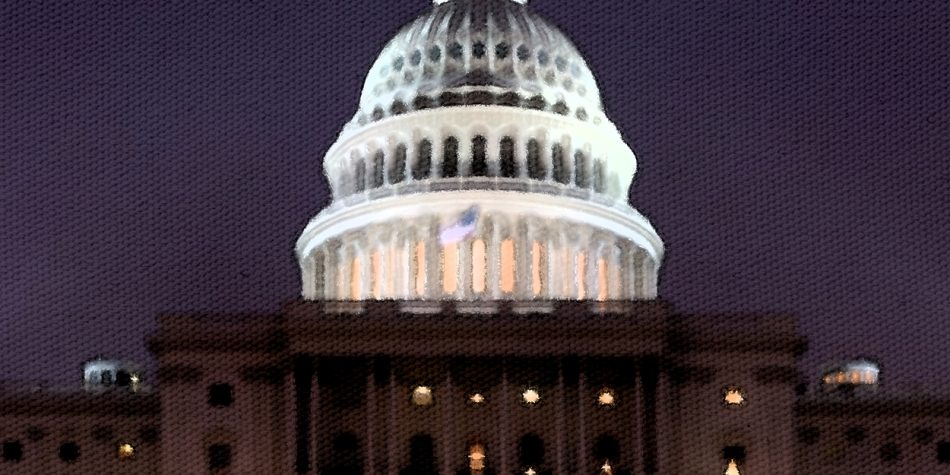
This has been reinforced as I have become fascinated by politically and emotionally charged events like what I saw in my youth and like what happened at the Capitol. I lived in the DC suburbs in 1968 and personally witnessed the hours-long convoy of National Guard soldiers as they gathered in Washington to try to bring peace to the city where whole blocks of buildings had been burned to the ground. I was among the thousands of innocent spectators who a few years later were tear-gassed at a 4th of July fireworks celebration on the National Mall when anti-war demonstrators clashed with police. And looking overseas, I watched Yeltsin standing on the tank changing the course of history in his country. I saw the Tiananmen Square events unfold before the eyes of the entire world.
More recently I have watched multiple sources report on civil unrest in cities across the nation. The picture quality is much better these days but the contrasts between the video and audio messages are still troubling at times. It is becoming more difficult to discern the truth of what we are seeing and what we are being told despite, or maybe because of, a flood of varied sources.
I watched over three hours of non-stop live coverage of the Capitol events as they unfolded. The first coverage I found was on PBS. As other news sources began to cover the evolving events I went over to CNN. After scanning other sources I chose to stay on PBS and CNN – at times running both feeds simultaneously. PBS had more fact-based coverage with little editorializing but they only had a couple of camera angles. CNN had more camera angles but their video images became increasingly disconnected from their audio reporting and editorializing as time went on. At first the crowd was described as “demonstrators” while the images showed highly charged individuals breaching the security perimeter of the Capitol. Then as the crowd became larger with fewer images of struggle between crowd members and law enforcement personnel, the description became that of a “mob” forcibly taking over the Capitol. Later as the crowd voluntarily dispersed with little or no violence, they were described as violent “insurrectionists” and even “domestic terrorists.”
Once again, throughout the coverage that I witnessed, the verbal description often didn’t seem to correlate with the visual images being projected.
What to make of it all?
I think the only way to make sense of it all is to look to the inspired writings of those in history who were privileged to see our day in detail – and who were rightfully fascinated with what happens to us. The world does not acknowledge this prophetic source of insight, and yet for me it is the best framework from which to understand the events unfolding around us. What I saw in the Capitol events yesterday felt like echoes of the recorded history of the Jaredite nation.
For instance, in light of the intense election disputes plaguing the nation, I marvel that just eight weeks ago (the first week after the presidential election) the entire membership of The Church of Jesus Christ of Latter-day Saints began studying the Book of Ether in the Book of Mormon – a book painstakingly included in the hand written record that Moroni knew would come forth in our day. Moroni was one of those ancient prophets who saw our day, literally in gory detail. He obviously felt that we would be benefited by knowing the story of the Jaredite nation which thrived miraculously and then self-destructed on this continent thousands of years ago.
What I saw in the Capitol events yesterday felt like echoes of the recorded history of the Jaredite nation. For me, understanding these parallels provides a helpful framework for making sense of our circumstances in 2021.
The Jaredite nation started in approximately the year 2300 B.C. from humble beginnings but became the greatest nation on the face of the earth at that time (known today among secular scholars as the “Olmec civilization”). It was founded on a deep faith in the power of God to bless and direct His children for good – with a founding narrative based on multiple, dramatic miracles and heavenly interventions.
Over time they drifted from that faith and narrative and eventually rebelled against the very God they had previously invoked as the source of their peace and prosperity. And here’s where this all starts to feel applicable to the events at the Capitol – and why I sincerely believe they could have consequences of Biblical proportions.
As this ancient nation spiraled down into ever-increasing conflict, two competing factions emerged as the dominant sources of political power. Somehow the leaders of these two factions – Coriantumr and Cohor – were able to persuade all of the people to align themselves with one side or the other. Everyone had to choose which side they would join. Remarkably, in the record we have, eventually only one person remained above the fray as a neutral observer: the prophet and historian Ether, whose writing from a cave helped make the surviving record we have today possible.
The contention escalated because “there were many who rose up, who were mighty men, and sought to destroy Coriantumr by their secret plans of wickedness.” But the warring factions were nearly equal in their strength and “Coriantumr, having studied, himself, in all the arts of war and all the cunning of the world, wherefore he gave battle unto them who sought to destroy him.”
Cohor was succeeded by others with continued death and destruction until there were only a few remaining on each side. The prophet Ether then records the last few days of the conflict when after further battles of attrition Coriantumr kills his single remaining opponent and becomes the last survivor of the war that completely destroyed the entire Jaredite nation.
The real Jaredite tragedy is that neither side had a cause worth shedding blood over, yet everyone became committed to shedding blood. What destroyed the Jaredite nation was that the people, individually and collectively, chose a path of ever-increasing contention and created an environment where everyone eventually joined in the fight.
Then, as now, ever-increasing contention inevitably leads to bloodshed. Usually someone steps forward and restores at least a semblance of peace. Sadly for the Jaredites, no one stepped forward. May we pray for leaders who will continue to step forward now.
What about for us – in our day?
With the results of the Georgia Senate runoff races coming to a conclusion last week, some Trump supporters are pointing to them as evidence of yet more fraud – “see, they even managed to swing both congressional elections!”
I would argue the opposite – that these results are strong evidence that there was no massive fraud or irregularities in the Georgia presidential vote. It was a second test of the will of the citizens of Georgia and the result seemed conclusive evidence that Biden won the popular vote fair and square.
Then the US Capitol erupted in chaos. While there was near-unanimous condemnation of the breach and the events that led up to it, the ensuing chaos is likely to galvanize the underlying ideological political conflict and could easily set the stage for a potentially dangerous escalation of contention (although, for the immediate term, it appeared to have calmed things down and shaken people on both sides to their senses).
As with the Jaredites, the two warring political factions are persuading people that they have to take sides in this conflict. President Trump has clearly won many to his side, convincing them that they must enter the fray and rebuking anyone who declines to join him – friend or foe alike. With the breach of the Capitol, the Democratic side can now continue doing likewise: convincing many others that they must enter the fray unless they want to risk a similar rebuke for anyone who declines to join.
That very dynamic seemed to be on full display by the end of the day across the country. Within my own circle of friends and family many had taken sides before the day was over. And of course the divisions were deep and almost equally divided in numbers. Who doesn’t have a strong opinion about what happened at the Capitol?
The stage seems to be setting up for a conflict between the two political factions of our day which could be catastrophic for the country.
What is to be done? What should we individually do about it all? Amidst the seemingly endless dramatic conflict that can take so much of our attention, President Nelson raises something that offers to frame everything in a very different perspective.
Maybe it’s time to step back and take a broader view. Several recent quotes from living prophets provide what I believe to be the most helpful counsel and insight for how we should respond to the turmoil of our day.
President Nelson: The most important thing – Let God prevail
Amidst the seemingly endless dramatic conflict that can take so much of our attention, President Nelson raises something that offers to frame everything in a very different perspective. “These surely are the latter-days, and the Lord is hastening His work to gather Israel. That gathering is the most important thing taking place on earth today.” This statement clearly distinguishes the relative importance of God’s work over that of the current political contests. The gathering he describes is first and foremost a gathering of hearts and minds in united commitment to the principles taught by Jesus Christ regarding love of God and of all mankind. Since this isn’t always easy to understand for people, he added further clarification by saying, “one of the Hebraic meanings of the word Israel refers to a person who is willing to let God prevail in his or her life.” He also reminded us that “God does not love one race more than another. His doctrine on this matter is clear. He invites all to come unto Him, “black and white, bond and free, male and female.”” In other words, the most important thing going on in the world today is the active gathering of ALL those who will let God prevail in their lives. As he has reiterated often before, nothing else is more important or of more consequence.
President Oaks: Generous Civic Engagement
Lest we think that we must passively submit to political policies that we disagree with, President Oaks has said, “This does not mean that we agree with all that is done with the force of law. It means that we obey the current law and use peaceful means to change it. It also means that we peacefully accept the results of elections. We will not participate in the violence threatened by those disappointed with the outcome.” For those of us who struggle with the current level of political acrimony he said encouragingly, “As I have lived for many years in different places in this nation, the Lord has taught me that it is possible to obey and seek to improve our nation’s laws and also to love our adversaries and our enemies.”
Elder Uchtdorf: Stay Hopeful (Even Today) for Unimaginable Good to Come
Elder Uchtdorf summed up a course of action that can provide a guide for our daily activities in this tumultuous world when he quoted from Doctrine and Covenants 123:17 “cheerfully do all things that lie in [your] power; and then may [you] stand still, with the utmost assurance, to see the salvation of God, and for his arm to be revealed.” He then concluded his remarks with a most hopeful apostolic promise: “And I promise that the Lord will cause unimaginable things to come from your righteous labors.” Unimaginable is the word that stands out to me in what God can make of our righteous labors – no matter how humble or seemingly insignificant they may be.
In summary, the forces of contention may have just escalated to a new and even more feverish pitch as a result of the election disputes and the breach of the Capitol building in Washington. The Jaredite record provides a clear warning of where this path can lead if we don’t change our ways – especially in a country so evenly divided on our points of contention. Prophetic counsel from ancient and modern prophets provide timely perspective and instruction on how we can navigate the daily challenge of being true to our principles while resisting the urge toward fear, anger, hate and contention. Isn’t that just what America needs right now?
While others continue to obsess about who is going to win, to prevail, and to dominate in terms of political and cultural power, may we encourage others to heed the call of living prophets to center our attention on another question: how we can “let God prevail” in our own lives.