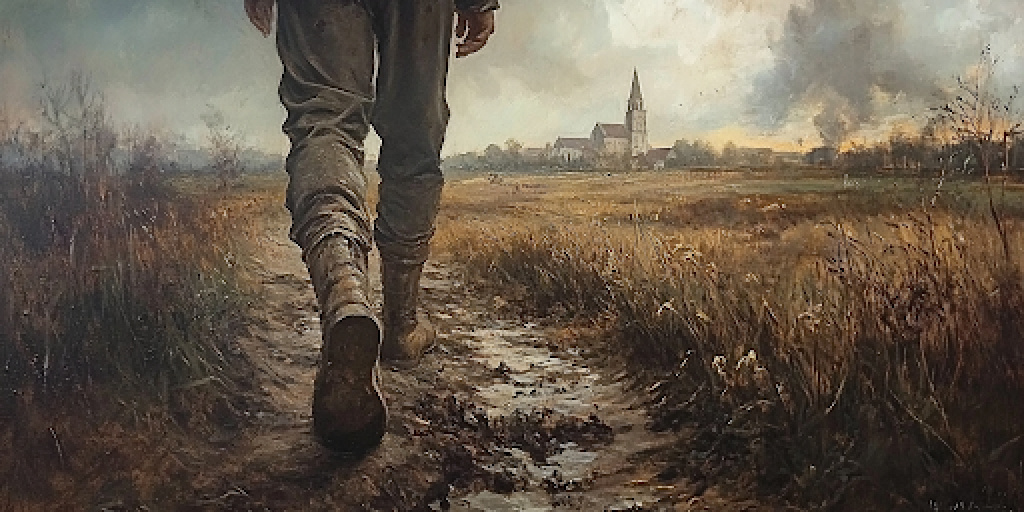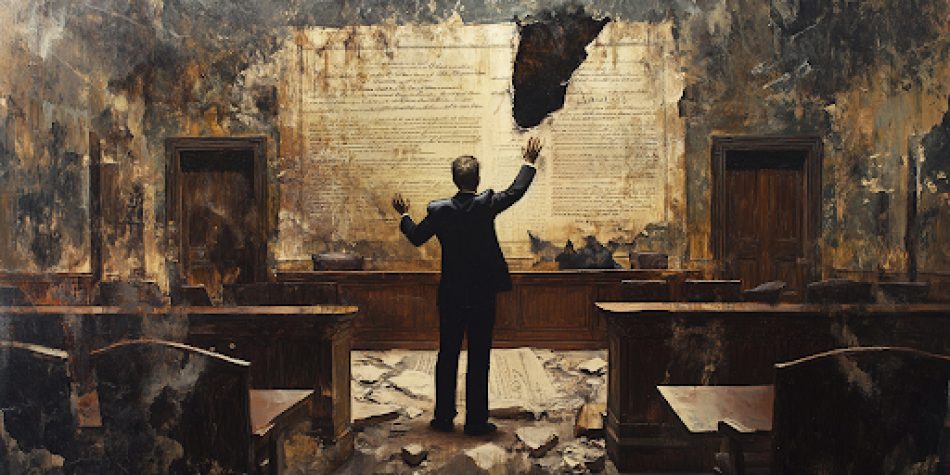
A president stands before a divided Constitution, symbolizing the central challenge in the president's role.

Are We Asking the Wrong Question When Electing a President?

Are we electing presidents for the right reasons? Protecting the Constitution is their duty, not policy debates.

Over the years, there have been significant changes in the American election process. These range from how we vote, such as the rising popularity of early voting, to even who is able to vote. However, one of the biggest yet undiscussed changes is how, historically, we used to vote for candidates of different political positions.

Before the 17th Amendment was ratified in 1913, it was the legislatures from each state that chose who would represent the state on the federal stage. This method was designed to strengthen the federalist ideals of those attending the Constitutional Convention. However, because of this amendment, it will be you voting for your senator on November 5. 

The argument for this change was to increase the power of the voter by allowing them to directly affect who would be the federal spokesperson for their state. Paradoxically, the unforeseen consequences of this action have led to a loss of freedom for individuals in any particular state. The focus and incentives for a senator shifted from protecting the state’s autonomy to focusing on the next election cycle. 

This resulted in what is referred to today as dual federalism. Instead of the federal and state governments operating in two different spheres, they are now combined in fundamental ways. Instead of fighting to keep the federal government out of their turf, senators are now fighting to allow the government to enact laws in their states called “federal mandates” so they can receive more funding from the federal government. 

This compromising relationship between the state and federal governments has seemingly led to the squandering of the rights of the average citizen so the state can make a quick buck—all done under the guise of increasing democracy.

The checks and balances of the legislative process were carefully considered by wise men.

This would not be a problem if it was not already the job of a federal representative. Their role is to represent your interests at the federal level. Now, because of these changes, there is nobody left in Congress whose sole purpose is to keep the federal government’s paws off your state’s rights.

The Senate is not the only office affected by America’s shift from a constitutional republic to the vicious wolves of a pure democracy. Even the high office of the president is being influenced by this cultural shift.

What is the purpose of the President of the United States? I don’t believe either candidate would have the correct response to that question. Donald Trump would probably start talking about Haitian migrants eating cats and dogs, while Harris might monologue about being raised in a middle-class family in Canada. Both candidates would probably answer as they have before, explaining their different policies. 

But that’s not the role of the president. Perhaps someone with a strong understanding of the Constitution will point to Article II broadly and say, “Here, this is the role of the president.” Even so, I think we need to be more specific than that. Although Article II enumerates the executive powers of the president, one line explains the role of the current president: the Oath of Office. 

As the U.S. Constitution, Article II, Section 1 states, it is the president’s duty to “preserve, protect, and defend the Constitution of the United States” to the best of their ability. And as George Washington so beautifully put it, “So help [them] God” if they don’t. 

If that’s the role of the president, then shouldn’t that be the standard by which we elect them? Maybe when voting for the POTUS, we shouldn’t be asking ourselves what their views are on taxes, transgender athletes in women’s sports, climate change, or IVF. Instead, we should ask ourselves who would do the best job of preserving, protecting, and defending the Constitution as it is written. 

That’s not to say that these issues aren’t important. They are. Both sides of these debates need to be discussed and considered at the federal level. However, that is the role of the House of Representatives—to discuss and promote what you, the person they represent, feel about any one of these issues. For this reason, the Electoral College was conceived. Its goal was to prevent the office of president from being one of pure populism. 

The checks and balances of the legislative process were carefully considered by wise men. The goal of the Constitution in this aspect was to involve the consent of every involved party before anything could become law. First, a bill must be proposed by either the House or the Senate and approved by the other. The passing of a bill in the House will signify the will of the majority of current citizens of the United States. The Senate will then convey the concurrence of the majority of states on the same matter before the bill can be moved from Capitol Hill to 1600 Pennsylvania Avenue. 

Then the president will read through the bill. Before signing it into law, it is their duty to determine if it aligns with the wisdom of the ages as portrayed in the Constitution. No matter how important, prudent, or popular a bill may be, it is the sacred obligation of a president to veto that bill if it does not align with the Constitution. If that bill is truly important and widely accepted enough, then there should be a national consensus to support an amendment that would allow for such a bill.

This election, I would encourage you to try to adopt this perspective. Don’t treat your senator like a representative. Vote for a senator who will stand up for the rights of your state. Conversely, when voting for the president, ask yourselves: Who do I trust to preserve, protect, and defend the Constitution of the United States of America?


About the author

Derek VanBuskirk

Derek VanBuskirk is a recent journalism graduate from BYU and is currently attending the National Journalism Center in Washington, D.C., while interning for The Spectator World. In his free time, he offers commentary on religion and politics.
On Key

You Might Also Like

When Did We Stop Trusting the Media? A Review of “September 5”

When did we begin to lose trust in the news media? There are plenty of theories. Some suggest March 6, 1981, Walter Cronkite’s last broadcast. Others suggest it was the coverage of President Bill Clinton’s perjury and impeachment. Others suggest it was the advent of 24-hour news stations. The newest film from Paramount Pictures suggests another option in its title, “September 5.” September 5, 1972, is the day that the Black Sabbath militant group kidnapped Israeli Olympic athletes. In total, eleven Israelis were killed. But according to the journalists at the center of the movie, none of that was nearly as important as making sure the “ABC” logo was on the TV screen while the coverage went on. A brief epilogue about how the incident turned out ends with these eerie words, “900 million people watched.”  “September 5” is interesting because, in a movie presumably about the attacks, we see none of it ourselves except through camera lenses and TV screens. It’s not a movie about the attacks at all; it’s a movie about watching the attacks. The film opens as Geoff takes over the control room for ABC Sports. He’s running the night shift, when word comes in about the attacks.  The ABC studios are yards from where the attacks are happening. So they rush Peter Jennings into the Olympic village, and put their own studio camera on top of the building so they can keep a camera on the room where the hostages are being held at all times. Geoff wakes up his bosses, Marvin and Roone, who often debate the relative merits of their decisions, such as whether to turn the story over to ABC News rather than the sports division or whether or not to call the attackers “terrorists.” These compelling arguments make for thoughtful viewing. Ben Chaplin, who plays Roone, an American Jew, does particularly good acting work as he tries to find a nugget of morality in what they are doing.  But every argument ends with the decision being made that will best help ratings and ABC. No matter how many times they argue about good practices, such as waiting for a second confirmation that the hostages were all safe before reporting, the better angels of our trio of decision-makers always lose.  By the way, the hostages weren’t safe, ABC did get the story wrong because they were relying on German state news, and Germany was trying to look safe and less militaristic in their first major international attention since the end of WWII. But for a moment, when the station thought the hostages were safe, their only concern was getting them in the studio for interviews.  Marvin Bader tries to use the language of “the story” as though his audience deserved to have “the story” in real-time. And no matter what decision they made it was in pursuit of capturing the story. But this justification rang shallow as the movie moved on. When the German police burst in to get them to stop telecasting their rescue attempts live because the militants were watching, they stopped to get them to put their guns down, but turned the feed back on nearly as soon as they had left. All of this makes this an engaging movie that is worth watching. When journalists are the main characters, we expect them to be the good guys. “All the President’s Men,” “Spotlight,” “The Post.” Even the film “Shattered Glass” about a dishonest journalist, spends more time highlighting the good journalists who caught him. “September 5” doesn’t offer the media such a convenient way out. By making its characters clear-headed and conflicted, they are more than simple villains. They are exactly what the pressure of studio news would naturally produce. There are real powerful forces driving the decisions of the news industry that are at odds with what is right or good, and all too often, there’s nothing we can do about it. If we are curious about how the spiral of trust began, this film serves as a worthwhile primer while being entertaining as all get out. The film is rated R. It is thematically tough, dealing with questions like whether to broadcast an execution live, but none of the violence of the incident is actually seen the movie. In terms of a ratings feel, I might compare it to the film “Gravity” while using the word “f***” three more times than is allowed in a PG-13 film. I wouldn’t recommend this for young children or young teens, but the themes about how media manipulates us would be important for older teens, and I might consider watching this film with my kids once they turn 15 or so.  If I did, I’d ask them questions about the nature of journalism. Is getting the story more important than the lives of the kidnapped Olympic team? Do we need to know about what’s happening in real-time on the other side of the world? How has constant news coverage made the world a better or worse place? What motivates those who choose what to show on the news, and how they tell those stories? Four out of Five Stars. September 5 has already had a limited release, and it is rolling out in individual markets across the country through January. 

Under the Banner of Heaven Episode 5, “The One Mighty and Strong”

Summary – Pyre is interrogating Sam, who shouts scripture at him about the “one mighty and strong.” Pyre uses false details about the murder to trick Sam into revealing that he isn’t the murderer. The police chief is getting ready to release the brothers, so Taba stalls him while Pyre talks to Robin about his brothers’ involvement in the “School of the Prophets” and gets him to reveal two names: Bernard Brady, a Provo businessman, and Prophet Onias. The detectives follow up with Bishop Low and his wife, located at the end of the last episode, asking them about the excommunication of Dan and Ron. The bishop is reluctant to reveal details because of clergy confidentiality but eventually reveals that Dan was excommunicated based on the testimony of his daughters that he attempted to forcibly take them as polygamous wives. We get a flashback to a heartbreaking scene where Matilda has sex with Dan to distract him as her daughters escape out a window in the middle of the night. Dan was excommunicated, and the girls were placed with a family in the ward (as the bishop refused to call CPS) but later ran away, and now they and their brother are missing. At his daughter’s baby blessing, Ron confronts the bishop about his brother’s excommunication, not knowing about Dan’s attempted polygamy and thinking that it’s about his political beliefs. Brenda has a conversation with Sister Low and Diana, indicating that both know that Ron is abusing her but only Brenda is willing to do anything about it. In fact, Sister Low feeds Diana a line about how her only duty is “creating a home and environment to sustain and support our Priesthood holder.” To Detective Pyre, the bishop claims to have followed church procedure but eventually encouraged Diana to leave and gave her money to do so. The detectives follow up on Robin’s lead about Bernard Brady by arriving at his house in the foothills of Provo with a warrant. We find out that the Bradys sheltered Ron when he was having a hard time. In a flashback, Ron receives a summons to a church disciplinary court and blames Diana for it. He punches her in the face and begins throwing the food she’s preparing on the floor, saying he’ll starve her into obedience. Diana grabs a kitchen knife and drives Ron from the house, telling him not to come back. Back in the present, Bernard admits to being in the School of the Prophets study group and driving miles to pick up Prophet Onias and the Laffertys but denies being further into the group than that. But when he sends his wife out of the room to make lemonade, he produces a notarized letter he sent to himself with details of the Laffertys’ hit list, including that Diana is on the list because she wrote a letter that got Ron excommunicated. The detectives rightly chastise him for not taking this information to the police earlier. Brady reveals that he knows the location of “the farm,” a Lafferty compound. With Allen’s help in drawing a map, the detectives plan to stake out the property in the morning. Detective Pyre returns home for FHE and finds that his wife and kids have been invited to the bishop’s house for the evening and are spending the night there. Pyre believes this is an attempt to keep an eye on his family and control the narrative about the case. The next morning on the way to the raid of the farm, Pyre questions Brady about the details of Ron’s excommunication, which we see in flashback. He is indeed excommunicated after lashing out at the church leaders about them not following the “correct” doctrines of the church. When Ron returns home, he finds that his teenage daughter has cut the markings out of his garments, which he puts on anyway with only a sports coat and jeans over the top. He says goodbye to his kids and leaves the home. When the farm is raided, the only people inside are three teenage girls, who we learn are from a polygamous compound in British Columbia and were brought down by Prophet Onias to be Ron’s wives. The girls show the detectives a cupboard they had been forbidden to touch, which the detectives open to reveal a single shirt belonging to Ron with some papers in the pocket, a hit list, and a revelation directed at Diana commanding her to repent and return to him. Allen is in disbelief that Ron could have written these things, but Brady confirms that Ron is a violent man. He explains that Ron fled to his parents’ home after his excommunication, where his mother confirms his calling as “the one mighty and strong” and says he’s only a heartbeat away from his rightful place. His father is lying sick in bed and asks Ron to call a doctor, but Ron recalls his cruelty to them as children and refuses. It’s implied that he indirectly caused his father’s death in order to take over the leadership of the family. Church History—This episode contains the most fabricated piece of church history in the show. When Bernard Brady reveals that Diana’s information led to Ron’s excommunication, he makes an analogy to Joseph Smith’s martyrdom. He claims that while Joseph was in hiding after destroying the press of the Nauvoo Expositor, Emma wrote a letter to Joseph encouraging him. John Taylor intercepts this letter and adds a line meant to make Joseph turn himself in, thus indirectly causing the prophet’s death. Taylor’s motive is to put Brigham Young at the head of the church, instead of Emma’s young son, in order to continue the doctrine of polygamy, which he and Brigham are already heavily involved in. Reputable historians both in and out of the church say there is no evidence to support this interpretation of events, though the succession crisis between Brigham Young and the ten-year-old Joseph Smith III is real and

Subscribe To Our Weekly Newsletter

Stay up to date on the intersection of faith in the public square.

You have Successfully Subscribed!

Pin It on Pinterest

Share This