
It took over 40 years to put into words what happened to me as a child. Each time I tried, I would somehow find ways to avoid talking about the abuse openly.
After grappling with the dark shadows of trauma for over 60 years, the heart-level healing I am now experiencing—after so long—has surprised me.
As a little child in the early ‘60s, I often heard the words: “If you don’t stop crying, I’ll give you something to cry about.”
My dad, raised during World War II by a Marine drill sergeant father, viewed emotional outbursts, especially crying, as weakness—much like others of his generation. Even in my mid-20s, I remember Mom asking me not to tell her anything “upsetting” because she didn’t want to cry. “Crying doesn’t help anything,” she said.
But I had plenty to cry about.
I had been the victim of ongoing abuse since the tender age of three through my midteens at the hands of multiple perpetrators. I also had plenty to say, but couldn’t say it, because “no one likes a tattletale.” Contributing to this barrier of silence were words from war-era Bambi: “If you can’t say something nice, don’t say nothing at all.”
Those phrases may seem small. But for a child living with abuse, I applied those sayings to the situation I was in, and those standards became a kind of prison for me.
That’s one reason why so many victims wait years, or even decades, to speak out.
Mistaking Silence for Safety
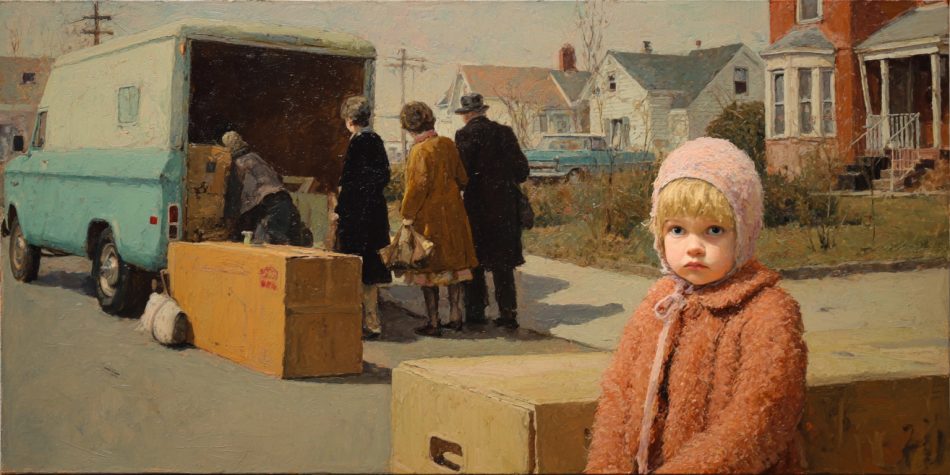
Standing in front of a small U-Haul in December 1968, I pointed down the street and, with as much feeling as I could muster, exclaimed, “I don’t like that boy. He’s mean!”
Mom snapped: “Diana! We don’t say naughty things about people we don’t know. I don’t ever want to hear you say anything naughty about that boy again.”
And I didn’t.
As soon as I came close to mentioning that I had been sexually abused, I would stop going to therapy.
It’s only because we were moving that I had the courage to point him out that day. But after Mom’s scolding, I didn’t dare say another word about him (or other abusers) for nearly 20 years.
I’m not alone with delayed disclosure. It is, tragically, common in cases of child sexual abuse. Many victims wait years or decades to tell anyone. Some research puts the average age of first disclosure or reporting at 52.
One 2010 research report summarizes: “On average it takes 17 years before victims disclose their abuse.”
Why do victims wait so long to speak out? What makes speaking out feel so impossible? Fear, shame, confusion, culture, threats, and the absence of empathy can all work together to keep a child silent.
It wasn’t until recently that I could see how being scared to “tell” set me up for years of continuing abuse and ensuing mental health issues.
Saying It Out Loud
Even today, I wonder: Why didn’t someone stop the abuse when I was little? Why didn’t anyone see that I was suffering and try to help?
Those questions troubled me until words I overheard as a child came to mind while writing a few months ago:
“Should we talk to her about it?”
“No, she’s too little. She won’t remember.”
Although it took me 20 years to speak up, I remembered.
I had just tried a third antidepressant, and I still wasn’t doing well. My doctor said, “I think what’s going on is more in here,” pointing to my head, “than anything else. A good therapist will help you more than I can.”
Even then, it took 18 anxiety-filled months before I mustered the courage to finally “tell”—to say out loud the words: “I was sexually abused as a child.”
Trauma researcher Peter A. Levine has written, “Trauma is not what happens to us, but what we hold inside in the absence of an empathetic witness.” He also explains that avoidance is sometimes “the nervous system’s attempt to cope with overwhelming activation.”
Looking back, I can see that as soon as I came close to mentioning that I had been sexually abused, I would stop going to therapy. That is, until the next triggered depression. Without realizing it, I was actually avoiding the emotional turmoil of talking about what happened to me.
What felt for a season as a weakness was, in part, woundedness and fear. That distinction matters for survivors, but also for families, friends, and faith communities. If we misunderstand the factors that keep survivors silent, we may unintentionally deepen another person’s isolation.
Deeper healing needed
Because that on-again, off-again cycle continued for over thirty-five years, progress seemed so slow that I often wondered what was wrong with me. Why couldn’t I experience more than fleeting relief from depression?
“Innocence offended, peace and comfort hid; Swallowed cups of bitterness, came to live,” I once wrote in a poem trying to make sense of it all.
Survivors are not machines to be reset. They are wounded souls and bodies.
Trauma does not stay neatly in memory. As Bessel van der Kolk has observed, “The effects of trauma are stored in the body. Until they are addressed there, words alone are not enough.”
That insight helped me understand why my healing required more than brief conversations or temporary relief. It also helped me see why healing can take longer than outsiders expect. Survivors are not machines to be reset. They are wounded souls and bodies learning and healing.
My emotionally raw poetry continued to help me heal:
“Years of vinegar passed; no one knew but me. Sorrow’s Jailor, ne’er a wounded heart frees.”
When I first began writing, I didn’t know I had entered a pathway out of trauma. Even so, words still mattered a great deal to me—words expressed to others, and to God, too.
I didn’t often pray aloud, but my wounded heart continually pleaded for help—yearning for deeper, more lasting healing. It wasn’t until recent years, while pondering and writing about my experiences, that I began to clearly see God’s hand in my life.
All along, silent prayers were being answered.
As President Thomas S. Monson, former President of The Church of Jesus Christ of Latter-day Saints, once taught, “I promise you that you will one day stand aside and look at your difficult times, and you will realize that He was always there beside you.”
More Than My Story
Learning to trust in the Lord with all my heart has not been easy for me. But as I choose to trust Him—and his timing—I have, indeed, experienced deeper, more lasting healing.
My story is personal, but the struggle that victims of childhood sexual abuse experience is not. Many who suffer do not disclose quickly. Many who try to speak do so indirectly. Many are met with misunderstanding.
This issue asks something of all of us.
It took over 40 years to put into words what happened to me as a child.
I wish it had not taken so long.
But I am grateful that, by God’s grace, it was not too late.