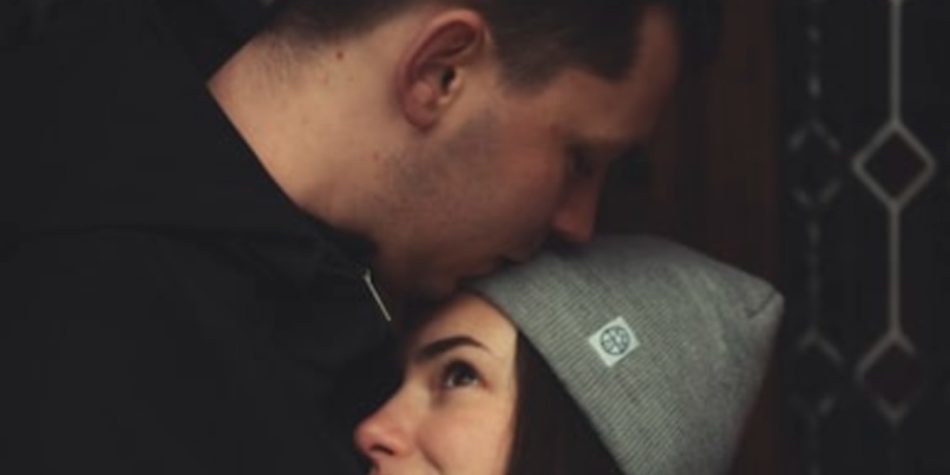
After a hopeful beginning, another marriage crumbles. After feeling sure this could really be “the one,” another dating couple breaks up. …
Even after two people experience wonderful sweetness and affection together, it’s remarkable how quickly things can disintegrate in heartbreaking fashion. One single man told me:
I have strong feelings initially—buying her flowers, saying sweet nothings, dedicating songs to her, wanting to put a smile on her face all the time, wanting to help her be happier … then, the next minute there is nothing. It’s off immediately, like a light switch. It’s weird, I just lose it.
I’ve been surprised at how often this comes up in interviews with single adults (emphasis my own):
- “Initially, I felt a crush and attracted … but there would come a point where I just felt nothing anymore; I just had no affection for the person. They were just like anyone else.”
- “After 2-3 months, my heart would start to dry up toward that person. I would let her down as gently as I could.”
- “My affection would die over time after the initial excitement of dating someone wore off. I have suddenly changed a number of times.”
- “I broke up with a wonderful girl three times because the bubbling feeling had faded.”
- “I would go from first kissing her when things were new and fresh, and writing in my journal that I thought I would marry her [to] then 3 weeks later, I would break up with her.”
- “We date, things are great, we’re happy, good to go—then it just drops off.”
- “It was always super exciting and butterflies and fireworks—and always around six months, he would lose interest. And I would get clingy and try to convince him to stay.”
It’s not just the guys having these kinds of emotional sea changes, either. One woman described breaking up four times with her boyfriend “because one day I would all of a sudden stop feeling it.” The next day, she said, “I would think, why did I do that? I really liked him”:
Each time I thought it was starting to work, I would lose that feeling and just start to feel anxious. Friends would tell me to break up and I assumed that was the only answer. It was torture to have that conversation each time. There was no explanation to give him except that I didn’t feel enough. After the last time, I cried for several days. I really wanted it to work.
Not feeling enough of “it.” And witnessing that passion “fade,” “drop off,” “wear off,” “dry up,” and “die” over time. What’s going on here?
Maybe this is mostly an issue with especially finicky singles? Not at all. Increasing numbers of marriages are ending not only because of abuse (which will always be a valid reason to end a marriage) but because of other less easy-to-define emotional dissatisfactions, ranging from a lack of personal happiness and relationship fulfillment to inadequate romantic connection and sexual excitement.
In fairness, most people—married or single—really do the best they can in fighting for a relationship to succeed. We really do want things to work out and do whatever we can to get there … but so often they don’t. Despite heroic and earnest efforts, too often grand relationship dreams disintegrate right before our eyes.
When that happens, the most common way any of this gets explained is to say something like, “well, it must not have been right … they just must not have been right for each other.”
Right?
That’s a convenient way of saying it because, with one sweep, this conclusion lays aside many other intriguing possibilities … including this one: that many of these couples that dissolved were very much right for each other—powerfully, profoundly, and maybe even eternally so.
BUT. Something else got in the way. Something else hijacked and gutted a relationship that could have been beautiful, vibrant, and sweet as sweet.
If so, what is it that might be strangling so many beautiful possibilities?
A story. A seductive, invasive, infectious, engrossing story … one that virtually everyone in the modern world breathes in, and ultimately believes on some level.
And what is that story focused on?
How You’re Supposed to Feel
When it comes to true love, most of us have been well-trained from our Disney-loving youth that there’s a way you’re supposed to feel, there’s a way he or she is supposed to look, and there are certain things we’re all supposed to get out of a relationship that is “right.”
Plenty has been written in recent years about unrealistic, dangerous expectations placed on body image and physical appearance in society today—and the degree to which so many raised in our sexualized society “have become uncomfortable with ‘real bodies'” in the words of one study. I focus below on a far more neglected area of exploration—the remarkably potent and surprisingly unexamined expectations regarding how we’re supposed to feel about the right person— both before marriage, in the many years afterward … and (if you really buy into the story) every moment in between.
Immediate & unchanging. “You know if it’s right immediately,” insisted one man, when asked about signs someone has found a good match. From this vantage point, true attraction should happen “right away,” reflecting what the philosopher Arthur Schopenhauer called “the wholly immediate, instinctive attraction.”
And then, of course, these feelings of fierce attraction are also expected to continue. “You want to be with her all the time,” another single man told me. “I’ve heard from people who’ve been in love that that’s what they feel.”
Did you catch that? All the time. The same intensity of romantic feelings we believe should arise suddenly is thus often expected to demonstrate a sublime constancy and remarkable staying power. “If human love ever wanes,” another person notes, “then it wasn’t love in the first place.” In one study of romantic beliefs in Spain, 65% of people reported believing that “the intense passion of the first stages, if it is real, will last, or it should last, forever.”
In this way, that intensity of passion that used to be understood as the “special prerogative and province of the young” is now held up as a “romantic privilege” available to all. If feelings do change, of course, we are encouraged to anticipate that they will grow into something larger and more overwhelming. Anything less than this may be taken as a sign that “true love” doesn’t currently exist, or never was there in the first place.
To be clear, these remarkably intense expectations for romantic partners haven’t been around forever. While some form of romance has been valued by cultures throughout history (from ancient Greece and the Roman Empire to ancient Persia and feudal Japan) the difference today, one author suggests, is that our modern Western society is the “first” and “only culture in history” that has come to expect its presence “all the time” as the “basis of our marriage and love relationships” and the marker of “true love” (emphasis my own).
It’s natural and understandable that we get excited by the sweetness of romantic connection. As exciting as it can be when that is immediate and consistent, though, it’s not even enough to satisfy today’s standards—not by a long shot.
Overwhelming & all-consuming. Another sign of true love, one man told me, is “not being interested in anyone else.” He explained, “If I’m still attracted to other girls in my head, maybe I’m not ready to commit to this other girl.”
Before you commit completely to someone, then, you must see this person as the most attractive person you have ever met—or will meet! That also means you better make sure there’s really nothing you don’t like about this person. After all, how else could anything have a lasting relationship?
As you can begin to see, this is not about simply looking for a nice companion or a good match; no, we’re looking for much, much more. Historians place the formation of these kinds of expectations for romantic bliss back to a particular period in the 11-13th century in southern France, where an ideal of courtly love arose. Within this early cultural aspiration, a brave knight sought to “worship” a fair lady as his inspiration and the “symbol of all beauty and perfection.” This love was intended to fill the emptiness and void in other areas of life, with romantic passion itself embraced as a source of meaning, wholeness, and fulfillment in a world that felt increasingly empty.
It was a couple of hundred years after the courtly love of France that the philosopher Jean-Jacques Rousseau first asserted that “a single human being” could be “experienced as embodying the greatest good and be worthy of the sort of love that was formerly reserved for God.” The idea began to spread across Europe—with the French population by the mid-1800s beginning to speak of “marriage by fascination.” In one man’s letter to his girlfriend in the late 1800s, he wrote, “I breathe by you; I live by you.”
Over time, a deeply-held cultural ideal emerged—namely, that in the intimacy of romance could be found answers to some of our deepest, most profound needs. It’s become increasingly common in the last fifty years, as therapist Robert Johnson points out, to believe that one “mortal human being has the responsibility for making our lives whole, keeping us happy, making our lives meaningful, intense, and ecstatic.”
For many, then, falling deeply in love came to be anticipated as the central transcendent experience of life, an “all-powerful solution to the problem of finding meaning, security, and happiness in life.” This was the kind of uplift and self-fulfillment, Stephanie Coontz continues, “that the previous generation had sought in religious revivals.” Yet this was “what we had always longed for,” Johnson adds—namely, “a vision of ultimate meaning and unity—suddenly revealed to us in the form of another human being.”
The right person is thus “expected to meet virtually impossible expectations,” another commentator notes—with a wife, husband or intimate partner “supposed to be gorgeous, a best friend, a superb financial contributor … sexy, and a marvelous parent” and the relationship a “fulfillment of all core needs.”
Oh yes, and did we mention you’re supposed to feel sexually charged most anytime you’re near this person throughout all the years ahead?
Wow. So, what if you’re missing any of this? Maybe you don’t always feel so excited … or one of your own many “needs” isn’t somehow being fully fulfilled in the relationship?
Well, why waste your time? Do you really want to “settle” with something this important?
And just like that, two amazing human beings—in many cases, with literally heavenly possibilities just ahead of them—walk away from each other … with a shrug and a tear.
Can you see the hijack now?
Beautiful possibilities crushed. None of this is easy for any of us to see—especially since we’ve not only grown up immersed in a particular narrative, but most of us have hopelessly fallen in love with that same Story of Romance—dictating how we’re supposed to feel when we “truly love” someone.
And who can really blame us? Think about a romance that is all of what we believe-we-deserve: Intense. Immediate. Constant. All-consuming. What could possibly go wrong with pursuing a romance that fits all these criteria?
Virtually everything. Who among us can really survive such other-worldly expectations? Not even celebrity couples—from Brad and Angelina to Kayne and Kim—can endure them. What hope do any of the rest of us mere mortals have?
Against these sky-high expectations about emotional connection reviewed above, any vacillation or shifting of romantic feelings can be hard to justify. One woman writes about feeling shame about the fact that she and her husband didn’t experience immediate attraction and bliss—and instead found their attraction growing more gradually over what sometimes felt like a “bumpy roller coaster.” As this woman described it, that prompted “some bouts of serious doubt where I felt our relationship was somehow less than other relationships” [that seemed to line up with the dominant narrative].
How many other couples are facing—or have faced—similar wrenching questions, either before or after marriage? And how many of these couples end up assuming that struggle speaks almost entirely to failings in their relationship—rather than this sea of expectations we’re all swimming in?
This increase in expectations for romantic connection and marriage has even been confirmed by statistical studies of committed couples across decades. Regarding these “unprecedented goals for marriage,” historian Stephanie Coontz notes, “Never before in history had societies thought that such a set of high expectations about marriage was either realistic or desirable.”
Yet, as summarized by philosopher Simon May at King’s College in London:
We expect love to be a … journey for the soul, a final source of meaning and freedom … a key to the problem of identity, a solace in the face of rootlessness … a redemption from suffering, and a promise of eternity. Or all of these at once. In short: love is being overloaded.
By requiring love to reflect “superhuman qualities,” May continues, we force relationships to “labor under intolerable expectations,” ultimately “demanding from the loved one far more than they can possibly be.”
“Never before in history had societies thought that such a set of high expectations about marriage was either realistic or desirable.”
Best-selling author Elizabeth Gilbert writes …
Contemporary Americans have the grandest, and most out-sized expectations about love of any people who have ever lived at any time on earth. We are completely infatuated with the idea of soul-matehood, and finding someone who is our absolutely perfect match. … [We] want it all … and we live in a culture where we are constantly promised that you can have it all and you can have it tomorrow and you can have it in red, and you can have six of them.
Have you ever felt your own marriage or dating relationship weighed down by some of these same expectations? If so, how did you and your partner make sense of that strain and turmoil? Did these kinds of onerous demands contribute to the relationship ending? How do you think that relationships would have been different if there was some way those expectations and demands could have been lightened or lifted?
Women aren’t immune to this either. This tendency is clearly not exclusive to one gender. In their search for a “perfect blend of selves,” one author noted that many women “hold a fantasy that their future mate must be perfectly balanced. He’ll be a best friend, a high earner, a sexual athlete, and a good housekeeper.” When asked what important qualities they were waiting to find in the right man, a group of women shared the following:
- “Even if he’s nice and smart and attractive, I can’t be with someone boring.”
- “Exactly [and] they have to be smart in an interesting way. They have to be curious.”
- “Curious, but not earnest … they have to be a little edgy.” “But not too edgy” (interjected the first woman). “They have to be normal. But just not boring.”
Some of these same women went on to share a list of deal-breakers for past relationships that had ended. One woman said, “He thought it was funny to make up strange words, like ‘fabulosa.’ He did this a lot—and in public, too. Once he said to someone at a party, ‘Being a doctor isn’t just one fabulosa after another’ and I was so embarrassed. I broke up with him the next day.” Another woman said, “He loved me too much. I felt like he was too much of a puppy dog, always looking at me with those adoring eyes. I wanted more of a manly man.”
One man spoke of a sense from women he knows that they “want true love but you’d better be this tall and make this much money—and not have bad moods or be a real person, either.” “Love is being overloaded … [and forced to] labor under intolerable expectations.”
I look back and think of many good friends that I never saw as potential relationships simply because I didn’t feel like I do when I watch Pride and Prejudice. These were good guys that had the qualities I was looking for, and whose company I really enjoyed. I am surprised now that I never even thought to give any of them a chance, especially when they really had what I need.
Why would we overlook entirely someone who may, in fact, “have what we need”? In some cases, maybe it’s not about what we really, genuinely need anymore. Maybe we’re searching for something else entirely.
More than a normal human being. More than a normal human experience of connection. And more than an emotional connection or romantic passion that any normal, wonderful, beautifully messy human relationship could ever sustain.
If that’s true, then how about doing it all differently? And courageously reverting to something which normal human beings can actually enjoy together?
Escaping the Hijack
If there’s a way out of this, it sure isn’t apparent to most people. Those men and women quoted earlier did not seem to be aware of any other way forward: If I’m not “feeling it” anymore, what else is there to do except walk away?
Against the backdrop of that larger narrative, a boyfriend or girlfriend, wife or husband, honestly have not seen any other way to resolve the tension.
After all, what are we to say to someone feeling this way? “Just try harder”? Or “you’re just not giving enough effort to make this work”?
Of course not. But how about this:
Don’t jump ship quite yet. And don’t let yourself be driven by what’s happening inside to make any rash or sudden decisions. Try this instead: watching what is going on inside—and noticing how much your own expectations about what’s Supposed to Happen might be coloring some of this.
Of course, you could walk away. Lots of people do. Chasing after more connection, more feelings, more passion, with someone else. Seems all too reasonable, right—and undoubtedly the “most exciting” way forward.
But maybe not the right way forward. Let’s microscope in on that moment of break-up—the one where a partner decided to stop calling. Or a spouse moved out. Because he “just wasn’t feeling it anymore” or she “didn’t love him enough.”
Let’s freeze-frame right there, going back to re-shoot that critical moment … but with a different take.
We get it—you’re not feeling the same level of intensity you once felt … but rather than rearranging everything because of that—instead of being completely driven by it—consider this, from Dr. M. Scott Peck who wrote one of the most popular books on relationships of all time:
No matter whom we fall in love with, we sooner or later fall out of love if the relationship continues long enough. This is not to say that we invariably cease loving the person with whom we fell in love. But it is to say that the feeling of ecstatic lovingness that characterizes the experience of falling in love always passes.
Did you hear that? Everyone. Even those sad celebrity couples dropping like flies. As soon as you or they are not feeling head-over-heels, what happens next?
The hijack. UNLESS we can see the truth about what’s happening. And what is that?
That this softening of feelings is another opportunity to show love. That’s exactly what Dr. Peck says next—check this out: “It is when a couple falls out of love [that] they may begin to really love. … True love happens after the love starts to fade.”
Compared to the time when your body’s hormones were giving you all the rationale in the world to love someone, NOW, guess what? You have a chance to use your personal will and agency to choose to love someone.
Will you?
For many of us, the answer is … well, no. Even if we become more conscious of the choice.
The story of romance is just too alluring. And it’s easy to want that feeling it promises even more even than wanting to grow with and stay committed to an amazing, but imperfect human being.
But for many others, if they’re actually aware there even IS a choice involved in the matter, their answer might just be YES(!)
Yes, I will love you.
You are important to me. And you are worth it—whether or not I’m feeling otherworldly passion all the time! I want to commit to you. I want to be there for you. I want to bring you happiness.
And right there—you know what that is?
True love. The kind of love too good even for most Disney movies. (Here are two cinematic exceptions—Naomi Watts and Edward Norton’s The Painted Veil and Katherine Heigl’s Love Comes Softly, both highly recommended.)
Embracing Comfortable Romance
Before all the chick flick aficionados close the book, hear me out! This is no pitch for settling or embracing loveless relationships. Instead, we’re simply considering here another pathway of progression towards long-term, profound emotional intimacy—one that starts with smaller seeds nourished over time.
Saraceno writes in her historical essay on Italian families about “tranquil affection” as something that used to be widely understood to develop over the course of a long-term relationship. Rather than needing to feel ‘everything’ right now, a couple may thus look for just enough confirming emotional assurance to begin.
Another man who spoke of happily marrying his best friend, said “Recognize that there’s a spark of physical attraction and interest…that’s all you’re going to need. The big stuff comes after years of bonding and working things out.”
Does that sound scary to anyone? If feelings are not remarkably intense and passionate, why not take that as a sign of mistaken love? And indeed, Johnson writes, “We assume that any other kind of love between couples would be cold and insignificant by comparison.”
But it’s not. It’s just different. Couples in eastern societies, one writer notes, tend to “love each other with great warmth, often with a stability and devotion that puts us to shame.” But, he notes: “Their love is not ‘romantic love’ as we know it. They don’t impose the same ideals on their relationships, nor do they impose such impossible demands and expectations on each other as we do.”
This alternative, to be sure, is not something lukewarm like benevolent empathy. Indeed, in life-long companions can be seen a level of love and romance that no movie can duplicate. “You’re just comfortable with them,” one person said. Reflecting on his decision 40 years ago to marry his wife, one man admitted, “I didn’t feel fireworks; I felt completely at ease.”
In these stories, you can see a deep acceptance of the natural evolution of romance over time. Compared to the previous or later historical expectations about romance, Coontz notes that during Enlightenment times love was expected to develop “slowly out of admiration, respect, and appreciation of someone’s good character.” Rather than needing to be ‘madly in love,’ ‘head over heels,’ or find a partner ‘the most amazingly attractive person ever,’ many couples have pursued a romance and love more subtle and potentially more profound. One author writes, “A man reserves his true and deepest love not for [someone] in whose company he finds himself electrified and enkindled, but for that one in whose company he may feel tenderly drowsy.”
For these people who may feel excluded from the dominant storyline of romance (or beat themselves over the head with others’ expectations), this comfortable-romance approach opens another potential pathway to pursue sweet relationships. New expectations thus allow new possibilities and a broader spaciousness
within which individuals may explore and love freely—even welcoming the initiation of relationships that would likely otherwise be ignored.
Rather than fulfillment of all-core-needs-at-every-level, this is about finding that meaningful connection and someone who is a “good match.” Instead of needing to come to “adore” a particular individual with intense physical/sexual passion—finding nearly everything he or she does amazing and remarkable and stunning
and take-my breathe-away all the time—the simple realization here is that you don’t need to be pursuing a demi-god. And rather than hoping and praying and waiting to be swept off your feet by an emotional and physical connection that finally “fulfills” you, this is about approaching love as a sacred practice that you (and the lucky person you give your heart to) can grow in steadily and together.
Growing in Love
Are you ready to “practice love” and move in a direction that helps you “grow in love”? Then give your permission to relish another real human being. You can do it!
The odds might feel stacked against you and your current partner or spouse—or against the possibility of finding a partner in a society that devalues healthy romance. But like all hijacks, there’s a way out … if you can find it. If you’re willing to fight like Harrison Ford on Air Force One. And buck the culture a bit, as a “romance rebel”—not going along with the unsustainable norms anymore.
To summarize: The idea you have to feel intensely for someone, with a near-constant state of passionate emotional connection and hypersexual arousal, in order to “truly love them” not true, not practical, and not right. And IF you believe it, you’re going to have a hard time EVER—and I repeat ever—making anyone truly happy … let alone committing to a relationship for longer than a few months or years.
Why? Because every person you meet—and each relationship you start—will eventually and inevitably be crushed by impossible, and intolerable expectations … demands that no human being and no human love can possibly meet.
Fairy tales are nice as bedtime stories. But maybe let’s be done with them in real life. As the ancient Persian poet Rumi beautifully entreats, may we all “put away thoughts of imaginary things, and stand firm in that which we are”—and that which is true!
Yes, we are created to enjoy and share sweet, true love together—but that is simply not the same as being consumed by immediate, continual, overwhelming sexual ecstasy.
More genuine human love may be more modest and comfortable. But it’s still amazing. That pure romance—as you might see in a first-time date between two good people—has almost a divine quality. It’s holy and beautiful.
And it’s worth fighting for … I grieve how many wonderful possibilities between two beautiful people have been crushed and gutted by an exaggerated, impossibly charged story about how we’re all supposed to feel.
That includes those among us who experience same-sex attraction or identify as LGBT+, by the way, including those seeking covenant marriages. One of my dear friends got back from a date with a wonderful gal from his ward. He told me all about how much fun they had, all they talked about, and the easy and comfortable time they had. Then he stopped, suddenly crestfallen.
What’s wrong? “Oh, but I didn’t get that feeling,” he said (you know, that feeling he was “supposed to have”) … and just like that, an emerging relationship that had seemed so hopeful met a short and hasty death.
Of course, there are other important dynamics in his situation, as there is in everyone’s experience. Life can be complicated, and what I describe above is one of many influences on any given relationship. Trauma of different kinds, for instance, can produce attachment issues that have been shown to predict some aspects of adult romantic relationships. For instance, those with avoidant tendencies are more likely to feel a “generally low level of emotional intensity” in romantic and dating relationships, one study reports.
Even though lots of things influence relationships, this Story about How We’re Supposed to Feel is one potent influence I believe we’ve paid far too little serious attention towards—allowing it to fly under the radar in a way that ends up causing all sorts of problems.
For those who are married, and those who are single. For young and old. Liberal and conservative. Across all sexual inclinations. This dominant narrative of romance is no respecter of persons. It messes with all of us.
And so I say, for those who want their love to endure, it may be time to rally our spirits and push back against some of this—so our hearts can be free again to love the real and endearing human beings all around us.
So, whether you’re married or dating, listen carefully: When the feelings ebb, when the excitement isn’t as intense, and when you start to notice some troubles, rather than taking them as signs of reconsidering the relationships, maybe let them be signs it’s time to begin to truly love the human face in front of you.
You can do it. You really can.
Don’t let any Hollywood nonsense tell you otherwise.
****
To go deeper, you’re welcome to download a copy of my full 2013 analysis of 75 interviews, with a lot more details about proactive things you can do to seek more sustainable romance: “Once Upon a Time … He Wasn’t Feeling It Anymore: What’s Killing Romance in America – and What to Do About It.” (Email me if you’d like me to send you a hard copy, [email protected]). See also, “A Valentine’s Note to Ty & Danielle and “Impossible” (“Mixed-Orientation”) Marriages Everywhere“