Thanksgiving pilgrims

Honor the Pilgrims by Cultivating Tolerance

Let’s make the Pilgrims proud by shedding any tendency towards intolerance across social, political, and religious differences.

If there is a lull in your family’s Thanksgiving repartee, you might ask if anybody knows the difference between the Pilgrims and the Puritans. The answer is surprisingly relevant in our polarized era, and might make the conversation with that obstinate uncle more amicable. 

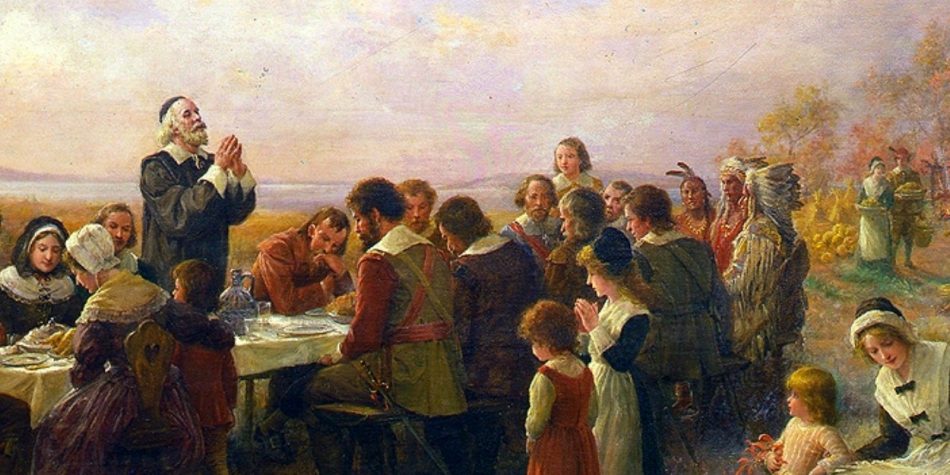
The Pilgrims wanted to separate from the Church of England, but the Puritans wanted to reform or “purify” the church. The Pilgrims came to America for “Freedom for each man to honour and worship God as he sees Him.” The Puritans, on the other hand, after failing to obtain political power in England, sought to influence the English Church from afar by creating a model of a perfect Christian community here. In other words, the Pilgrims had a “live and let live” attitude that quickly produced peace with the natives, whereas the Pilgrims were more prone to forcing their views on others, as in the Salem witch trials. 

Nearly 400 years later, we still have types of Puritanical intolerance.  

In India, Hindu nationalists persecute Buddists. In Myanmar, Buddhist extremists persecute Rohingya Muslims. In Iraq, Islamist Muslims persecute everybody, including other Muslims. Around and around we go. 

In Sri Lanka, a six-year-old girl who lost both her parents and her eyesight in the Easter church bombings keeps asking her grandmother, “Why is it so dark”?

Why so dark, indeed.

In the last decade, government restrictions on religion around the world have increased in every category Pew Research tracks. As of this year, 82% of people live in countries with either “high” or “very high” restrictions on religion. And for the rest of us, the level of social hostilities against religious minorities is increasing.

There is a lot of finger pointing about who is attacking religious freedom, but the reality is that the only real threat to religious freedom is intolerance, and intolerance is not exclusive to any particular dogma. We might turn that finger around and search inside ourselves. 

Religious freedom, as protected in the First Amendment, is the source of all freedom of thought, conscience, and belief in our law. Without this most basic of all freedoms, freedom of speech, the press, assembly, and petition are all meaningless. This is why it is called our first freedom. 

Those who have reason to fear religion being used as a weapon should be some of the staunchest supporters of religious freedom.

Those who have reason to fear religion being used as a weapon should be some of the staunchest supporters of religious freedom. Without freedom of religion or belief, we lose scientific and academic freedom, the freedom to lobby congress or march in pride parades, the freedom to not worship other people’s gods. In nations that do not protect religious freedom, academics, atheists, sexual minorities, and religious minorities are all on the receiving end of persecution.  

If religious freedom becomes a casualty of the culture wars, we would lose the very foundation of freedom upon which we all stand. 

The heart of religious freedom is the Golden Rule. Whether our differences be as wide as between AI worshipers and the Amish, or just two people sitting next to each other in Sunday School class, nobody wants others’ opinions forced upon them. Every human deserves to worship their Creator or not, according to the dictates of their own conscience.

As we bow our heads in gratitude this Thanksgiving, let us remember that the price of freedom is eternal vigilance. Today the United States ranks #118 in the world for religious freedom—meaning 117 countries rank higher than us. We cannot afford to take religious freedom for granted. 

Reconciliation was a big part of Thanksgiving from the beginning. The Pilgrims had violated the Wampanoag by robbing their graves and storehouses for corn in a desperate attempt to survive their first winter. But they soon struck a peace treaty and shared their first harvest. Let us follow the Pilgrims’ example by making similar efforts towards reconciliation. We might cultivate tolerance in ourselves by sharing a meal with someone who is different from us. 

We can also learn something positive from the Puritans. John Winthrop said, “We must delight in each other, make others’ conditions our own, rejoice together, mourn together, labor and suffer together.” Without imposing our beliefs, we should care about others’ well being, extending concern beyond our own communities to the whole human race. If you would like to pray for a specific victim of religious persecution by name, you can sign up at www.FirstFreedomActionNetwork.org for a weekly email with a prayer request.   

If we really want America to be a shining city on a hill, with a light bright enough to be seen by a blind girl in Sri Lanka, then we must respect the freedom of religion or belief for everyone.  

About the author

On Key

You Might Also Like

Under the Banner of Heaven Episode 3 Discussion and What’s True?

Summary – The episode opens with Detective Pyre leading a group of officers up the mountain to rescue Taba, who is completely fine and sitting on the ground outside one of the cabins. (The episode doesn’t explain how he got there after having a gun pointed at his face at the end of episode 2.) Pyre calls for more backup and finds a little girl wandering in the woods, lost and scared. The officers apprehend her and she tells Pyre about how things function up at the “fort” and about “Uncle Allen and Auntie Brenda” when her mother Sara arrives. Pyre questions Sara about Brenda’s experiences in the temple. The episode then depicts the beginning of an endowment session in a pretty good imitation of the garden room in the Salt Lake Temple. Brenda shares with her sisters-in-law her worries about making a covenant to “surrender” to her husband. One of the signs is shown as well as the penalty motion. Sara claims the end of the world is nigh, that her husband Sam’s job is to separate the wheat from the tares, and that Brenda was subject to the doctrine of blood atonement. A large squadron of police officers prepares to storm the Lafferty “fort,” when Pyre realizes that the situation resembles the Haun’s Mill Massacre and decides to instead approach unarmed. A wild-looking Sam and his family are taken into custody while one man escapes into the woods.  Meanwhile, Pyre’s mother with dementia is recovered after she wandered out during the twin’s birthday party. We see a flashback to Father Lafferty confronting Dan about refusing to pay taxes and beating him with his belt. The next day, Dan receives a “revelation” that he is the rightful leader of the family. In the present, Pyre and his wife take the girls to their baptismal interview with their bishop, and Pyre stays behind to discuss his mother’s health with the bishop. He also brings up how his current case ties into difficult church history topics, which the bishop encourages him to “put on a shelf.” At home later, Pyre and his wife fight about whether to postpone the girls’ baptism until after the case is closed.  At the police station, Sam Lafferty is ranting and raving. Pyre corners Allen about his criminal record due to unpaid parking tickets. He shares how his brothers pressured him into it, and as a result, he was arrested and missed Brenda’s graduation from BYU. Brenda’s anger about this led her to confront Dan about his beliefs (which involve a lot of strange reasoning about the constitution and separation of powers), and during the confrontation, Dan reveals his plan to run for sheriff and eventually pull down most government institutions from the inside. Allen ties this story to Brigham Young encouraging Joseph Smith to fight persecution, but Allen says he made a deal with Brenda that he would leave their influence if she gave up her career to start a family.  Pyre and Tab interrogate Sam Lafferty, who claims to be the Lord’s destroying angel, murdering those who are on his “holy list.” Robin Lafferty, still in custody, overhears Sam’s rants and demands to know if Brenda and her daughter are okay. Pyre shows him pictures of their deaths and Robin breaks, revealing that the Lafferty’s are likely also planning an attack on their bishop and stake president, who tried to stop their apostasy. Flashback to Brenda finding out she is pregnant and deciding to try to help the Lafferty family back onto the path of the mainstream church. Church History – This episode has a violent depiction of the Haun’s Mill Massacre, which most members will readily recognize. Less well known is the obscure early church concept of blood atonement, which the Lafferty’s appear to believe is still in force and to be enacted by them. Allen also pins violence in the early church on Brigham Young’s influence on Joseph Smith, with Emma Smith being against it. This neatly parallels the Lafferty situation, but it’s a significant simplification of the complex web of influences and responses to constant violence against the early Saints. We also get a mention of Joseph Smith running for president, which from my understanding he mostly did to draw attention to the plight of the church rather than expecting to win and reform the government. The show also alludes to the alleged assassination attempt on Governor Boggs by Porter Rockwell. Shibboleths – Sara Lafferty asks Pyre if he “follows his covenants.” This phrasing is off: LDS members would say “keep your covenants” or “honor your covenants.” (A search for the phrase “follow the covenants” on the church website yields only one result.) In the temple, Robin’s wife remarks on the importance of “keeping our agency strong,” another formulation that makes no sense. To Latter-day Saints, agency means the God-given ability to choose. This isn’t something we can strengthen, but an inherent condition of mortality. During their fight, Sister Pyre worries that delaying the baptism will shame her in front of their “congregation.” Members would never use this word, especially in private. We exclusively refer to our congregation as a “ward.” Her concern about people wondering if her daughters “failed” their interview seems off as well. Finally, let’s talk about LDS family size. Several times in this episode we get references to “at least 10” or “dozens” of kids as though this is the typical size of an LDS family. But in actuality, in 1980, only 12% of Utahns had a family of 6 people or more, and only a fraction of that 12% would have 10+ children. The wards I have lived in have maybe one family that has more than 5 kids. It’s just not that typical. I Don’t Love to See the Temple – Alright, here we are at the biggest controversy of the series: the decision to portray sacred temple ordinances. The temple scene takes place from timestamp 14:00 to 17:00. Only three minutes long, yet

Traveling Temple Open Houses

We wanted to draw your attention to an interesting announcement from The Church: https://news-gu.churchofjesuschrist.org/article/yigo-guam-temple-open-househttps://www.thechurchnews.com/temples/2022-05-02/inside-the-new-yigo-guam-temple-and-its-traveling-open-house-252759 A new temple is about to open in Yigo Guam. As is tradition, the temple will be opened for an open house before its dedication. The local area around Guam though includes many different island nations, and COVID-19 travel restrictions are still abundant in the area. The traveling open house, the first of its kind, will include both photos of the temple’s exterior and interior as well as samples of the materials used in construction so that visitors can better appreciate it. Traveling open houses will never have the full-impact of visiting the temple, but it may be a way to invite visitors to learn about the temple in increasingly remote areas in the future. We’re excited to see how this open house goes, and if the plan is revisited in the future.  

Subscribe To Our Weekly Newsletter

Stay up to date on the intersection of faith in the public square.

You have Successfully Subscribed!

Pin It on Pinterest

Share This