Couple Dancing Classic Ballroom | Celebrating Gender Difference in Courtship | Public Square Magazine | What is Traditional Courtship | Traditional Dating vs Modern Dating

More than a Door: Celebrating Gender Difference in Courtship

Is traditional courtship outdated? Modern views that erase these customs lose the gender-specific rituals that enhance heterosexual relationships. We should celebrate and preserve these gendered differences.

To my progressive friends, men and women are practically the same, the only difference worth mentioning being that men are more privileged. They mock traditional courtship rituals such as the man asking the woman out on the first date, paying for it, holding the door open for her, walking her to her door at the end of the date, and generally being the pursuer in the relationship.

Once after a breakup, I reminisced to a friend about how I missed my ex-boyfriend, remembering how I appreciated him trying to take care of me and demonstrating he would be a good protector and provider. My friend lectured me, telling me I was being sexist for my comments and that I should be a strong, independent woman who didn’t “need” a relationship. According to her, nothing about dating or relationships should reflect a difference in gender. Specifically, she said that men opening doors for women is backward, and there shouldn’t be any regard for gender in offering such gestures. Her comments seemed to reflect the attitude of many in today’s culture.

Despite modern society’s insistence, the idea that men and women aren’t inherently different and any gesture implying that they are is wrong goes against our nature. When a man walks a woman to her door after a date, he is reflecting his responsibility to protect, and the woman is likely going to appreciate it. That is the way we inherently are, and there is nothing wrong with that. Trying to deny that is denying our nature. 

Our culture used to have rules to help navigate courtship.

At times it can be good to question customs, for sometimes it is beneficial to abandon or alter previous generations’ ways of doing things. But to me, getting rid of constructive customs like men holding the door open for women takes some of the flavor and meaning out of our interactions, especially in courtship. As a single woman, I am more attracted to men when they act like men, and that means acting differently than women in some ways. As articulated by Brett McKay in The Illustrated Art of Manliness, “Rules and traditions give life texture and meaning. Sameness is boring. Difference creates attraction.”

Dating rituals such as men holding the door open or walking the girl to her door make a date different than hanging out. I agree with Brett McKay; if men and women act the same way on a date as they would getting tacos with friends, then dates lose some of what makes them interesting, fun, and special.

As I thought about it, stigmatizing the celebration of gender differences in courtship privileges homosexual relationship ideals over heterosexual ones. Erasing gender differences might work if one is pursuing a same-sex relationship, but it’s straight-phobic to expect heterosexuals to have the same ideals. As a heterosexual woman, I don’t want a relationship with a guy who acts just like a woman. I want a man. And the men I know generally appreciate women who are not only intelligent and capable but who embrace their femininity. Heterosexuals aren’t interested in the opposite gender just because of physical attraction but because they are different. Celebrating these differences makes relationships, especially romantic ones, not only more meaningful but interesting.

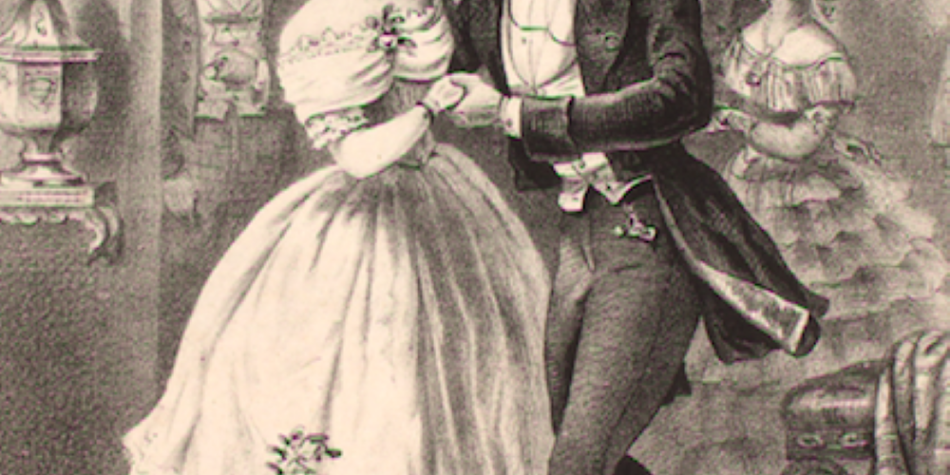
Couple Hand-in-Hand in a Garden, Symbolizing Romantic & Gentlemanly Conduct | Celebrating Gender Difference in Courtship | What is Traditional Courtship | Public Square Magazine
A courting couple walking through a garden reflecting the simplicity of how courtship used to be.

Progressives are offended by the notion that the genders are different and that women should strive for femininity while men strive for masculinity. But this is them placing their post-gender values on heterosexual, cis-gender people. It’s like a new form of imperialism.

When I express the importance of men embracing masculinity, many of my progressive friends think I expect men to be toxic, emotionless brutes. But for the most part, traditional masculinity has offered more range for masculine expression than many modern thinkers give it credit for. In “The Necessity of Chivalry,” C. S. Lewis explains that chivalry encourages men to be brave and gentle, explaining that they need to encourage their protective instincts when necessary while also being sensitive enough to express tender feelings when appropriate. I’ve known men who enjoy choir and other stereotypically “soft” interests, but I still consider them to be masculine if they willingly embrace their responsibilities as protectors and providers. Masculine ideals have more often been like how C. S. Lewis describes Lancelot as both fighting courageously in battle and being meek in court rather than being Gaston from Beauty and the Beast.

Unfortunately, we often aren’t teaching young men how to express chivalry. Our culture used to have rules to help navigate courtship. Now young adults are entering the dating world with little idea of what “rules” to follow. This creates problems because many women want men to act like gentlemen, but many young men don’t know how. I’ve been surprised how many guys I’ve been on dates with seem oblivious to gestures such as walking me to my door afterward, but I can’t blame them because they likely weren’t taught to.

As Brett McKay expressed, “Rules and traditions give life texture and meaning.” For too long, our society has attempted to erase rules and tradition, and as a result, many young people are confused and wandering. It’s time to recommit to celebrating our differences and the rituals that make courtship different than hanging out.


About the author

Meg Marie Johnson

Meg Marie Johnson recently graduated with her master’s in English at BYU. She writes adaptations of classics for children and young adult social satire. Her interests include philosophy, foreign languages, art history, and the gospel. You can often find her in the dry regions of Washington state with her parents, seven siblings, and two sheep.
On Key

You Might Also Like

The Deceptively Boring Adamant Notecard

Why is General Conference the way it is? Maybe because “the inner change that makes the outer Zion possible depends, first and finally, on our ability to accept and to apply the simple, basic principles of the gospel.”

“Deep” Norwegian Film About Nothing in the End

How does a community and the families within it respond to a nearly unspeakable accusation? How do you treat everyone with dignity? How do you suss out the truth? Do you need to? “Armand,” the Norwegian submission for The Academy Award’s best international feature film, sets out as though it is interested in answering those questions. The film opens with a young teacher, a principal, and a school staff member wondering what they are going to do. Armand has done something again. The parents are called in. The film’s premise is that Armand was accused of hitting Jon in the bathroom when Jon said he didn’t want to play with Armand. There are many additional revelations about the context, the relationship between Armand and Jon’s families, and the history of Armand’s family. There are accusations upon accusations that both indict and exonerate the boys and the adults around them. But these revelations eke out. It feels like filling up a mug from a leak in the sink. “If you want us to know what’s happening, just tell us,” I felt like shouting at the screen more than once. The film’s first act works well. The cinematography is ragged, framing its subjects well but always just off from what we’d expect. Too close, or the light is just wrong. It felt like how I imagine it would feel to have my child accused of something horrific.  And when the parents first start talking the tension is terrific. Those first few drops of exposition in the mug were thrilling. Oh there’s something happening here; it’s complicated and interesting.  Thea Lambrechts Vaulen, plays Sunna, a young teacher in over her head trying to manage the meeting between Armand’s mother, Elisabeth, played by Renate Reinsve, and Jon’s parents Sarah and Anders played by Ellen Dorrit Petersen and Endre Hellestveit.  Vaulen is particularly effective. She has been sent on a mission by her principal, Jarle, to make sure the whole thing blows over. Watching her struggle to navigate this while the parents are processing what’s been said is captivating. But it just keeps going.  The film’s entire second act consists of learning the basic facts of what has happened and the context around it. This is a complicated situation, and as a viewer I’m interested to see how the compelling characters navigate that situation. But the screenplay seems mostly interested in telling you the information. As though learning that Armand “plays doctor” at school is enough to compel me to the film’s ending. But once the audience finally understands the situation, the third act begins and flies wildly off the handle into surrealism, including two interpretive dance numbers, three over-the-top metaphors, and five straight minutes of Anders’ mother laughing.  The movie feels so desperate to be deep that it forgets to be about anything. It’s the first film of director Halfdan Ullmann Tøndel, so perhaps the bold ideas and beautiful cinematography will be wielded for a more worthwhile story next time. The film is entirely in Norwegian. And its English subtitles include a fair amount of profanity, though not an overwhelming amount. And the accusations that fly include suicide, alcoholism, and sexual assault. So these are adult themes. The film is R-rated, but not an egregious one, it pretty well all takes place in a parent-teacher conference.  I can’t imagine ever showing this to my kids. The themes are hard ones, and the film has nothing worthwhile to say about them. Two out of five stars. Armand releases in US theaters on February 14, 2025.

Subscribe To Our Weekly Newsletter

Stay up to date on the intersection of faith in the public square.

You have Successfully Subscribed!

Pin It on Pinterest

Share This