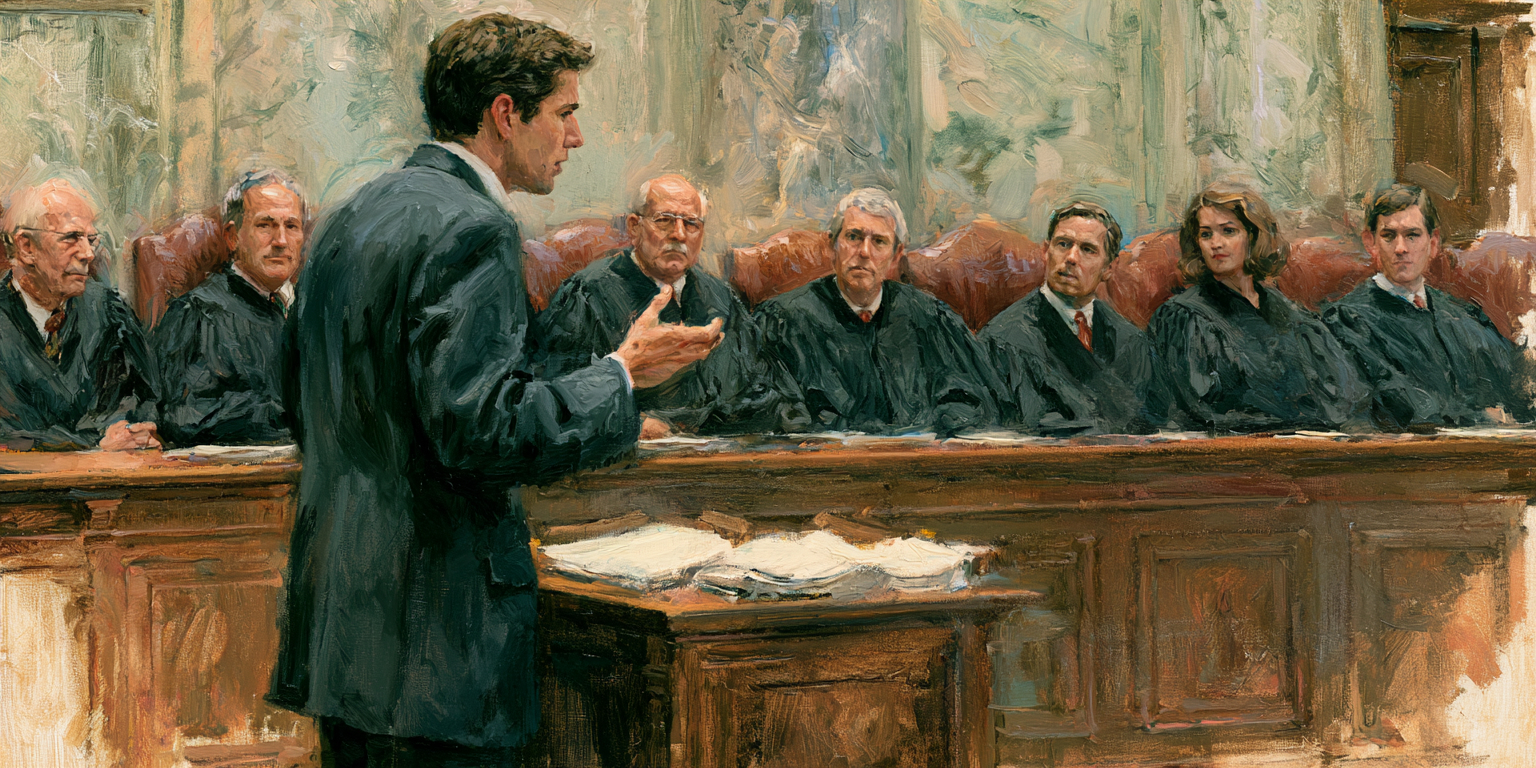
Dental chair with stained-glass window reflects the intersection of health and spirituality in the "Strength of Youth" standards.

Clean Teeth, Pure Hearts: For the Strength of Youth

What does the shift in the "Strength of Youth" standards signify? They motivate adherence by promoting personal values and understanding, just like your dentist!

The American Dental Association recommends everyone brush his or her teeth for two minutes twice per day. Their recommendation is based on careful study and data-gathering and is motivated by a desire to help people have good dental health and avoid painful problems. It is, quite simply, True-with-a-capital-T that brushing twice per day is the best choice for everyone.

But when you brushed your teeth this morning, I bet you didn’t even think about the ADA recommendation. You were not motivated by a deep desire to comply with scientific guidelines. Instead, you simply wanted to be your best, to feel clean and healthy.

That doesn’t mean the ADA shouldn’t bother with its guidelines! Some people’s parents didn’t teach them the importance of brushing, or they need authoritative encouragement for other reasons. And even though it might seem like literally everyone will always brush twice per day, trends can change if they’re not backed up with Truth and authority.

Agency requires authoritative teaching of truth.

This metaphor tells us something important about changes The Church of Jesus Christ of Latter-day Saints recently made to the new For the Strength of Youth guide. This guide has long helped teenagers navigate temptations and cultural issues with standards regarding dating, media consumption, making friends, and more. There is nothing wrong with the specific standards in the old pamphlet. They are motivated by love and hope that you’ll succeed in life (and eternal life). The shift from specifics to principles was not a repudiation of the standards but a change in how we teach them.

Now, instead of brushing your teeth to comply with ADA guidance (choosing high standards to comply with the guidelines), you’ll brush because you value being clean and at your best (choosing high standards because you love the Lord and value the Holy Ghost’s companionship).

Far from signaling a relaxing of standards, this change could actually prompt you to raise them. It should prompt you to honestly examine your motives in ways you haven’t before. Before, you might have chosen your outfit to wear to a church activity because it technically complied with the standards. But maybe your heart wasn’t really in it? Maybe, even though everything was long enough and covered enough, you were still choosing it because it was tight or flashy, and you wanted to draw inappropriate attention to yourself? It’s like when Jesus said it’s not enough to just technically comply with the law by not committing adultery. You need to really search your heart to make sure you’re not even thinking lustful thoughts. Learning to be fully honest with ourselves—and the Lord—is a difficult, necessary, and incredibly rewarding process. 

The standards are not gone. Leaders will still set standards for church and activities and teach you specific standards as inspired. But rather than focus on the rule, we’ll emphasize the principle so that the Spirit can teach you more effectively than any teacher or pamphlet ever could.

Some of the confusion stems from a misunderstanding of the doctrine of agency. Some influencers are mistakenly saying the standards had to be abandoned because it violates your agency to tell you what to do. This is wrong about the standards—they weren’t abandoned—and wrong about agency.

We know from the scriptures that Satan tried to destroy the agency of man (and woman). For a long time, many Church members thought that meant Satan wanted to force us to choose the right. We thought he would have turned us into Satan’s Robots, unable to choose anything except what he programmed into us, which is to say, unable to meaningfully choose anything at all.

But that’s wrong. We’re not mere creatures who can be pushed around like that. According to scripture, we’ve had intelligence and will since the beginning of eternity

So what did happen? Satan wanted to overthrow God and His love for us, so he targeted the heart of the plan of salvation: redemption. An even worse fate than being a robot is to sin but not be able to repent. So Satan said we should all be exalted regardless of our choices.

I imagine his arguments then sounded a lot like his arguments now: “A loving God wouldn’t condemn anyone for their choices! He would exalt everyone without judging and imposing his unloving standards! If you give me God’s glory and power, I will exalt every single soul, regardless of their righteousness!” In other words, Satan proposed to save us in our sins instead of redeeming us from our sins when we repent. But without redemption, there is no progression; we can’t become like God if we’re forever stuck with our sins and their consequences. 

This was such a bad idea that the scriptures specifically condemn it and tell us how God prevented it. The symbol of God using “cherubim and a flaming sword” to “keep the way of the Tree of Life” teaches us how strongly the plan of redemption was safeguarded. If we humans, with our agency and power to choose, had been able to obtain eternal life (symbolized by the Tree of Life) but not redemption in mortality (“a time to repent and serve God”), we would have ended up miserable, estranged from God, unable to achieve our potential or have eternal families.

This is why we cherish the principles that will help us return to God and the standards that help us apply them. Satan wants us to think we narrowly escaped being robots so that we will be suspicious of authority and rules. I’ve heard it said: “Rules and standards are coercive! Don’t tell us what to do; that’s Satan’s plan!” Even grown-ups who should know better fall into this trap. I’ve heard it argued we shouldn’t bring up topics like chastity or abortion at church because people who disagree with church teachings might feel coerced, which infringes on their agency.

That’s absolutely untrue. Teaching church doctrine in authoritative terms is not coercion, and being taught doesn’t infringe on your agency. Agency requires authoritative teaching of truth. That’s why God “gave unto [Adam] that he should be an agent unto himself,” but promised Adam “should not die … until I, the Lord God, should send forth angels to declare unto [him] repentance and redemption” (Doctrine and Covenants 29:35-42). If authoritative teaching was really coercion, then sending angels to teach Adam would be incredibly coercive. But God isn’t coercive; He lovingly gives us knowledge we need. We cannot fully exercise our agency without good information.

Satan loves to deceive us with flattery. In this case, he uses the false history—”you narrowly missed becoming a robot!”—to flatter you. He tells you you are no mere robot as though that makes you special; he tells you “God respects your agency” as though that legitimizes any choice you happen to make. Don’t fall for it.

We are not beings of pure reason, uninfluenced by outside forces.

When church leaders recommend specific rules and standards, they’re not enacting “Satan’s plan.” God gives us commandments and guidance and calls leaders to teach them to us because He loves us and wants us to succeed at the Plan of Happiness. We are not beings of pure reason, uninfluenced by outside forces. On the contrary, we are constantly subject to “opposition in all things” and require a steady stream of true and righteous teaching to counter the steady stream of temptation we’re getting from the Adversary, whether we realize it or not.

It’s as though you faced an intense advertising campaign, all day, every day, telling you it’s cool and attractive to never brush your teeth. In that atmosphere, it wouldn’t be coercive for your parents or others who love you to point out what the ADA advises. It wouldn’t infringe upon your agency to learn how the ADA studied the science of tooth decay and based its recommendation on the very best evidence. And your parents wouldn’t be impressed if you insisted you had done your own studies or even received revelation contradicting the ADA.

Your parents would be thrilled if you decided to follow the ADA’s guidance because you trust their evidence. And they’d be even more thrilled if you decided you value having clean teeth more than you want to follow the world’s fashions—just like your Father in Heaven is thrilled when you choose high standards for obedience’s sake, but even more thrilled when you choose high standards because you’re sincerely determined to become like Him


About the author

Cassandra Hedelius

Cassandra Hedelius has a law degree from the University of Colorado. She is board chairman of FAIR (Faithful Answers, Informed Response), homeschools her four children, and writes at cassandrahedelius.substack.com.
On Key

You Might Also Like

When Did We Stop Trusting the Media? A Review of “September 5”

When did we begin to lose trust in the news media? There are plenty of theories. Some suggest March 6, 1981, Walter Cronkite’s last broadcast. Others suggest it was the coverage of President Bill Clinton’s perjury and impeachment. Others suggest it was the advent of 24-hour news stations. The newest film from Paramount Pictures suggests another option in its title, “September 5.” September 5, 1972, is the day that the Black Sabbath militant group kidnapped Israeli Olympic athletes. In total, eleven Israelis were killed. But according to the journalists at the center of the movie, none of that was nearly as important as making sure the “ABC” logo was on the TV screen while the coverage went on. A brief epilogue about how the incident turned out ends with these eerie words, “900 million people watched.”  “September 5” is interesting because, in a movie presumably about the attacks, we see none of it ourselves except through camera lenses and TV screens. It’s not a movie about the attacks at all; it’s a movie about watching the attacks. The film opens as Geoff takes over the control room for ABC Sports. He’s running the night shift, when word comes in about the attacks.  The ABC studios are yards from where the attacks are happening. So they rush Peter Jennings into the Olympic village, and put their own studio camera on top of the building so they can keep a camera on the room where the hostages are being held at all times. Geoff wakes up his bosses, Marvin and Roone, who often debate the relative merits of their decisions, such as whether to turn the story over to ABC News rather than the sports division or whether or not to call the attackers “terrorists.” These compelling arguments make for thoughtful viewing. Ben Chaplin, who plays Roone, an American Jew, does particularly good acting work as he tries to find a nugget of morality in what they are doing.  But every argument ends with the decision being made that will best help ratings and ABC. No matter how many times they argue about good practices, such as waiting for a second confirmation that the hostages were all safe before reporting, the better angels of our trio of decision-makers always lose.  By the way, the hostages weren’t safe, ABC did get the story wrong because they were relying on German state news, and Germany was trying to look safe and less militaristic in their first major international attention since the end of WWII. But for a moment, when the station thought the hostages were safe, their only concern was getting them in the studio for interviews.  Marvin Bader tries to use the language of “the story” as though his audience deserved to have “the story” in real-time. And no matter what decision they made it was in pursuit of capturing the story. But this justification rang shallow as the movie moved on. When the German police burst in to get them to stop telecasting their rescue attempts live because the militants were watching, they stopped to get them to put their guns down, but turned the feed back on nearly as soon as they had left. All of this makes this an engaging movie that is worth watching. When journalists are the main characters, we expect them to be the good guys. “All the President’s Men,” “Spotlight,” “The Post.” Even the film “Shattered Glass” about a dishonest journalist, spends more time highlighting the good journalists who caught him. “September 5” doesn’t offer the media such a convenient way out. By making its characters clear-headed and conflicted, they are more than simple villains. They are exactly what the pressure of studio news would naturally produce. There are real powerful forces driving the decisions of the news industry that are at odds with what is right or good, and all too often, there’s nothing we can do about it. If we are curious about how the spiral of trust began, this film serves as a worthwhile primer while being entertaining as all get out. The film is rated R. It is thematically tough, dealing with questions like whether to broadcast an execution live, but none of the violence of the incident is actually seen the movie. In terms of a ratings feel, I might compare it to the film “Gravity” while using the word “f***” three more times than is allowed in a PG-13 film. I wouldn’t recommend this for young children or young teens, but the themes about how media manipulates us would be important for older teens, and I might consider watching this film with my kids once they turn 15 or so.  If I did, I’d ask them questions about the nature of journalism. Is getting the story more important than the lives of the kidnapped Olympic team? Do we need to know about what’s happening in real-time on the other side of the world? How has constant news coverage made the world a better or worse place? What motivates those who choose what to show on the news, and how they tell those stories? Four out of Five Stars. September 5 has already had a limited release, and it is rolling out in individual markets across the country through January. 

A Unity of Heart Transcending Differences of Mind

Many appeals for peace center on various ways to bring people into greater cognitive alignment. But as highlighted in recent addresses, modern prophets are pointing towards a deeper pathway to peace centered on orienting our hearts collectively toward the great Parent of us all.

Disagreeing Without Death Threats

When strong disagreements take place publicly, it’s no longer surprising when death threats occur – on both sides. Why is that? And what will it take to preserve space for productive disagreement in the days ahead?

Subscribe To Our Weekly Newsletter

Stay up to date on the intersection of faith in the public square.

You have Successfully Subscribed!

Pin It on Pinterest

Share This