If there’s one thing Americans agree on today, it’s that things aren’t looking good. The sense of worry and alarm is palpable—from the front pages of our news sources to angsty conversations around dinner tables everywhere.
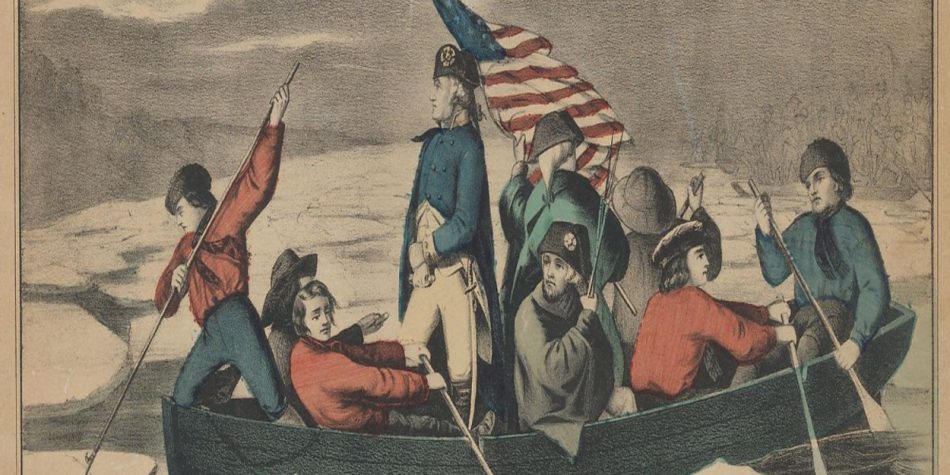
At certain points in our history, Americans have united around a general appreciation of certain threats: Nazism in the 1940s, Al Qaeda in the 2000s—and, of course, King George’s tyranny all the way back to our founding (yes, in 1776). At other times throughout this same history, of course, we’ve had profound disagreements on what constitutes the great threats and dangers the nation faces—the most prominent example being the Civil War itself.
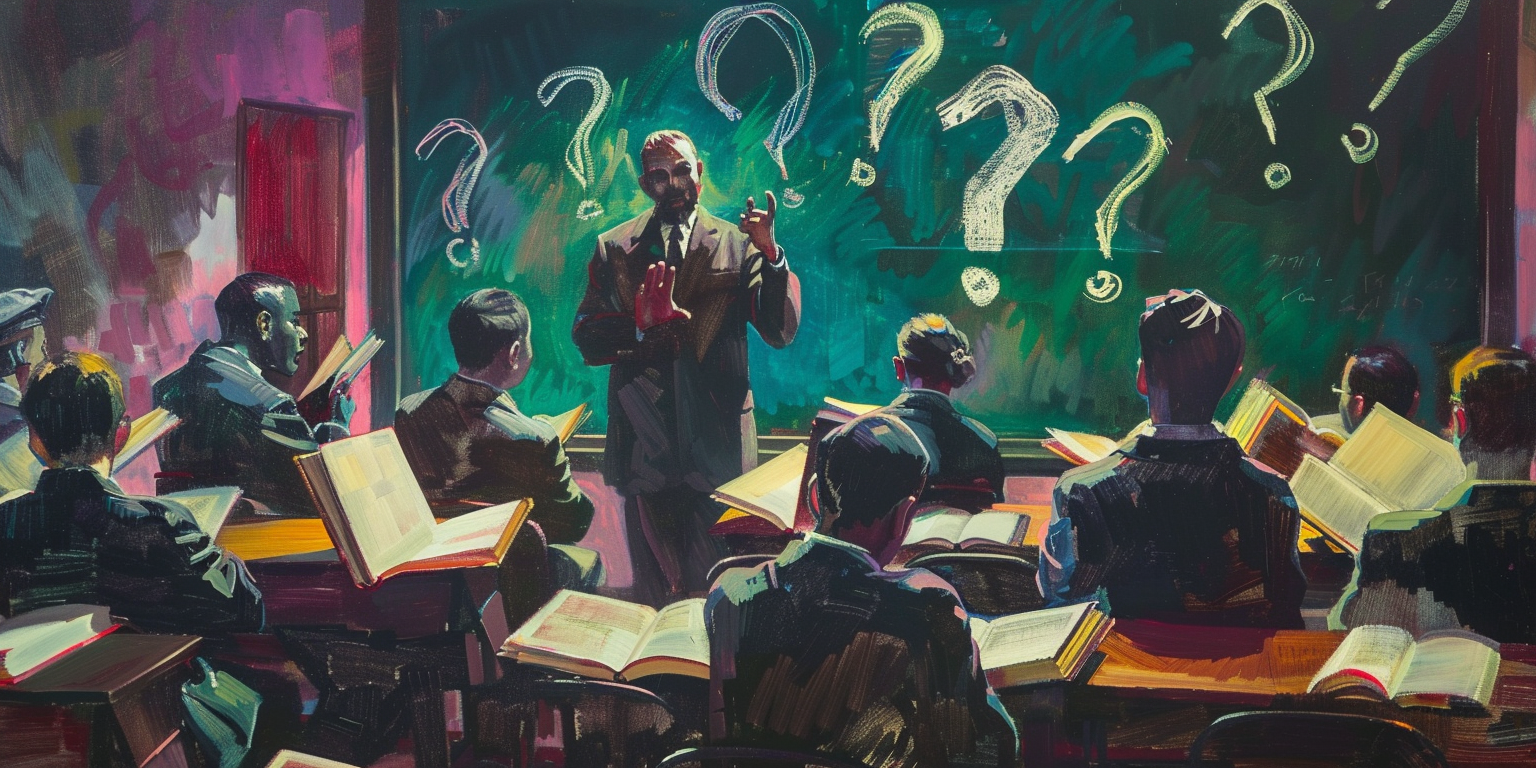
The contrasts between competing stories of threat being told in America today are striking, with different priorities for attention, different specified solutions, and different questions that preoccupy us.
Are threats to our country primarily coming from actions on the political right, the political left, or a combination of the two? Where you stand—and what narrative you adopt—shapes a lot about how you see this moment, and what you think needs to happen next.
Story #1. Republican Aspirations as the Great Threat. The first narrative portrays the actions and aspirations of leadership on the political right—in the White House, Congress, and at the Supreme Court—as the most significant threat right now to America (and not in the usual ways Democrats have always warned of Republican dangers). The nature of warnings these days is much more potent—with the “Trump-Pence regime” accused of being a danger to the foundations of democracy itself.
The “Trump-Pence regime” is accused of being a danger to the foundations of democracy itself.
Some have increasingly argued that aspects of President Trump’s administration demonstrate a kind of totalitarian state in embryo—with prospects of his reelection often discussed as an existential threat to democracy itself.
Others who may perhaps see these fears as inflated point to the policies he has pursued (and not pursued) as what constitutes the real threat. According to the respected Survey of American Public Opinion and U.S. Foreign Policy released earlier this month by the Chicago Council, Democrats are most concerned about the COVID-19 pandemic (87% seeing it as a critical threat) and climate change (75%), followed by societal issues such as racial inequality (73%) and economic inequality (67%). 69% of Democrats are also concerned with foreign interference in US elections.
Each one of these top concerns has been minimized or re-prioritized in this current administration—which also plays into why Republican leadership is seen as so much of a threat by one part of America right now. Between 2014 and 2016 according to Pew Research, the percentage of Democrats saying the the Republican Party’s policies “are so misguided that they threaten the nation’s well-being” rose to 41% (a 10% increase in just two years).
How much higher has that number risen in the last four years?
Those who embrace this narrative of Right Threat are generally supporting the Biden-Harris candidacy firmly. From this perspective, standing up to the political right in any way possible is the crucial pathway to greater security and prosperity as a society.
Story #2. Democrat Aspirations as the Great Threat. The second narrative portrays the actions and aspirations of leaders on the political left—in Congress, previously leading the White House, and currently aspiring to do so again—as the most significant threat to America right now. Compared with past warnings of Republicans about Democrats, the nature of these warnings are likewise more potent— with the ascendant social justice efforts portrayed as a Marxist assault on the foundations of democracy itself.
Although former Vice President Joe Biden is most often characterized as center-right, with bipartisan-instincts, this narrative insists he will be a “puppet” or “trojan horse” to a much more radical agenda to enact a left-ward transformation of America. Although Biden has condemned the looting and riots, this narrative suggests that his concern is disingenuous—and that, at heart, he supports the revolutionary aspirations of agitators in the streets.
On a more specific level, the political right also sees the central threats facing the country very differently. For instance, in the same Chicago Council Survey, neither COVID-19 nor climate change make it into the top 7 concerns for Republicans—who instead emphasize external threats from the development of China as a world power (67%), international terrorism (62%), and Iran’s nuclear program (54%) as critical threats—along with immigrants and refugees coming into the country (61%).
This is a striking contrast to surveys of Democrats—who, for instance, don’t even mention China in their top seven.
Overall, between 2014 and 2016 according to Pew Research, the percentage of Republicans saying the the Democratic Party’s policies “are so misguided that they threaten the nation’s well-being” rose to 45% (an 8% increase in just two years).
Those who embrace this narrative of Left Threat are generally supporting the Trump-Pence candidacy firmly. Standing up to the political left in any way possible is the crucial pathway to greater security and prosperity as a society—with considerations about eroding civility or social trust cast as insignificant compared with the threat of progressives gaining more political power.
Story #3. Mutual Hostility Across Differences as the Great Threat. A third narrative of threat does not deny the significance of concerns raised about particular policy agendas on either the left or the right, but does not see these as the central and overriding threat facing the nation.
Specific policy positions are no longer of primary importance
Instead, it is the poisonously suspicious-and-accusatory way of interacting together as Americans that is of greatest concern in this view. In the same survey mentioned above, a third group of people less affiliated with either major political party identify domestic political polarization as a top threat, second only to the pandemic (with a mixture of where they place the other threats identified on the left and right). By comparison, Democrats place national divisions at No. 7, and Republicans omit it from their top seven.
Exemplifying this third narrative, Susan Rice wrote recently, “I have long viewed domestic division as our greatest national security vulnerability. Political polarization is a ‘force multiplier’ that worsens other threats and cripples our ability to combat them.”
Those who embrace this narrative of threat are inclined to make decisions in this election for very different reasons than partisans on either side. Even more than the “what” of specific policy positions (which usually take priority importance), this group tends to see the “how” of general attitudes and mindsets towards the campaigns, the country and politics itself as crucial, and even decisive.
None of these other policy issues conservatives (or liberals) care about will matter, these people argue, if the United States dissolves into chaos. Since our system depends on basic trust between human beings—and for our institutions—that becomes the central, overriding issue in the election.
As David Brooks said in late September, “Our system depends on the good will of the players involved. And if that good will isn’t there, then [beware] the spiral of accusation, animosity, and enmity.” A week later, Brooks added this caution, “When people in a church lose faith or trust in God, the church collapses. When people in a society lose faith or trust in their institutions and in each other, the nation collapses.”
Averting that collapse—and preserving our system as a whole—is the central preoccupation of those holding this third narrative.
These are, of course, not naïve fears. A new YouGov poll of 1,999 registered voters found that 56% of respondents agree on some level that America will see an increase in violence as a result of the election. The poll also confirmed the rising distrust in election results nationally, with nearly half (47%) disagreeing that the election “is likely to be fair and honest.”
These are remarkable statistics—and clearly not reassuring to anyone. But as illustrated above, where exactly you see this cancerous cynicism in the catalog of threats varies widely.
Is it our fraying trust and confidence in each other as Americans that present our greatest danger? Or is it those rascal Republicans or those lawless liberals that constitute our gravest threat?
How you answer that question says a lot about how you’ll vote and how you’ll respond to the election as a whole.
While the Third Narrative folks are signing petitions like “What We Will Do to Hold America Together” and praying for a peaceful transfer of power, it’s disturbingly unclear to what extent hard-core adherents of either of the more dominant narratives feel the same concern—at least compared with the threat of Another Four Years of Those Despicable Souls in Power (Again).
And that’s precisely why, from this third perspective, we’re in such a pickle.