
Today, TIME published an essay by President Russell M. Nelson, the leader of The Church of Jesus Christ of Latter-day Saints, who is considered by followers of the faith as a prophet. This is a rare instance of a Latter‑day Saint prophet addressing a general audience in his own voice. It is a pastoral invitation to the blessings of following Jesus Christ.
Scripture sets a clear pattern: prophets speak where the most can hear, and they send the message beyond earshot—Noah before the flood, Moses before Pharaoh, Samuel the Lamanite on the wall, King Benjamin from the tower. President Nelson’s TIME essay belongs to this lineage: a modern tower enabling written sending beyond earshot.
TIME is a uniquely effective platform for such a message, and the invitations are concrete: see the divinity in each human being, and love the people around you, especially those in your family.
Contemporary Context
Across the last century, presidents of The Church of Jesus Christ of Latter‑day Saints have typically taught through Church‑owned channels (general conference, official magazines, broadcasts) and pastoral administration (ministering visits, councils). Signed, first‑person pieces in major U.S. general‑audience outlets have been exceptional, and generally aligned with moments calling for moral clarification or consolation in the broader public square. President Nelson’s TIME essay belongs to that limited set and therefore carries heightened signaling value. The invitations are concrete: see the divinity in each human being, love …
Publishing in TIME positions the message before a general public rather than a pre‑selected ecclesial audience. Many who would not watch a conference address may still encounter a well‑crafted essay in a magazine they already read. Analogous to Paul at Athens, the venue signals a willingness to speak in the marketplace of ideas without diluting core claims (Acts 17:22–23).
What the TIME Essay Says
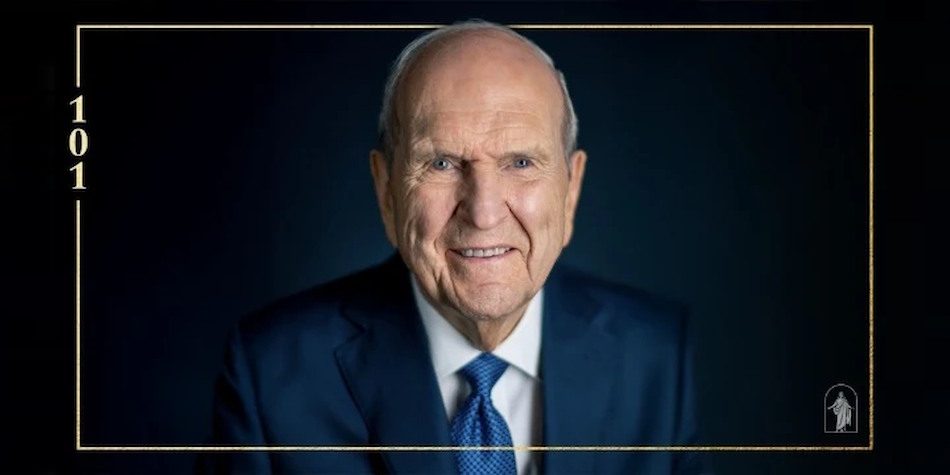
At 101, President Nelson frames his message around two enduring truths he has tested across a century—as a heart surgeon and as an apostle. Speak to the world in a love-letter key: witness before argument, blessing before debate, invitation before indictment.
Second, he encourages us to love our neighbor. Peacemaking is not optional civic etiquette but moral law: “anger never persuades, hostility never heals, and contention never leads to lasting solutions.” He commends bridge‑building across differences and the simple dignity we owe every person.
He extends the ethic to the most immediate community: the family. In a lonely age, “fidelity, forgiveness, and faithfulness within families yield deep, enduring peace”—and strong families radiate kindness outward.
He opens with an analogy from his career as a surgeon. He learned that when natural laws are honored—the right balance of sodium and potassium—the heart can safely be stopped, repaired, and revived: “It always works.” He draws a parallel to spiritual law: when we align with eternal truths, life revives. The essay ends with a birthday wish—that these truths make our lives, and our world, steadier and more joyful.
Context in a Prophetic Ministry
On his 101st birthday, this essay does not launch something new; it compresses the through-lines of President Nelson’s ministry since 2018. From the invitation to “Hear Him,” to “Let God Prevail,” to the charge that gathering Israel is the great work of our time, to appeals for peacemakers and the plea to “Think Celestial,” his teaching has been remarkably consistent. The article’s two themes—divine worth and neighbor-love—sit squarely inside that arc: identity in God, and charity toward God’s children.
Read in that light, familiar notes surface. Come unto Christ personally and daily (Matthew 11:28). Hear Him in scripture and by the Spirit (Matthew 17:5; Joseph Smith—History 1:17). Let God prevail through covenant belonging that is renewed and clarified in the temple (Genesis 32:28; Jeremiah 31:33; Doctrine and Covenants 128:18). Gather Israel one by one on both sides of the veil (3 Nephi 20–21; D&C 128:18). Be peacemakers—reject contention and choose charity (Matthew 5:9, 44). Think celestial—set your affection on things above so priorities re-order (Colossians 3:2). And bear and honor the name of Jesus Christ openly and reverently (3 Nephi 27:7–8; 1 Peter 3:15). The world we address is not an opponent to defeat but a neighbor to bless.
Together, these themes describe a public posture as much as a private practice. They urge Latter-day Saints to speak to the world in a love-letter key: witness before argument, blessing before debate, invitation before indictment. The center of that witness is not a policy or a brand, but a Person. In that sense, the TIME essay is a synthesis—a clear, external expression of what President Nelson has been asking the Church to be and to say from the beginning of his tenure.
Why Publish in TIME?
King Benjamin wrote so the absent could still receive the word (Mosiah 2:8). TIME operates as a modern tower that reaches readers far beyond Church‑owned microphones. The decision also signals trust—that core Christian claims (mercy through Christ, hope by His Atonement, the dignity of every soul, the sanctifying power of covenants) remain intelligible and appealing within pluralist discourse. Members, in turn, are invited to carry the message further “with quiet confidence and charity,” functioning as digital runners who help others hear (Mosiah 2:8).
Founded in 1923 by Henry R. Luce and Briton Hadden, TIME effectively invented the American newsmagazine: a concise, organized digest for busy readers, written in a recognizable “Timestyle,” and later amplified by cultural touchstones like Person of the Year and the TIME 100. Across a century, its covers and language have helped shape the way Americans—and an international audience—talk about leaders, crises, and ideas. Today, beyond its print cadence, TIME’s multi‑platform reach gives a single essay outsized distribution, and its Ideas pages explicitly welcome outside contributors while distinguishing contributor views from the magazine’s own editorial positions. In other words, the tower is both tall and capacious: a broad audience, a clear invitation for first‑person witness, and a familiar format for civic address.
For a century, TIME has stood at the junction of civic attention and general‑interest reading: a weekly cadence that privileges synthesis over outrage, a magazine architecture that frames essays as addresses to the public rather than duels, and a global subscriber base that encounters it in airports, classrooms, offices, and living rooms. Its Ideas pages invite first‑person contributions from public figures while clearly labeling them as such, preserving both accessibility and a distinction from reported news. The brand’s recognizable cover language and franchises—Person of the Year, the TIME 100—signal to casual and serious readers alike that what appears there participates in a broader civic conversation. A message placed on this tower arrives with prestige without being trapped in a single partisan lane; it is discoverable, shareable, and quotable across communities. That combination—prestige, breadth, and a format hospitable to direct moral speech—makes TIME an unusually effective carrier for a prophet’s love‑letter intended to bless first and persuade by the quiet force of lived invitation.
Amplifying Light
Our public posture should match the essay’s: a love letter, not a lecture. The world we address is not an opponent to defeat but a neighbor to bless. In print, online, and across a pulpit, let our first sentence be witness, not winning; benediction before debate. Such love binds families and mends neighborhoods.
Let our outreach be one by one and to all at once: a personal invitation joined to a public witness. See them for their divine identity, and love them. In neighborhoods and in the national square, let the Name be present, the welcome explicit, the door held open. We are not curators of a brand; we are messengers of a Person.
When prophets stand and speak, the faithful “pitch their tents” toward the word and toward the temple (Mosiah 2:6). We do not wait for the world to change before we change. We let God prevail now; we hear Him now; we follow Jesus Christ now. Properly received, such love binds families, mends neighborhoods, and promotes unity—until the day a tower is no longer needed because “every knee shall bow and every tongue confess that Jesus is the Christ” (Philippians 2:10–11).
May the Lord inscribe His law on our hearts (Jeremiah 31:33) and make our public words a real invitation—to the person beside us at church, the neighbor across the street, and the reader who stumbles on a magazine essay and hears, perhaps for the first time, that a prophet has written to them.