Many years ago, a Norwegian scholar of human rights named Tore S. Lindholm traveled to Brigham Young University to help finalize a 1,000-page treatise on religious freedom.
But Professor Lindholm also came to research why his co-author, Professor W. Cole Durham Jr. so tirelessly promoted religious freedom. At bottom, he wanted to know the motives of The Church of Jesus Christ of Latter-day Saints, the founding sponsor of BYU.
To his delight, and perhaps surprise, he learned that The Church of Jesus Christ promotes the doctrine of religious freedom to bless everyone. In his own words, “You really believe this.”
Indeed, we do. But what is the doctrine of religious freedom, and why is it so important?
This three-part series will explore these questions. In this article, I discuss the importance of the doctrine of religious freedom in the gospel of Jesus Christ, the fundamental rights that facilitate it, the blessings it confers, and the prophetic invitations for Latter-day Saints to teach and promote it. In the next installment, I will discuss the history and constitutional protections of religious freedom and explore our responsibilities as church members to ensure the doctrine of religious freedom endures to bless all God’s children.
Religious Freedom is Important Church Doctrine
President D. Todd Christofferson has taught that church doctrine does not come through “a statement made by one leader on a single occasion.” Rather, as Elder Neil L. Andersen explained, Church “doctrine is taught by all 15 members of the First Presidency and Quorum of the Twelve.”
By that definition, religious freedom is unquestionably an important doctrine of the Church. Indeed, members of the First Presidency and the Quorum of the Twelve Apostles have frequently taught the principles of religious freedom.
In particular, President Dallin H. Oaks, president of the Church, has defended religious freedom throughout his apostolic ministry. This is significant because, as President Christofferson has noted, the President of the Church has a “preeminent role” in promulgating church doctrine.
At the heart of religious freedom is the doctrine of moral agency.
To make that ultimate choice, religious freedom is required. Without religious freedom, we cannot choose “to worship Almighty God according to the dictates of our own conscience” nor, as stated in the eleventh article of faith, can others choose to worship “how, where, or what they may.”
As a Church, we celebrate the Constitution of the United States that the Lord “suffered to be established” for the “rights and protection of all flesh” precisely because it sets forth “just and holy principles” allowing “every man” to “act in doctrine and principle pertaining to futurity, according to the moral agency which I [the Lord] have given unto him, that every man may be accountable for his own sins in the day of judgment.” Thus, the Church champions the universal doctrine of religious freedom not merely for its own benefit, but because it is key to accomplishing God’s purpose in allowing everyone to exercise their moral agency.
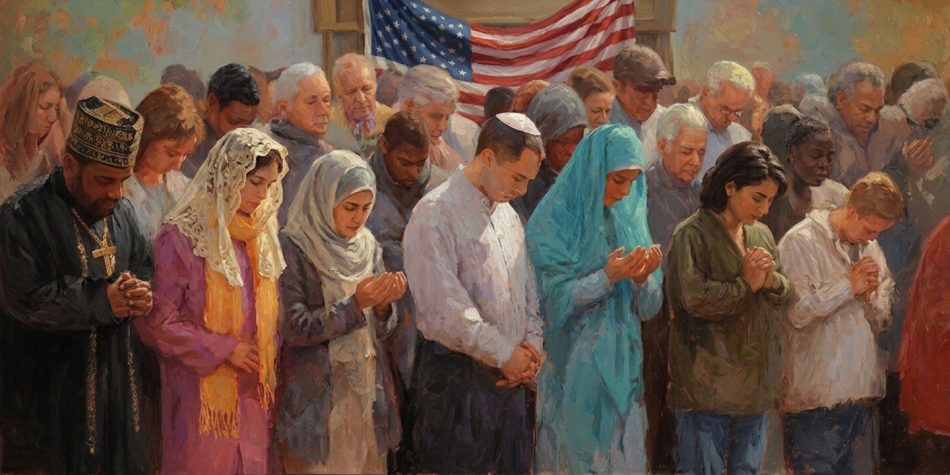
The importance of this doctrine of religious freedom is now on full display as we celebrate the 250th anniversary of the United States of America. Earlier this year, the First Presidency issued a letter instructing all church wards and branches to hold a fifth Sunday discussion on May 31, 2026, on how the Declaration of Independence and the U.S. Constitution “support religious freedom and our God-given agency.” In addition, for the Church’s scheduled fast on July 5, 2026, the First Presidency invited all “to participate in a unified fast to express gratitude for religious liberty and to pray that it be strengthened throughout the world.”
In support of these worldwide initiatives, the Church has created a specialized curriculum on religious freedom available on Gospel Library. This curriculum emphasizes the doctrine of religious freedom as taught by the Lord and His servants.
In addition to these resources, church members can find a repository of addresses given by Church leaders available at the Religious Freedom Library.
Rights of Religious Freedom
Given the importance of the doctrine of religious freedom, it is appropriate to ask which legal rights are most important for enabling the moral agency it aims to protect. President Oaks and Elder Wickman, a former general counsel of the Church and General Authority Seventy, suggested an answer by identifying the following rights as necessary protections for individuals and religious organizations:
- The right of freedom of conscience
- The right of worship
- The right to assembly
- The right to self-government
- The right to communicate with church members
- The right to legal entity status and action for religious organizations
- The right to declare religious beliefs publicly
- The right to travel freely
- The right to full participation in society
- The right to freedom from retaliation.
These protections are examples of what Elder Wickman terms the “innermost core” of rights that should be available under our doctrine of religious liberty. Because there is little room for compromise on this core, they form the highest priority in our hierarchy of religious rights.
In America today, the innermost core is generally protected.
Elder Wickman also explained that near this core is “the right not to be punished, retaliated against, or excluded from one’s employment based solely on one’s faith.” In addition, “freedoms related to religiously important nonprofit functions carried on by religious organizations and religious schools, colleges, and universities” are near the core rights that should be protected. These rights include “the freedom to hire based on religious criteria” and to “establish honor codes that reflect religious teachings.” These “near core” rights have occasionally been threatened in recent years. Examples includfe repercussions to religious believers for morally objecting to same-sex marriage and threats to BYU because its Honor Code requires traditional chastity and virtue.
Beyond this core are rights in commercial settings in which “our expectations of unfettered religious freedom must be tempered.” In such settings, we “must be willing to make prudential compromises.” This is an area of churning dispute. The Supreme Court has recently supported a variety of religious freedom claims in commercial settings, exempting cake makers and website owners from having to provide artistic services to same-sex weddings, and permitting counselors to provide counseling consistent with a patient’s biological sex in accordance with their religious convictions. On the other hand, many other courts have denied religious claims in commercial settings. For example, many courts have upheld employers’ COVID-19 vaccination requirements even though employees have sought exemptions for religious reasons. Additionally, a public school teacher was recently required to remove a private crucifix from her classroom when a student objected.
The lowest level in this hierarchy consists of religious rights that conflict with others’ rights, including those of government. “In these areas, religious beliefs should be reasonably accommodated, but other governmental interests may significantly limit the degree of accommodation.” As an illustration, Elder Wickman suggested that if your government job is to issue marriage licenses, your freedom to refuse to issue “licenses for marriage that are contrary to your religious beliefs may be very limited.”
Thus, while religious liberty is ultimately intended to protect our rights, properly understood the doctrine of religious freedom recognizes that not all rights have equal weight. We acknowledge that we must be willing to temper our expectations based on the circumstances, according to the hierarchy of the religious rights involved.
Blessings of Religious Freedom
Beyond the rights it bestows, the doctrine of religious freedom also confers important blessings.
President Christofferson began his argument by acknowledging:
It is becoming increasingly common for people to think that religion and religious freedom are some kind of burden on society. That is simply not true. Religion is fundamental to societal well-being, and freedom of religion benefits not only believers but all of society, whether they know it or not. Therefore, all have an interest in protecting this freedom, whether they are believers or not.
President Christofferson then noted that some of the many universal benefits that religion and religious freedom provide include protection for other fundamental rights and increased societal goods. He noted that “rich scholarship” suggests that “[c]ountries with strong religious freedom tend to be more stable and prosperous,” have increased moral virtues and habits of good citizenship, have less crime and violence, have increased civic involvement, give more time and resources to humanitarian causes, have increased marital stability, and have healthier children with lower rates of depression and suicide and less “anxiety, loneliness, low self-esteem, sadness, delinquent or illegal behavior, pornography, drug and alcohol abuse, and other addictive behaviors.”
At a subsequent international conference, President Christofferson enumerated additional social benefits derived from the doctrine of religious freedom. He noted:
- “Religious liberty is the oldest and most deeply rooted freedom in international human rights law and is essential to the entire structure of human rights.”
- “Religious liberty is essential for protecting human dignity.”
- “Religious liberty promotes pluralism and peace.”
- “Religious liberty facilitates a proper separation of church and state that avoids any justification for secular hostility toward religion.”
- “Religious liberty allows diverse faith communities to continue providing critical services to society and its most disadvantaged members.”
- “Religious liberty enables all of us—whether religious or not—freely to pursue truth and the meaning of life, and to live accordingly.”
This impressive list of benefits accrues because those who enjoy religious freedom can freely choose to follow their faith, allowing them to be “blessed in all things, both temporal and spiritual.”
To secure such blessings for ourselves and others, the Lord has encouraged the Church and its members to “befriend[] that law which is the constitutional law of the land.” In doing so, the Church and its members increasingly engage with others in “supporting that principle of freedom in maintaining rights and privileges.”
Examples of this engagement include BYU’s International Center for Law and Religion Studies (ICLRS), which hosts the Annual International Law and Religion Symposium. Now in its 33rd year, the Symposium has hosted over 1,500 government, academic, and religious leaders from 138 countries to learn more about religious freedom principles applicable in all countries. Additionally, ICLRS and the Wheatley Institute at BYU co-host the Religious Freedom Annual Review, in which academic and government leaders from many faith traditions, as well as members of the public, gather to learn about religious freedom within the United States. Similarly, the Church acts with others in supporting the G20 Interfaith Forum, which brings together scholars, faith leaders, and government officials to ensure public policy appropriately supports religious freedom principles.
All these efforts, and many more, are intended to bless mankind. As Joseph Smith emphatically stated in 1843:
If it has been demonstrated that I have been willing to die for a ‘Mormon,’ I am bold to declare before Heaven that I am just as ready to die in defending the rights of a Presbyterian, a Baptist, or a good man of any denomination; for the same principle which would trample upon the rights of the Latter-day Saints would trample upon the rights of the Roman Catholics, or of any other denomination who may be unpopular and too weak to defend themselves. It is a love of liberty which inspires my soul—civil and religious liberty to the whole of the human race.
Invitation to Teach and Promote the Doctrine of Religious Freedom
The living prophets and apostles have abundantly taught us the doctrine of religious freedom, the rights needed to facilitate it, and the great blessings it bestows. President Oaks has invited us to learn this doctrine and promote its principles. Speaking to an audience at BYU–Idaho, he said:
I invite you to march with me as I speak about religious freedom under the United States Constitution. There is a battle over the meaning of that freedom. The contest is of eternal importance, and it is your generation that must understand the issues and make the efforts to prevail.
Fortunately, we have a unique capacity to promote religious freedom. Years ago, when I began working on religious freedom issues, I invited a former professor not of our faith to visit the International Center for Law and Religion Studies at BYU. After spending several hours learning about the Center’s work, he looked at me and said, to the best of my recollection, “What your church is doing to protect religious freedom is amazing. You must continue because your people are in the best position to carry forward the message of religious freedom to the world. Because of your history of religious persecution and because you sincerely advocate religious freedom for everyone, you speak from a position of tremendous credibility and authority.” His encouragement to me applies to all Latter-day Saints because we share a common heritage and responsibility to promote the doctrine of religious freedom.
As part of our country’s 250th anniversary celebration, I hope we all feel renewed motivation to learn and promote the doctrine of religious freedom as we heed the First Presidency’s invitation to unitedly fast and pray that religious freedom “be strengthened throughout the world.”