
“The Family: A Proclamation to the World” contains only one direct quote from scripture: “Children are an heritage of the Lord.”
The word “heritage” stands out as somewhat unusual in current usage. Some translations use “gift,” while others use “inheritance.” The children themselves are the gift. Although the opportunity and responsibility of parenthood can feel daunting, the understanding of children as gifts from the Lord emphasizes both their divine origin and the blessings of bearing and raising them.
As I have written previously, our society often emphasizes the challenges of rearing children. I can hardly consider myself an exception, since I am the author of an article on the challenges of raising a child with special needs. However, even as I acknowledge the challenges of parenthood, I believe that faith in the Lord and His teachings about the family calls us to recognize its blessings. I hope that such a focus can help change the narrative about raising children, giving those considering parenthood a fuller understanding of its rewards and demands.
Parenting philosophies may differ, but parenthood can unite.
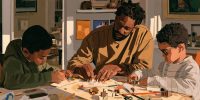
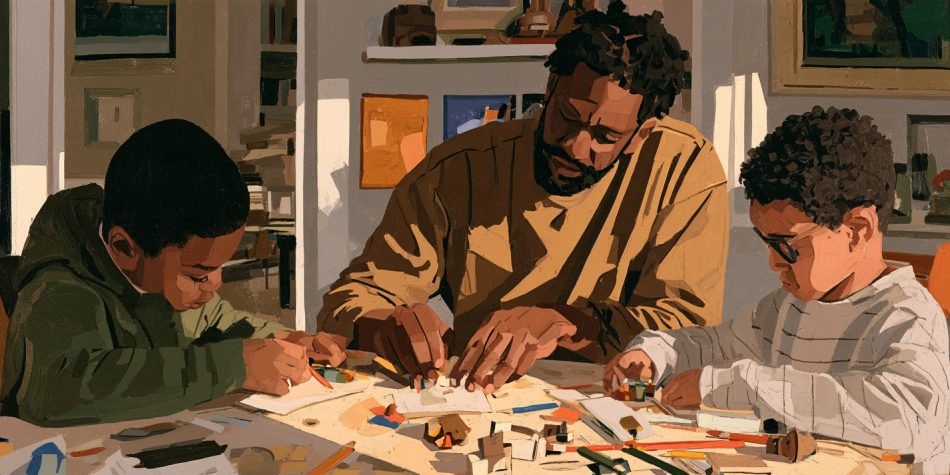
Not every interaction with children is pleasant. At times, children disobey, demand a great deal just when parents have no energy, and make it clear, both visibly and vocally, that they have not yet mastered basic manners and etiquette. It seems that whenever I start an in-depth or important conversation with my wife, at least two other voices immediately begin begging for our attention. These instances are trying, but they also provide important teaching opportunities. Finding the most effective way to teach my children is a rewarding challenge, like finishing an elaborate puzzle, but more satisfying.
I recently read Psalm 127 to my sons, and I was struck by the final verses: “As arrows are in the hand of a mighty man; so are children of the youth. Happy is the man that hath his quiver full of them: they shall not be ashamed, but they shall speak with the enemies in the gate.” The language here is figurative. The image of arrows speaking with enemies could mean driving enemies away by force or threat—or, as my son said, “Speaking with them in ways they understand.” But I also see the enemies at the gate as more than rivals or thieves: they can represent the struggles of mortality. They include the perceived meaninglessness of life and frailty of human efforts that lead the writer of Ecclesiastes to remark that “all is vanity.” Children help us defeat these enemies because they are an eternal legacy. Our work with them extends beyond our lifetimes into the lives of our children and their descendants, and into eternity. The gospel gives us the promise of an eternal family, meaning that when we treasure our children, we are choosing “treasures in heaven, where neither moth nor rust doth corrupt, and where thieves do not break through nor steal” (Matthew 6:20).
I have to wonder who gave life to whom.
Another indirect blessing of raising children is an increased ability to prioritize. This clearer sense of priorities stems partly from the fact that raising children requires significant time. There simply isn’t as much time for other things. Although having less free time can be inconvenient, it also brings the compensatory blessing of a change in perspective that makes minutes and hours more valuable.
Furthermore, raising children has led me to reflect on what is most meaningful. These reflections have given me the clarity I need to live deliberately. The changes I have made have been so meaningful that I ended a poem about my oldest son’s birth with the line “I have to wonder who gave life to whom.” At the same conference, I heard similar comments about prioritizing from my colleagues with children. They said that raising children has helped them eliminate less important things that previously used up their time. They expressed gratitude for the increased focus that comes with parenthood.
One of the most important lessons I have learned from raising children is how much my spiritual growth depends on relationships. The growth, attributes, and strength that I seek spiritually do not come solely through personal effort or even solitary communion with God. It is in growing together that we follow the Savior. When challenges have pushed me to my limits, I have often found sustaining strength in family members. And increasingly, I find it in my children. Sometimes simply knowing that they trust in and depend on me is enough to sustain me. At other times, their pure faith and willingness to learn inspire me.
The blessings of parenthood deserve more airtime.
The blessings of parenthood deserve more airtime. For me, paying attention to those blessings is not merely a matter of optimism but of faith in God, whose children we are raising. When we speak honestly about what raising children has given us, we offer those considering parenthood a fuller picture of the life they might choose. These blessings deserve a place in our public conversation as well as our private gratitude.