Ben Pacini on Brad Wilcox' Recent Comments

Brad Wilcox’ Recent Comments

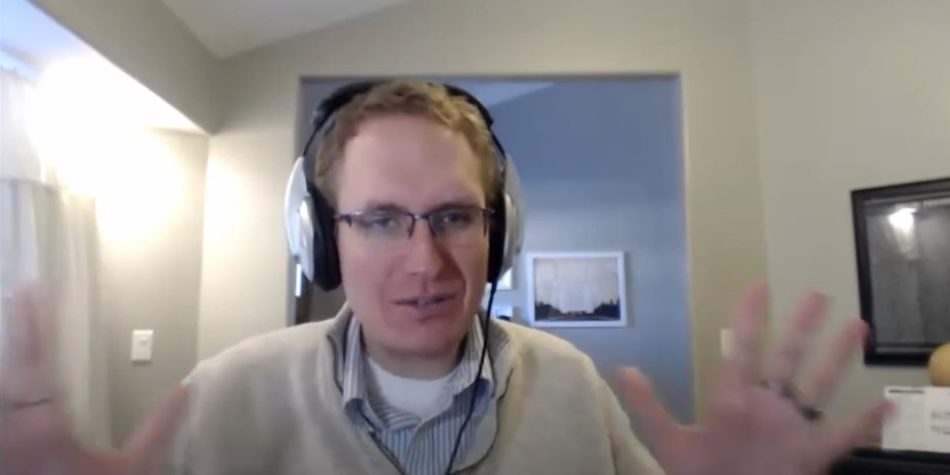
I get together with some friends to discuss Brad Wilcox's recent comments--and the strong response they received. We talk about intent and circumstances, but also the reason the comments were hard for so many. Note: we tried to get this right. I guarantee we didn't manage perfectly. A group of thoughtful people talking it out helped me though. There were some really good moments and insights, and if nothing else, I think we modeled what it looks like to grapple with something hard in as faithful a way as possible. That sounds me as worth doing.


 

I get together with some friends to discuss Brad Wilcox’s recent comments–and the strong response they received. We talk about intent and circumstances, but also the reason the comments were hard for so many.

Note: we tried to get this right. I guarantee we didn’t manage perfectly. A group of thoughtful people talking it out helped me though. There were some really good moments and insights, and if nothing else, I think we modeled what it looks like to grapple with something hard in as faithful a way as possible. That sounds me as worth doing.

About the author

Benjamin Pacini

Benjamin Pacini is a husband, father of four, and faculty at BYU-Idaho in Elementary Education. He served as a teacher and administrator in Baltimore City and Washington D.C. for ten years. He is currently pursuing an EdD from BYU.
On Key

You Might Also Like

Red & Gold Heart Painting w/ Blue Background | A New Heart I Will Give You | Public Square Magazine | I Will Give You a New Heart New Testament

A New Heart I Will Give You

It’s easy to get fixated on our own actions—or failure to act—in a life of discipleship. The teachings of ancient prophet Ezekial show a God more than ready to act on our behalf—and eager to help us know exactly that.

Yes, We Really Do Need to Talk About Race

It’s not just folks on the political left who we’d love to go deeper in exploring meaningful questions. These are some of our questions for brothers and sisters on the political right as well.

A Halloween Vision of the Dead

Halloween wasn’t always just about costumes and candy. If you don’t really dig the ‘spirit’ of the holiday, here’s something you can try.

The Room Next Door Review

“The Room Next Door” is the latest example of arthouse social engineering.  The film is about a troubled woman, Martha, who in the midst of cancer treatments decides to commit suicide. If this bothers you, the film implies, it is because there is something wrong with you. This is all the more troubling, because the film, in many ways, is beautiful. It is directed by Pedro Almodóvar, one of the most acclaimed living film directors, in his first full-length film in English. And you can’t help but be taken by the beauty of it all. The film is suffused with the soft colors of the woods. Despite being an entire screenplay full of little except two friends talking, the camera work keeps the film alive and moving. And Julianne Moore and Tilda Swinton who play Ingrid and Martha once again give impeccable, engaging performances, that you can’t help but admire.  But all the beauty in this film is in service of a story that is decidedly ugly—but not self-awarely so. Our two main characters are old friends who met as young writers. Ingrid has published a best seller recently, where she writes about how she can’t accept death. On her publicity tour, she learns that Martha is in the hospital with cancer. She goes to visit her and reignite their friendship. We learn through the conversations that these characters aren’t bad people, necessarily, they just struggle to see a world outside of their own desires and consciousness. They have repeatedly avoided building relationships or having families. Martha does have a daughter. But she chased her father away, then lied to her about who he was her whole life, and then proceeded to be an absent mother so she could chase the romanticism of being a war correspondent.  Now that she is sick and dying, she notices that she has no one in her life. The movie comments on this like an unusual quirk, rather than the inevitable result of a life of bad decisions. We learn early on that cancer treatment can be a roller coaster with euphoric peaks, and miserable nadirs. During one such rut, Martha purchases a suicide pill, and decides she will kill herself. She reaches out to Ingrid and asks her to come on vacation with her, so that she will have someone in the house when she does it.  Ingrid agrees. And although she early on expresses some discomfort, she quickly respects Martha’s wishes to largely pretend nothing is happening. They have a lovely vacation in upstate New York watching old movies and reading books. While they are there, Ingrid reconnects with Damien (John Turturo) an ex-boyfriend of both hers and Martha’s. He is horrified at the state of the world, and seems to only live for sex (or to constantly talk about sex.) Damien is not a sympathetic character, and perhaps the audience is supposed to read that his unpleasant and helpless politics are akin to Martha’s helpless approach to life. If so the audience hardly has time to ponder it under a heavy heaping of affirmations about the power to choose, and the dignity to die.  Eventually, Martha does exactly what she promised to do. There is a brief police investigation where the officer (Alessandro Nivola) expresses concern that Ingrid would have knowingly not gotten help for her friend. A lawyer comes and helpfully tells the audience we can ignore that concern because he is a religious fanatic. This is the kind of movie that alludes to James Joyce not just once but three times. It is so pleased with just how artsy it is. And for a film with a message like “life isn’t worth fighting for,” the best comfort is that it’s so artsy not a lot of people will watch it.  The only people I would recommend watching this film is for those studying how society has devalued human life, and how good tools can be misused to harm people. The film is rated PG-13. It includes several normalized same-sex relationships, and some joking about polyamorous relationships. But obviously the biggest warning is the way it normalizes and glamorizes suicide. If you watch it with older teenagers, I would focus on questions about the choice that Martha made, and how family and relationships could have helped her make better choices. I might ask about how Ingrid could have been a better or more caring friend. One out of five stars. “The Room Next Door” will be released in theaters nationwide January 17, 2025.

Subscribe To Our Weekly Newsletter

Stay up to date on the intersection of faith in the public square.

You have Successfully Subscribed!

Pin It on Pinterest

Share This