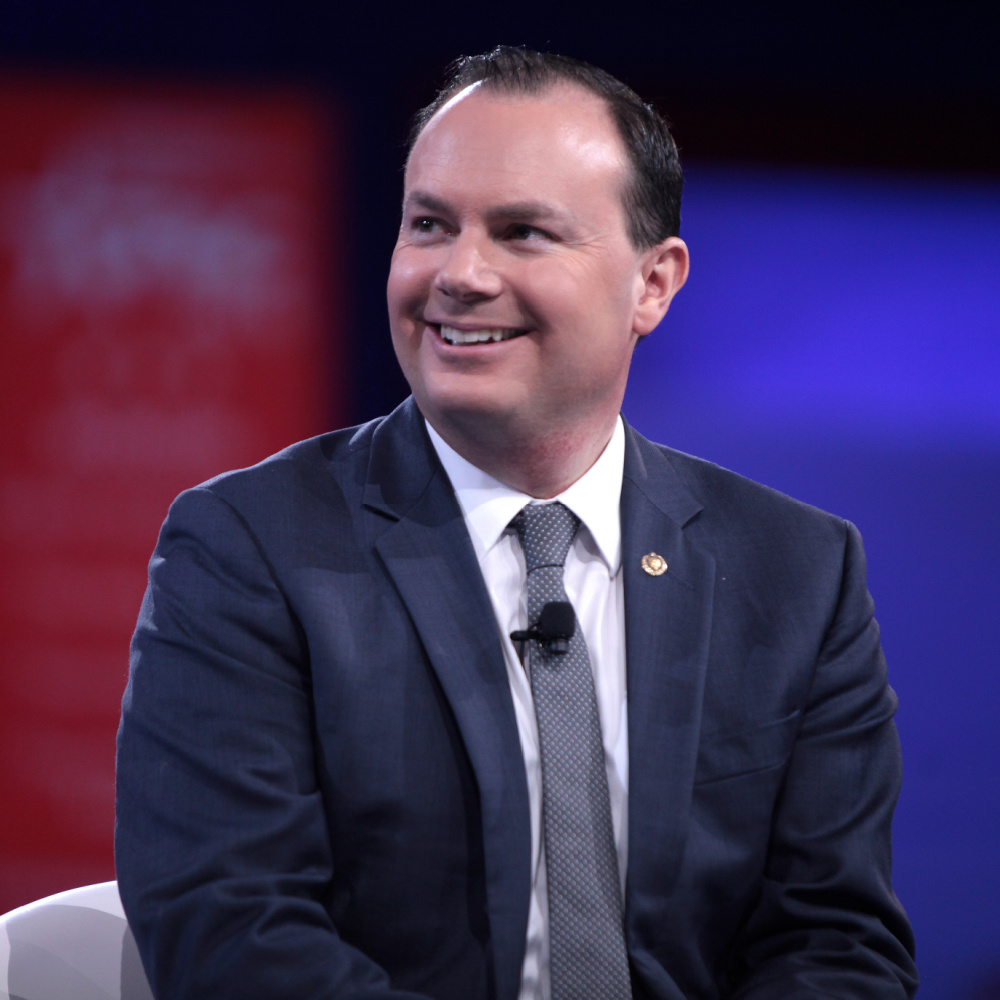
Elder Patrick Kearon called as an Apostle

Elder Patrick Kearon was born on July 18, 1961, in Carlisle, Cumberland, England. He married Jennifer Carole Hulme in January 1991 and they have four children. Kearon joined The Church of Jesus Christ of Latter-day Saints in 1987. He has served in various church roles, including stake president and Area Seventy. Professionally, Kearon has worked in multiple countries and industries, and ran his own communications consultancy. He has been involved in civic and community service, including on boards of charities and educational institutions. For more details, please visit his bio on the Church’s website.

Elder Patrick Kearon’s messages in General Conference convey a strong emphasis on compassion, healing, obedience, and resilience through Christ’s Atonement. In his 2016 talk, “Refuge from the Storm,” he calls for empathy towards refugees, linking this to the Church’s history and Christian responsibilities. Kearon says, “Our response to refugees […] is a litmus test of our discipleship.” His 2022 talk, “He Is Risen with Healing in His Wings: We Can Be More Than Conquerors,” offers solace and empowerment to those facing abuse, underscoring the transformative power of Christ’s Atonement. “No matter our suffering,” he affirms, “we can find comfort in Him.” His 2010 address, “Come unto Me with Full Purpose of Heart, and I Shall Heal You,” highlights the importance of obedience to gospel teachings, using a personal story to stress the necessity of full-hearted dedication to Christ for genuine peace. These messages collectively illustrate his unwavering commitment to fostering a Christ-centered life marked by deep compassion, adherence to spiritual guidance, and the pursuit of healing and strength through faith.

For more details and the full context of these quotes, please visit the talks on the Church’s website:


On Key

You Might Also Like

Is There Anyone Who Shouldn’t Watch “Rule Breakers”?

There is a moment where the Dreamers team is waiting to hear if they will attend an upcoming competition.  They wait. Their coach comes out. “Yes,” she says. The group pauses. Nothing happens. The coach says yes again, and suddenly, everyone cheers. The scene is emblematic of the joys and shortfalls of Angel Studios’ latest and most uncharacteristic film.  You can’t help but hope for the best for the group of girls at the film’s center. The film intends to make you cheer, but the pacing hiccups make it difficult to know when you’re supposed to.  In many respects, “Rule Breakers” follows the model of a classic based-on-a-true-story sports movie. You construct the team. They overcome challenges. They succeed through a series of competitions until the big moment. But the particulars are quite different. Our competitors here are teenage girls from Afghanistan. The competition is robotics. The challenges are not just the discrimination that has become de facto to sports movies but also bombings and customs regulations.  The characters are such personable go-getters facing so many struggles that you can’t help but root for them. The distinct story helps keep the genre fresh. But the same novelty that benefits the film also makes it hard to understand the stakes. What does it take to get admitted to these competitions? Which competitions are important? What is the goal of the young women participating? The reactions from the characters to their placement were different enough from how I felt that I wondered what I was missing. The series of competitions all felt co-equal. It’d be like watching a baseball movie that starts in spring training and ends in July. You’d feel excited for their growth and wins, but it lacks the build-up and climax that is inherent in the form.  Nikohl Boosheri plays Roya who became an early female computer programmer in Afghanistan turned coach for the team. She turns in a controlled, understated acting job. Her performance is believable for someone determinedly overcoming the many challenges she does. But what it has in verisimilitude, it lacks in accessibility. I wanted to understand her journey, but instead, I watched her conquer logistics.  The remainder of the cast follows Boosheri’s lead. For as inexperienced as the ensemble is, there is hardly a misstep. But the characters also don’t feel distinct.  In many ways, the film reminded me of a documentary. It feels as though it follows events, not a story, and it follows people, not characters. But it also doesn’t have the authenticity or immediacy that sets documentary footage apart. I struggle to imagine the misanthrope that wouldn’t like this film. Its themes are so deeply human just about anyone will be able to feel them.  There is one scene between Roya and a Hispanic man named Jesus. They introduce themselves, and she responds, “Like the Christian prophet?” Jesus responds, “Yeah, is that a problem?” Roya takes a beat and chuckles to herself, “No. My father is named Mohammed.”  By being so specific to such a distinct slice of humanity, “Rule Breakers” somehow manages to speak to all of us. It’s far from a perfect film, but if you love sports movies and culture clash movies, you will love this movie. And even if you don’t, you’ll cheer along. This is an easy film to watch with kids. It’s not flashy enough to keep most kids’ attention, but the plot moves well enough to engage older kids. And there is nothing objectionable at any point for anyone except learning about off-screen violence that could be thematically hard for very young children. It may not seem obvious, but this is a family film in the truest sense.  Two and a half out of five stars. “Rules Breakers” releases in theaters nationwide on March 7, 2025.