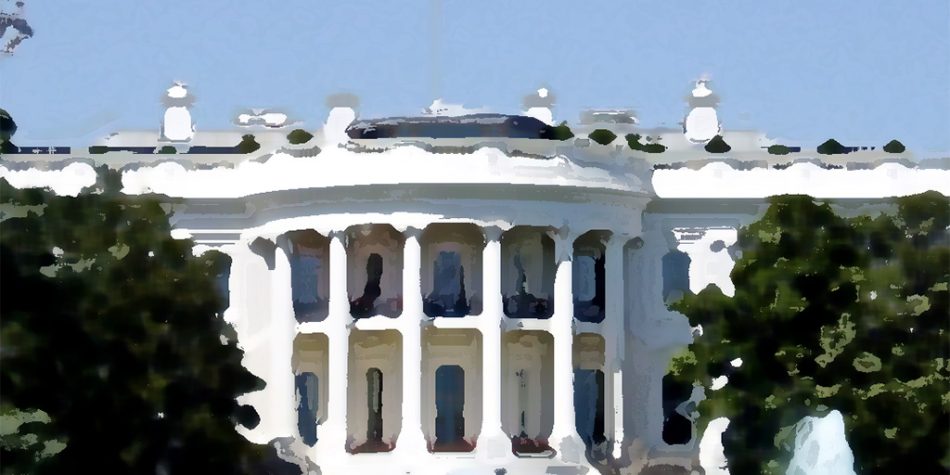
Whitehouse

A Path to Unity, Mr. President: The Fairness for All Act

Many Americans rightfully crave unity right now. The Fairness for All Act, not the Equality Act, is a better path to get there on one of the most sensitive and challenging questions of our time.

President Biden’s calls for unity have become the opening theme of his presidency. No doubt, the country is thirsty for unity, as misinformation, violence, and fear have riven the nation. Set with the task of restoring normality to our republic, President Biden has laid out an extensive policy plan and is reportedly creating space for cooperation with conservatives on his objectives. One of the many fronts on which President Biden seeks to act is the culture war being waged between the LGBT+ and religious communities. 

On the campaign trail, President Biden promised to “make enactment of the Equality Act a top legislative priority during [his] first 100 days.” Since then, President Biden has backed down from this promise, fearing there are not enough votes in the evenly divided Senate. This should be a sign for President Biden: protecting LGBT+ rights while removing protections for religious liberty, as the Equality Act does, is not a move that will unify—within Congress or without. 

The Equality Act would admirably grant sexual orientation and gender identity protected class status under federal law, ensuring that LGBT+ individuals do not face unjustified barriers in employment, housing, and public accommodations. But it includes no accommodations for the faith community and rescinds a portion of decades-old legislation that protects religious minorities. This is a one-sided proposal for a two-sided problem.

Far better would be for President Biden to endorse the Fairness for All Act. As the result of years of discussion, bridge building, and legal finesse, Fairness for All bars all the same sorts of LGBT+ discrimination as the Equality Act while also diffusing the most pressing clashes with religious liberty in various venues: employment, housing, public accommodations, education, medical services, tax exemption, public financing, and foster care and adoption placement services (see here for a deep dive into the mechanics of each solve and here for some helpful infographics). In short, Fairness for All would be a pluralism-expanding effort, increasing the rights of LGBT+ Americans and the rights of their neighbors of faith. 

Endorsing the Fairness for All Act would not only permit President Biden to maintain his title as the nation’s “most pro-equality president in history” passing the most comprehensive LGBT+ rights bill ever, but it would also make good on his promise to be a “president for all Americans.” And with pieces for both the LGBT+ and religious communities, Fairness for All could break the 50/50 wall in the Senate. 

Most importantly, Fairness for All would dispel fear. The fear that a lesbian couple will be turned down for an apartment; the fear that a Christian will be run out of their profession; the fear that a transgender woman will be refused service at the grocery store; the fear that religious universities will cease to exist; the fear that we cannot live openly as we are. It will show Americans that we are not the same, that we are diverse, and that this is good.

Without the fear and anger that motivate the most contentious factions of this culture war, neighborly kindness returns. We have already seen this occur. In Utah—Fairness for All’s testing ground—the results are astounding. In 2015, Utah passed protections for the LGBT+ community in employment and housing, while also adding a handful of religious liberty protections to its state code. Since then, with tensions diffused, the citizenry’s support for LGBT+ nondiscrimination laws has shot up, making Utah the second-most supportive state in the country, ahead of states like California, Washington, and New York. And Utah’s laws have created real-life change. One transgender woman wrote last year that Utah’s laws saved her life, granting her “blessings more beautiful than [she] could ever have imagined.”

Certainly, there will be opposition to the Fairness for All Act, as there was to Utah’s laws. When introduced in the House in 2019, the Fairness for All Act faced criticism from the extremes in both liberal and conservative camps. But if the nation has learned from recent events, it is that extremists cannot be our guiding forces. Strong policy groups on both sides of this culture war are fed by fear, anger, and high-profile clashes. Just reading the headlines of these organizations’ press releases is enough to see they don’t seek compromise, collaboration, or healing. Rather, they use the language of war to fuel lawsuit after lawsuit—a demonstrably terrible way to seek unity of any kind. 

President Biden can show that rights need not be wrestled out of others’ hands. This is not a zero-sum game. Passing the Fairness for All Act would sidestep hate, expand rights to all Americans, and fast-track equity through legislative means. It would preempt years of legal battles needed to determine whether basic nondiscrimination protections should be extended in housing and public accommodations, even after the Supreme Court extended such to the workplace last summer. And by signaling the Fairness for All Act as the way forward, President Biden can dispel the myth that America is not big enough for all of us.


About the author

Tanner Bean

Tanner Bean is an attorney at Fabian VanCott. He previously had a clerkship at the Idaho Court of Appeals. His experience focuses on the intersecting areas of religious and LGBT+ discrimination. He has a JD from J. Reuben Clark Law School.
On Key

You Might Also Like

Episode 7, “Blood Atonement”

Summary – Pyre joins Taba in talking with Prophet Onias about how Ron’s belief that he is the “One Mighty and Strong” tempted him into immoral behavior. In a flashback, Ron interrogates Matilda about the warning she gave Brenda and gets information about who helped Diana disappear. He comes up with the removal revelation, which Onias immediately rejects, but Dan pushes back, saying his doubts are just what an unbeliever would say. Ron brings out a blade he’s “consecrated” for the purpose. In the present, Pyre finds out that Ron has Diana’s address in Florida because their son sent a letter with a return address. Pyre struggles in his office to write out a testimony, presumably to give in church to fulfill his wife’s requirement or he quips to Taba he’ll “be single by fall.” Pyre is talking to Allen again when an unidentified church leader is brought in by Taba (I’m still not sure if it’s the stake president or a seventy). The church leader again pressures Pyre to wrap the case up, saying the church doesn’t need more bad press after the 1978 revelation and the “communists at the NAACP.” He then regales with Taba about how his “Lamanite” ancestors helped the Saints in the Mountain Meadows Massacre. Allen and Taba both dispute this interpretation, and the church leader leaves after brushing the dust off of his shoes against them. The detectives call the Florida police to do a welfare check on Brenda. They break into her home and find no one there, but security footage from a local store shows Diana and her kids at the grocery store four days ago. She looks behind her and is frightened by something, causing her to leave the groceries on the counter and quickly exit the store with her family.  At the police station, Jacob Lafferty, the mentally handicapped brother, wanders in and briefly causes a tense situation before turning over Dan’s journal to the police. Turns out he was the one who bolted from the cabin in episode 3. He was under orders to protect “God’s word” but heard the press conference and wants to help solve Brenda’s murder because he had a crush on her.  Pyre reads the journal, which reads like scripture, and finds out that Dan and Ron were holed up in Las Vegas earning money by gambling when they received the “revelation” that it was time to start the killing. Somehow (it’s not clear how) he knows that at that point Diana called Brenda to warn her and also called the prophet, which Pyre calls “bold as it gets for a woman.” He wants to fly out to Florida immediately to look for Diana. While he’s packing for the trip, Becca Pyre walks in. She’s disappointed he’ll be skipping out on Sunday’s testimony meeting. We find out that she’s the one who called the church leader on him. Pyre again orders her not to interfere with his investigation, pulling rank as the priesthood holder again. He claims that early church leaders saw “little girls and women as eternal servants” and that he’s afraid of what will happen to his daughters in the church. Ron’s car is located in Cheyenne and so the detectives are rerouted to there to investigate. They find the two strangers, Ricky and Chip, identified by Ma Lafferty in a previous episode. Ricky and Chip claim Dan and Ron are in Reno trying to make more money so they can finish their list, and that they stole the car to get away because they were disturbed by the murders. In flashback, we see Ron and Dan preparing for the murders at the Lafferty house, leaving Sam and Jacob behind. They stop by Robin’s home to ask for his rifle but he doesn’t have it. Ron leans in and kisses Robin on the mouth and then leaves. Now we come to the actual murder. Ron knocks on Brenda’s door, but no one answers, so they drive away. Brenda comes in from the backyard, calls Allen worried that there’s someone at the door, but no one is there. She goes out to check the mail and finds a letter from Diana which she writes a reply to. Back in the car, Dan stops in the middle of an intersection and attempts to wrest religious control back from Ron, saying that this was just a test of their faith and they should go back and try again. This time, Dan knocks on the door. Brenda answers and immediately tries to shut the door. She is overpowered by Dan who knocks her to the ground. She tries to convince Ron that this isn’t who he is and quotes scripture to them about being cast to outer darkness and testifies that she knows God will make her whole again. Ron cuts the cord from the vacuum cleaner that will be used to strangle Brenda before the camera cuts away to Dan and Ron leaving the house covered in blood. They drive to the Lows, find them not home, and miss the turn to the stake president’s home. Dan interprets this as a sign that they should stop killing and regroup, focusing on Diana so that he can keep Ron involved. Pyre and Taba are searching on the side of the highway where Ricky and Chip have told them the Laffertys discarded the weapon. Pyre worries that the men lied because they are atheists, but Taba asserts that it’s Mormons who have an allergy to facts. He shares the version of the Mountain Meadows Massacre that he was taught as a child, and eventually they find the murder weapon on the side of the road. The detectives return to Reno to search for the brothers, with Pyre trying to get details without a warrant by reminding the casino owner that “if there’s one thing our people have in common, it’s that we hate the feds crawling around our home.” They hear back from the Florida agents who

The Ordinary Saint’s Guide to Under the Banner of Heaven: Episode 4, “Church and State”

Summary — The episode begins with the detectives checking in on Bishop Low’s home, which they find ransacked and deserted. Pyre finds a letter written by Ron’s wife to the Prophet expressing concern about her husband’s refusal to pay taxes. The detective contacts the Church about the letter and is told the letter was handed down to one of the bishop’s counselors, LeConte Bascom, who works at the bank. Brother Bascom says he had to turn Ron down for a loan because his brother’s refusal to pay taxes made him a liability, though it’s heavily implied that the real reason is that his wife’s letter was seen as an embarrassment to the Church. In flashbacks, we see Dan marching in a Pioneer Day parade, shouting about the government’s illegal taxes, as well as smoking and kissing a woman who isn’t his wife. Dan’s father says he’s ashamed of his immoral behavior and anti-tax nonsense and advises him to study the scriptures to set himself back on the right path. This unfortunately drives Dan into researching more obscure history of the Church, including information on polygamy.  He makes a business trip down to Colorado City to visit the breakaway polygamist sect there and manages to get the name of a pro-polygamy pamphlet called “The Peace Maker.” He reads this pamphlet and brings up the idea to his wife Matilda, telling her she’s limiting his spiritual power if she doesn’t let him marry a second wife.  During this conversation, Dan is pulled over for speeding and refuses to cooperate with the officer, leading them on a police chase that ends with his arrest. At the jail, Dan’s brothers try to convince him to stop his resistance to the government. Ron feels it’s his responsibility to show Dan the error of his ways, but instead, Dan runs circles around him, leaving him speechless and admitting that he’s going to lose his business and home. Dan somehow turns this fact into evidence that his views are correct and ends up winning over Ron to his side. In the present, Detective Pyre is being leaned on by the Laffertys’ stake president to release them into his custody but refuses. The detectives have identified the car the killers were probably using and plan to hold a press conference to ask for tips when the police chief returns from vacation and demands that all mentions of fundamentalism Mormonism be scrubbed from the press briefing. (It’s implied he’s being leaned on by the Church.) Pyre tries to toe the line at the conference but eventually caves to a persistent reporter and admits that he thinks that the murders may have something to do with fundamentalist beliefs. The next day at church, the ward is shunning the Pyres, and a specific couple is assigned to keep an eye on their faith. Meanwhile, a police officer has located Bishop Low fly fishing in the mountains and safe. Church History — During Dan’s explanation of polygamy, we get flashbacks to the infamous scene where Emma finds out about the doctrine of polygamy for the first time and throws the revelation in the fire. Though church members will be familiar with this story, the tone is portrayed very differently than we are used to. Emma is shown as being absolutely skeptical of Joseph’s translation of the Book of Mormon and other prophetic acts, even though she firmly testified of the truth of these things even after her break with the Church after Joseph was murdered. Joseph is portrayed as proclaiming the doctrine of polygamy only for his own physical gratification, which is a common anti-Mormon trope with little evidence behind it. While it is true that one of Joseph’s wives was only 14, the facts behind the situation are more complex than portrayed in the show. The pamphlet “The Peace Maker” is portrayed by Dan Lafferty as an “essential LDS tract” written by Joseph Smith, and no one in the show ever corrects this perception. In fact, the tract was not written by Joseph Smith, and he repudiated it during his lifetime. This episode presents a slanted view of church history, giving only one side of the conversation and showing the modern church as trying to hush it up rather than having its own interpretation of events. Shibboleths — Pyre claims that writing a letter to the prophet is like writing to “Heavenly Father himself,” which is absolutely wrong. While members of the Church do revere the prophet and listen to his teachings, he is not God, and this equivalency is not one Saints would make (though outsiders think we do). The idea that doing business with fundamentalists is like “doing business with the mafia” is totally alien to me. They are regarded as somewhat of an oddity in Utah, but not dangerous like organized crime. One unusual phrase occurs when the stake president claims that the Laffertys need to be released into his custody for “healing prayer.” I honestly have no idea what this phrase refers to and have never heard it in an LDS context. And the formal type of shunning portrayed happening to the Pyres is not something we do. Though obviously, wards vary in their culture, there is no formal instruction not to talk to those who have questions. Rather, we are encouraged to keep being friends with those who are struggling with faith and support them however we can. Changing History — It is interesting to note that in the actual chain of events, it was Sister Low, not Bishop Low, who was on the Lafferty hit list. Sister Low was a Relief Society President who supported Dan’s wife as she sought a divorce. Why does the show change this? Perhaps the idea that the Church has female leaders doesn’t fit well with the show’s depiction of the oppression of women in the LDS church. Brenda Lafferty’s sister has also expressed her disappointment with the way the show is misconstruing her sister’s murder in pursuit of an

Subscribe To Our Weekly Newsletter

Stay up to date on the intersection of faith in the public square.

You have Successfully Subscribed!

Pin It on Pinterest

Share This