Many have died this year. And with daily tallies, death has never seemed to loom so large over the living quite like it does in 2020. My brother died this year. His mortal life was short—40 years old—but it was rich, full, and deep. So, it’s perhaps fitting this year I’ve found solace in one of the shortest verses of all the gospels.
Only two words: “Jesus wept.”
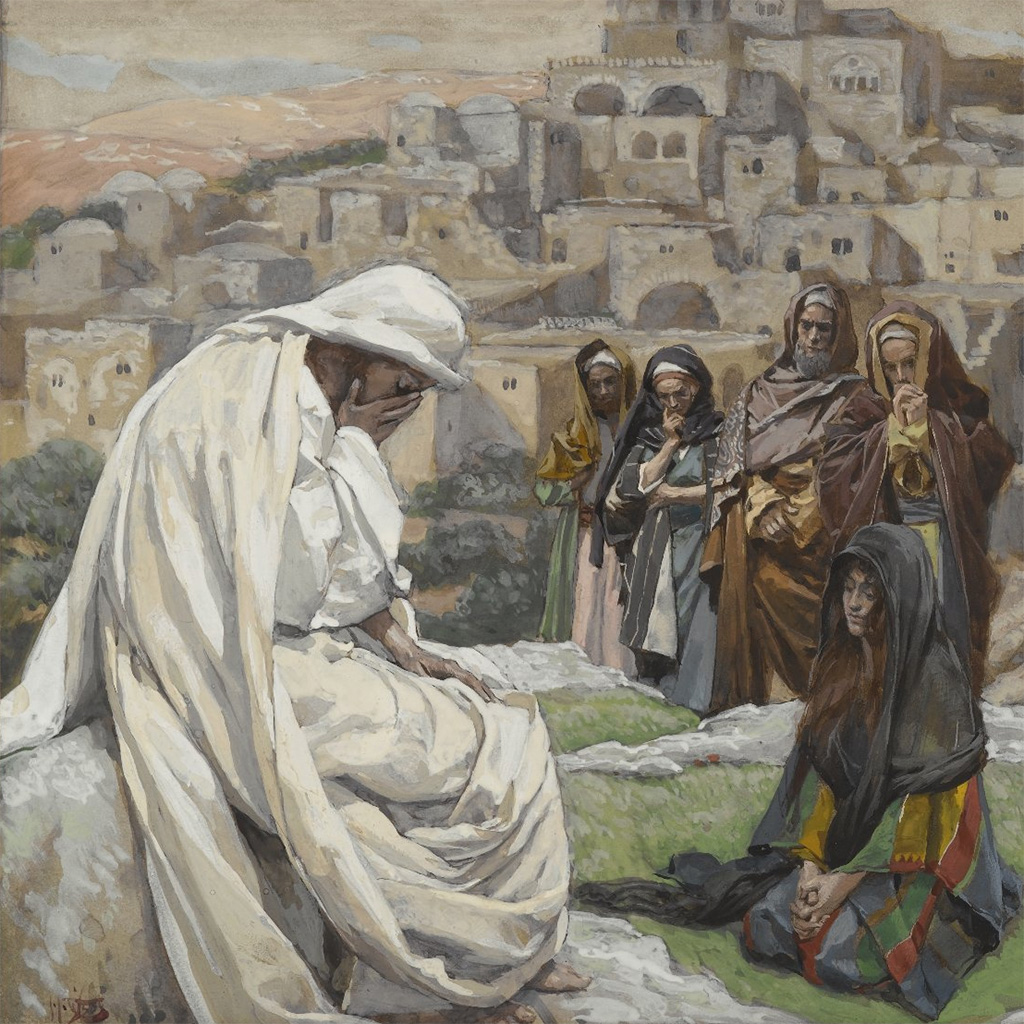
You’ll remember that soon after that verse, the Savior’s preternatural, divine powers eventually raise Lazarus from the dead. But in those words—a single pronoun and a single verb—the gospel author shows us that Christ mourned with Mary first.
Mary’s brother, after all, had died. She was inconsolable and fell at the Savior’s feet, crying, “Lord, if thou hadst been here, my brother had not died.”
The master’s first response? Tears. Someday we all will witness and rejoice when the dead come forth.
Will, my brother, is dead. Tears have been inevitable this year. Christ we read, “groaned in the spirit” when he encountered Mary in mourning. We can’t help but do the same when we lose someone close to us in this life—a sibling, a parent, a friend.
But, although tears were the Savior’s first response, the scriptural narrative doesn’t end there. Upon seeing Lazarus’ tomb, Christ declares: “take ye away the stone.” Martha, Mary’s sister, reflexively reminds him that her brother has been dead for four days. But the Savior persists, declaring: “Lazarus, come forth.”
I have mourned my dead brother, and before him, my dead father—and it’s right to mourn—but, Christmas—the season of Christ—is a reminder that someday we all will witness and rejoice when the dead come forth; the Lord in his unstinting mercy and grace can cast aside any stone that impedes their progress. And when they are ready, at the appropriate time, the Lord will call their names.
“The spirits of all,” we read in the scriptures, “as soon as they are departed from this mortal body … are taken home to that God who gave them life” (Alma 40:11).
There, in the world beyond, my brother Will—alongside your own loved ones too—continues to move forward; to serve others; to learn; to grow. The dead cultivate the same fellow feelings and sociality we enjoy here. Our dead, we believe in the Latter-day Saint tradition, are asked at certain moments to lend a hand to us who still remain to navigate mortality; they provide comfort during times of acute trial and at moments when the veil is thin, between heaven and earth, we sense their presence. The tears will represent a super-abundance of unending gain.
And someday I will see Will again. And the grand sum of all of Christmas’ meaning is that I won’t see him the way I did on the day his casket was closed.
No, this time he’ll stride forward. His gait will still be unmistakable. I’ll recognize his magnetic smile. He will stand tall and unfettered; I will see him eye to eye. And I will weep again. But this time there will be no loss; the tears will represent a super-abundance of unending gain.
No more death counts on the news. Just eternal communion. Jesus told Martha, “Your brother will rise again.” Martha replied, “I know that he will rise again in the resurrection at the last day.”
Jesus then stated: “I am the resurrection and the life. He who believes in Me, though he may die, he shall live. And whoever lives and believes in Me shall never die.”
My brother Will is not lost. Nor is your loved one. And that’s a message worth remembering during this year’s Christmas season in particular. “Blessed are those who mourn, for they shall be comforted.”
He will make good on that promise.