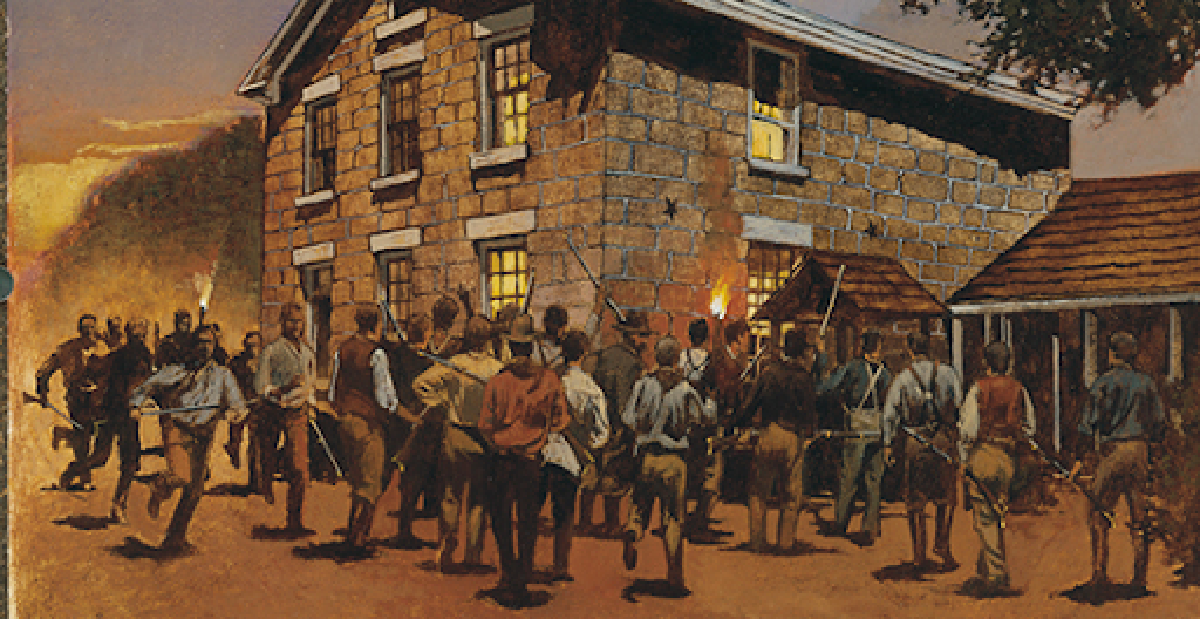
“For unto you is born this day …” The first Christmas homily is preached to people whose names we don’t know. People whose names were barely known then. No titles, no platform—just workers on the late shift, keeping watch because someone has to. And heaven opens there.
Then a second scandal: learned men cross borders to kneel before a baby who cannot hold up His own head. And behind it all, the greater scandal: the Maker of worlds arrives in the most powerless form we know.
Yes, the angels announce to shepherds.
Yes, kings worship a baby.
Yes, God comes as a child.
Yes, we worship a Lord executed in the manner reserved for the disgraced.
The weak, strong. The last, first—this is not a footnote to Christmas. It is the pattern.
Christmas reveals the grammar of the gospel: God’s strength moves through human lowliness. Christianity is a religion of the meek for the meek; it upends the ancient habit of equating glory with dominance and piety with prestige. If we want to be where the glory is, we must go where the angels went—toward the overlooked, the small, the tired, the last shift.
Nativity in the Age of Metrics
Our moment is fluent in power—digital, economic, and civic. We speak it in metrics and platforms, in credentials and capital, in influence and leverage. We measure one another by visibility and reach—by what can be photographed, clipped, tagged, repeated, and scaled.
And even religious life can drift into that current. Public ambition begins to look like the same thing as holiness. The nativity knocks the ladder sideways.
The Church of Jesus Christ is not a stage for the impressive; it is a covenant family where the “weak and the simple” often carry God’s work (see 1 Corinthians 1:27; Doctrine and Covenants 1:19–23). Advent is our annual reminder that the kingdom’s center of gravity is low.
The nativity knocks the ladder sideways.
And this is not sentimental. It is practical. People on the margins—by income, schedule, language, health, age, or social confidence—often know something the center forgets: how to receive, how to ask, how to depend. That posture is not a deficiency; it is the doorway to grace. “Blessed are the meek,” the Lord says, “for they shall inherit the earth” (Matthew 5:5). In other words: the future belongs to the teachable.
If you want to know what you worship, watch what you honor. If you want to know who you’re becoming, watch whom you notice—and whom you pass by.
Christmas tells us where God’s attention goes first—and where ours must go if we want to become like Him.
An Old Standard and The Gospel’s Reversal
For most of human history, the “standard” for divinity was obvious: gods were supposed to look like power made permanent. The holy belonged at the top—near empire, victory, wealth, and spectacle. If the divine ever showed itself, it would do so in the arenas of the impressive: the secure throne, the triumphant general, the gleaming temple, the unassailable lineage. Heroes were strong, untouchable, and admired—more like perfected versions of our power than a contradiction of it.
That’s why Christianity is so strange. We forget how strange because we have lived inside its math for two millennia, but the claim is still breathtaking: the God we worship does not merely visit human weakness—He enters it.
Christianity does not simply soften power with kindness. It rewrites what counts as power.
Scripture names the pattern with almost embarrassing clarity.
The announcement goes to shepherds (Luke 2:8–20). Not to the palace. Not to the religious elite. Not to the persons whose approval would have made the message “credible.” Heaven speaks first to those who were already awake in the cold.
A young woman says yes—quietly, without leverage, without any guarantee that obedience will be safe—and then she magnifies the Lord (Luke 1:38, 46–55). She does not present a résumé. She offers her body, her life, her future. Her song is a prophecy of reversal: the proud scattered, the mighty brought down, the lowly lifted.
“The Word was made flesh, and dwelt among us” (John 1:14). Not “visited.” Not “appeared.” Dwelt. He took up residence in our vulnerability. He entered the world the way every one of us entered it: unable to speak, unable to walk, dependent on hands that could drop Him.
And then the descent continues. The Lord “descended below all things” (Doctrine and Covenants 88:6; see also 122:8). The least are His stand‑ins: “Inasmuch as ye have done it unto one of the least of these my brethren, ye have done it unto me” (Matthew 25:40). Paul refuses to boast in strength and instead confesses the strange mathematics of grace: “When I am weak, then am I strong” (2 Corinthians 12:10).
This is not an exception for Christmas pageants. It is the bright‑line norm of discipleship: God chooses smallness as His stage. The divine life is revealed not by crushing enemies but by carrying crosses; not by insulating the holy from the unclean but by touching lepers and lifting the fallen. Bethlehem is the first note in that reversal, and it keeps sounding wherever disciples learn to stop worshipping invulnerability—and start worshipping the God who chose weakness as the doorway to glory.
Christmas is the first movement in that symphony of reversal. Bethlehem is not merely a scene. It is a doctrine.
A Christmas rule of meekness
Christmas teaches a reversal so complete that we can mistake it for sentiment. But the gospel’s elevation of weakness is not a warm slogan; it is a holy discipline. It does not romanticize injury, excuse vice, or bless exploitation. The Lord never asks the oppressed to call their wounds “virtue. ” The gospel never calls sin “smallness” so we can baptize our appetites as humility.
He heals. He delivers. He forgives. He makes clean.
So what, exactly, is being elevated?
Meekness is not passivity. It is strength under the Lord’s rule—strength bridled, submitted, and therefore safe. It is power that refuses to eat people. It is competence turned outward rather than upward. In the kingdom of God, the measure of strength is not how high you can climb, but how faithfully you can stoop without contempt.
This is why the gospel can honor both the lowly and the gifted without confusion. Public stewardships, education, eloquence, and leadership are not intrusions into holiness; they are potential consecrations—when they bend toward service instead of self-display. The boundary is simple and searching: weakness welcomed, pride resisted. Wherever influence is used to bless the overlooked, it becomes meekness in motion. Christmas does not abolish excellence. It abolishes contempt.
Bethlehem is God’s verdict on where greatness begins.
And because this pattern begins in Bethlehem, it cannot remain private. A world trained to prize dominance will always treat the lowly as disposable, the slow as inconvenient, the dependent as embarrassing. Christmas contradicts that instinct at its root. It teaches us to look again—to honor the unseen labor, to make room without fanfare, to practice a quieter kind of courage that notices the tired, the newcomer, the anxious, the socially invisible. Often the first work of discipleship is simply to stop stepping over the places where God likes to dwell.
Bethlehem is God’s verdict on where greatness begins.
The cheapest seats got the first announcement. The smallest body held the Ancient of Days. The condemned cross became the throne of mercy. The gospel does not merely tolerate weakness on the way to “real” power; it reveals weakness as the place where God most loves to work.
If we want more glory in our wards and in our world, the instructions are uncomplicated:
Go low.
Make room.
Walk toward the margins—
because that is where the angels still sing.