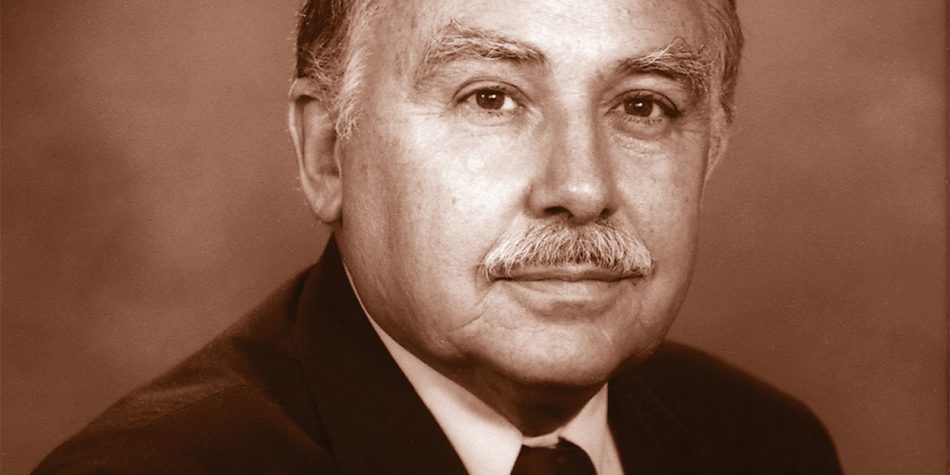
In memory of Monroe McKay, by one of his clerks
They say that when an old man dies a library burns, but that image has lost its power. Libraries can’t matter now like they did, what with everybody educated and with so much information free online that it’s difficult to imagine how hard it used to be just to know things. Do you know why the wizards in old stories are always old? I think it’s because having a life’s worth of learning, once upon a time, let you do and say things that seemed to the youngsters like magic.
An old man I know died this year, and his life really was magic. He was born in his family home in a tiny farming-and-sheepherding town; born in the same room where his father had been born—in the same room where his father would die, in fact, while he and his seven siblings were still young. The father had no life insurance, but the local insurance salesman later joked that for once it had turned out better that way. Plunged into poverty, the surviving family were forced to work hard and rely on each other, and together they raised a crop of extraordinary people.
One older brother became a congressman, the other a dean at Weber State. Monroe himself became a federal judge, and yet it’s how he got there that I find most remarkable. Today, federal judges’ race up the prestige pole starts before kindergarten, but this future judge didn’t even start college until he was twenty-five. First he was a Marine, or a sheepherder, or a traveling teletype mechanic, until his brother walked him through the enrollment process at BYU.
That was a theme with him—I don’t think I ever heard him take credit for anything that went right in his life. He owed his success at BYU to the brother who talked him into college. He owed his admission at the University of Chicago to a professor with a connection, and to the superb performance at Chicago of earlier BYU alumni (including one Dallin Oaks). He owed his legal writing style to a partner at his law firm, and his sense of judicial decorum to an older judge who’d politely reprimanded him, early in his tenure, saying, “We have a strong tradition on our court of not filing sharply worded dissents.” (If you know me, you can probably guess the context in which he told me that.) Throughout everything, on his telling, his life was a string of kind things that good people had done for him.
As to his appointment as a judge, he joked that it was “on the merits”: “Tip O’Neill owed my brother a favor, and Jimmy Carter owed Tip O’Neill a favor, and that was my appointment on the merits.”
Because he didn’t take credit for his successes, he never looked down on less successful people. He addressed everyone with interest and with a charming gentility, and even when awful criminals filed frivolous appeals, he expressed none of the righteous anger I often felt. (He once teased me for being “judgmental”; I pointed out that was quite a criticism to get from a judge.)
To some extent these virtues were unique to him. He was patient with the uneducated because he remembered being uneducated; he had compassion for the poor because he’d been poor himself. Everyone on the court knew he’d been a sheepherder, but some seemed to see the fact as entertaining biographical trivia. They had never earned their living from the earth or spent time with people who did. They couldn’t see the line that ran straight from the soil and the sheep to the kindness and generosity and humility of the man they knew.
So, though he was unique, he was also a man of his generation, and an exemplar of the virtues of his generation. There was a day, and he remembered it, when even among doctors and lawyers most people had known manual labor and been friends with manual laborers. There was a day when, even among the laborers, people said “sir” and “ma’am,” and starched their collars, and didn’t swear when ladies were present—when there were rules of dress and manners that you didn’t just follow during job interviews. There was a day when you could say with a straight face, as you practiced following those rules, that you were “improving yourself,” like when the judge learned as a youth that it was undignified to use filler words like “um” and then set about eliminating them from his speech. (It worked.) And if you said you were improving yourself, you were probably right. It is out of such tiny, conscious acts of self-denial that character grows, and you could see it in the judge’s character, and in my grandparents, and in millions of their contemporaries.
Maybe his virtues were so much a part of him that he couldn’t imagine how many people today grow up without them—without even seeing them—or what the consequences might be.
What’s more, character wasn’t the only thing their self-denial built. Every institution I trusted as a child came to me through the hands of people like the judge—and that’s probably why I found the institutions trustworthy. You can’t have a functioning court (for example) without judges following a lot of rules that can’t easily be enforced. You can’t have courts that enjoy the public’s confidence when all the judges are aiming to be the “great dissenter,” to build their own reputations at the expense of their colleagues or the parties in their courtrooms, or to get their opinions quoted on MSNBC or Fox. You need judges who understand that there are some things just not done, some things just not said, no matter how much the judge himself might believe in them and no matter how they’d advance the causes he cares about.
That capacity for self-sacrifice doesn’t just descend on a man when you give him a robe. It’s a matter of character, and a closer cousin to starched collars than most people today appreciate.
Please don’t accuse me of nostalgia. I know our ancestors’ rules could be stifling and pointless, and I know the rule-givers could be oppressors or hypocrites. If there has ever been a perfect generation, we know it only through scripture; it certainly has not existed in the United States of America.
But with the judge’s generation all but departed, we owe it to ourselves—and, yes, to them—to admit that maybe they knew a few things that their richer and more comfortable descendents have forgotten.
Ironically, I’m not sure how much the judge would agree with me. I’m a gloomy conservative always dwelling on what’s being lost; he was an optimistic liberal amazed by the progress he’d seen in his lifetime—scientific progress, economic progress, progress in racial and sexual equality, and so on. And given his life story, how could I blame him? The institutions that had unwritten all the rules were the same ones that had accepted a Huntsville sheepherder with open arms and given him a life of wealth, prestige, and responsibility beyond anything he can possibly have imagined as a fatherless teenager in the mountains.
But for that exact reason, I wondered whether he could see the cost of all the progress, the way it ate the roots the judge himself had sprouted from. I wondered whether, spending all his time with his prosperous colleagues and family, he simply hadn’t met the people who didn’t thrive in the brave new world; the ones who, lacking rules, live aimlessly; the ones wearing scars from others’ aimless living. Maybe his virtues were so much a part of him that he couldn’t imagine how many people today grow up without them—without even seeing them—or what the consequences might be. Or maybe I was wrong and he’d seen all the things I’d seen, and he would just disagree with me about what they meant. If so, I’m sure he’d do it politely.
God willing, he and I will have that argument someday, or perhaps by then we’ll both be done with arguing and have greater things to talk about. In the meantime I’ll do the conservative’s work of remembering his generation with gratitude, and of asking my own generation to consider this: if the price of progress is a world that produces fewer people like Judge McKay, then maybe it isn’t really progress.