Washington Post columnist Jennifer Rubin recently published a striking essay that was, in some sense, just a reflection of what many others are feeling. Entitled, “We Should Soon Stop Catering To The Vaccine Holdouts” the article stood out for its withering characterizations of those resisting all the abundant encouragement to receive a COVID-19 vaccine. In the article, Rubin called people who were vaccine-hesitant “impervious to reason and facts” and “self-destructive, selfish and potentially deceitful people”—arguing “at some point, only the willfully ignorant and destructive will remain unvaccinated.”
Ignorant. Selfish. Deceitful. Willfully destructive.
These are descriptors you’d virtually never hear applied to most any other subgroup in America (except, perhaps, Trump supporters or Republicans). To call an ethnic or sexual minority names like this would lead you to immediate termination of employment. To apply them to religious minorities or atheists, or even to former felons or sex offenders would be seen, at the very least, as deeply insensitive.
But in America today, for perhaps some understandable reasons, these kinds of incendiary descriptors are allowable for a sizable subgroup in America not yet on board with orthodox medical views, even in the nation’s most celebrated news outlets. Notice that it’s not possible, in any of these views, to disagree with current COVID-19 vaccination protocols reasonably.
Anyone who refuses to get vaccinated, outside of actual medical reasons anyways, are idiots. Mostly caused by the ego of an idiot. There is no excuse. They should not be allowed to possibly infect anyone else. Sorry, I have zero compassion for these people.
In a more positive spirit, one person shared their encouragement to “get the vaccine for the well-being of society and the common good” before adding “be a good citizen and decent human being.”
Notice that it’s not possible, in any of these views, to disagree with current COVID-19 vaccination protocols reasonably.
One woman declared, “I don’t care what happens to Republicans who don’t get vaccinated. Yes, that is a callous thing to say, but it’s true.” Another added, “Republican men and Evangelicals are the most vaccine-resistant. I would not be pained if there were fewer of them in the world.” Others took it even further:
- “In a perfect world, this virus would only kill Trump supporters.”
- “You want a choice? Okay, here’s your choice: vaccine or lethal injection.”
Of course, real violence against holdouts is hyperbole largely reflecting people’s frustration. Something else, though, is not hyperbole. As one person summarized it, “there need to be consequences for these hold-outs.”
Given the widespread conviction that the solution to a pandemic is for enough people to accept vaccination (aka, “herd immunity”), it’s perhaps understandable to see the desperation to persuade enough Americans to get the vaccine. As one person said:
They hold the entire nation hostage—by willfully serving as a reservoir for the virus. Allowing it to not only survive but to mutate into a more deadly form—maybe into a form that is immune to the vaccine. Who pays for the cost of repeated shutdowns of businesses? Who pays for expensive medical care of idiots who contract the virus while claiming it doesn’t exist?
That epitomizes well the medical philosophy that a majority of Americans now embrace—and from which detractors naturally are seen as a serious threat. As one person summarized the sentiment, these people are “why we still have a pandemic.”
If that’s what you believe, then perhaps this level of frustration is understandable—as reflected in some especially vivid comparisons (emphasis my own). As several people argued:
- “Unvaccinated people provide a reservoir in which the Covid virus can survive and continue to mutate into a more deadly form resistant to vaccines. In that regard, they are the equivalent of biological warfare factories aimed at Americans.”
- “We destroyed Iraq and lost 4500 soldiers on the mere rumor Saddam Hussein was developing biological warfare agents—here we have millions of morons deliberately serving as hosts—a reservoir/factory for a virus that has already killed over 570,000 Americans.”
- “The anti-vaxxers are deliberately helping this pandemic continue even though 571,200 Americans have already died from it. How is that different from mass murder?”
One person went so far as comparing the unvaccinated to “sociopaths.”
Jennifer Rubin herself stated, “There is no right to remain a breeding ground for dangerous coronavirus variants” and argued against any accommodations for “those bent on being a danger to themselves and others. We have all sacrificed too much for too long to indulge reckless conduct.”
On that basis, Rubin went on to suggest that these “ornery holdouts won’t be mandated by the government to get shots, but they should not be able to enjoy the benefits, privileges, and access that responsible Americans have earned by getting vaccinated.”
A small handful of people objected, with one saying, “sure go ahead and call people who don’t think just like you sociopaths.” Another person chimed in, “we don’t live in a totalitarian state.”
Yet most people seemed to agree with Rubin’s line of thinking. One person said, “Lock them out!” Another man insisted, “at some point soon, those that refuse to participate in public health measures, such as vaccinations, masking, physical distancing, etc., should be held liable for their irresponsible behavior … possibly financial & legal liability for willful negligence for infecting others in the community.” Still others wrote:
“These are the same people who wanted everyone over 65 to ‘just stay home’ for a whole year so they wouldn’t be inconvenienced by face masks. Now it’s THEIR TURN to stay home. No vaccine, no admission.”
All Americans ought to feel free to advocate for whatever policy measures seem necessary and justified.
- “Public Health’s strong quarantine powers should be used to put unvaccinated people under house arrest because they are a severe threat to the nation—including to vaccinated people. They are a reservoir for the virus which will allows it to mutate and continually evolve into a more deadly form—a form that may overcome the protective effects of the vaccine.”
- “People who are not vaccinated should be treated as outcasts and lepers. They should not be given privileges to attend ballgames, go to concerts or Disneyland, etc. They should be banned from workplaces.”
Banned from workplaces. House arrest. Refused services. Stay home.
To those who are deeply concerned about the broader health impact of unvaccinated Americans, these may seem reasonable policy measures. And certainly, all Americans ought to feel free to advocate for whatever policy measures seem necessary and justified.
My purpose here is not to try and resolve these complex policy matters; navigating them well will take remarkable grace and wisdom—and we should pray for our elected officials. I simply draw attention here to the spectrum of rhetoric we are seeing, and how (perhaps unnecessarily) threatening some of this will and does feel to a large subset of Americans—sending many into “bunker” mode. For that reason, I can’t help asking: Regardless of what you feel about those resisting vaccination and the viability of such restrictions, how do you feel about the tenor of some of this rhetoric above?
Certainly, there will be many who may sensibly say, “the rhetoric is unfortunate, but the deep concern is only understandable.” Indeed, there are plenty of reasonable ways to advocate for restrictions, without insisting on people with questions being social pariahs. For instance, other commentators said things like:
- “Honestly, I see little difference between vaccine holdouts and a person who claims they should have the freedom to drive drunk. In both cases, an individual’s … behavior … puts not only themselves, but others, at risk.”
- “Nearly every employer requires a drug test. Nearly all schools require proof of basic childhood vaccinations. Requiring proof of COVID vaccination does not impinge on anyone’s freedom.”
- “The military requires other vaccines, so do many schools and colleges. We need clear reasons for exceptions and they need to be few in number and backed by science.”
As we’ve seen over recent years in American discourse, there’s a significant difference between holding serious concern and saying incendiary, aggressive things. For one, if your goal is to “persuade the holdouts” pretty much the best thing you can do to drive people even deeper into their bunkers is to reinforce the visceral sense of being outcasts, social pariahs, and potential exiles “banished” from polite society.
Furthermore, as people of faith, I believe it’s our obligation to stand up against such provocative rhetoric, on any issue. In this spirit, President Dallin H. Oaks recently called for Latter-day Saints to work towards commonality rather than discord: “On contested issues, we should seek to moderate and unify.”
In recent weeks, I’ve also proposed more attention to what a productive vaccine dialogue would look like. In that spirit of seeking mutual understanding, I would leave an honest question to those feeling concerned with the unvaccinated (if not the rhetoric above): Is it possible to disagree about dominant medical conclusions in this area thoughtfully?
With so much attention to questions about the vaccine intervention itself, I’ve personally been struck at how little acknowledgment there seems to be regarding the very different approaches to illness and health that have a long history in America (aka, an alternative, natural, and naturopathic stance vs. a more dominant allopathic philosophy).
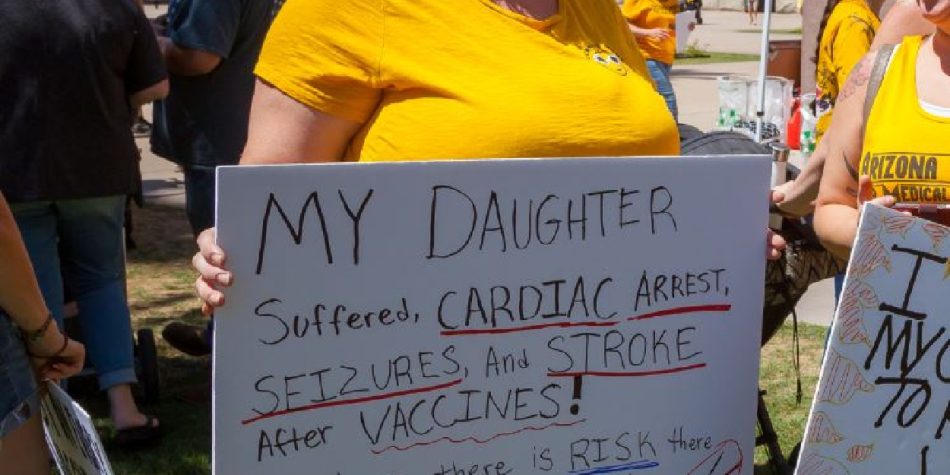
In the absence of that acknowledgment, those questioning vaccination are increasingly cast, almost automatically, as merely stupid, anti-science, selfish—as if that were the only way someone could be seriously questioning the vaccine.
Ignorance and ill-will. And maybe some egotism? As Dr. Fauci recently said with more than a little sarcasm, “If you want to only worry about yourself and not society, then that’s OK.”
But what if these resistors are questioning more than the vaccination itself? What if they also hold a very different philosophy of health and healing? Furthermore, what if they also care immensely about solving the pandemic, but are unconvinced the vaccination is our primary salvation—indeed, harboring personal concerns at inadvertent, longer-term impacts that we are not aware of yet?
Is that really all that reasonable? While acknowledging the legitimacy of your own feelings and concerns, are you open to others being thoughtful as well in their dissent?
Stop calling those with honest questions about vaccines simply “selfish” or “ignorant” or even “crazy.” Start recognizing that competing medical philosophies are also at play here: competing views of how healing happens—and how best to protect health.
I recognize these suggestions and questions will press some readers in uncomfortable ways. But if we’re committed to a fully honest American discourse, what really is the alternative?
These remain fearful times for many. On one hand, a large group of Americans fears what will happen if herd immunity is not reached. On the other hand, another group of Americans fears serious threats to their freedom—especially if they get wholly blamed for any bad turn in the pandemic, as is highly probable.
At the very least, let’s try to hear each other’s fears—even and perhaps especially if we disagree with the basis behind them.
Outside of that fairytale land where everyone eventually ends up coming around to agree with your view, it’s hard to find really positive answers to any of this ongoing conflict.
Yet this very palpable, shared sense of fear, alongside the common desire to overcome the pandemic, both remain common grounds that virtually all Americans stand on.
Don’t let anyone convince you otherwise.