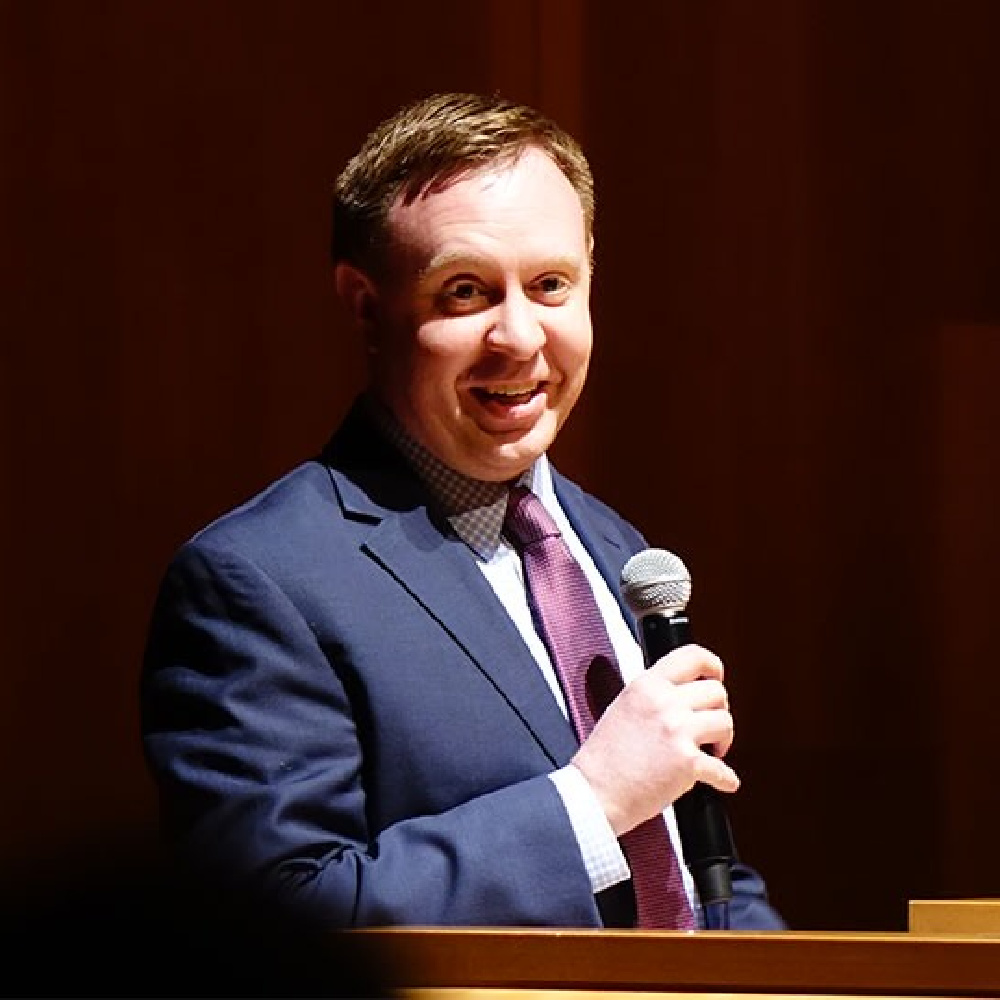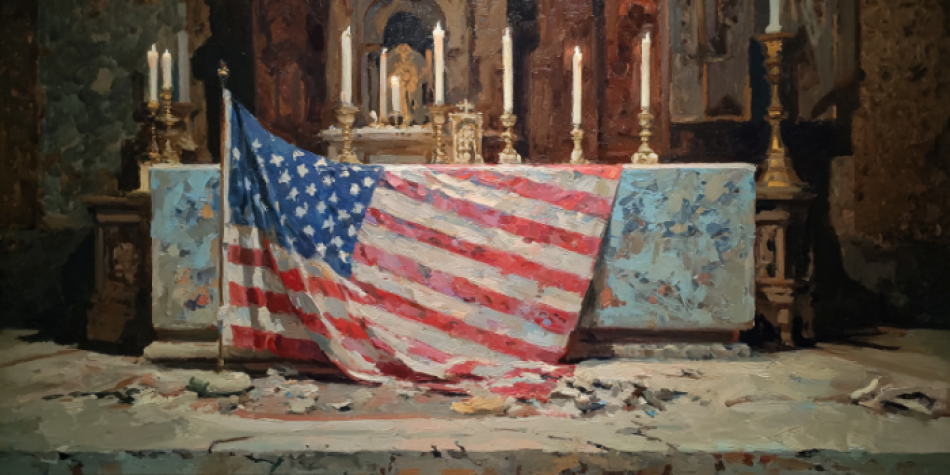

The idea that religion is essential to the American experiment in self-government has carried significant weight since the Founding era. For example, in his final address, George Washington declared that “religion and morality are indispensable supports” to the new country. Many others throughout American history have made similar arguments. I lead America’s Quilt of Faith, an organization committed to this idea in today’s modern and turbulent public square. [These movements] are rooted in dominion theology and a vision … dominance over every sector of society.
While it is true that many religions and traditions draw upon forceful, even militant language to describe the spiritual quest to enact God’s will on the earth, these movements are different.
They are rooted in dominion theology and a vision of enacting Christian political and cultural dominance over every sector of society. Several are influential within conservative politics, and a majority of their proponents are also fervent supporters of the current president. The original articulator and foremost proponent of one of these movements is among the most influential MAGA Christian activists today.
This particular belief was central to the spiritual warfare theology and political propaganda that drove many Christians to participate in the January 6 insurrection. Some are part of a broader movement of the Christian right in the United States to more fully embrace (what they perceive as) the workings of the Holy Spirit, which has brought a more assertive, militaristic rhetoric and sensibility to the values and policy agenda of the old Christian right.
America’s Quilt of Faith celebrates the freedom that allows for all religious beliefs, including those described above. Yet we are concerned that these particular religious movements undermine American constitutional democracy.
The founders of the United States held that religion was essential because religions have a unique capacity to build virtue in citizens. We applaud all religions and beliefs in this indispensable work, which brings peace and stability to communities and the nation. However, we believe the founders of the United States of America did not intend for religion, let alone one sect or belief system, to “take over” any sector of society, most especially the government they had just created. We believe the founders … did not intend for religion, … to “take over” any sector of society …
It is true that many Christians believe Jesus will one day return and rule on earth during a time of worldwide peace. It’s hard to imagine even in this scenario that such a global reign would be enacted through aggression that somehow forces a belief in Him, and without an allowance of continued free expression and peaceful pluralism.
Latter-day Saints join many other believers in insisting on an unpressured conversion experience—respecting other faiths to walk their paths even as they seek to “build the Kingdom” by influencing and persuading through love and the Holy Ghost’s workings. As Princeton’s Robert P. George argues, “Any attempt by the state to coerce religious faith and practice, even true faith and practice, will at best be futile and would likely damage people’s authentic participation in the good of religion.” A true relationship with God “cannot, by its very nature, be established by coercion.”
A true relationship with God “cannot, by its very nature, be established by coercion.”
We urge all religious Americans who, as part of their faith, believe that God had some role in establishing the United States Constitution and see it still relevant today to be wary about supporting the aggressive goals and methods of these movements and instead participate in the public square in ways that support, protect, and defend the U.S. Constitutional order.