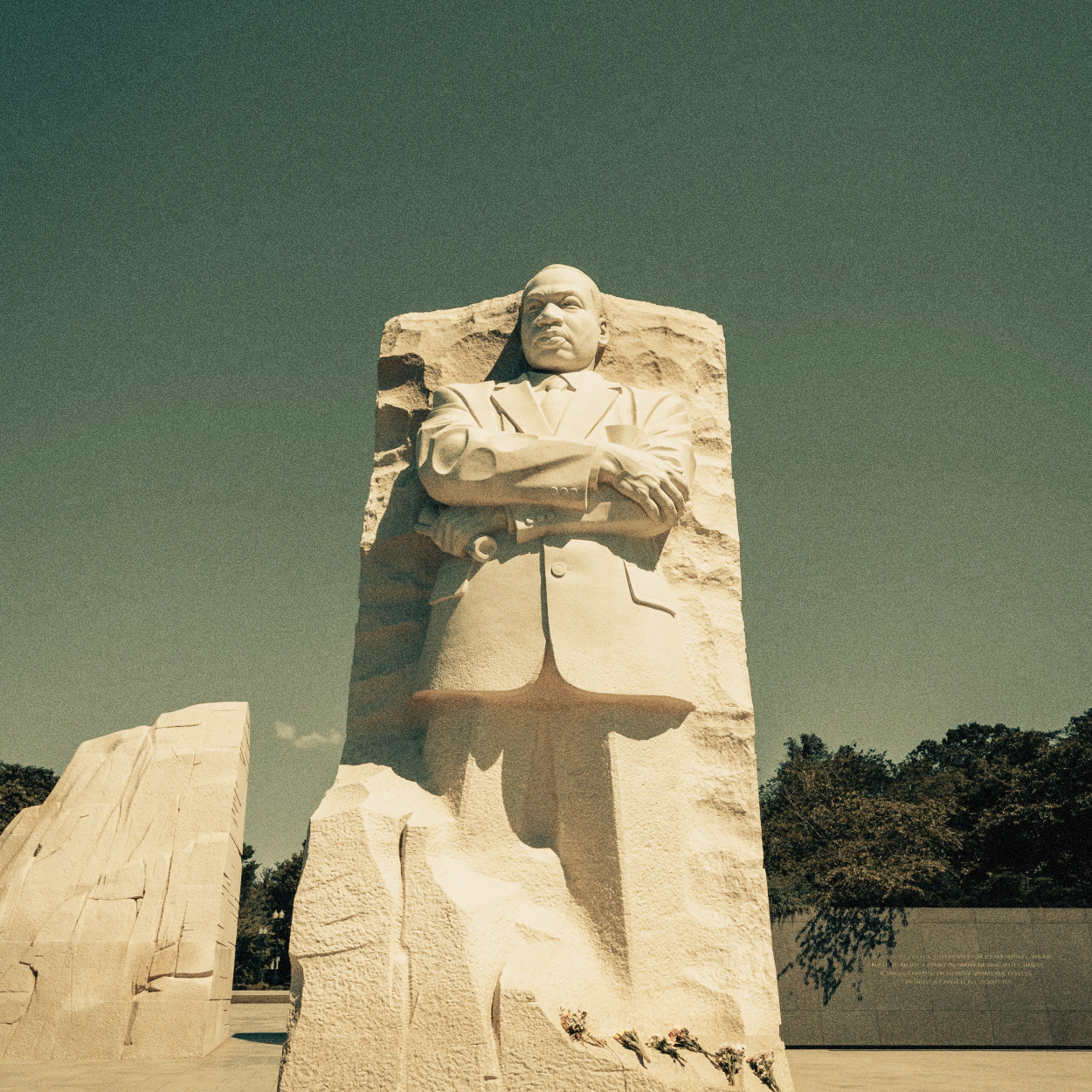
Citizens wait to enter a local voting location for a primary election. Independent voters are unable to participate in these primaries, leaving both parties in the hands of those with less moderate views.

Join the Party

Many Americans reject party labels, yet absence from party processes leaves activists shaping ballots and platforms.

Download Print-Friendly Version

In today’s fraught political landscape, it’s hard not to feel like both sides are dominated by extremes. And people are noticing. Registered independents have hit an all-time high and continue to increase. While academic research shows that most independent voters still hold ideological leanings, more people than ever are hesitant to officially align themselves with either political party.

This is problematic. Political parties have served as important organizing institutions in American politics for over two hundred years. Their primary goal is to elect candidates to office. Parties accomplish this by attracting voters and building broad coalitions. With America’s two-party system, as soon as one party knocks the other out of the arena, there is an incentive to broaden political appeal to win back voters. 

 Registered independents have hit an all-time high and continue to increase.


But the surge of voters registering as independent shows that neither party is following that incentive, at least not officially. In recent decades, electoral wins have not come from large coalitions but increasingly energized base supporters. Parties aren’t courting average Americans but rather their most engaged believers. From Rah-Rah Republicans to Die-Hard Democrats, we see this playing out in real time.

The past three presidential elections have been decided on thin margins, and Congress has had the narrowest majorities over the past three cycles than at any point in nearly a century. If large, diverse coalitions are no longer necessary to win elections and mobilized ideologues can instead emerge victorious, then the founding idea of a democratic republic reliant on a pluralistic society is bankrupt. 

The solution? Join a party. The medicine might seem counterintuitive to the diagnosis. How can increased partisanship help a polarized America? Because civic engagement, including partisan activity, allows citizens to steer the course of the political parties and, by extension, the nation.

Too often, people relegate political engagement to Election Day, unaware that half the battle was already fought months earlier in caucus nights and committee meetings. It’s powerful to cast a ballot, but even more powerful to shape the ballot itself. In politically homogeneous states, which are becoming more common, congressional elections are often decided at the primary level, or even earlier through party maneuvering (see both Democrat and Republican examples) that determines who appears on the ballot. Registered independent voters are often left out of these decisions, limiting their ability to select candidates and party platforms they most support.

When a closed primary system is used, independents lose political influence, especially in homogenous states, because they cannot determine who is selected as the party’s candidate. Take Utah as an example. Only registered Republicans are allowed to vote in the Republican primary, and GOP candidates are almost always elected for federal and statewide office. While we can bemoan party operations, I am personally irked when someone claims, almost righteously, that they registered as an independent voter. To me, it means they have willfully given up political influence. 

It taught me that one vote in a caucus can matter.


I learned the importance of partisan civic engagement through my own experience. In 2024, I attended my local Republican caucus night. After discussion with the people in my precinct, it became clear that none of the likely state delegate candidates for our precinct matched my views of the party. I then decided to run as a delegate to the state convention. The small gathering quickly became divided and resulted in a tied vote between another candidate and me. 

Surprised at the significant support I garnered for running on a different agenda than the national fervor at the time, I again offered my vision of a different direction for the party. I called for a broader coalition of support and identified the shortcomings of relying upon divisive figures. After a second round of voting, and with one person shifting support, I was elected as my precinct’s state delegate.

My experience did not teach me to have a holier-than-thou attitude toward people with a differing vision of politics than myself. Instead, it taught me that one vote in a caucus can matter, and that involvement with parties can be effective in changing their direction. 

I urge readers to become more involved in their local parties. We should seek to be more engaged within our communities, especially through civic and partisan means. A political party may not accurately represent all your views; indeed, it probably will not and should not. Dallin H. Oaks, President of The Church of Jesus Christ of Latter-day Saints, said as much in 2021, emphasizing that “no party, platform, or individual candidate can satisfy all personal preferences.”

Joining does not mean you agree with every aspect of the party.


This is just more reason to be involved. Who do you think decides a party platform? Too often, we forget that parties are beholden to the people and not the other way around. Criticizing your own party in pursuit of its overall improvement can even be considered patriotic. Philosopher Alasdair MacIntyre theorized that patriotism should mean holding the nation as the primary object of regard. However, he asserted that while the nation as an ideal and project should be exempt from criticism, the makeup of its government and policies should never be exempt from critiques.

While I do not place the Republican or Democratic parties on the same pedestal as the American democratic project, I do believe MacIntyre’s point offers a helpful model for the partisan. Being an avid supporter of a political party still allows for healthy disagreement with the party’s platform or structure. 

I leave with this: joining a mainstream political party opens up avenues for political power that are closed to many independent voters, and joining does not mean you agree with every aspect of the party. If anything, the greatest impact you can have is changing the institution itself and moving the party forward in its quest to serve the people. 

In the past, Republicans and Democrats were not so polarized, and I believe more partisan involvement would actually increase mutual understanding and respect if done thoughtfully. So why wait? Join the party.


 

About the author

Dallin Bundy

Dallin Bundy is a senior at BYU studying political science and preparing to enter law school. Dallin is originally from St. George, Utah, and is the former president of BYU College Republicans and an active member in his community.
On Key

You Might Also Like

Under the Banner of Heaven Episode 5, “The One Mighty and Strong”

Summary – Pyre is interrogating Sam, who shouts scripture at him about the “one mighty and strong.” Pyre uses false details about the murder to trick Sam into revealing that he isn’t the murderer. The police chief is getting ready to release the brothers, so Taba stalls him while Pyre talks to Robin about his brothers’ involvement in the “School of the Prophets” and gets him to reveal two names: Bernard Brady, a Provo businessman, and Prophet Onias. The detectives follow up with Bishop Low and his wife, located at the end of the last episode, asking them about the excommunication of Dan and Ron. The bishop is reluctant to reveal details because of clergy confidentiality but eventually reveals that Dan was excommunicated based on the testimony of his daughters that he attempted to forcibly take them as polygamous wives. We get a flashback to a heartbreaking scene where Matilda has sex with Dan to distract him as her daughters escape out a window in the middle of the night. Dan was excommunicated, and the girls were placed with a family in the ward (as the bishop refused to call CPS) but later ran away, and now they and their brother are missing. At his daughter’s baby blessing, Ron confronts the bishop about his brother’s excommunication, not knowing about Dan’s attempted polygamy and thinking that it’s about his political beliefs. Brenda has a conversation with Sister Low and Diana, indicating that both know that Ron is abusing her but only Brenda is willing to do anything about it. In fact, Sister Low feeds Diana a line about how her only duty is “creating a home and environment to sustain and support our Priesthood holder.” To Detective Pyre, the bishop claims to have followed church procedure but eventually encouraged Diana to leave and gave her money to do so. The detectives follow up on Robin’s lead about Bernard Brady by arriving at his house in the foothills of Provo with a warrant. We find out that the Bradys sheltered Ron when he was having a hard time. In a flashback, Ron receives a summons to a church disciplinary court and blames Diana for it. He punches her in the face and begins throwing the food she’s preparing on the floor, saying he’ll starve her into obedience. Diana grabs a kitchen knife and drives Ron from the house, telling him not to come back. Back in the present, Bernard admits to being in the School of the Prophets study group and driving miles to pick up Prophet Onias and the Laffertys but denies being further into the group than that. But when he sends his wife out of the room to make lemonade, he produces a notarized letter he sent to himself with details of the Laffertys’ hit list, including that Diana is on the list because she wrote a letter that got Ron excommunicated. The detectives rightly chastise him for not taking this information to the police earlier. Brady reveals that he knows the location of “the farm,” a Lafferty compound. With Allen’s help in drawing a map, the detectives plan to stake out the property in the morning. Detective Pyre returns home for FHE and finds that his wife and kids have been invited to the bishop’s house for the evening and are spending the night there. Pyre believes this is an attempt to keep an eye on his family and control the narrative about the case. The next morning on the way to the raid of the farm, Pyre questions Brady about the details of Ron’s excommunication, which we see in flashback. He is indeed excommunicated after lashing out at the church leaders about them not following the “correct” doctrines of the church. When Ron returns home, he finds that his teenage daughter has cut the markings out of his garments, which he puts on anyway with only a sports coat and jeans over the top. He says goodbye to his kids and leaves the home. When the farm is raided, the only people inside are three teenage girls, who we learn are from a polygamous compound in British Columbia and were brought down by Prophet Onias to be Ron’s wives. The girls show the detectives a cupboard they had been forbidden to touch, which the detectives open to reveal a single shirt belonging to Ron with some papers in the pocket, a hit list, and a revelation directed at Diana commanding her to repent and return to him. Allen is in disbelief that Ron could have written these things, but Brady confirms that Ron is a violent man. He explains that Ron fled to his parents’ home after his excommunication, where his mother confirms his calling as “the one mighty and strong” and says he’s only a heartbeat away from his rightful place. His father is lying sick in bed and asks Ron to call a doctor, but Ron recalls his cruelty to them as children and refuses. It’s implied that he indirectly caused his father’s death in order to take over the leadership of the family. Church History—This episode contains the most fabricated piece of church history in the show. When Bernard Brady reveals that Diana’s information led to Ron’s excommunication, he makes an analogy to Joseph Smith’s martyrdom. He claims that while Joseph was in hiding after destroying the press of the Nauvoo Expositor, Emma wrote a letter to Joseph encouraging him. John Taylor intercepts this letter and adds a line meant to make Joseph turn himself in, thus indirectly causing the prophet’s death. Taylor’s motive is to put Brigham Young at the head of the church, instead of Emma’s young son, in order to continue the doctrine of polygamy, which he and Brigham are already heavily involved in. Reputable historians both in and out of the church say there is no evidence to support this interpretation of events, though the succession crisis between Brigham Young and the ten-year-old Joseph Smith III is real and

Subscribe To Our Weekly Newsletter

Stay up to date on the intersection of faith in the public square.

You have Successfully Subscribed!